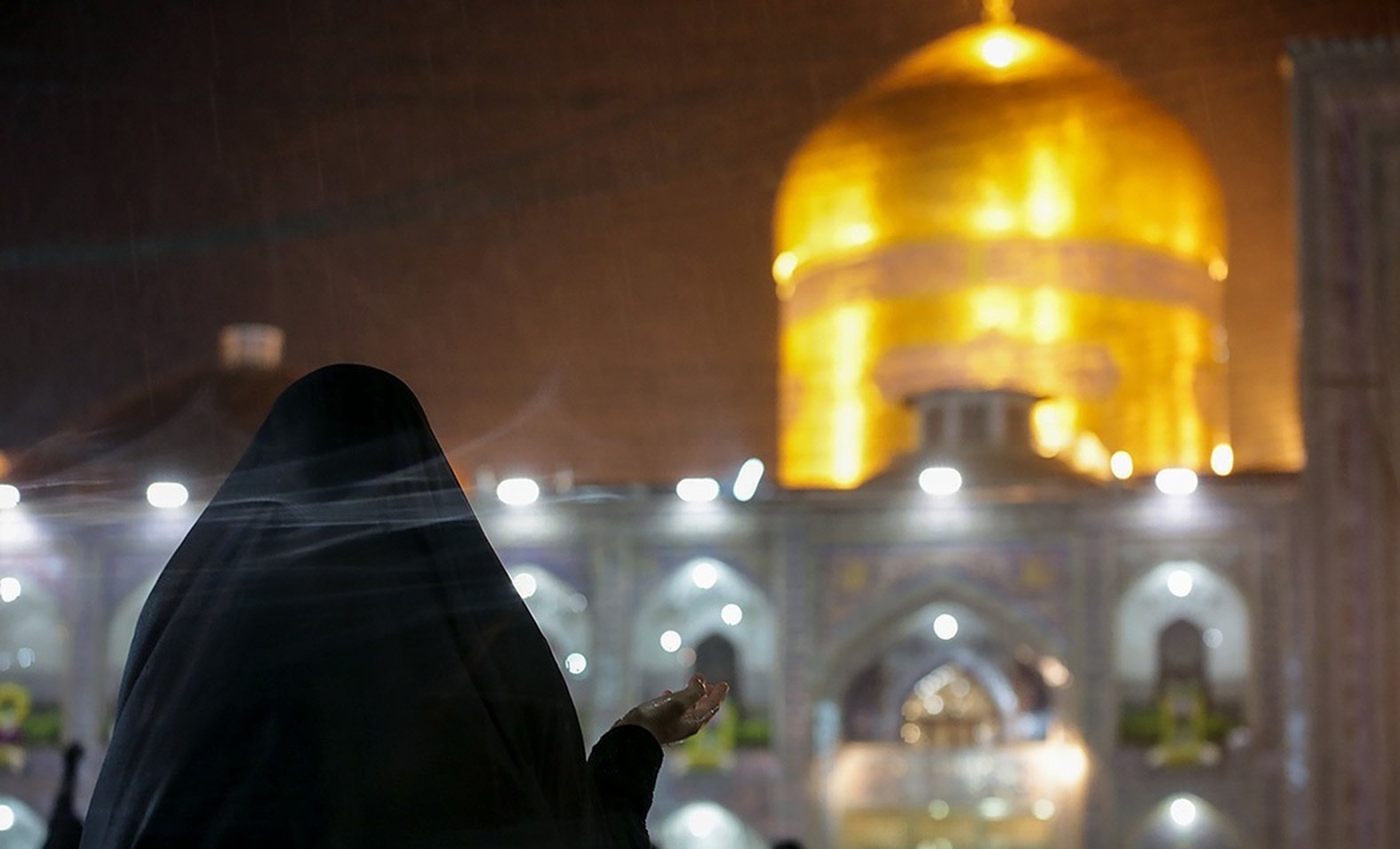
Mashhad is the city where Iran's spiritual heart beats loudest. It is the capital of Razavi Khorasan province in the far northeast of the country, and every year millions of travelers arrive here to stand before the Haram, the vast sacred precinct built around the tomb of Imam Reza, the eighth Imam of Shia Islam. Yet Mashhad is not only a pilgrimage destination. It is a working metropolis of more than three million people, with a metro system, a university quarter, mountain parks on its western edge, and a bazaar economy that has been trading saffron, gemstones, and prayer rugs for generations. This guide walks you through the whole trip: how to reach the city, how to behave inside the Haram, what to see beyond it, where to sleep, and how Mehyar can carry the practical load so you can focus on the experience itself.
Where is Mashhad?
Mashhad sits in northeastern Iran, roughly 900 kilometers east of Tehran, in the province of Razavi Khorasan. The city spreads across a broad, dry valley between the Binalud and Hezar Masjed mountain ranges, at an altitude of about 995 meters. That elevation matters: summers are hot and dry, winters can bite hard, and spring arrives later than you might expect.
Historically, this is the Khorasan of the Silk Road, the region that gave Iran its epic poet Ferdowsi and its most revered shrine. The city grew up around the tomb of Imam Reza, who died here in 818 CE, and the name Mashhad literally means "place of martyrdom." Everything in the city's geography, from the ring of hotels around the Haram to the boulevards that radiate out from it, is organized around that sacred center.
For orientation, the Haram complex sits in the middle of the city, bounded by Imam Reza Street, Shirazi Street, Tabarsi Street, and Navab Safavi Street. Most of what a first-time visitor wants to see is within walking distance of those four arteries, and the rest is reachable by metro or a short Mehyar Taxi ride.
How to get to Mashhad
By air
Mashhad International Airport, officially Shahid Hasheminejad International Airport (IATA: MHD), is the main gateway for long-distance travelers. It handles both domestic flights from Tehran, Isfahan, Shiraz, Tabriz, and other Iranian cities, and international services to destinations including Istanbul, Dubai, Doha, Muscat, Medina, Lahore, Karachi, Beijing, Shanghai, Moscow, and New Delhi . Turkish Airlines, Flydubai, and Air Arabia are among the international carriers that operate here, and Iran Airtour has the broadest domestic network from Mashhad .
The airport lies about 11 kilometers southeast of the city center, and the drive into town takes roughly 20 to 30 minutes depending on traffic. Metro Line 1 connects the airport directly to the city, with the Shahid Hasheminejad Airport station at the end of the line. If you prefer a door-to-door ride, open Mehyar, choose Taxi, and set your hotel as the destination; the fare will be shown before you confirm, so there is no need to negotiate with a driver after a long flight.
One practical note: morning flights into Mashhad tend to be more reliable, as afternoon departures are more prone to delays. If your schedule allows, book an early arrival and you will still have most of the day ahead of you.
By train
The train from Tehran to Mashhad is one of the classic Iranian journeys. The route covers roughly 900 to 950 kilometers and takes about 10 to 11 hours on a standard service, or as little as 8 hours on the faster Pardis train . Trains depart throughout the day and night, and there are several classes to choose from: four-berth couchettes, six-berth compartments, and in the newer five-star trains, two-berth cabins with private facilities .
Overnight trains are a sensible option because you sleep through the journey and arrive in the morning. The rail route passes through the Dasht-e Kavir edge and the Khorasan plains, and the scenery shifts gradually from the Alborz foothills to the arid northeast. Book through Mehyar's Flights and Trains section, where you can compare departure times and cabin classes in one place.
Mashhad Railway Station itself is a landmark, designed by the Iranian architect Haidar Ghiyabi and inspired by Parthian and Achaemenid forms . It sits on Shahid Keshvari Boulevard at Rahahan Square, about 2 to 3 kilometers from the Haram. Metro Line 2 serves the station, and the ride to the shrine area takes only a few minutes. Alternatively, a Mehyar Taxi from the station to a hotel near the Haram is a short and inexpensive hop.
By bus
Long-distance buses connect Mashhad to Tehran and most other major Iranian cities. The Tehran to Mashhad bus takes about 11 to 13 hours, with departures in the late afternoon and evening from Tehran's South Terminal and West Terminal . VIP buses with reclining seats, USB ports, and onboard refreshments are the comfortable choice; ordinary buses are cheaper but less spacious . Buses arrive at the Imam Reza Terminal in Mashhad, from which a Mehyar Taxi or a metro ride will get you to your accommodation.
By car
Driving to Mashhad is feasible if you have time and want to break the journey. The main route from Tehran runs via Semnan, Damghan, and Neyshabur, following the older Silk Road corridor. The drive is roughly 900 kilometers and takes about 10 to 12 hours without long stops. In winter, check road conditions before setting out, as snow can close passes in the Binalud range.
Best time to visit Mashhad
Mashhad has a continental climate with four distinct seasons, and the best time for you depends on whether you prioritize weather, crowds, or religious atmosphere.
Spring, from late March through May, is the most balanced season. Temperatures range from about 15 to 25 degrees Celsius, the parks and mountain foothills are green, and the city is busy but not overwhelming . This is also the season of Nowruz, the Persian New Year, when domestic travel peaks and hotels fill up quickly.
Summer, from June through August, is hot and dry, with daytime temperatures often reaching the mid-30s. It is also the peak pilgrimage season, especially around the birth anniversary of Imam Reza in August, when the Haram is decorated and the city receives an enormous influx of pilgrims. If you visit in summer, plan your outdoor sightseeing for early morning or evening and expect higher hotel prices.
Autumn, from September through November, brings cooler air and fewer crowds. Temperatures settle between 10 and 23 degrees, and the parks around the city take on their autumn colors. This is an excellent season for combining shrine visits with day trips to the surrounding countryside.
Winter, from December through February, is cold, with temperatures that can drop below freezing and occasional snow. The upside is that this is the quietest and most affordable season. If you do not mind the cold, you will have the Haram courtyards more to yourself and hotel rates at their lowest.
Religious events shape the city's rhythm throughout the year. During Ramadan, the Haram hosts Quran recitation sessions and communal iftar, creating a particularly intense atmosphere. Muharram brings mourning processions and special ceremonies, and the martyrdom anniversary of Imam Reza draws large crowds of pilgrims. If you want to witness these traditions, plan around the Islamic calendar and book well in advance.
The Imam Reza Holy Shrine and the Haram
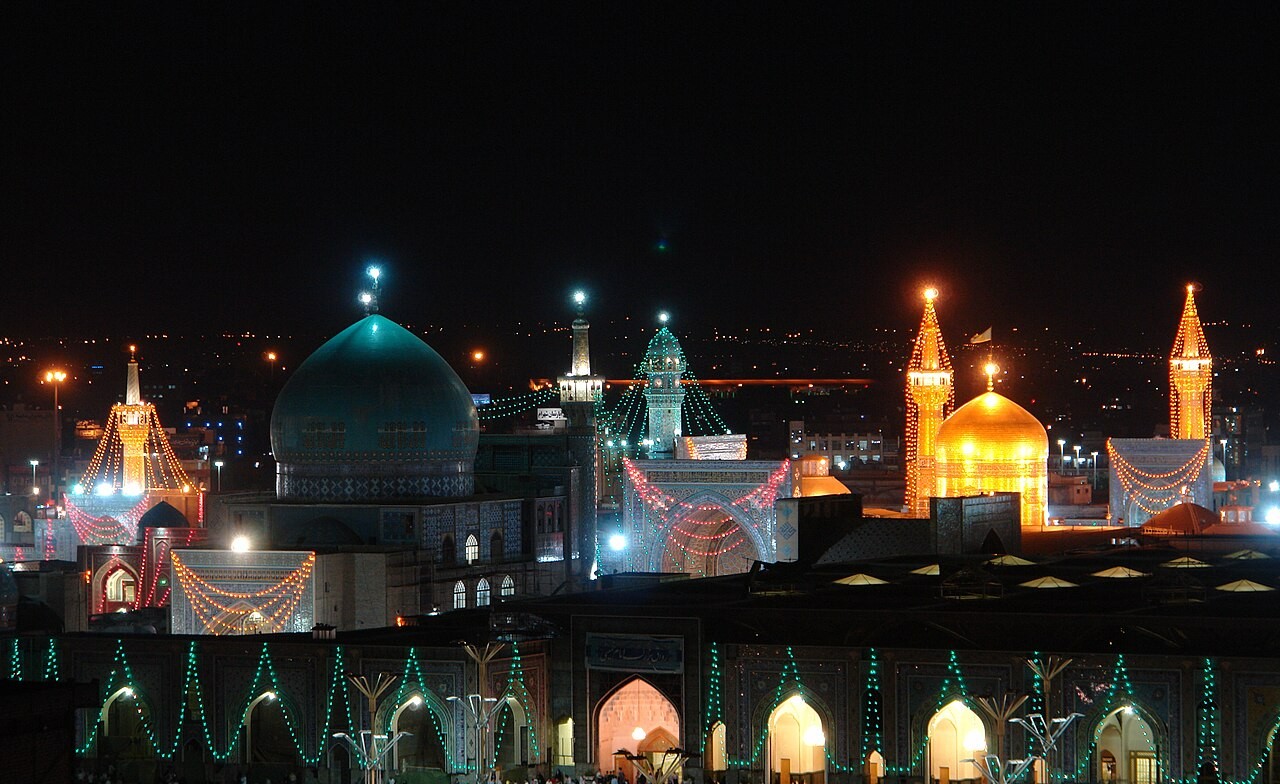
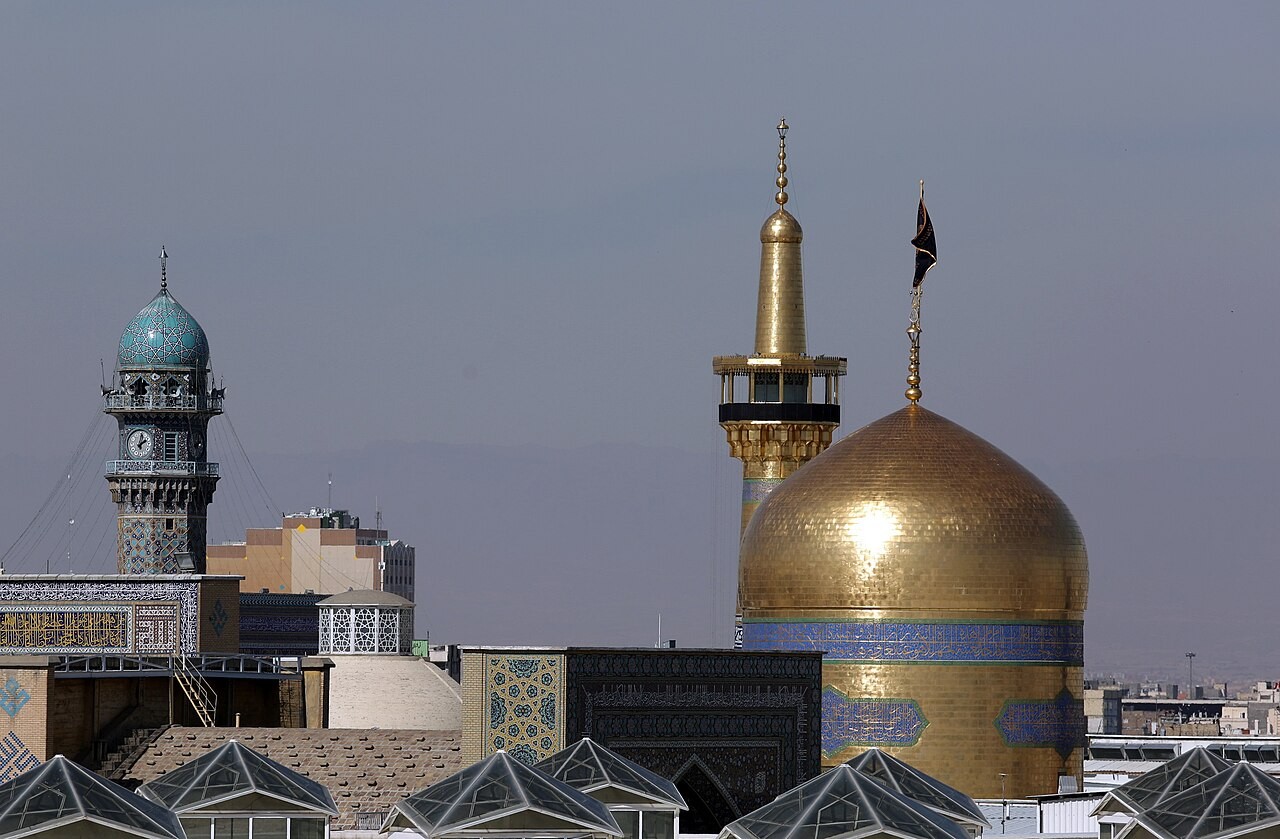
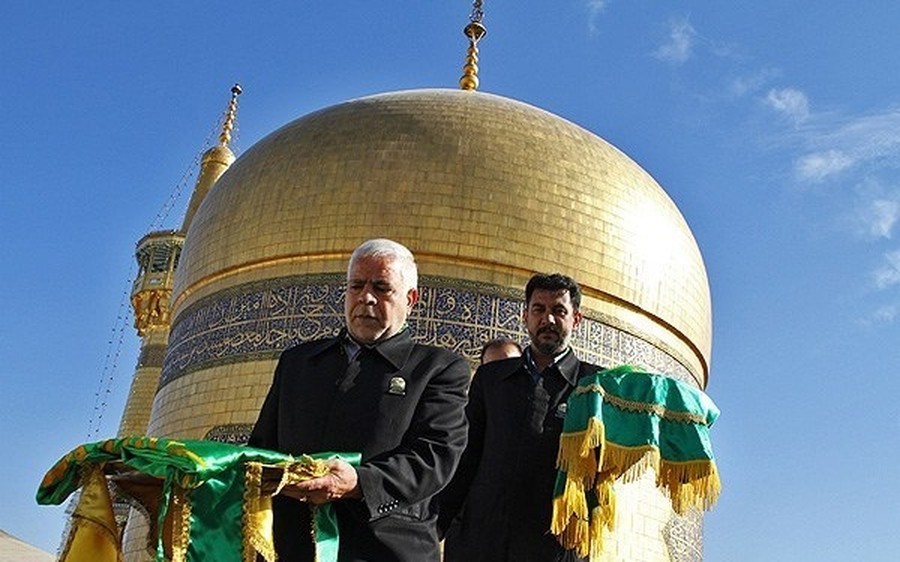
The Haram-e Razavi, usually shortened to the Haram, is the reason Mashhad exists. This is the largest mosque complex in the world by area, a walled city of courtyards, porticos, prayer halls, museums, and libraries built up over more than a thousand years around the tomb of Imam Reza. The architecture spans Timurid, Safavid, Afsharid, Qajar, and contemporary periods, and the golden dome, visible from across the city, is one of the defining images of Iran .
Understanding the layout
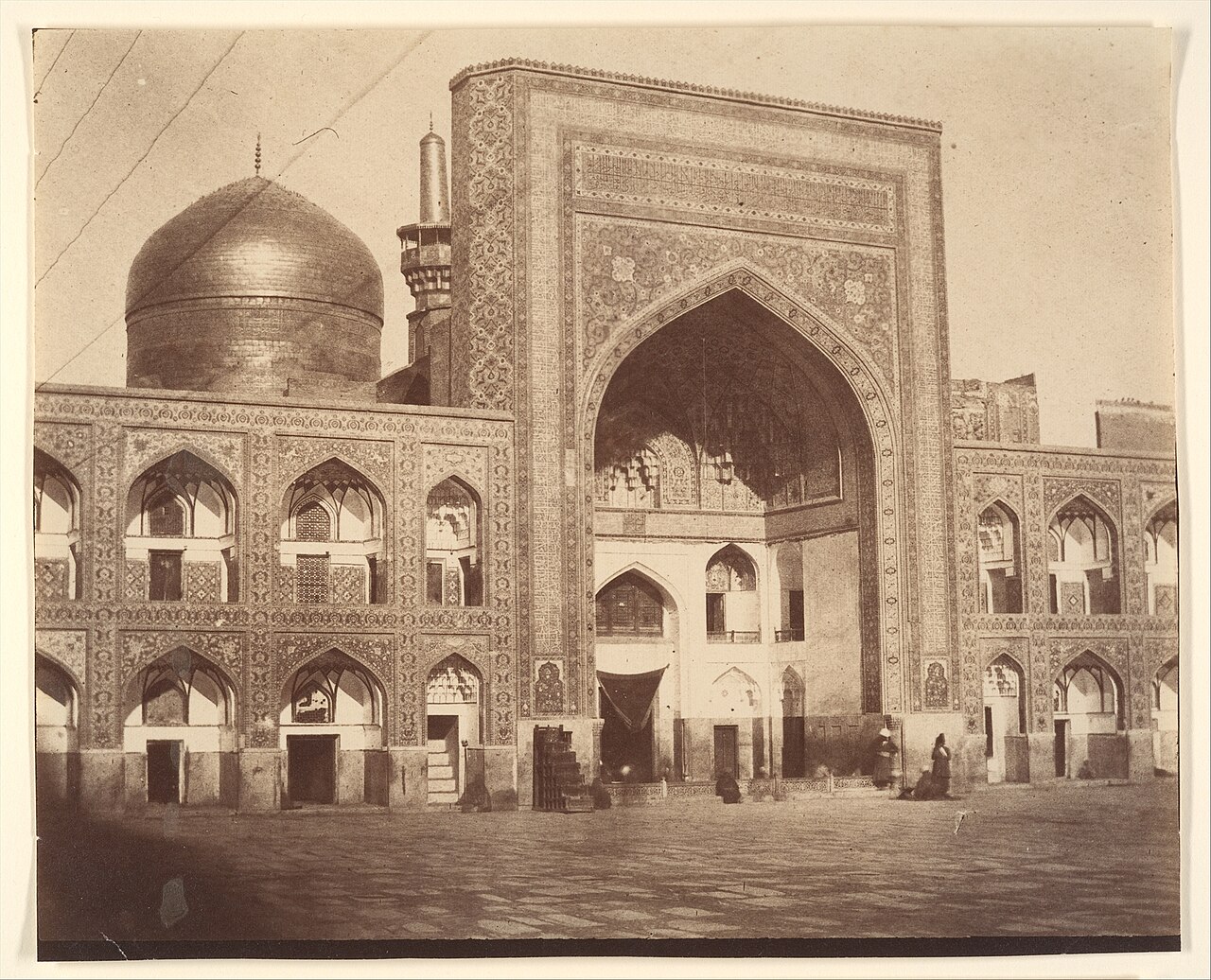
The complex has nine main courtyards, each named after a religious figure or concept. The largest is the Jameh Razavi courtyard, entered directly from Bab al-Reza, the main gate at the end of Imam Reza Street opposite the Reza Bazaar. Other important courtyards include Enqelab, the oldest, which has stood for more than six centuries, and Azadi, which contains the golden Nasseri portico . The Goharshad Mosque, a Timurid masterpiece from the 15th century, stands on the southern side of the complex and is one of the most important historical buildings in Iran.
The shrine itself, the zarih, is at the center of the complex, under the golden dome. The atmosphere around it is extraordinary: pilgrims press forward to touch the lattice, many of them weeping, and the crowd moves in a slow, reverent rhythm. If you are not familiar with Shia devotional practice, it is worth standing back for a few minutes and simply observing before you join the flow.
Etiquette and dress
The Haram is a place of worship first and a tourist site second, and the rules reflect that. Men and women enter through separate gates and are politely searched. Women must wear a chador, the full-length covering; chadors are available to borrow free of charge at most entrances for those who arrive without one . Men should wear clean, conservative clothing, and shorts are not appropriate. Shoes are removed before entering the prayer areas, and bags and large cameras are not allowed inside the complex, though there are left-luggage offices near the entrances . Mobile phone photography is generally tolerated in the courtyards, but be discreet and never photograph people at prayer without permission.
Non-Muslim access
Non-Muslims are allowed into most of the Haram's outer courtyards, but they are not permitted inside the two holiest buildings, the Holy Shrine itself and the Goharshad Mosque, nor in the Enqelab and Azadi courtyards . In practice, access is managed by the shrine stewards, and individual travelers are usually treated with courtesy as long as they dress appropriately and respect the space. If you are unsure where you may go, ask at one of the information kiosks inside the complex; the staff are used to foreign visitors and can point you toward the areas open to you.
What to see inside the complex
Beyond the shrine itself, the Haram contains several museums that are worth a visit. The Central Museum of Astan Quds Razavi holds a collection of Quran manuscripts, historical carpets, coins, and gifts presented to the shrine over the centuries . The Carpet Museum, the Quran and Treasures Museum, and the Anthropology Museum each focus on a different aspect of the shrine's heritage. The Goharshad Mosque, with its Timurid tilework and inscriptions, is a highlight for anyone interested in architecture. The Naqqareh Khaneh, where drums and horns are played at sunrise and sunset, is a tradition that has continued for more than four hundred years .
Bazaars and shopping
The Reza Bazaar, known locally as Bazaar-e Reza, is the main shopping complex near the Haram. Built in the 1970s on the initiative of the provincial government, it is a two-story covered market with 332 shops arranged in six sections . The ground floor is where you will find saffron, dried fruit, barberries, rock candy (nabat), prayer rugs, scarves, and religious clothing. The second floor is quieter and specializes in gold, gemstones, and handicrafts, including turquoise cutting and agate workshops.
The bazaar is busiest at the main entrance from Falakeh Ab Square, which faces the shrine. For a quieter entry, use the 17 Shahrivar side. If you are shopping for saffron, buy from a shop with a visible license and ask for the harvest year; the best saffron in the world comes from this region, and Mashhad is one of the best places in Iran to buy it.
The Mashhad Gold Bazaar is another landmark, particularly for those interested in jewelry and precious stones. Even if you are not buying, the atmosphere of the gold market is worth experiencing, and the craftsmanship on display is impressive.
Food and local flavors
Mashhad's food scene is shaped by its pilgrimage economy: there is an enormous range of restaurants, from simple kebab houses near the Haram to more polished dining rooms in the hotel district. The regional specialty is Shandiz kebab, a large, juicy kebab made from lamb and served with grilled tomatoes and rice. It is named after the mountain town of Shandiz, about 25 kilometers west of the city, where the restaurants are famous for it.
Other local dishes include ash-e reshteh, a thick noodle and herb soup that is especially popular in winter, and various types of kuku, Iranian frittatas made with herbs or vegetables. For dessert, look for saffron ice cream (bastani-e zaferani) and faloodeh, a rosewater and noodle sorbet that is refreshing in summer.
Tea is everywhere, and the chaykhaneh, the traditional teahouse, is still a social institution in Mashhad. Many of the teahouses around the Haram serve tea with nabat, rock candy, and a plate of dates or dried fruit.
Day trips from Mashhad
Tous and the Tomb of Ferdowsi
About 30 kilometers west of Mashhad, in the direction of the ancient city of Tous, lies the tomb of Ferdowsi, the poet who wrote the Shahnameh, the Persian Book of Kings. The tomb is set in a garden designed by the architect Houshang Seyhoun, with a marble plinth and reliefs depicting scenes from the epic . The site also contains a small museum and the graves of the contemporary poet Mehdi Akhavan-Sales and the singer Mohammad Reza Shajarian. It is a peaceful, reflective place, and a good half-day trip from the city.
Nader Shah's Tomb
In central Mashhad, on Shirazi Street, the tomb of Nader Shah Afshar commemorates the 18th-century ruler who briefly restored Persian power and campaigned as far as Delhi. The tomb, built in the Qajar era, is a modest but striking structure, and the adjoining museum displays weapons, armor, and documents from the Afsharid period . It is an easy stop if you are already in the Haram area.
Koh-e Sangi Park
Koh-e Sangi, or Rocky Mountain Park, is one of Mashhad's oldest and most popular recreation areas. It sits on a rocky outcrop in the western part of the city and offers walking paths, a small lake with paddle boats, a traditional teahouse, and panoramic views over Mashhad. The park is especially pleasant in spring and autumn, and the evening lighting makes it a good spot for a relaxed end to the day. Metro Line 2 has a station nearby, and a Mehyar Taxi will get you there quickly from the center.
Shandiz and Torqabeh
The mountain towns of Shandiz and Torqabeh, about 25 to 30 kilometers west of Mashhad, are the city's summer escape. Shandiz is famous for its kebab restaurants and its cool, green setting, while Torqabeh has a more village-like atmosphere with handicraft shops and riverside walks . In spring, the surrounding valleys fill with wildflowers, and in autumn the trees turn brilliant colors. Both are reachable by car or taxi; there is no metro service this far out.
Where to stay in Mashhad
The main decision is whether to stay near the Haram or elsewhere in the city. Hotels within walking distance of the shrine are convenient for pilgrims who want to visit at different times of day, and the area has accommodations at every price point, from five-star hotels to simple guesthouses. The trade-off is that this district is busy and can be noisy, especially during peak pilgrimage seasons.
Hotels further out, in the western part of the city near Vakilabad Boulevard or around Mellat Park, are quieter and often cheaper, but you will need to take a taxi or the metro to reach the Haram. For a first visit with a focus on the shrine, staying close is usually worth it. For a longer stay or a mixed leisure and pilgrimage trip, the western districts offer more space and easier access to the parks and day-trip routes.
Mehyar Hotels lets you filter by distance from the Haram, price range, and amenities, and you can book directly through the app. If you are traveling during a major religious event, book as early as possible; the best-located hotels fill up weeks or months in advance.
Getting around Mashhad
Mashhad has a modern metro system with two operational lines. Line 1 runs from Vakilabad in the west to Shahid Hasheminejad Airport in the southeast, passing through the city center and serving stations such as Mellat Park, Azadi, and Shohada. Line 2 runs from Tabarsi in the north to Reza Town in the south, with stations including Rahahan (Railway), Shohada, and Saadi . Trains run from about 6:00 to 22:00, with frequencies of 4 to 6 minutes on Line 1 and about 10 minutes on Line 2.
For door-to-door travel, Mehyar Taxi is the simplest option. You set your pickup and destination in the app, see the fare upfront, and pay through the Mehyar wallet, so you do not need to carry cash or negotiate. This is especially useful for airport transfers, day trips to Shandiz or Tous, and late-night returns from the Haram.
If you are staying for more than a few days, consider topping up your Mehyar wallet at the start of the trip. It works across taxis, hotels, and other services in the app, and it saves you from hunting for an ATM or a money changer when you would rather be sightseeing.
Practical notes
Money. Iran operates on a cash-based economy for many small transactions, though card payments are becoming more common in hotels and larger shops. The Mehyar wallet is the most convenient way for foreign visitors to pay, as it avoids the need to carry large amounts of cash. You can top up through the app and use it for taxis, hotels, and partner merchants.
Connectivity. A local SIM card makes navigation, translation, and ride-hailing much easier. Mehyar SIM, when available, gives you a data plan that works with the app and local networks. If Mehyar SIM is not available for your dates, a local SIM from one of the Iranian operators is the fallback; airport kiosks sell them, but the queue can be long, so it is worth arranging in advance if you can.
Dress code. Mashhad is a conservative city, and the Haram enforces a strict dress code. Women should carry a chador or a loose, long coat and headscarf at all times, and men should avoid shorts. Outside the Haram, the standard Iranian dress code applies: modest clothing that covers the arms and legs, with a headscarf for women.
Safety and etiquette. Mashhad is generally a safe city, and violent crime is rare. The main things to watch out for are pickpocketing in crowded areas and the occasional pushy seller in the bazaars. In the Haram, follow the instructions of the stewards, keep your voice low, and avoid photographing people without asking.
Language. Persian is the main language. English is spoken in hotels and by younger people in the service industry, but it helps to learn a few phrases. The Mehyar app can help with translation and navigation.
Start your Mashhad trip with Mehyar
Mashhad rewards both the pilgrim and the curious traveler. Whether you come for the Haram, for the poetry of Ferdowsi, or for the mountain air of Shandiz, the city has a way of staying with you long after you leave. The practical side of the trip, from flights and hotels to taxis and payments, is where Mehyar makes the biggest difference. Open the app, set your dates, and let it handle the logistics while you focus on the experience.
If this is your first visit to Iran, our first trip to Iran guide covers the essentials of planning, and our what to wear in Iran article will help you pack appropriately for Mashhad's climate and the Haram's dress code. For a broader look at the capital, see our Tehran guide, and for visa questions, the Iran visa for travelers article walks through the current process.