
Iran is a country of dry plateaus, salt deserts, and mountains that hold snow in winter but almost no rain in summer. And yet, across that landscape, you find walled enclosures where water runs in straight channels, cypress trees stand in long rows, and the air is suddenly cool. These are the Persian gardens, and they are one of the great achievements of Iranian culture.
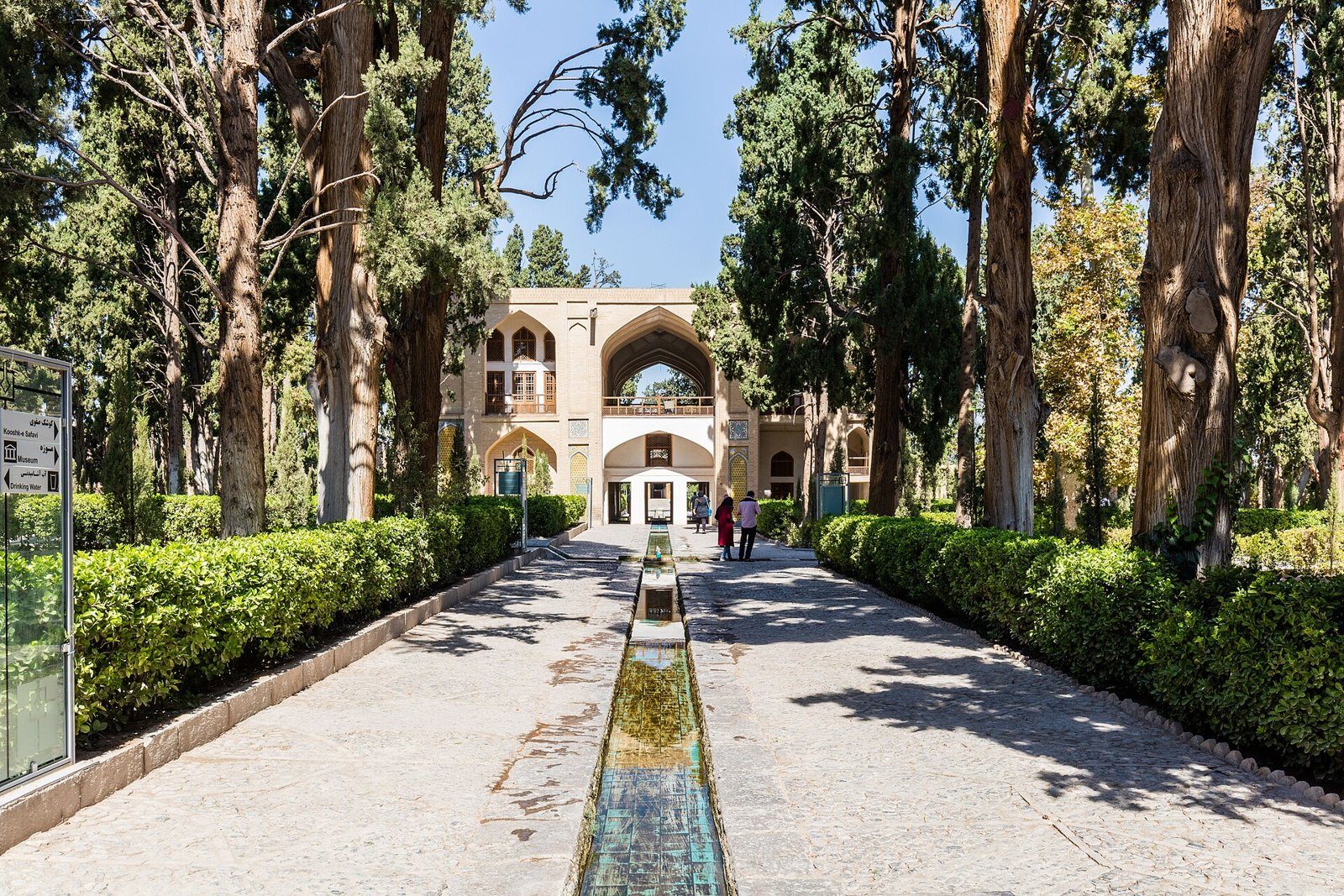
This guide explains what a Persian garden actually is, how the chahar-bagh layout works, and how to visit the nine gardens that UNESCO listed together in 2011 as "The Persian Garden." It covers Fin in Kashan, Eram in Shiraz, Shazdeh near Kerman, Dowlatabad in Yazd, Chehel Sotoun in Isfahan, and the others that belong to the same family. It also explains how to move between them using Mehyar Taxi, so you spend your energy on the gardens instead of on logistics.
What Is a Persian Garden?
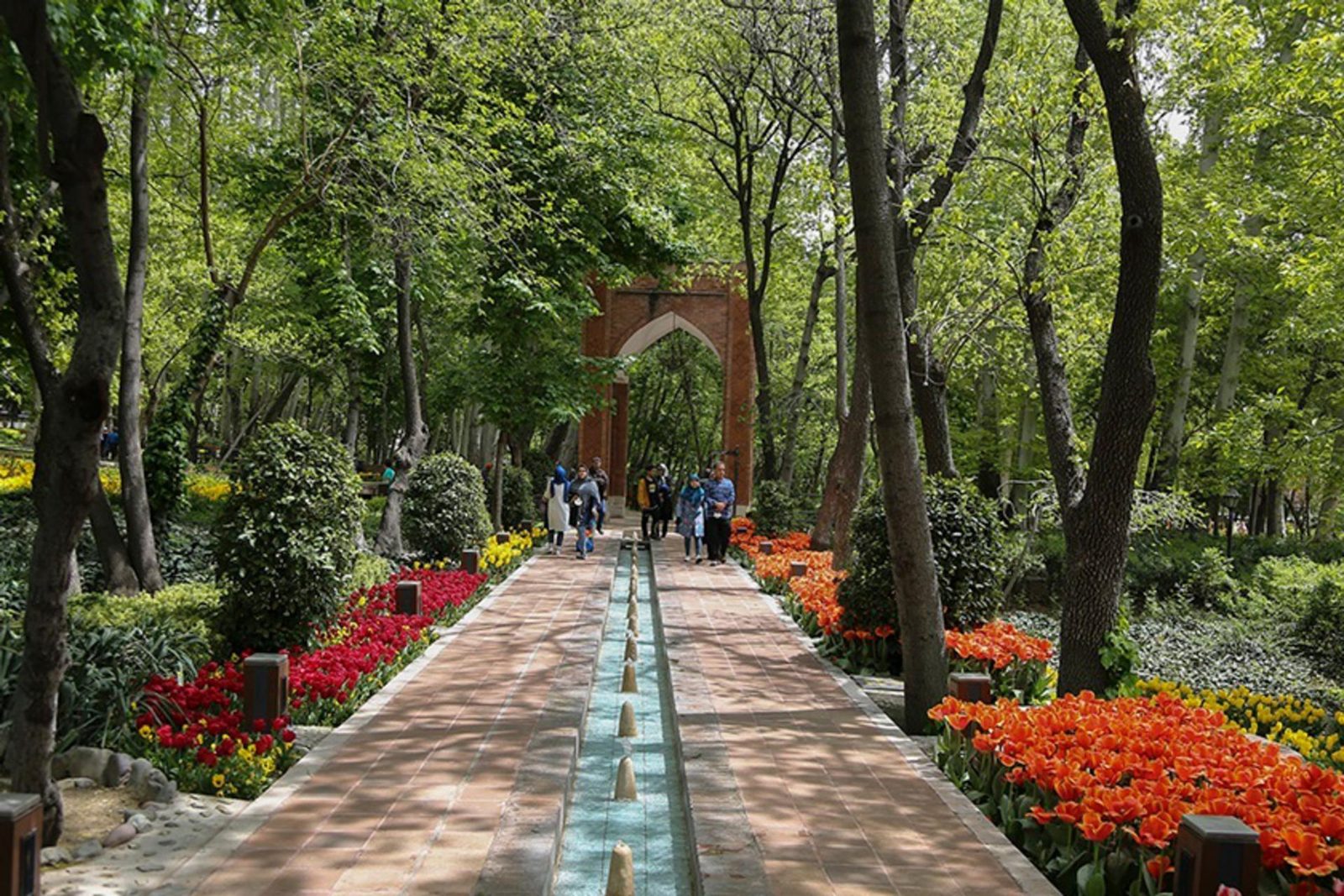
A Persian garden is not simply a park with flowers. It is a designed system with rules. The land is divided by water channels and walkways into geometric sections, usually four. Water is not decoration only; it irrigates, cools the air, and makes sound. Trees are planted in deliberate rows, often cypress for height and fruit trees for shade and harvest. Walls surround the whole thing, separating an ordered inner world from the harsh outer one.
The Persian word behind all of this is pardis, meaning a walled garden or enclosure. It traveled through Greek and Arabic into European languages, and it is the root of the English word "paradise." That is not a poetic coincidence. These gardens were built to represent paradise on earth, and the people who built them said so directly.
The Chahar-Bagh Idea
The organizing principle is called chahar-bagh, which means "four gardens." A main water channel runs one way, another crosses it, and the land is divided into four quadrants. Sometimes the channels are real running water, sometimes they are paved paths, and often they are both together.
The chahar-bagh is not just a practical irrigation plan. In Zoroastrian thought, the garden echoed the four elements: sky, water, earth, and plants. In Islamic tradition, the four-part garden recalled the rivers of paradise. When you walk a chahar-bagh, you are walking through an argument about how the world should be ordered.
The earliest mature expression of this idea is at Pasargadae, the palace complex of Cyrus the Great, built in the 6th century BC. Its royal garden had water channels more than 1,100 meters long, and archaeologists have traced the same fourfold logic that later gardens would refine.
The Nine UNESCO Persian Gardens
In 2011, UNESCO inscribed nine gardens across nine provinces under a single entry called The Persian Garden. The list is not a ranking of the "best" gardens. It is a selection meant to show how one design principle adapted to very different climates, from the Caspian lowlands to the edge of the central desert.
| Garden | City or Region | Era |
|--------|----------------|-----|
| Pasargadae | Pasargad County, Fars | 6th century BC |
| Chehel Sotoun | Isfahan | 17th century |
| Fin | Kashan | 16th century |
| Eram | Shiraz | 13th century, later rebuilt |
| Shazdeh | Mahan, near Kerman | 19th century |
| Dowlatabad | Yazd | 18th century |
| Abbasabad | Behshahr, Mazandaran | 16th century |
| Pahlavanpour | Mehriz, Yazd Province | 19th century |
| Akbarieh | Birjand, South Khorasan | 19th century |
Most travelers cannot see all nine on one trip, because they are spread from the far northeast to the south. A realistic first journey focuses on four or five that sit along the classic route: Kashan, Isfahan, Shiraz, Yazd, and optionally Kerman.
Fin Garden, Kashan: The Oldest Surviving Royal Garden
Fin Garden sits about six kilometers from the center of Kashan, at the end of Amir Kabir Street. It is the oldest surviving royal garden in Iran, with its current main structures built under Shah Abbas I around 1590, then repaired and expanded under later dynasties.
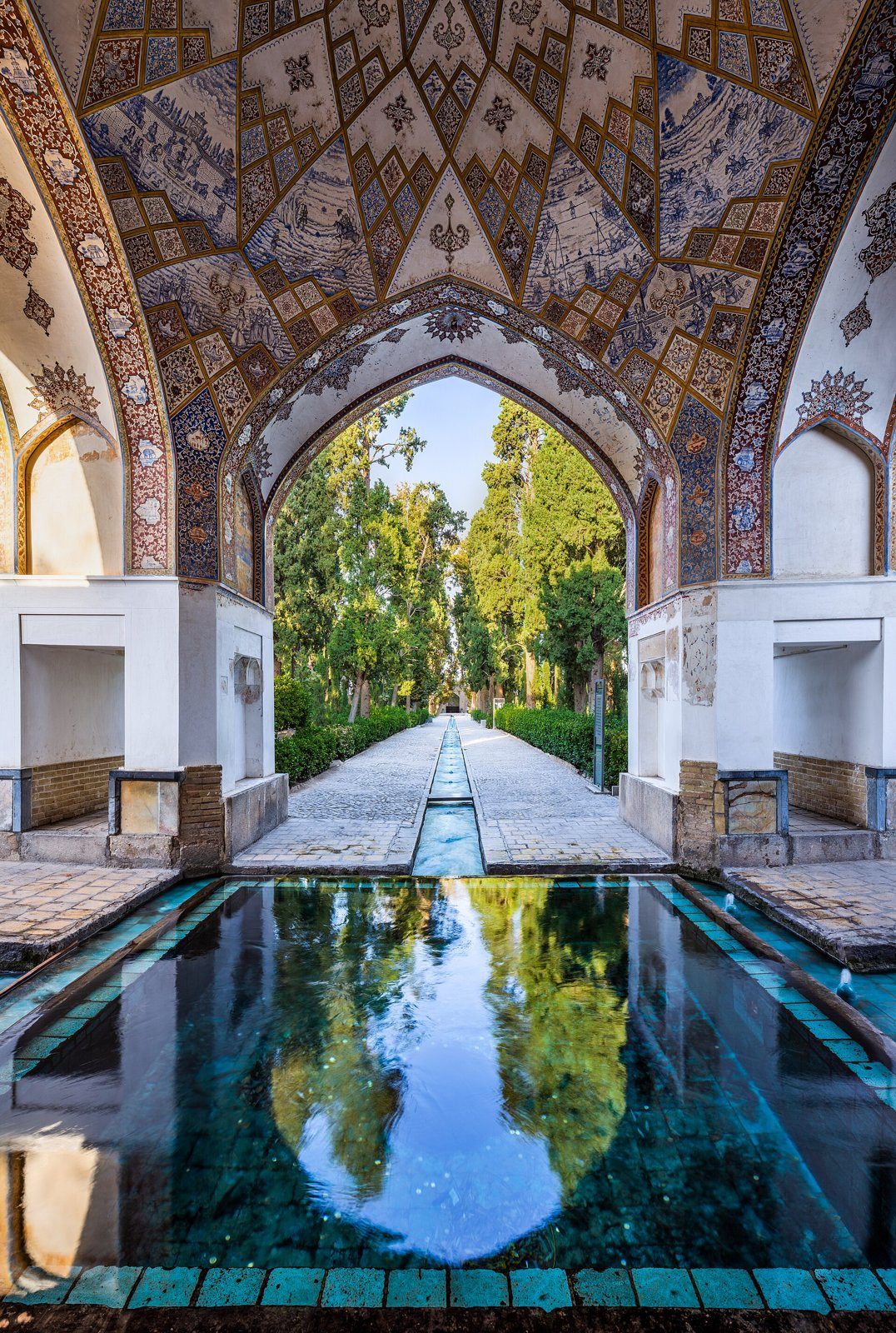
What makes Fin remarkable is the water. The garden draws from the Sulaimaniyah spring on the nearby hillside, and the system uses the slope and underground pressure to feed pools and fountains without pumps. In a city on the edge of the desert, that constant sound of running water is the whole point.
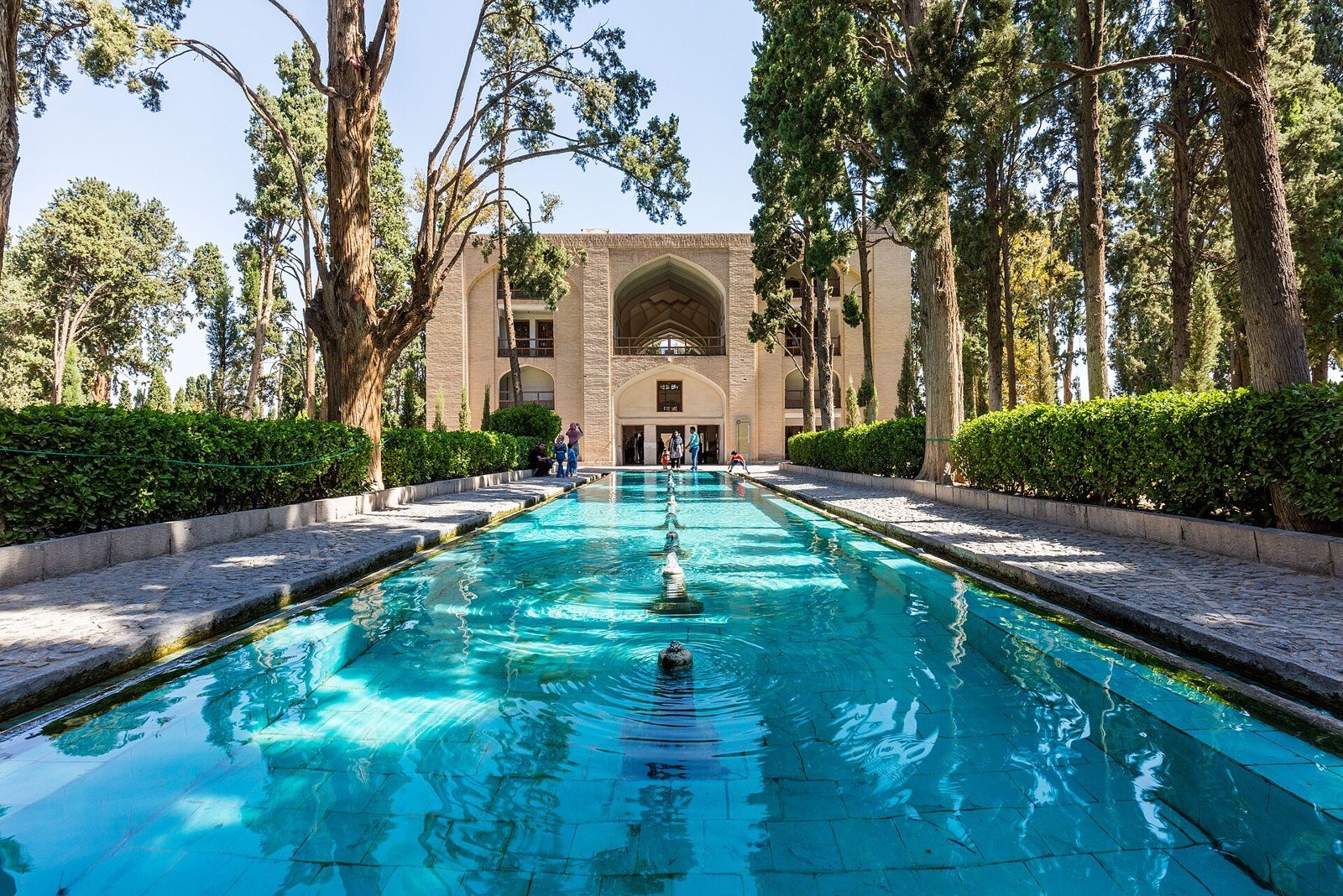
The layout is a textbook chahar-bagh, with a long central channel, rectangular beds, and a two-story pavilion at the center. Cypress and plane trees give heavy shade. The garden is also a site of Iranian political memory: in 1852, Amir Kabir, the reformist prime minister of the Qajar court, was killed in the bathhouse here. The bathhouse still stands, and the spot is marked.
Practical notes. Fin Garden is generally open daily from around 09:00, with closing times that shift by season, often around 16:30 in winter and later in summer. Foreign visitor tickets cost more than local tickets, and prices change, so confirm at the gate or through Mehyar before you go. Allow one to two hours. Sturdy shoes help on the stone paving.
Eram Garden, Shiraz: The Cypress Avenue
Eram Garden lies on Eram Boulevard in Shiraz, close enough to the city center that a taxi ride takes about ten minutes in normal traffic. The name comes from a Persian form of the Arabic Iram, a word associated with a garden of paradise in the Qur'an. The site has a long history, with later construction mostly from the Qajar period and a palace that still anchors the composition.
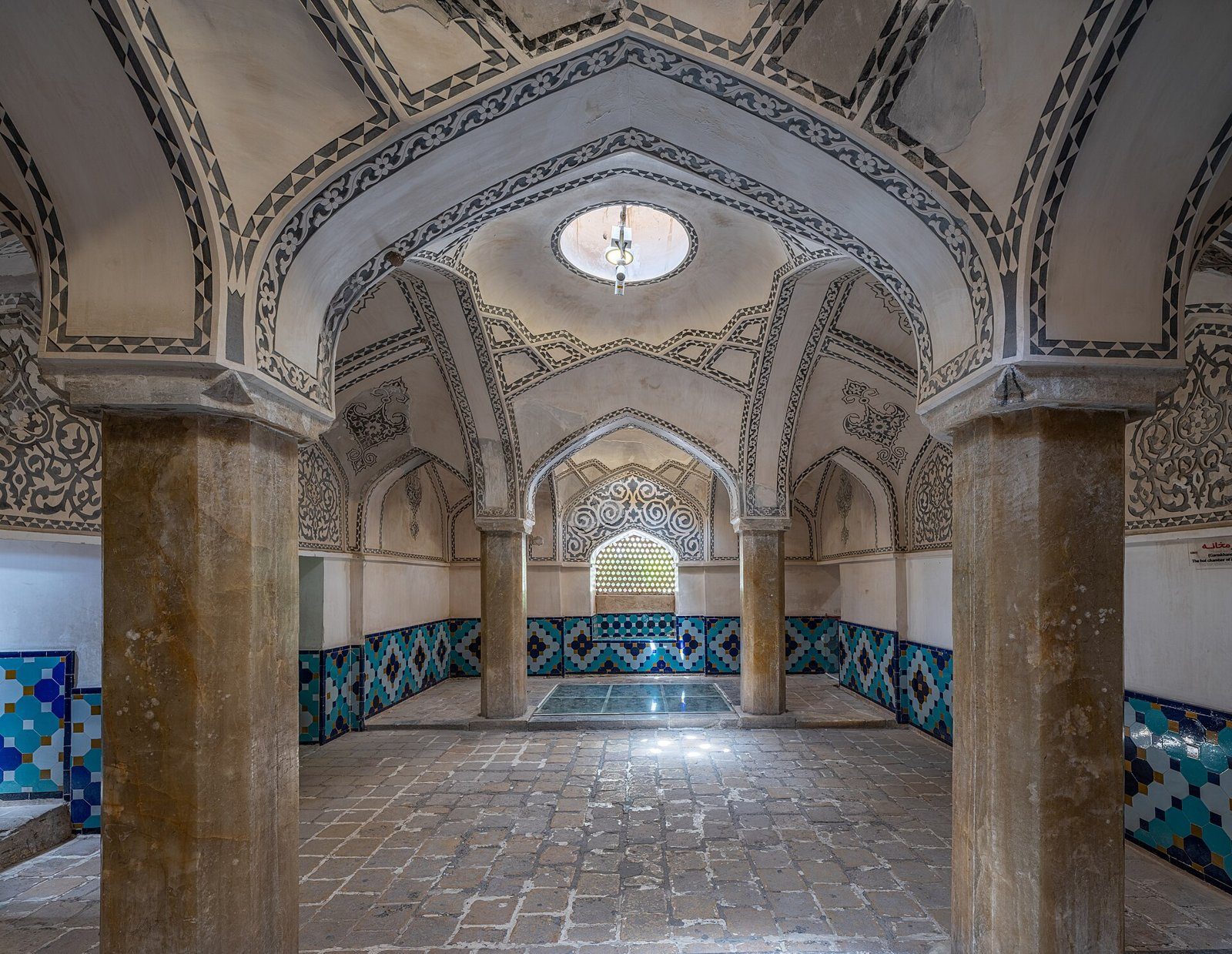
The signature view is the long pool with the palace at the end and tall cypress trees framing everything. The cypress is not random planting. In Persian poetry and garden design, the cypress stands for uprightness and endurance, and the cypress of Shiraz carries its own literary weight.
Eram is a botanical garden as well as a historic one, with a wide range of trees and flowers, and it is managed in part as a research and plant collection site. In spring the roses and citrus blossom are at their best. In autumn the light turns soft and the cypress avenue becomes one of the most photogenic walks in the city.
Practical notes. Eram is usually open from morning until early evening, with hours extending in the long days of summer. Plan on one to two hours. The garden is a UNESCO component, so foreign visitor pricing applies. It combines well with the Nasir al-Mulk Mosque and the Vakil Bazaar in a single Shiraz day.
Shazdeh Garden, Mahan: Water That Climbs
Shazdeh Garden, also called Bagh-e Shazdeh, sits about six kilometers from the town of Mahan and roughly 37 kilometers from Kerman, a drive of about thirty minutes. The setting is pure desert, dry hills and open sky, and then a wall opens onto a green corridor that seems impossible.
The garden was built in the late 19th century under the Qajar period, begun by Mohammad Hasan Khan Iravani and completed under Abdolhamid Mirza Naser ol-Dowleh. Its genius is topographic. The site slopes, and the builders used that slope so the fountains run on gravity alone, with no pumps and no electricity. Water enters at the top, steps down through a series of pools and channels, and irrigates as it goes.
The plan is rectangular, with an entrance pavilion at the lower end and a two-story mansion at the upper end, so the whole garden reads as a single composition leading your eye uphill. Cypress and pine give shade, and the contrast between the green interior and the bare desert outside is the memory most visitors carry home.
Practical notes. Opening hours are usually from morning to around 18:00, with seasonal variation. Foreign visitor tickets apply. Wear shoes with grip, because the paths and steps are uneven. Sunset behind the mountains is the best light. Do not swim or wade in the channels, and check before flying a drone, since permission may be required.
Dowlatabad Garden, Yazd: The Windcatcher Garden
Dowlatabad Garden sits close to the old city of Yazd, a short taxi ride from most central hotels. It was built in the 18th century under Mohammad Taqi Khan Bafghi, the administrator of Yazd, and it is a true traditional Iranian garden rather than a royal showpiece.
The garden is split into two rectangular sections, north and south. Its most famous element is the windcatcher, the badgir, which rises about 33 meters and is often described as the tallest in Iran. The windcatcher catches breezes, pushes them down over a pool inside the pavilion, and cools the building without any mechanical system. In a city where summer temperatures climb hard, this is architecture as survival.
Inside the pavilion you find colored glass windows, carved wood, and detailed plasterwork. The long pool in front mirrors the windcatcher and the pavilion, and the reflection is the photograph everyone wants. Pomegranate and grape vines grow in the garden, chosen for shade and fruit as much as for beauty.
Practical notes. The garden is generally open from morning until late evening, which makes it one of the best gardens to visit after dark, when the pavilion is lit and the air finally cools. Allow about an hour. Combine it with the Yazd old city, the Jameh Mosque, and the water museum.
Chehel Sotoun, Isfahan: The Garden of Forty Columns
Chehel Sotoun stands in the heart of Isfahan, set in a park with a long reflecting pool in front. It was built in the 17th century under Shah Abbas II as a pavilion for receptions and pleasure, and it belongs to the Safavid golden age of Isfahan.
The name means "Forty Columns," and the trick is in the water. Twenty slender wooden columns support the porch, and their reflection in the pool doubles them to forty. It is a small joke that also happens to be a perfect statement of how these gardens use water to multiply architecture.
Inside, the pavilion is covered in frescoes and murals showing court life, battles, and receptions of foreign envoys. These paintings are one of the best surviving records of Safavid court culture, and they are a reason to slow down rather than rush through. Outside, the long water channel, the plane trees, and the flowerbeds carry the classic paradise-garden message: order, shade, and water in a dry land.
Practical notes. Chehel Sotoun is usually open daily with hours that vary by season. Allow one to two hours if you want to read the murals. It is an easy walk or a very short Mehyar Taxi ride from Naqsh-e Jahan Square, so it fits naturally into an Isfahan day.
The Others: Pasargadae, Abbasabad, Pahlavanpour, Akbarieh
Four of the nine are less visited, and each is worth knowing about even if you cannot reach them on a first trip.
Pasargadae, in Fars Province near Shiraz, is the oldest and the most conceptually important. The palace garden of Cyrus the Great is the birthplace of the chahar-bagh idea, and although the original planting is gone, the water channels and the logic remain legible.
Abbasabad Garden in Behshahr, Mazandaran, shows the Persian garden in a completely different climate. Here the problem is not drought but humidity and green abundance, and the garden adapts accordingly. It dates to the 16th century.
Pahlavanpour Garden in Mehriz, Yazd Province, is a 19th-century garden that shows how the tradition continued into the Qajar era in a small-town setting, with the same water discipline and symmetry.
Akbarieh Garden in Birjand, South Khorasan, is also 19th century and sits far to the east, near the Afghan border. It is the hardest to reach of the nine, and it rewards travelers who are already exploring the northeast.
How to Move Between the Gardens
The gardens are spread across Iran, so the honest answer is that you move between cities first, then between gardens and city centers. This is where planning pays off.
For city-to-city travel, open Mehyar and check the options before you decide. For long hops such as Tehran to Kashan, or Isfahan to Yazd, the Mehyar planner and Mehyar Buses can show you schedules, and Mehyar Flights covers the longer legs such as Tehran to Kerman or Shiraz to Tehran. Booking through one app keeps your itinerary in one place.
For the last stretch, from your hotel to the garden gate and back, use Mehyar Taxi. Fin Garden is about six kilometers from central Kashan. Eram Garden is a short ride from central Shiraz. Dowlatabad is a quick hop from the Yazd old city. Shazdeh requires a real drive of about thirty minutes from Kerman, so arrange the taxi as a round trip with waiting time, or ask the driver to return at an agreed hour. Chehel Sotoun is close enough to central Isfahan that the ride is short.
A few habits make this smoother. Save your destinations in the app before you leave the hotel, since garden entrances are sometimes on side streets. Agree on whether the driver waits or returns, especially at Shazdeh and Pasargadae, where finding a new car on the spot can be slow. Carry small cash for tea and snacks near the gates, even if you pay for the ride through Mehyar.
If you prefer a structured approach, the Mehyar planner can hold your garden list as stops in a day-by-day plan, so you are not rebuilding the route each morning.
Visiting Tips That Actually Matter
Timing. Spring and autumn are the best seasons for the desert gardens, with mild days and comfortable evenings. Summer afternoons in Yazd and Mahan are genuinely hot, so visit Dowlatabad in the evening and Shazdeh in the early morning or near sunset. Winter is quiet and often clear, and gardens such as Fin and Eram remain pleasant in the middle of the day.
Tickets. Foreign visitors usually pay a higher ticket price than Iranian nationals, and prices change with inflation. Treat any figure you read online as a rough guide and confirm at the gate or through Mehyar before you build a budget around it.
Dress and etiquette. These are historic and sometimes religious-adjacent sites. Modest clothing is expected, and women should have a head covering available. Do not wade or swim in the water channels, and do not climb on walls or ancient structures. Photography is generally fine, but drones may need permission.
What to bring. Water, a hat, and sun protection for the desert gardens. A light layer for the evening, since desert nights cool quickly. Comfortable shoes with grip, because stone paving and garden steps are often uneven. A little cash for tea, snacks, and small purchases near the entrances.
How long to allow. Fin, Dowlatabad, and Chehel Sotoun work well in about an hour to ninety minutes. Eram and Shazdeh deserve longer, closer to two hours, especially if you want to sit and let the place settle.
Where the Gardens Fit in a Route
A practical first journey that catches five of the nine runs Tehran to Kashan for Fin, then Isfahan for Chehel Sotoun, then Shiraz for Eram and Pasargadae, then Yazd for Dowlatabad. If you have more time, add Kerman for Shazdeh. That route uses the main transport corridors, so Mehyar Buses and Mehyar Flights can cover the long legs while Mehyar Taxi handles the garden runs.
If you start in Shiraz, you can see Eram and Pasargadae before heading north. If you start in Isfahan, Chehel Sotoun and Fin are close together. The order matters less than giving each garden enough time to be more than a photograph.
A Closing Thought
The Persian garden is one of the clearest statements a culture has ever made about what it wants the world to be: ordered, watered, shaded, and enclosed against chaos. Walking through one, you are not just seeing trees and tiles. You are seeing an old and confident answer to the question of how to live well in a hard landscape.
Start with one garden. Open Mehyar, find your taxi, and go early, before the tour groups and before the heat. Then let the next garden pull you onward.
For more on the cities that hold these gardens, see our guides to Isfahan, Shiraz, and Yazd. If you are building a route around the gardens, our Fin Garden guide and our Kerman guide will help you plan the two ends of the journey.