
Shiraz sits in a broad bowl between dry ridges in Fars Province, southern Iran, about 900 kilometres south of Tehran. For centuries travellers have arrived here expecting gardens and poetry, and the city still delivers both without much effort. But Shiraz is also the practical gateway to the Achaemenid world. Persepolis and Pasargadae are day trips from the city, not separate journeys, and most visitors build their whole southern itinerary around this one base.
This guide covers the honest logistics: how to reach Shiraz by air, rail, bus and car, how to move inside the city, which sights deserve your mornings and which deserve your evenings, how to plan the Persepolis day properly, when to come, and how to book each step through Mehyar before you land.
Where is Shiraz, and what makes it different?
Shiraz is the capital of Fars Province and the largest city in southern Iran, with a metropolitan population of well over a million and a half people. It lies at roughly 1,500 metres above sea level, which explains why its summers are hot but rarely coastal-humid, and why its winters can drop close to freezing at night. The city is ringed by mountains: Baba Kuhyi to the north, the Qur'an Gate pass at the north-east exit toward Marvdasht, and the long dry slopes that frame the plain on every side.
The seasonal river that crosses the city, known locally as Khoshk or Haft Pay, runs dry for most of the year and empties toward the Maharlu salt lake to the south-east. This is not a green river city. Its greenness comes from its gardens, which are irrigated, walled and deliberate. Once you understand that, the whole layout of Shiraz makes sense: a dense historic core, a ring of gardens and shrines, and a modern western district of hotels and offices.
What separates Shiraz from Isfahan or Yazd is not just architecture. It is the way the city reads itself. Two of the most important poets in the Persian language, Hafez and Saadi, are buried here, and locals treat their tombs as living places rather than monuments. That tone carries into daily life, and it is the reason many travellers who planned two nights end up staying four.
How to get to Shiraz
By air
Shiraz International Airport, coded SYZ and named Shahid Dastgheib, is the second most developed airport in Iran after Tehran's Imam Khomeini. It has two terminals: one for domestic flights and one for international. Flights from Tehran take roughly one hour and twenty minutes; from Isfahan about one hour; from Mashhad around one hour and twenty-five minutes. The airport sits on the south-eastern edge of the city, and a taxi to the centre normally takes twenty to thirty minutes depending on traffic.
Metro Line 1 reaches Shahid Dastgheib station near the airport, which is the cheapest way into town if you are travelling light. For most arrivals, though, the cleaner option is to open Mehyar, choose Taxi, set the airport as your pickup and your hotel as the destination, and have the fare agreed before you walk out of arrivals. This matters more here than in many cities, because airport taxi pricing can drift depending on the hour and how obviously foreign you look.
By train
Shiraz Railway Station sits about thirty-five minutes by car from the city centre. Trains connect Shiraz with Tehran (around sixteen hours), Isfahan (four to six hours), Mashhad (around twenty-four hours) and Tabriz. The overnight Tehran service is the most popular, and sleeper compartments sell out in advance during holidays. Book through Mehyar so your seat and compartment are confirmed before you commit to the rest of your schedule.
By bus
Karandish Terminal is the main long-distance bus station, on Eastern Saheli Street off Karandish Boulevard. It is well placed relative to both the metro and city bus lines. Buses from Tehran take nine to ten hours, from Isfahan six to seven hours, from Mashhad fifteen to sixteen hours. Iranian intercity coaches are comfortable, with reclining seats and a rest stop, and they remain the cheapest way to cross the country. Reserve through Mehyar Buses, which lets you pick your departure and seat without standing in line at the terminal.
By car
If you are driving, the Tehran to Shiraz route runs about 910 kilometres and takes roughly ten hours without stops. The classic approach is to break the drive in Kashan and Isfahan, which turns the transfer into a proper road trip. From Isfahan the drive is four to five hours. From Bandar Abbas on the Persian Gulf coast it is 579 kilometres, and from Ahvaz about 517 kilometres.
Getting around Shiraz
The city works best when you think in clusters rather than in individual sights, because the distances between clusters are real and the traffic in the centre is slow.
The Zand cluster is the one you walk. Arg-e Karim Khan, Vakil Mosque, Vakil Bathhouse and Vakil Bazaar all sit within a few minutes of each other. Do not try to drive between them. Set aside a full morning, arrive when the bazaar is busy but not overwhelmed, and let the route unfold on foot.
The Qajar and shrine cluster brings together Nasir al-Mulk Mosque, Naranjestan-e Qavam and the Shah Cheragh shrine. This is a half-day or a full day depending on how much time you spend inside the shrine, where entry rules for non-Muslim visitors, dress requirements and photography restrictions change from time to time. Check before you go, and treat the space with the quiet it deserves.
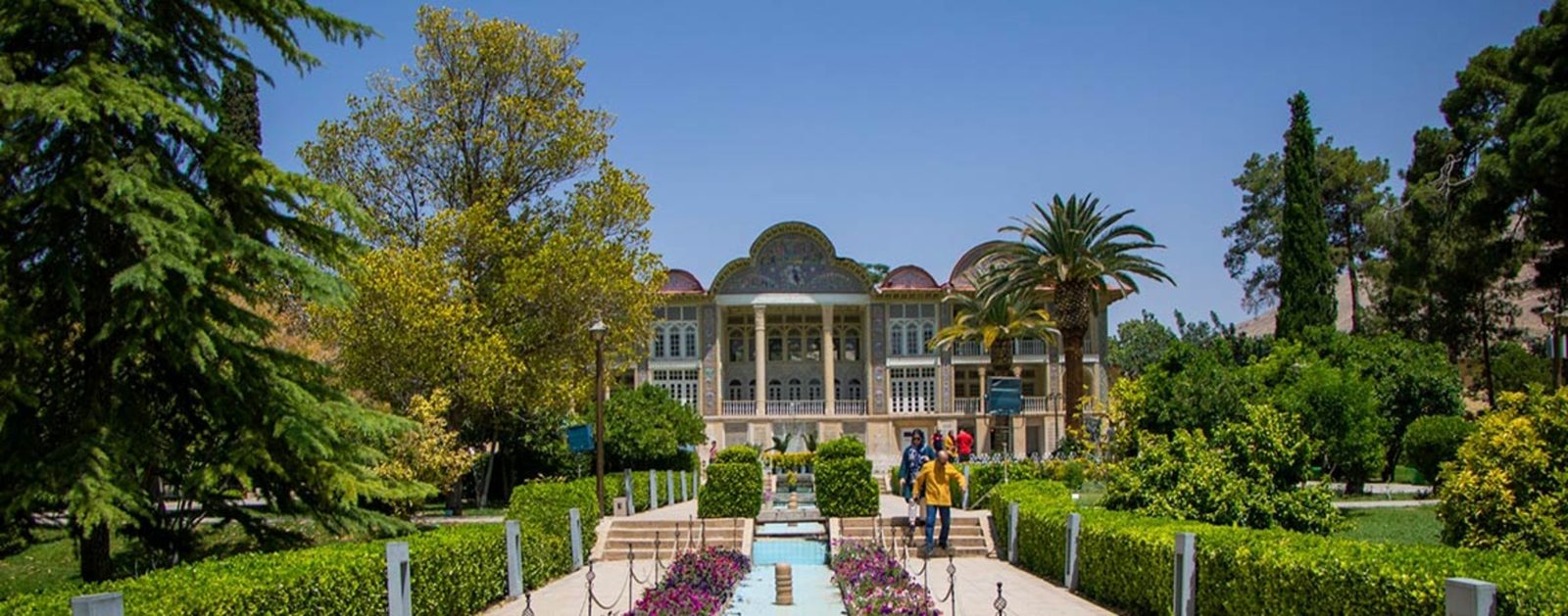
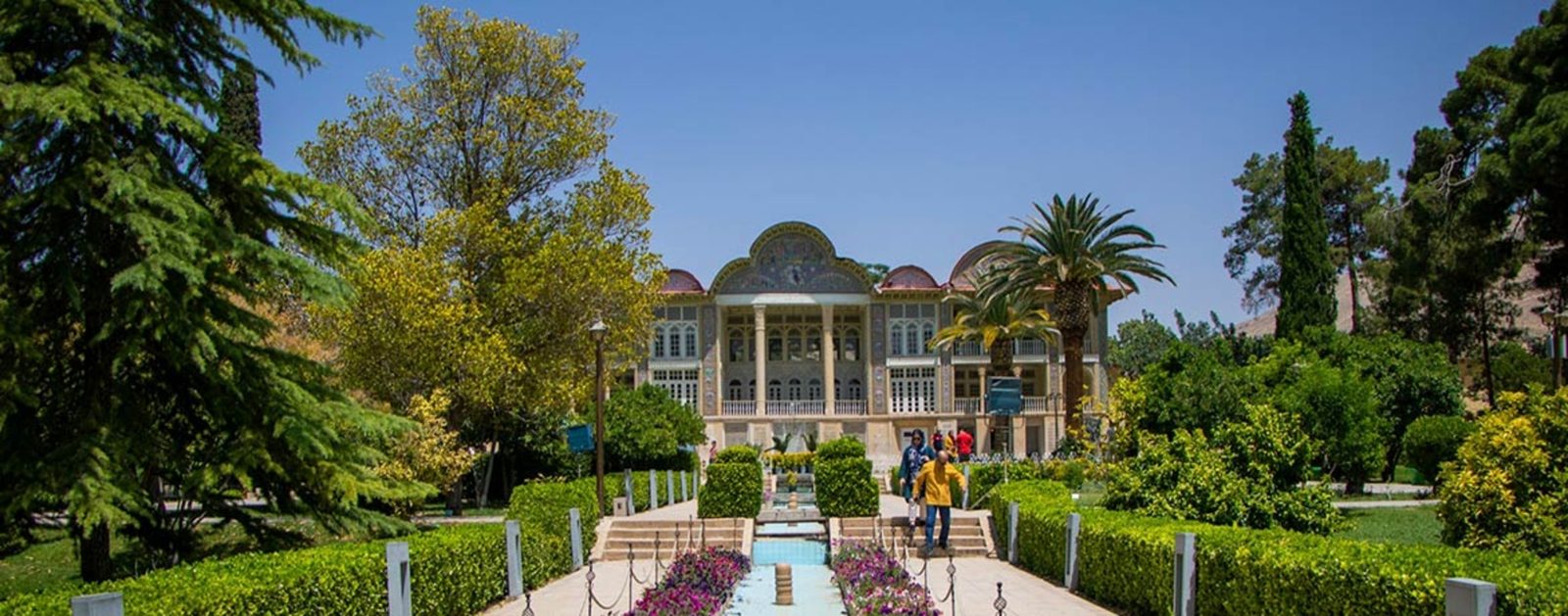
The gardens and tombs cluster is not walkable as one unit. Eram Garden, Hafezieh and Saadieh sit on different axes, and the Qur'an Gate is a separate stop. Give Eram its own slot in the late afternoon, when the light softens and the cypresses throw long shadows across the water channels. Combine Hafezieh with the Qur'an Gate and the small garden nearby in one evening, and treat Saadieh as its own taxi ride.
The Marvdasht cluster is Persepolis and Naqsh-e Rostam, and it is a standalone day. More on that below.
For all of this, Mehyar Taxi is the simplest way to move. Enter your pickup and destination, confirm the fare, and skip the negotiation that otherwise eats into your sightseeing time. Metro Line 1 is useful for long north-south hops, and city buses are extremely cheap, but they will not put you at the gate of most of the sights on your list. For a garden-heavy day, a taxi between stops is not a luxury, it is time saved.
A short history of Shiraz
The name Shiraz appears on Elamite clay tablets found in the region and dated to roughly four thousand years ago, which makes it one of the older continuously referenced place names in Iran. The city as a substantial settlement took shape in the early Islamic period, and by the Zand dynasty in the eighteenth century it became the capital of a large part of Iran under Karim Khan Zand, who built the citadel, the bazaar, the mosque and the bathhouse that still carry his name.
The nineteenth century brought the Qajar buildings that now define the city's image: Nasir al-Mulk Mosque, Eram Garden's central pavilion, Naranjestan-e Qavam and the Afifabad garden. Under the Pahlavi period, Eram was transferred to Shiraz University and Persepolis was excavated and studied in earnest, which is why the site you visit today is legible rather than a field of rubble.
The thread that runs through all of it is poetry. Hafez and Saadi lived in the thirteenth and fourteenth centuries, and Shiraz has been defined by their presence ever since. Even travellers who have never read a line of Persian arrive at Hafezieh and feel the weight of the place, because the visitors around them are not tourists, they are readers.
What to see in Shiraz
Hafezieh, the tomb of Hafez
Hafezieh sits in the north-east of the city, in a garden planted with cypress and citrus. Hafez, born in Shiraz in the fourteenth century, is the most quoted poet in Iran, and his tomb is a place of pilgrimage as much as a monument. Visitors come in the evening, when the light fades and the garden fills with families, students and couples reading aloud.
Opening hours run roughly from eight in the morning until nine at night, extending later on some evenings. The site is compact, and most visitors spend thirty to sixty minutes. Go twice if you can: once in the late afternoon for the architecture, and once after dark for the atmosphere.
Saadieh, the tomb of Saadi
Saadi, born in Shiraz about a century before Hafez, is buried on the north-eastern edge of the city. His mausoleum is quieter and less crowded than Hafezieh, set inside a garden with a pool and a colonnade, and it rewards a slower visit. The tomb sits near a fish pond and a small tea house, and it is a good place to end an afternoon before heading back into the centre.
Nasir al-Mulk Mosque, the Pink Mosque
Nasir al-Mulk Mosque is the single most photographed building in Shiraz, and the reputation is earned. Built between 1876 and 1888 under the Qajar dynasty, it is famous for its stained-glass windows in the main prayer hall, which scatter coloured light across the carpets in the early morning.
To see that effect, arrive before nine in the morning, ideally just after opening. After that the sun moves and the coloured light fades. The mosque is sometimes called the Pink Mosque because of the dominant pink tiles in its decoration. Modest dress is required and is generally available at the entrance for visitors who need it. Photography inside is restricted to phones in some periods, so check the current rules on arrival. Opening hours have been extended into the afternoon in recent years, but they shift with the season and with religious occasions.
Arg-e Karim Khan, the citadel
The citadel of Karim Khan dominates the centre of Shiraz. It was built in the eighteenth century as the ruler's residence, with four circular towers at the corners, one of which leans noticeably. From the outside it looks military. Inside, the courtyard is calm, with sour orange trees and a long reflecting pool that mirrors the tiled facades.
The citadel now functions as a museum, and it is the natural starting point for a walk through the Zand cluster. Give it an hour, more if you linger in the courtyard.
The Vakil complex
Karim Khan's other buildings sit close together, and they are best seen as a single unit.
Vakil Bazaar is the most atmospheric market in southern Iran. Its brick vaults keep the lanes cool in summer, and the corridors are organised by trade, so you walk through sections of carpets, then spices, then copper, then textiles. It is a working market, not a display, and the best thing to do is to wander without a target.
Vakil Mosque, a few steps away, is known for its prayer hall with forty-eight spiralling stone columns carved from single blocks. The tiling, in pink and cream, is among the finest of the Zand period.
Vakil Bathhouse, next to the mosque, has been converted into an ethnographic museum with wax figures that explain how a traditional Persian public bath functioned. It is a good twenty to thirty minute stop and explains a piece of daily life that has almost disappeared.
Eram Garden
Eram Garden is a UNESCO-listed Persian garden on the north-western side of the city, near Shiraz University. It follows the classic Persian garden plan: a long axis, water channels, cypress and orange trees, and a central pavilion at the western end. The pavilion is Qajar in its current form, built for the Nasir al-Molk family, and its tiled facade reflects in the long pool in front of it.
Opening hours typically run from eight in the morning to around eight thirty in the evening, though they shorten in winter and the garden closes on certain religious mourning days. The site is popular, and late afternoon is the most comfortable time to visit.
Shah Cheragh
The shrine of Shah Cheragh is the most important religious site in Shiraz and one of the most visually striking in Iran. It holds the tomb of Ahmad ibn Musa, a brother of Imam Reza, and its interior is covered in mirror work that turns the light into something closer to a mosaic than a reflection.
Non-Muslim visitors are generally admitted in designated areas with a guide, but the rules change, and dress requirements are strict for everyone. Women will be asked to wear a chador, which is provided at the entrance. Photography is limited. This is a working shrine and a place of pilgrimage, so plan around prayer times and behave accordingly.
Naranjestan-e Qavam and the Qajar houses
Naranjestan-e Qavam is a small Qajar-era garden and pavilion with some of the best mirror work and painted ceilings in the city. It is next to the Qavam House, and the two are usually visited together. It sits close to Nasir al-Mulk Mosque, so the three can be combined in one half-day.
The Qur'an Gate
The Qur'an Gate is the historic northern entrance to the city, a stone gateway set into the pass that leads toward Marvdasht. It is a short stop, best combined with Hafezieh and the Tomb of Khwaju Kermani nearby. The pass itself is where travellers historically received their first view of the Shiraz plain, which is where the name comes from.
Persepolis and Pasargadae as day trips
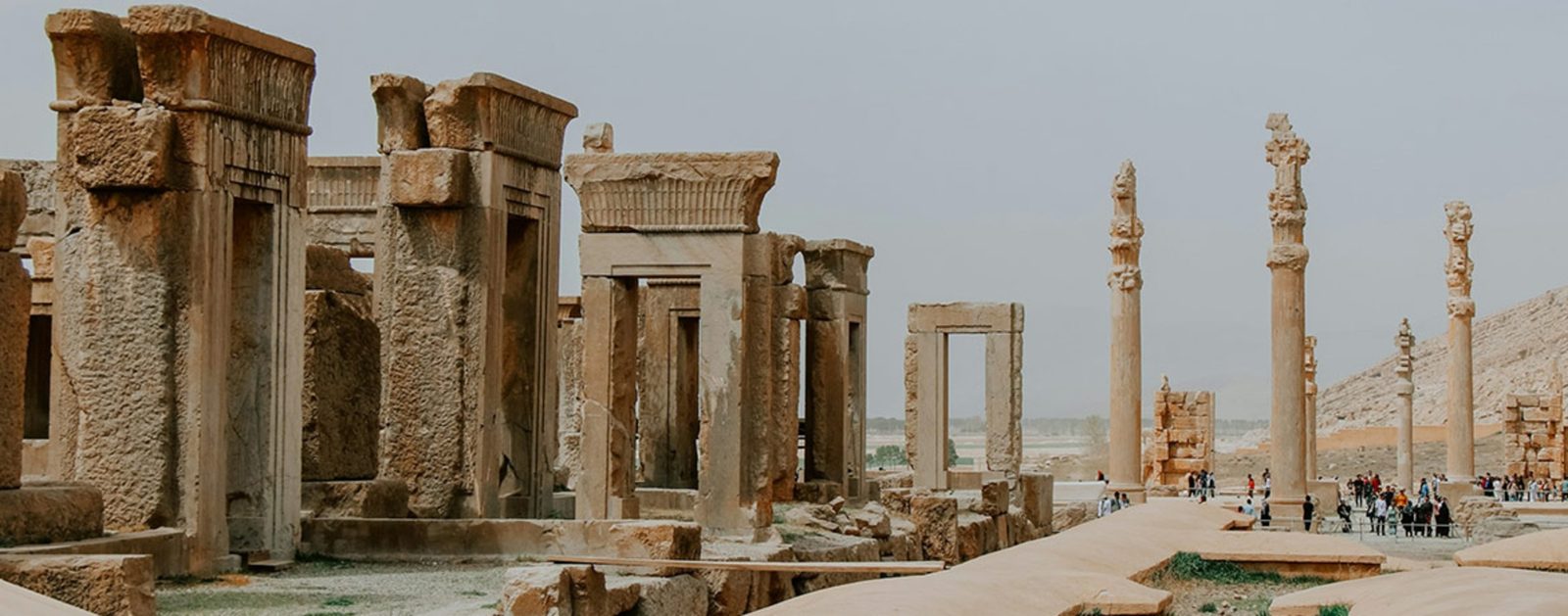
Persepolis sits about 55 to 60 kilometres north-east of Shiraz, near Marvdasht, at the foot of Mount Rahmat. It was begun in 518 BC under Darius I as the ceremonial capital of the Achaemenid Empire, and construction continued for more than a hundred and twenty years under Xerxes and Artaxerxes. It was burned by Alexander's forces in 330 BC, which is why what survives is stone: stairways, column bases, reliefs and gateways rather than roofs and rooms.
To visit properly, allow two to three hours on site, and plan for the day rather than for the visit. The practical options are a private car with driver, a group tour, or your own car if you have one. Public transport will not place you at the gate and then move you to Naqsh-e Rostam and back, so the last mile has to be solved in advance.
The simplest solution is to book a Mehyar Taxi for the full round trip, agreeing the waiting time at each stop before you leave the city. A typical day includes Persepolis, Naqsh-e Rostam with its Achaemenid royal tombs, and possibly Pasargadae, the tomb of Cyrus the Great, which is 130 kilometres from Shiraz and adds considerable driving time. If your interest is Achaemenid history above all else, start very early. If you are travelling with children or older companions, split Pasargadae into a separate day.
When to go
The best months for Shiraz are late March to early May, when the city's orange trees blossom and the gardens are at their peak. The scent of bitter orange blossom in April is the single most memorable thing about spring in Shiraz, and locals plan their evenings around it.
September to early November is the second good window, with mild days and fewer visitors, which makes the bazaars and gardens far more pleasant. Winter is cold at night but clear and quiet, with daytime temperatures in the low teens. Summer is genuinely hot, often above 35°C, and sightseeing has to be pushed into the early morning and late evening.
Climate norms, roughly:
- Spring: highs 17 to 30°C, some rain in March and April
- Summer: highs 33 to 38°C, almost no rain, very dry
- Autumn: highs 19 to 33°C, dry, cooling fast in November
- Winter: highs 11 to 13°C, lows near freezing, more rain
Check the calendar for Nowruz, the Persian New Year around 21 March, and for religious mourning periods, because some sites close or shorten their hours. Rates for hotels and flights spike during Nowruz and the first week of April.
Where to stay
Shiraz has a wide range of accommodation, from international-standard hotels to restored historic houses.
The Zand cluster around the citadel is the most atmospheric area, and staying within walking distance of Vakil Bazaar changes the feel of the whole trip. The area around Hafezieh and the Qur'an Gate is quieter and greener, and it puts you close to the gardens and the northern exit toward Persepolis. The western districts around Ma'ali Abad are newer and more convenient for business travellers and longer stays, with modern hotels and easier parking.
Historic guesthouses in the old quarter are the most characterful option, and several of them occupy restored Qajar houses with courtyards and small pools. Check the exact room layout, whether there is an elevator, and the real walking distance to the nearest metro station or sight before you book, because photographs of a courtyard do not tell you what the stairs are like.
Book through Mehyar Hotels so your reservation is confirmed and documented, and so you can compare location against your sightseeing plan rather than against a map alone.
Practical notes
Currency and payments. Iran operates largely on cash and domestic card systems. Foreign cards generally do not work. The cleanest approach is to top up your Mehyar wallet before you arrive or immediately after, and to use Mehyar Cards for everyday spending. Keep a small amount of cash in rials for the rare stall or rural stop that has no terminal.
SIM and connectivity. Buy a tourist SIM through Mehyar SIM when available, or arrange it at the airport as a fallback. Coverage in Shiraz is good, including 4G in most of the city. Coverage on the Persepolis road is patchy, so download offline maps before the day trip.
Dress and etiquette. Modest dress is required in public, and strict inside shrines and mosques. Women should carry a scarf at minimum and expect to wear a chador at Shah Cheragh. Men should avoid shorts in religious spaces. Photograph people only with permission.
Health and timing. Tap water is generally not recommended for visitors. Pharmacies are widely available. The main practical risk in summer is heat and dehydration, and the main practical risk in winter is cold evenings, so pack accordingly.
Safety and rules that change. Entry requirements, visa rules and site access can shift. Confirm current conditions through official channels before booking, and confirm opening hours on the day, because religious occasions alter schedules with little notice.
A suggested three-day shape
Day one, the Zand core. Arg-e Karim Khan in the morning, then Vakil Mosque, Vakil Bathhouse and Vakil Bazaar, with a long lunch inside the bazaar. Evening at Hafezieh.
Day two, Qajar and the gardens. Nasir al-Mulk Mosque at opening, then Naranjestan-e Qavam and the Qavam House. Afternoon at Eram Garden. Evening at the Qur'an Gate and, if you have energy, back to Hafezieh.
Day three, Persepolis and Naqsh-e Rostam. Leave early with a Mehyar Taxi, spend the morning at Persepolis, the middle of the day at Naqsh-e Rostam, and return to Shiraz by late afternoon. Add Saadieh on the way back in if you still have daylight.
If you have a fourth day, add Pasargadae, or slow down and repeat your favourite garden.
Where to go next
From Shiraz, the classic onward routes are north to Isfahan, which is four to five hours by car or bus, and east to Yazd, which is a longer drive but a natural pairing on a southern loop. If you are building a longer trip, our guide to the seven-day classic loop through Iran shows how Shiraz fits with Isfahan, Yazd and Kashan into a single coherent itinerary. For the Achaemenid sites in detail, see our pieces on Persepolis and Pasargadae.
Start by opening Mehyar and setting up your wallet, then book your hotel, your intercity bus or flight, and your Persepolis taxi day. Everything else in Shiraz is easier once those three are fixed.