
Yazd is the city that taught the desert how to breathe. For more than a thousand years its people have engineered shade, water, and moving air into a way of life, and what they built is still standing, still lived in, still cooling whoever walks through the door. This guide walks you through the old town adobe alleys, the windcatchers that crown the rooftops, the Zoroastrian sites that predate Islam by centuries, and the practical business of getting there, sleeping well, and eating your fill. Open Mehyar before you start, and the planning becomes almost as pleasant as the walking.
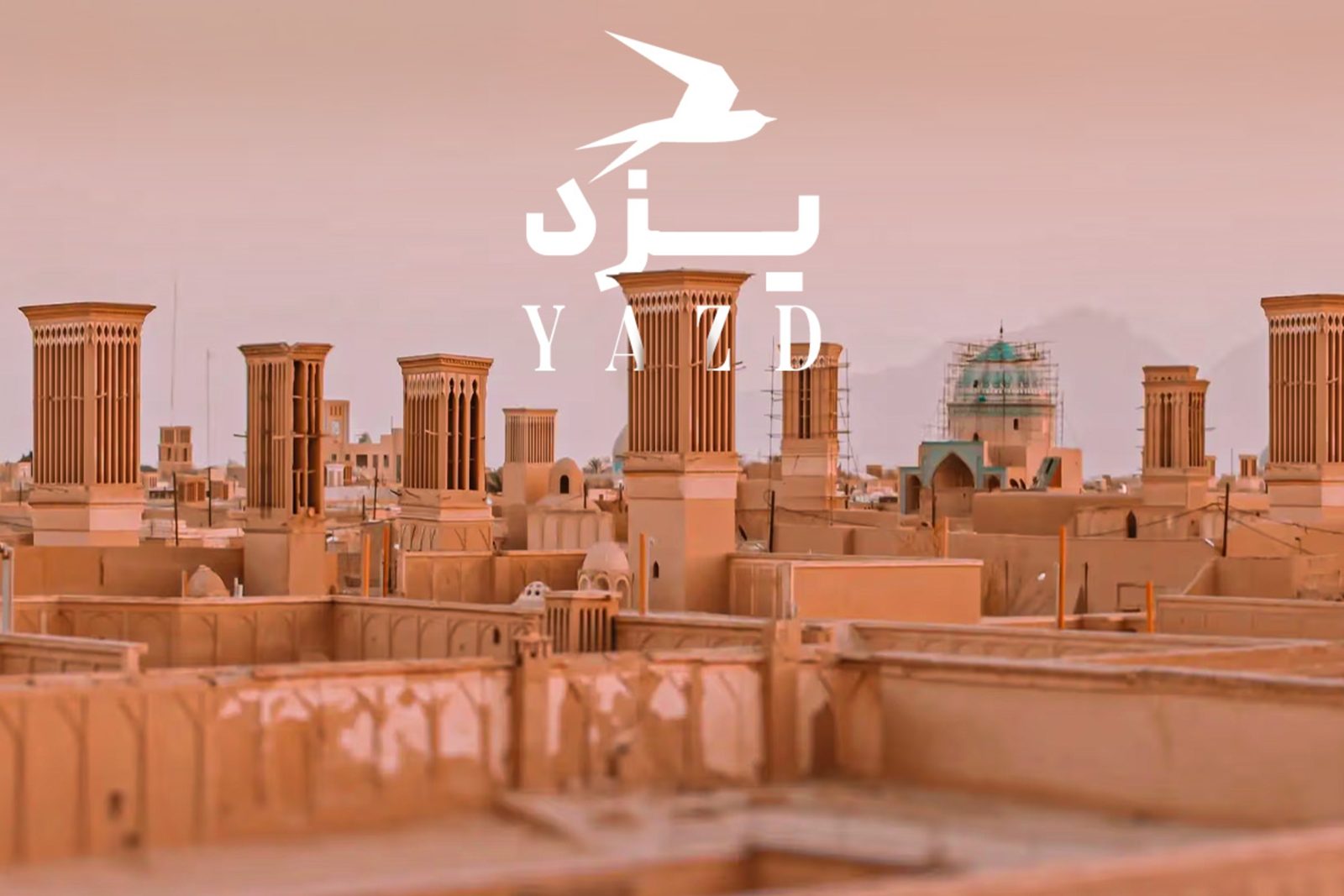
Where exactly is Yazd?
Yazd sits in the heart of the Iranian plateau, roughly midway between Isfahan and Kerman, in a wide dry valley between the Shir Kuh range and the Kharanagh hills. It is the capital of Yazd Province, a sprawl of desert, qanat-fed oasis, and small historic towns such as Meybod, Ardakan, Taft, and Bafq. The old city itself is compact and flat, which is a gift to anyone who likes to walk. The modern city wraps around it in wide boulevards, and just beyond that, the desert begins without ceremony.
How to get to Yazd
By air
Shahid Sadooghi International Airport (AZD) sits about 10 kilometers west of the city center, roughly a 15 to 20 minute drive depending on where you are staying. The terminal is small and easy to navigate, and there are regular domestic flights from Tehran, Mashhad, and Bandar Abbas, plus occasional international services. When you land, the cleanest way into town is to open Mehyar, choose Taxi, set your hotel as the destination, and confirm the fare before you walk out of arrivals. If you prefer to arrange the ride before departure, Mehyar lets you do that too, which is a kindness when you land at an awkward hour.
There is a public bus, line 85, that connects the airport area to the city, but with luggage and desert heat it rarely wins. Official taxis wait outside arrivals and are a fine fallback if your phone is not yet connected.
By train
Yazd railway station is about 10 kilometers from the center, a 15 minute drive, with overnight and daytime services linking Tehran, Isfahan, Kerman, and Bandar Abbas. Iranian trains are comfortable, and a night train saves you a hotel night. Book through Mehyar where available, or at the station if you are already in the country. From the station, Mehyar Taxi is the simplest last mile.
By bus
The Ghadir terminal, the main long-distance bus station, sits about 8 kilometers from the center, a 10 minute drive. Buses run frequently from Tehran, Isfahan, Shiraz, and Kerman. Mehyar Buses lets you compare departures, reserve a seat, and pay in the app, which spares you the small adventure of buying a ticket in a language you do not yet speak.
By car
Yazd is roughly 320 kilometers from Isfahan and about 440 kilometers from Shiraz. The roads are good, the scenery is stark and beautiful, and the drive is best done in the early morning. If you are not renting, a private driver arranged through Mehyar is a comfortable middle path.
A short history of why Yazd matters
Yazd has been continuously inhabited for a very long time, with roots reaching back into the pre-Islamic era and a location on the old routes that connected Ray to Kerman and Pars to Khorasan. Zoroastrians settled here in large numbers after the Arab conquest, and their presence shaped the city's character as much as the desert did. Later, under the Atabakans, the city grew into a regional capital, and in 2017 UNESCO inscribed the historic city on the World Heritage list for its earthen architecture and living urban fabric. It is often described as the world's first raw brick city and one of the oldest continuously inhabited historic cities anywhere.
What to see in Yazd
The old town and its adobe alleys
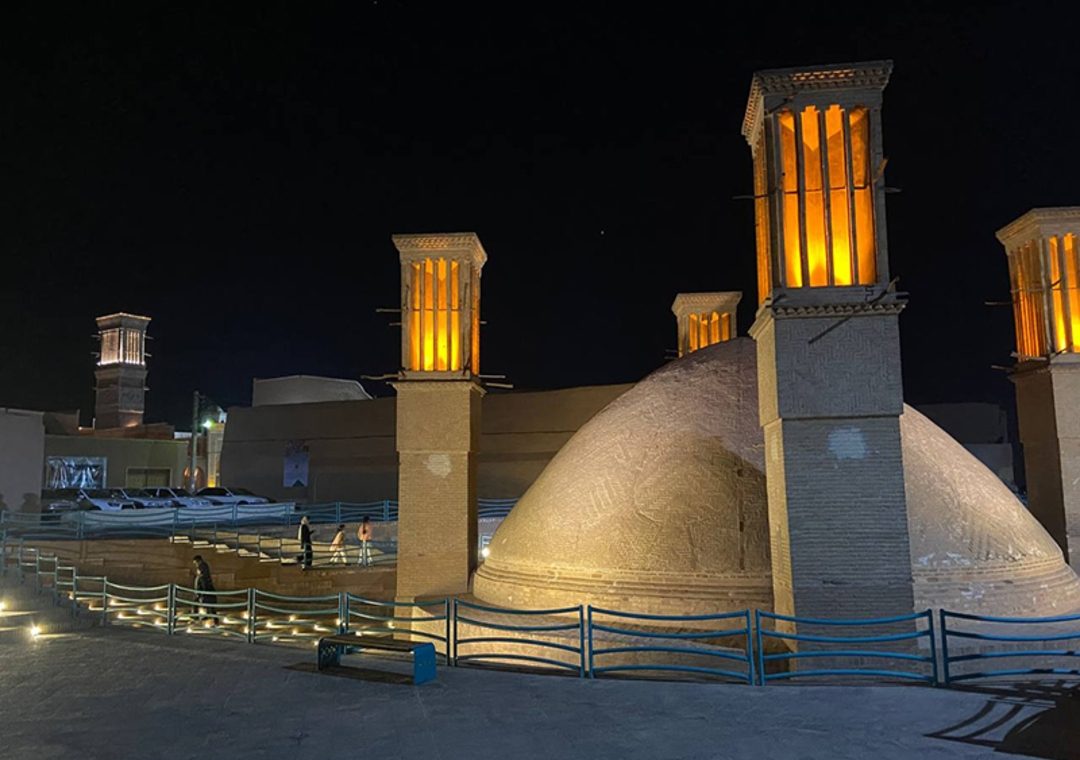
The historic fabric is the main event, and it does not charge admission. You walk. You get slightly lost. You find a doorway with a curved brick arch, a shop selling rosewater, a courtyard where a fig tree leans over a small pool. The alleys are deliberately narrow and shaded, and many of them are covered, so even a July afternoon becomes bearable. Look up: the rooflines are broken by badgirs, the windcatchers that catch whatever breeze exists and funnel it down into the rooms below.
Jameh Mosque of Yazd
The Jameh Mosque is the city's great architectural statement, crowned by minarets that rank among the tallest in Iran and a portal covered in deep blue tilework that seems to drink the desert light. Much of what you see was built and rebuilt across the Seljuk, Ilkhanid, and Timurid periods, and the interior is cool, dim, and quietly enormous. Non-Muslim visitors pay a small entry fee. Wear something that covers shoulders and legs, and women should have a scarf.
Amir Chakhmaq Complex
Amir Chakhmaq is the image most people carry home from Yazd: a symmetrical facade of recessed arches, built in the Timurid period in the 15th century, anchored by a takyeh, a mosque, a bazaar, and a water reservoir. It is at its best after sunset, when the lighting turns the brickwork amber and the square fills with families and tea drinkers. The complex sits on Imam Street and is easy to reach on foot from most old town hotels.
Zoroastrian sites
Yazd is the spiritual heart of Iranian Zoroastrianism, and the sites are treated with real reverence.
The Atash Behram, the Fire Temple, houses a flame that has been burning for more than 1,500 years. It is a small, calm building with a peaceful garden, and the symbol of Ahura Mazda above the entrance. Entry is modest and the atmosphere asks for quiet.
The Towers of Silence, or dakhmeh, sit on a low hill about 15 kilometers southeast of the city. These circular stone structures were used for sky burials, in which the deceased were placed to be returned to the elements rather than to the earth. The practice is no longer followed, and Zoroastrians in Yazd now bury their dead nearby. The walk up gives you a wide view over the city and the desert edge, and the site deserves the same quiet you would bring to any cemetery.
Dowlat Abad Garden
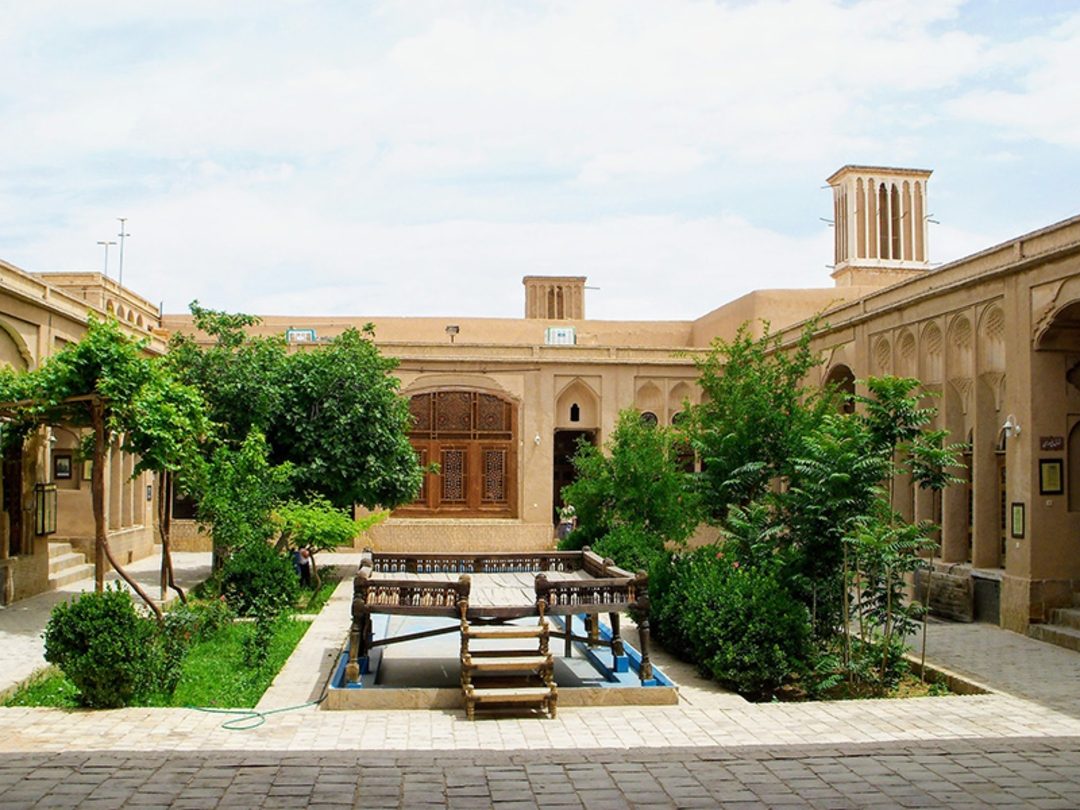
Dowlat Abad is a classic Persian garden with the tallest adobe windcatcher in the world, built in the Afsharid and Zand periods. Water channels, pomegranate and grape trees, and a mirrored hall make it the coolest place in the city on a hot afternoon. It is a short taxi ride from the center and pairs naturally with a stop at the Water Museum.
Water Museum and qanats
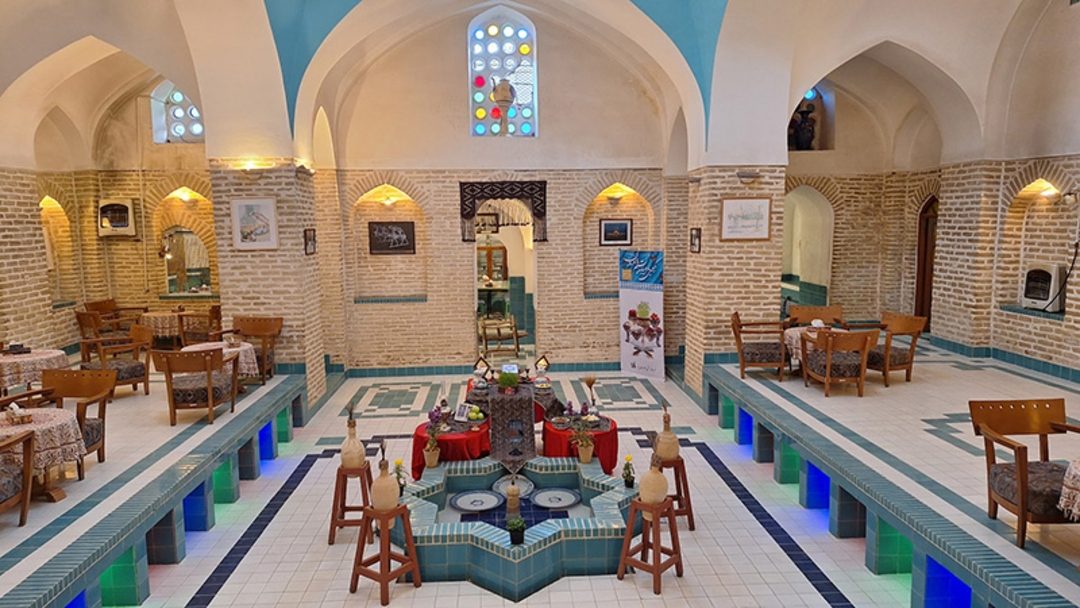
The Water Museum, housed in a restored merchant house, explains the qanat system that made life here possible: underground channels that carry water from distant aquifers, sometimes tens of kilometers, without losing it to evaporation. It is one of the few places where you can descend into the infrastructure itself and understand why Yazd exists at all.
Bazaars and the Khan complex
The Khan complex brings together a square, a long bazaar, and a historic bathhouse, most of it from the Qajar period. The Gold Bazaar, about 94 meters long with a vaulted ceiling and skylights, is a lovely short walk, and the wider bazaar is the place to buy termeh cloth, zilu weavings, pottery, and sweets.
Hours, tickets, and money
Most historic sites in Yazd keep daylight hours, roughly 08:00 to 19:00, with some variation by season, and the garden and mosque sites sometimes stay open later in summer. Prices change and are quoted in rials, so treat any figure you read as indicative and confirm on the day. Entry fees are modest by international standards, and several sites offer combined tickets.
For paying, do not rely on your home bank card. Open Mehyar, use the wallet and top-up features, and keep a tourist card loaded for daily spending. This lets you pay for taxis, tea, entry tickets, and small purchases without hunting for cash, and it is the smoothest path we have found for visitors. A reputable exchange office remains a reasonable fallback for topping up, and you should still carry a small amount of cash for the rare shop that has not gone digital.
When to go
Spring and autumn are the sweet spots. April, May, October, and November bring daytime temperatures that invite long walks, cool evenings, and clear skies. September and early October are especially lovely, and the light at that time of year flatters the brickwork.
Summer is genuinely hot, with July averages around 35°C and afternoons that push higher, though the dry air and the shade of the old town make it more manageable than the numbers suggest. If you come in summer, do your sightseeing early and late, spend the middle of the day in a garden or a museum, and drink far more water than you think you need.
Winter is cold at night and mild by day, with occasional rain. It is the quietest season, and the low sun on the mud walls is beautiful. Snow is rare in the city but does fall on the surrounding mountains.
Where to stay
The best way to experience Yazd is to sleep inside the historic fabric. Traditional courtyard houses have been converted into guesthouses and boutique hotels, with thick adobe walls that hold the cool, central pools, and rooftops where you can take tea and watch the sun drop behind the minarets. Fahadan and the lanes around the Jameh Mosque are the most atmospheric areas, and most of the main sights are within walking distance.
Open Mehyar, choose Hotels, and filter for the old town if that is what you want. Booking ahead matters in spring and autumn, when the best courtyard properties fill up.
Food and drink
Yazdi cooking is shaped by the desert: sweet, tangy, and built for hot days. Try qeymeh Yazdi, a lamb stew with chickpeas and dried lime, and shuli, a thick soup of beets, lentils, and vinegar. The sweets are famous for good reason, especially qottab, a small fried pastry filled with almond and cardamom, and the local baklava. Wash it down with doogh, the salty yogurt drink that does what no soda can in 38 degrees.
Tea is a ritual here, and a rooftop cafe with a view of the Jameh Mosque minarets at dusk is worth planning your evening around.
Desert edge and day trips
Yazd is a natural base for the desert. Local operators run trips to the dunes for sunset, camel rides, stargazing, and 4x4 driving, and the night sky out there is genuinely extraordinary. If you want to stay overnight, the Zein-o-Din Caravanserai on the Meybod to Anar road is a restored 16th-century stop that won a UNESCO award for its restoration and now operates as an inn.
Chak Chak, the Zoroastrian pilgrimage shrine set into a cliff, is a memorable half-day trip, and the annual pilgrimage draws Zoroastrians from across Iran and beyond. Meybod, about 50 kilometers north, has the Narin Castle and a remarkable adobe ice house. Kharanagh, roughly 75 kilometers away, is a thousand-year-old village with a castle and a caravanserai that has been restored for overnight stays.
Getting around Yazd
The historic core is walkable and flat, and walking is the right way to see it. For anything further, open Mehyar, choose Taxi, and set your destination. Rides are short and affordable, and the app handles the fare so you are not negotiating in the heat. Bicycles are popular with locals and there are rental options, though traffic in the newer parts of the city takes some nerve.
Practical notes
Dress modestly, with shoulders and knees covered, and women should carry a scarf for mosques and shrines. Tap water is generally not recommended for visitors; bottled water is cheap and everywhere. The sun is serious year round, so bring a hat, sunglasses, and high-factor sunscreen. Pharmacies are well stocked and staff are helpful.
Connectivity is easy: pick up a tourist SIM on arrival, or arrange one through Mehyar SIM where available, and you will have data for maps, translation, and the app itself. This also unlocks the digital side of the tourist card, including balance updates by message, which is a genuinely useful thing when you are splitting a bill at a courtyard restaurant.
For anything beyond Yazd, Mehyar is the planning spine: Flights if you are flying on to Shiraz or Mashhad, Buses for the overland legs, and Hotels for every stop. The Planner pulls it together into one itinerary you can actually follow.
A last word
Yazd rewards slowness. Give it two full days at minimum, three if you want a desert night and a day trip. Walk without a destination for an hour. Sit on a rooftop at sunset. Let the city set the pace, because it has been doing this for a very long time and it is very good at it.
When you are ready, open Mehyar and start with the old town: a courtyard room, a taxi from the airport, and a wallet that works. Everything else follows.
If your trip continues west, our guide to Isfahan is the natural next chapter, and the classic seven-day Iran loop puts Yazd in context with Shiraz and the Persian Gulf coast. For the desert itself, Varzaneh is the other name worth knowing.