
In the center of Tehran, on the eastern side of Baharestan Square, rises a grand Qajar-era mansion that witnessed the birth of Iran's constitutional democracy. Baharestan Mansion, known locally as Emarat-e Baharestan, served as the seat of the National Consultative Assembly for much of the twentieth century and today functions as the Tehran Municipality building. Visitors who step through its entrance enter a layered story of architecture, revolution, fire, and resilience that stretches across more than 150 years of Iranian history.

Where Is Baharestan Mansion?
Baharestan Mansion occupies the eastern face of Baharestan Square on Mostafa Khomeini Street in central Tehran, within District 12 of the municipality. The address places it within walking distance of Imam Khomeini Square and the historic core of the capital. The surrounding neighborhood, also called Baharestan, was once on the northeastern edge of old Tehran, but decades of urban growth have placed it firmly in the city center.
The square itself is surrounded by other important buildings, including the National Arts Museum and the Masoudiye Mansion, making this a rewarding area for a walking tour of Qajar and Pahlavi-era architecture.
A Brief History of the Mansion
The story of Baharestan Mansion begins in 1871, when Mirza Hossein Khan Sepahsalar, one of the most powerful prime ministers under Naser al-Din Shah Qajar, commissioned the construction of a grand palace and garden on this site. The complex covered roughly five hectares and included the main mansion, gardens, a school, a mosque, and a reservoir. Sepahsalar intended the complex to be a center of cultural and political life in Tehran.
After Sepahsalar's death, the Qajar state took control of much of the property. Following the Constitutional Revolution of 1906, the mansion was chosen as the home of the newly formed National Consultative Assembly. From that point until the Islamic Revolution of 1979, twenty-four sessions of the Iranian parliament convened within these walls. The building survived cannon fire in 1908, when Mohammad Ali Shah Qajar ordered the Russian-led Cossack Brigade under Colonel Liakhov to shell the parliament, an event known in Iranian history as the Bombardment of the Majlis.
The building suffered three major fires over the decades. The first came in 1883, the second in 1932, when the roof of the private session room collapsed, and the third and most devastating in 1995, when an electrical fault gutted much of the western wing. Restoration work after the 1995 fire followed the original Qajar plans and took several years to complete. In 2005, the restored building was converted into the Parliament Museum.
In 2017, Baharestan Mansion was struck again when terrorists affiliated with ISIS attacked the parliamentary complex. The assault was repelled, but the event reminded the nation of the building's enduring place in Iran's political life.
Architecture and Design
The architectural style of Baharestan Mansion blends traditional Iranian and Islamic motifs with European Neoclassical elements, creating a distinctive Qajar hybrid that scholars consider a fine example of late nineteenth-century Persian civic architecture. The southern facade draws on Neoclassical design, while the northern facade features decorative elements inspired by Achaemenid column capitals. The result is a building that looks simultaneously eastward and westward.
The chief architect was Mirza Mehdi Khan Shaghaghi, known as Momtazen al-Dowleh, who is regarded as the father of modern Iranian architecture. He also worked on the Sepahsalar Mosque, the Bagh-e Ferdows, and the Moghaddam Mansion in Bojnord. The renowned mirror hall, or Talar-e Ayeneh, was crafted by Master Jafarkhan, one of the most celebrated builders of the era.
What to See Inside
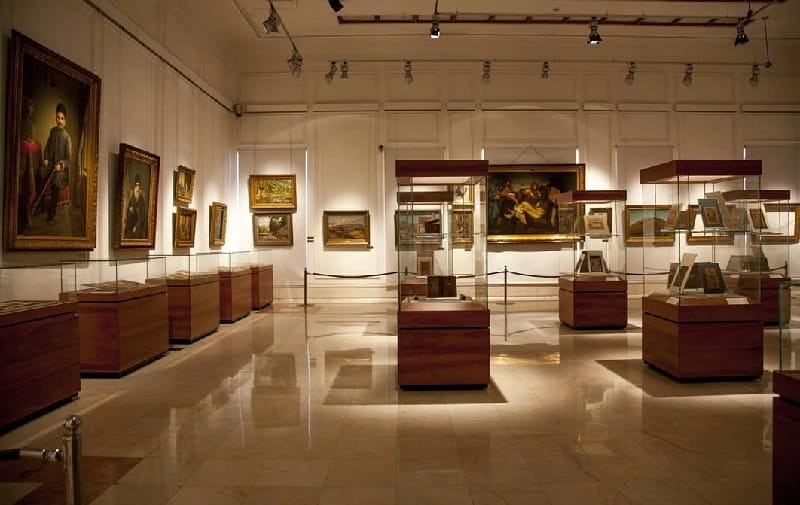
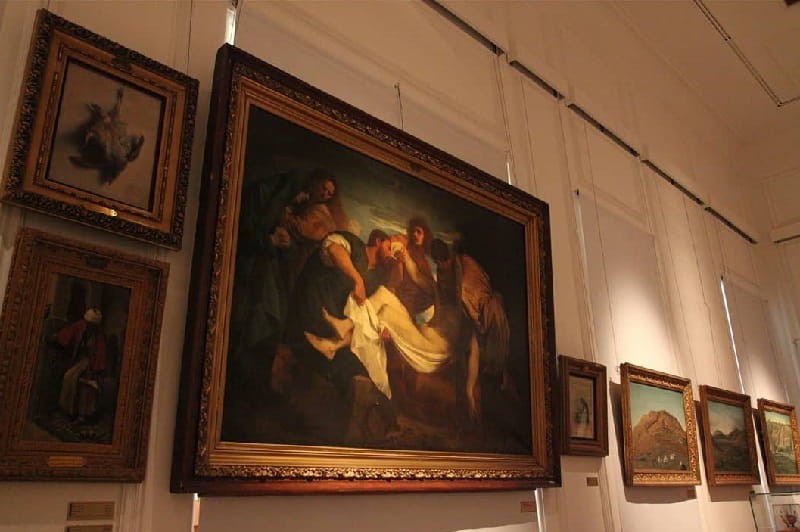
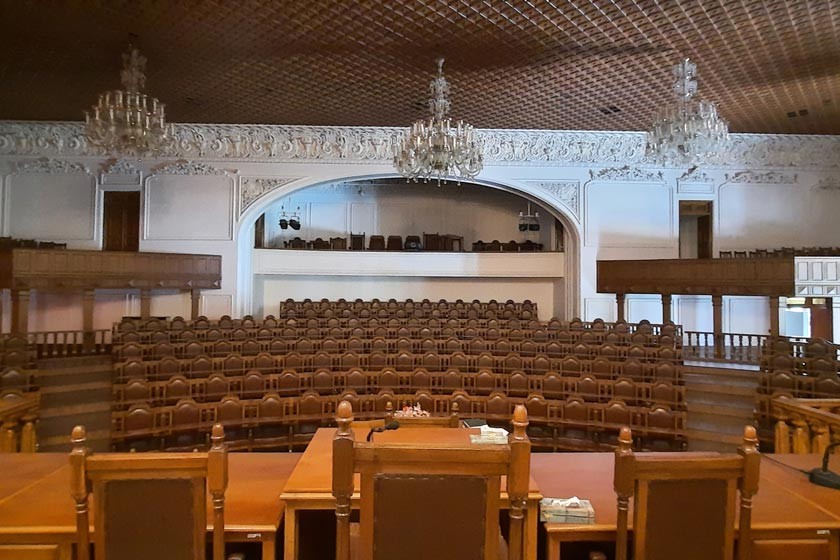
Today the mansion serves as the Tehran Municipality headquarters, but portions of the building are open to visitors as the Parliament Museum. The museum displays include paintings, historical documents, photographs, and furniture from the constitutional era. The grand hall where parliament sessions once took place has been carefully restored, and visitors can stand in the very chamber where Iranian lawmakers debated the future of the nation through revolution, war, and modernization.
The adjacent Malek Mansion, also called the Aziz al-Sultan Mansion, is a two-story building with a southern portico and a blend of traditional and modern construction techniques. It once served as the private quarter of the Baharestan garden complex and is notable for its elegant interior decorations, including painted ceilings and stucco reliefs that survive from the Qajar period. The building has been restored and now contributes to the cultural functions of the broader complex.
The complex also houses the Library, Museum, and Documentation Center of the Islamic Consultative Assembly, one of the most important specialized libraries in Iran. The collection includes rare manuscripts, lithographed books, period documents from the constitutional era, and a significant archive of parliamentary records. Scholars and researchers with appropriate credentials may access parts of the collection, while general visitors can view selected items in the exhibition halls. The museum galleries display paintings of Qajar rulers and prominent political figures, original furniture from the constitutional period, and photographs that document key moments in Iran's parliamentary history.
How to Get There
The easiest way to reach Baharestan Mansion is by Tehran Metro Line 2. Get off at Baharestan Metro Station, and the mansion is a short three-minute walk from the eastern exit. Several bus lines also stop at Baharestan Square and the nearby Zahiroldowleh Station.
Open Mehyar and book a taxi or arrange transport from your hotel in Tehran to Baharestan Square. If you are driving, note that the square falls within Tehran's traffic zone, so you will need to purchase a daily traffic permit through the Tehran Man system.
Book your Tehran hotel through Mehyar Hotels to stay within easy reach of the city's historic center. Mehyar Buses also connect Tehran to major cities across Iran, making it simple to include Baharestan Mansion in a broader cultural itinerary that might also include the Golestan Palace, the National Museum of Iran, and the Tehran Grand Bazaar.
Visiting Tips
The mansion is generally open during government working hours, Saturday through Wednesday. Admission is free. Allow about one to two hours to explore the museum halls and the restored parliament chamber. Photography is permitted in most areas, but check with staff before using flash. The building is wheelchair accessible on the ground floor.
The best time to visit is during spring and autumn, when the weather in central Tehran is pleasant and the surrounding gardens are at their greenest. Combine your visit with a walk to the nearby National Arts Museum or a stop at the traditional cafes around Baharestan Square.

Nearby Attractions
Baharestan Square is surrounded by other landmarks worth exploring. The National Arts Museum, housed in a former Qajar mansion, displays Persian miniatures, calligraphy, and decorative arts. The Masoudiye Mansion, a short walk to the west, is another beautifully restored Qajar palace. The Bagh-e Muzeh-ye Negarestan, the Museum of Painting, is nearby and holds an important collection of Persian and European artworks. For a deeper dive into Iran's royal history, the National Jewelry Museum on Ferdowsi Street is also within reach.