
Iran has two provinces that earn the word "green" honestly, and Lorestan is the mountainous one. Set in the heart of the Zagros, southwest of Isfahan and inland from Khuzestan, it takes the nickname Bride of Nature without argument: rivers cut gorges through red rock, springs come out of the hillsides in full columns of water, and in late April the high plains turn red with upside-down tulips. The waterfalls alone justify a trip. So does the castle that watches over the capital, Khorramabad, from a hill in the middle of the city.
Lorestan is also a place that rewards a plan. The sights sit in three loose clusters: the capital and its north, where the castle, the old bazaar and Lake Keyow are all walkable; the railway-and-road corridor to the northeast, where Bisheh falls; and the south, the Pol-e Dokhtar country of gorges and jungle-like valleys, which needs a car and sensible shoes. Give it three days and you will see the best of it. Give it five and you can add the long drive up to Lake Gohar.
Where is Lorestan?
Lorestan lies in western Iran, in the central Zagros, with Khuzestan's plains falling away to the southwest and Kermanshah province to the northwest. Its capital, Khorramabad, sits about 490 kilometres southwest of Tehran, roughly a six-hour drive on the Qom and Arak road. From Kermanshah it is around 120 kilometres, a two-hour hop, which is why the two provinces are so often paired in one itinerary. Ahvaz, in Khuzestan, is about 240 kilometres to the south, and Isfahan around 250 kilometres to the east.
The province is folded, and that folding is the point. Roads follow rivers into deep defiles, and a distance of 60 kilometres can take an hour and a half. Elevation runs from the hot southern valleys of the Karkheh and Zaz systems up to the Zagros crests above 2,500 metres, so the same week can offer palm shade in Pol-e Dokhtar and snowmelt at Lake Gohar. Counties you will meet on signs: Khorramabad, Borujerd and Aligudarz in the north, Dorud and Kuhdasht on the Kermanshah road, Pol-e Dokhtar, Doudezh and Mamoolian in the south.
How to get to Lorestan
By road from Tehran. The standard route runs Tehran to Qom to Arak to Khorramabad, about six hours in a car with one stop. Mehyar Taxi covers it door to door, which matters here more than in flat provinces: the sightseeing is spread out, and a car with a driver who is willing to wait at a waterfall turns a hard day into an easy one. Mehyar Buses run the same corridor several times a day for considerably less, with terminals in Khorramabad close to the centre; book an early departure so that you reach the hills before dusk.
By air. Khorramabad airport has short flights from Tehran, and there is a smaller field at Pol-e Dokhtar that puts the southern gorges and waterfalls within an hour of landing. Fares on both routes are usually modest and seats fill on holidays, so reserve through Mehyar Flights with the transfers attached; the drive from Khorramabad's airport into the city is quick, but arranging a car after a late arrival is not.
By rail. Trains connect Tehran with Khorramabad on the branch that climbs into the Zagros. The ride is slow and scenic and a good option if you would rather not spend six hours on a bus.
Around the province. There is no realistic public transport to a waterfall. Rent a car, or hire a car and driver for a day through Mehyar Taxi and share the cost. Distances are short on the map: Khorramabad to Bisheh is 60 kilometres, to Pol-e Dokhtar about 90, to Aligudarz around 90, to Dorud 85 and to Kuhdasht 90. The drive up to Lake Gohar is a full day from the capital and should be done with a fuel stop in Aligudarz.
Falak-ol-Aflak, the castle above the city
Everything in Khorramabad starts here, on a hill that rises in the middle of the urban grid. The fortress is known by four names, and all of them are used: Falak-ol-Aflak, meaning roughly the wheel of the sky; Shapur-Khast, the older royal name; the Castle of the Atabeys; and the Castle of Twelve Towers. It was founded in the Sasanian era and, with interruptions, served as a seat of command and a residence of governors down to the Qajar period, which is a very long time for one site to be the most defensible point in the landscape. It entered Iran's national register in 1969.
The plan is an irregular octagon, asymmetrical where the ground forced it to be, with two courtyards and twelve round towers at the corners and along the walls. Brick, tile and stucco do most of the decorative work, and the best thing to do is walk the full circuit of the ramparts and look down on the city in both directions. Inside, the castle houses the Lorestan Anthropology Museum, which covers local nomad life, dress, music and household objects alongside artefacts that go back to the Achaemenid period. It is a good collection and it explains the province you are about to drive through, so budget a second hour.
The old city on foot
The Brick Minaret. South of the centre, a bare brick column about 30 metres tall has been standing for roughly 900 years. Its base is 5.4 metres across, and 99 steps wind up the inside to the top. Archaeology around the base shows a caravanserai and a mosque beside it, which fits the minaret's likely job: it acted as a beacon guiding caravans toward Shapur-Khast, so that travellers crossing the plain could set their course by it.
Gerdab Sangi. Northwest of the centre is one of the cleverest small monuments in western Iran: a circular weir of stone and saruj, the traditional lime mortar, built in the Sasanian period around a spring to gather its overflow and send it out to the city through channels. It is registered nationally, having entered the list in 1976, and it is best visited late in the day when the water is lit.
The covered bazaar. Khorramabad's bazaar is roofed in the manner of the old markets of Tehran, Tabriz, Yazd and Isfahan, and it began life as a caravanserai. The present structure covers 2,130 square metres and was built in 1922, at the tail of the Qajar era, with two domed gateways on the north and east sides. It is a working market rather than a souvenir row: coppersmiths, fabric sellers, spice stalls, and in the outer lanes the nomad textiles and kilims that Lorestan is known for.
The waterfalls

Lorestan's waterfalls are not a single star attraction but a family, and they differ enough that you should choose two rather than try for all of them.
Bisheh is the showpiece and the easiest to combine with a Khorramabad base: 60 kilometres from the city, 48 metres of single main drop, set high enough in the hills that it is at full voice in spring and still running in summer. It was put on Iran's national natural heritage list in March 2009, which is a useful signal about how seriously the province treats it. The approach involves a slope down to the pool, so take shoes with grip.
Afrineh, in Afrineh village in the Mamoolian district of Pol-e Dokhtar county, is the full one. Where most Zagros falls thread down a channel, Afrineh spills across wide, open rock faces, in several cascades, the tallest around 20 metres. Access is easy, which is why it is busy on weekends, and there is a very large plunge pool below that holds water even when smaller falls have thinned. It is cold, and swimming is part of the standard visit.
Brunje, also called Taf, near the historic village of Pir Imam in the Shulabad area, is the wild card. It is a seasonal, three-tier staircase fall, and local estimates of the total drop range from 200 to 800 metres, which says more about how hard it is to measure than about precision. It comes off the mountain top into the Taf grove, the Zaz river runs through below, and the banks are covered in walnut, wild fig, wild grape, whitethorn and bramble. Peak flow is early spring; if you come in Ordibehesht, roughly May, the upside-down tulip fields are close by.
The gorges
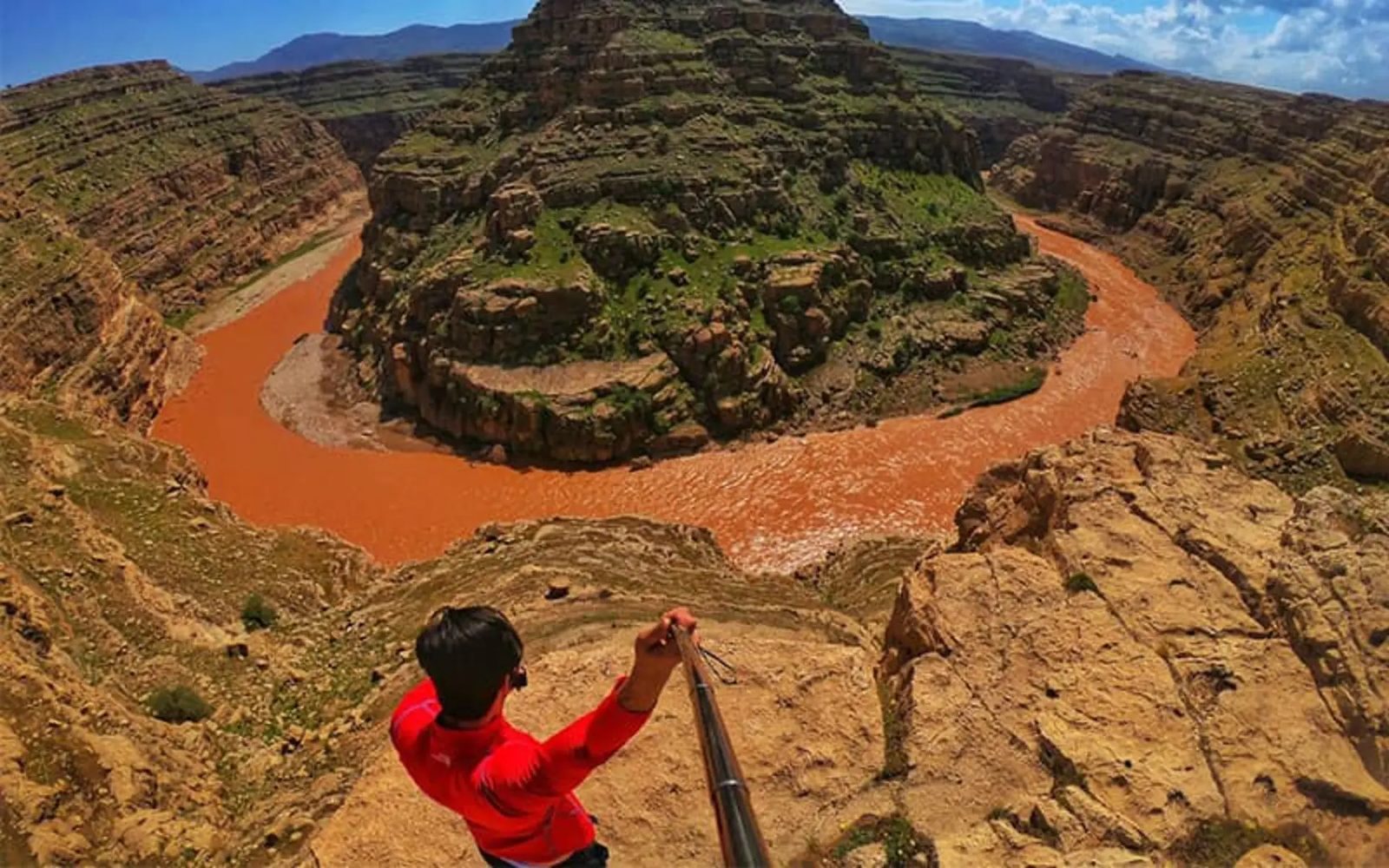
Khazineh Valley is the one people call the Grand Canyon of Iran, and while that is flattering rather than accurate, the sight at the horseshoe bend is genuinely arresting: the Simreh river, part of the Karkheh system, has spent millennia sawing through layered rock and left a red, curving meander that you can stand above. The valley lies around the middle of the Pol-e Dokhtar to Andimeshk road, at Khazineh village. Reaching the good viewpoints means several hours of walking, so bring boots and a hat; the crossing point used by the more adventurous is an old bridge, 112 metres long and 85 metres above the water, with a suspension span that is an experience in itself. Go in the first half of spring or early autumn.
Helet Gorge, near Pol-e Dokhtar, is for canyoning rather than looking. It runs about four kilometres and takes four to five hours round trip, wading and swimming much of the way, and it asks for reasonable fitness. The gorge was cut by millions of years of water erosion, and the story locals tell about its mouth, that it was once dammed into a lake until a flood broke through, matches the morphology well enough. Late summer and early autumn are the best windows, before the heat and after the low water.
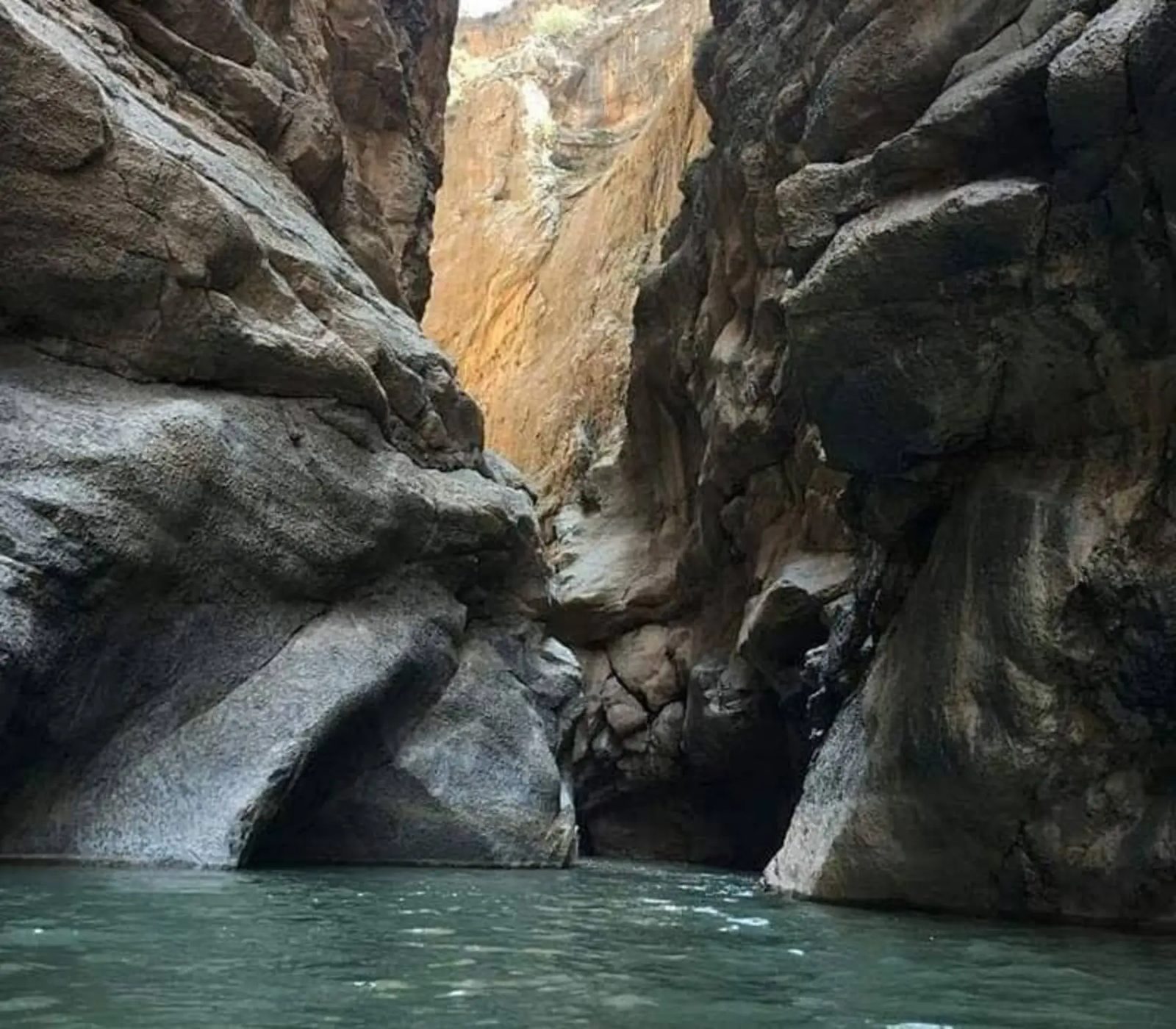
Leli Gorge, at Dorud, was carved by the Marbareh river into walls of polished, slicked stone that look remarkably like the Stars Valley on Qeshm Island, except wet. The water is deep and clear, and people swim and dive in it; a pedal boat takes you up the narrow rock channel, which is the strangest half hour in the province.
Shirz Valley, in the Zardlan district of Kuhdasht where Kermanshah, Ilam and Lorestan provinces meet, is five kilometres of some of the oddest geology in Iran, with springs, a waterfall, a river and, at the valley's head, a water cave called Pol-e Khoda. Ancient sites in the valley carry evidence of early cave dwelling. Spring is the season.
Lakes, high and low

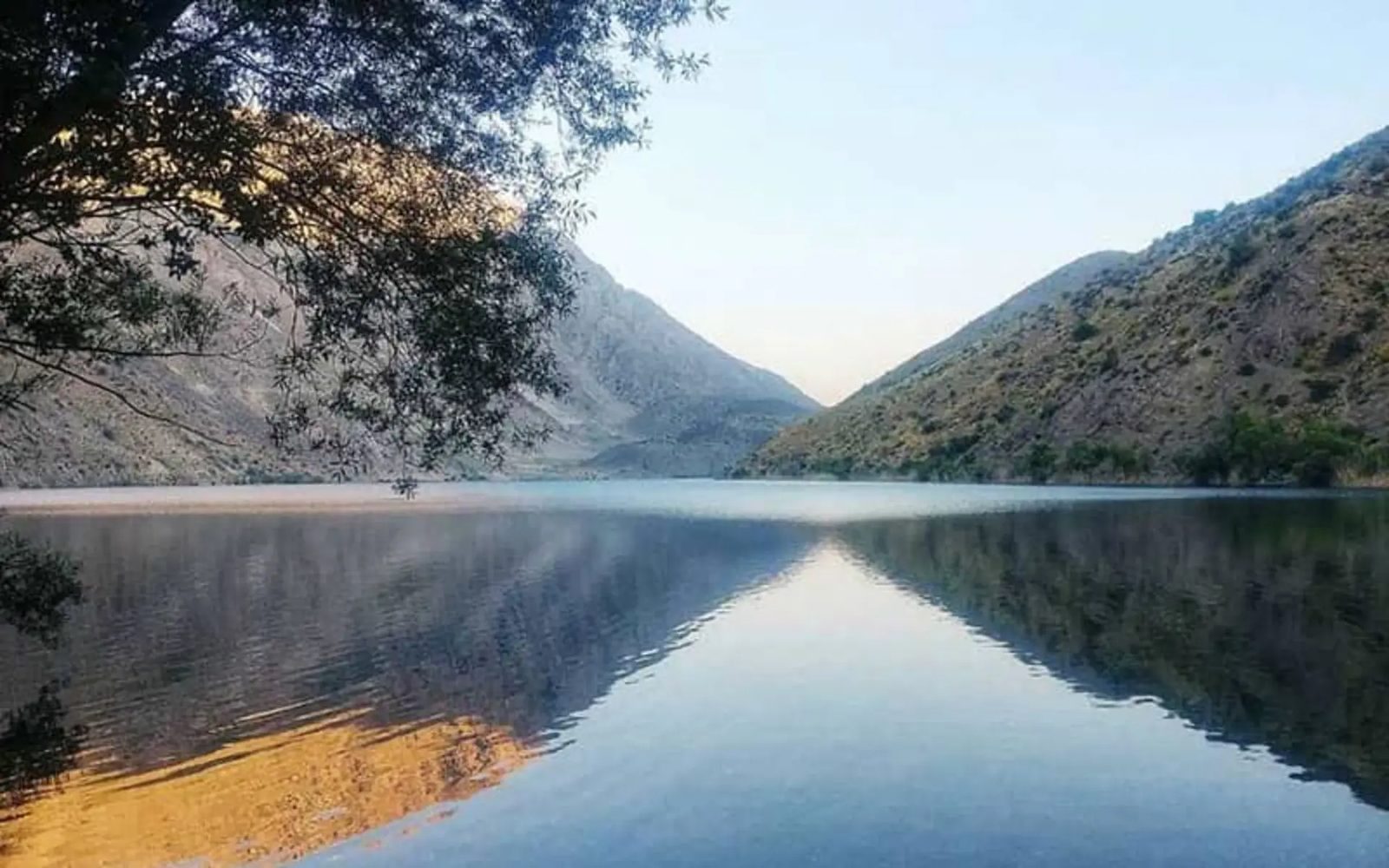
Lake Gohar is the alpine one, known locally as the gem of Ashtrankuh, and it sits inside the protected Ashtrankuh zone on the boundary of Aligudarz, Dorud and Azna. It is a freshwater lake with unusually clear water and clean, cold air, split into Greater Gohar and Lesser Gohar, and it draws campers from across Iran. The shoreline is mostly rock, with sandy stretches where swimming is possible; the trade-off is that you should arrive with everything you need. In the good season this is the best overnight in the province, under a tent.
Lake Keyow is the opposite kind of lake: seven hectares of it, three to seven metres deep, sitting in the middle of Khorramabad so that you can walk there from the bazaar. The water reads as a dark blue-green because of the plant life on the bed, and in fact "keyow" is the Luri word for that blue, dark colour. Motor boats, pedal boats, jet boats and musical boats run on it, there is a small amusement park on the bank with a ball pool, trampolines and a euro-bungee for children, and every year migratory birds stop on the water, which makes it a quiet dawn stop for anyone who likes birds.
Borujerd, and the largest historic mosque in the west
North of Khorramabad on the road toward Kermanshah, Borujerd holds the Soltani Mosque, also called the Imam Mosque or the Shah Mosque. It was built under Shah Esmail, the first Safavid shah, on a four-iwan plan, and it covers more than 7,000 square metres, making it the largest historic mosque in western Iran. Its inscriptions are worked in stucco, stone and wood, and the sheer scale of the courtyards is the point: this is a mosque built to announce a dynasty in a city on the frontier. If you are driving toward the Ali Sadr cave country or on to Kermanshah, it is an easy and worthwhile detour.
The observatory and the roof of the city
Khorramabad is spread out below ridges, and the ridge on the city's edge is what locals call the roof, the "bam". On it stands the Casin Observatory, opened in 2014 and billed at its inauguration as the most modern observatory in the Middle East. It runs training courses and science visits for children, students and adults, and an evening session here is a good answer to a cloudy afternoon, or to a clear one: the sky away from the city lights is genuinely dark.
Where to shop in Khorramabad
Beside the old bazaar, the city has two modern options that are useful on a hot or rainy day. The Besat commercial and tourism complex runs about 130 shops, with handicrafts, gold and jewellery and clothing, plus a 1,000 square metre play hall for children and a run of restaurants and cafés. The Keyow complex, opened in 2018 beside the lake, is six floors of clothing, bags, shoes, cosmetics and handicrafts, and it lets you combine shopping with an evening walk on the waterfront. For souvenirs that actually mean Lorestan, buy nomad textiles and kilims and the dried herbs sold in the bazaar's outer lanes.
When is the best time to visit Lorestan?
Spring is the honest answer, and the province is at its best from late March through May. The waterfalls are full, the tulip plains at Aligudarz and near Brunje bloom in April and May, and the gorges are walkable before the heat. Early autumn is the second window: Khazineh and Helet are comfortable, the rivers have cleared, and the crowds are gone.
Summer is two provinces in one. In Khorramabad and the north, days are hot and dry and evenings are pleasant; in the southern gorges, the heat is severe, so those visits go to the calendar in the cool hours. The higher country, Ashtrankuh and Lake Gohar, is the summer escape, and camping there in July and August is a national tradition. Winter brings snow to the mountains and closes the high lake roads for stretches at a time, but the waterfalls near the roads, Bisheh above all, run high and bare, and the castle is empty of visitors.
Where to stay in Lorestan
Khorramabad is the practical base for most trips, and it has the widest choice of hotels, all within reach of the castle and the bazaar. Filter by the old centre if you want dinner without a car. Browse Mehyar Hotels for the shortlist before you commit: the better properties fill quickly on spring weekends, when domestic tourism to the waterfalls peaks.
Dorud works well as a second base if you want Leli Gorge, Shirz and the tulip plains within an hour, and it sits directly on the Tehran road. Aligudarz is the jumping-off point for Lake Gohar, with simple guesthouses and the start of the mountain track. In the south, Pol-e Dokhtar has limited hotel stock, which is why many travellers do the gorges as a long day or overnight with a local camp rather than as a hotel-based stage.
Book transport and accommodation together for the south. A driver who knows which dirt turn leads to Afrineh is worth more than a cheaper car, and the same day can absorb Helet or Khazineh if the start is early.