
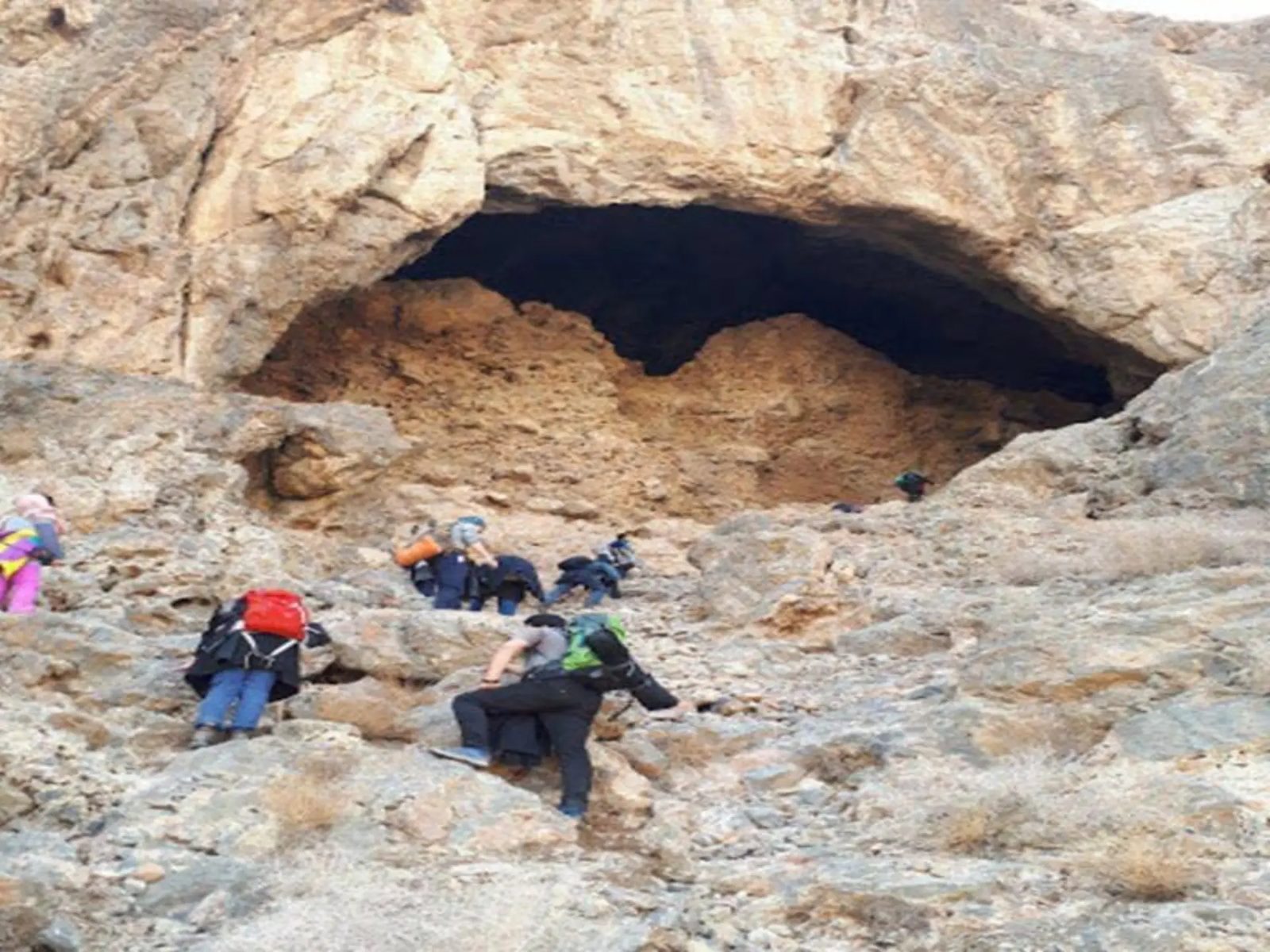
Iran's desert province is not the first place you would associate with a great natural cave. Yet in the ridges north-west of Ardakan, above the village of Hefahr, a mountain called Shaganf opens into a chamber large enough to hold crowds, old enough that geologists date its stalactites to more than two million years, and holy enough that Iranian Zoroastrians kept their sacred fire burning inside it for thirty years in the ninth century of the Hijri calendar. Ashkeft Cave, also written Ashkeft-e Yazdan and known locally as Ghar-e Shaganf, is one of the largest natural caves in Iran: ashkeft means a cleft in local speech, and Yazdan, meaning God, names what the cave was used for. Reaching it is a genuine mountain effort rather than a walk from a car park, and that difficulty is why the interior is still pristine.
Where is Ashkeft Cave?
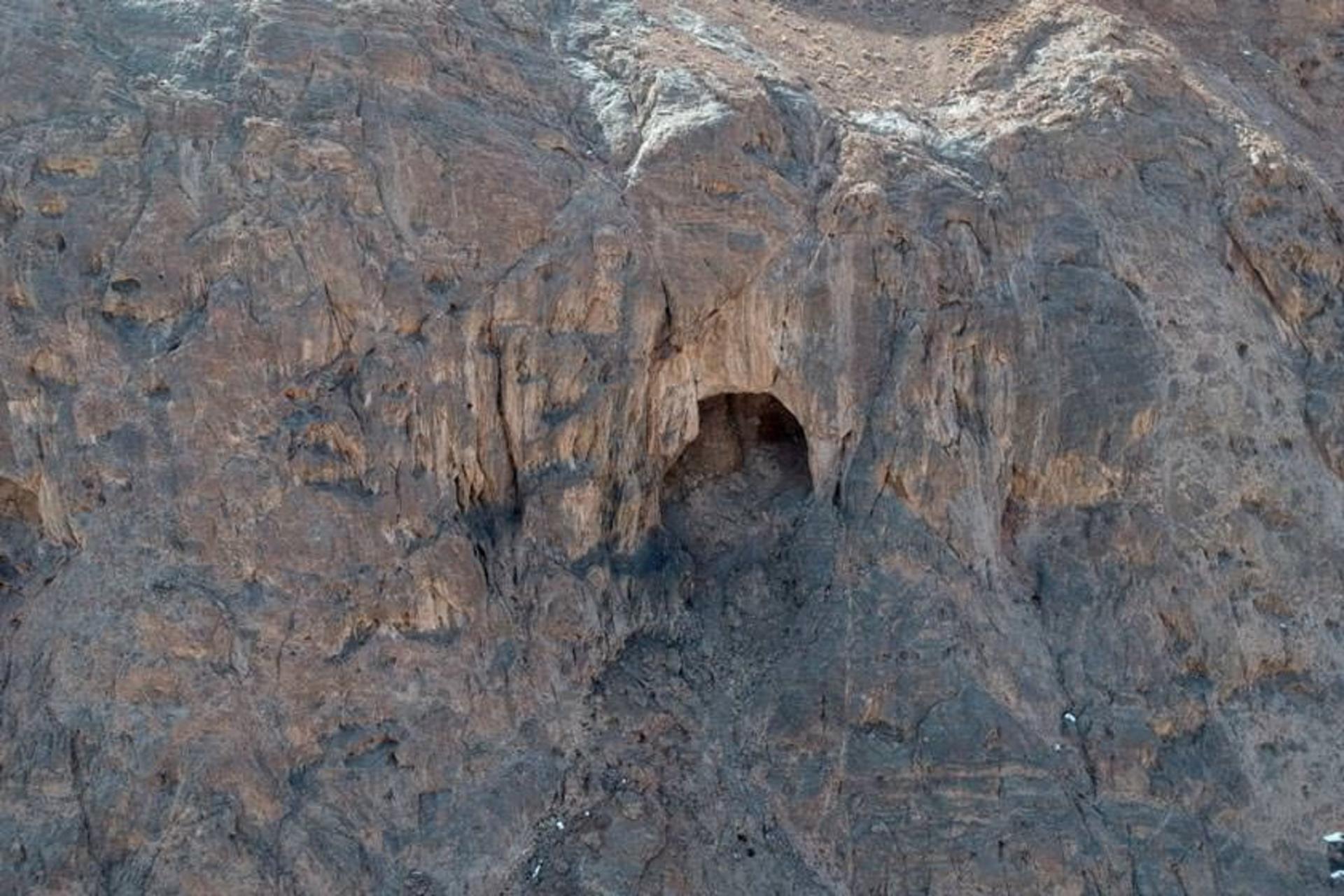
The cave is in Yazd province in central Iran, on the mountain of Ashkeft above Hefahr, in the hills north-west of Yazd city. Ardakan lies about 70 kilometres away and Yazd itself roughly 110 kilometres. The mouth sits high on the flank of Mount Shaganf at more than 2,200 metres above sea level, and the chamber descends some 20 metres.
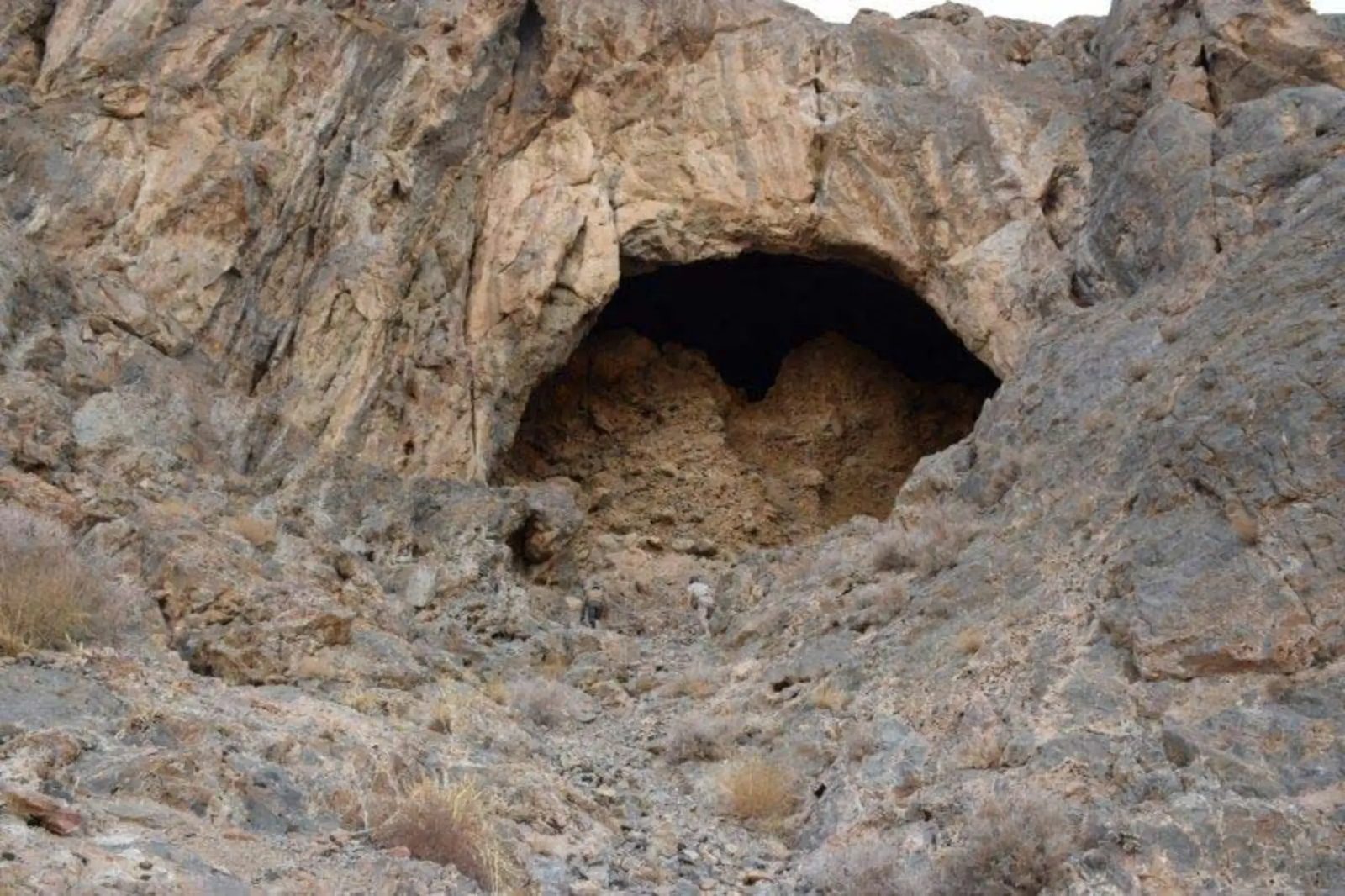
The scale of the entrance explains the cave's place among Iran's largest. Its main mouth measures around 60 metres across and a smaller opening near 40 metres, and the floor inside is broad and level enough to absorb a large group at once.
The mountains around it are not the bare rock you might expect from Yazd. The slopes carry wild plants such as gon astragalus, wormwood and almond scrub, which is why the area feels like another country after the desert flats.
How to get to Ashkeft Cave
No public transport reaches Hefahr and no road runs to the cave mouth. Everything depends on a hired car and then on your own feet, so treat this as an expedition with a schedule.
By Mehyar Taxi from Ardakan. The cleanest solution is a private car booked in Mehyar for the day, with the driver waiting. From Ardakan take the Na'in to Ardakan road toward the village of Aghda, then around 45 kilometres on to the cave. Beyond Aghda cross to the far side of the road and enter the secondary lane toward Mazrale Now; past Mazrale Now and Khalilabad you reach a fork, and the left branch takes you to Hefahr. Three kilometres beyond the village, turn onto a side track, and 500 metres later a dirt road runs straight toward Mount Ashkeft. Ignore the diversions branching off to the local mines. After about eight kilometres you reach a water reservoir, and here the drive ends: park and continue on foot.
From Nadooshan. Coming up from Nadooshan, the route runs north out of the village for roughly 30 kilometres of dirt track to Hefahr, about an hour, and part of the way to the start of the mountain trail can also be covered by car.
By Mehyar Buses plus a driver. Mehyar Buses reach Ardakan or Yazd. Book that leg, then arrange the onward car through your accommodation or as a local Mehyar Taxi booking. Do not count on finding a ride at Hefahr, and never plan to be walking down that mountain after dark.
The hike itself. From the reservoir a footpath climbs the mountain: not long, but steep, and it needs real fitness. After three kilometres on the rising ground, keep right at the point where the trail is marked. The path is visible but the going is exposed, and first-time passage without a guide who knows the mountain is not advisable. At a later fork you can see the cave mouth on your right. The final stretch falls away steeply, proper mountaineering gear helps, and a metal ladder has been fixed at the entrance to make the last move into the cave possible. For fit hikers, the climb toward the summit of Shaganf takes around two hours.
What the cave is made of
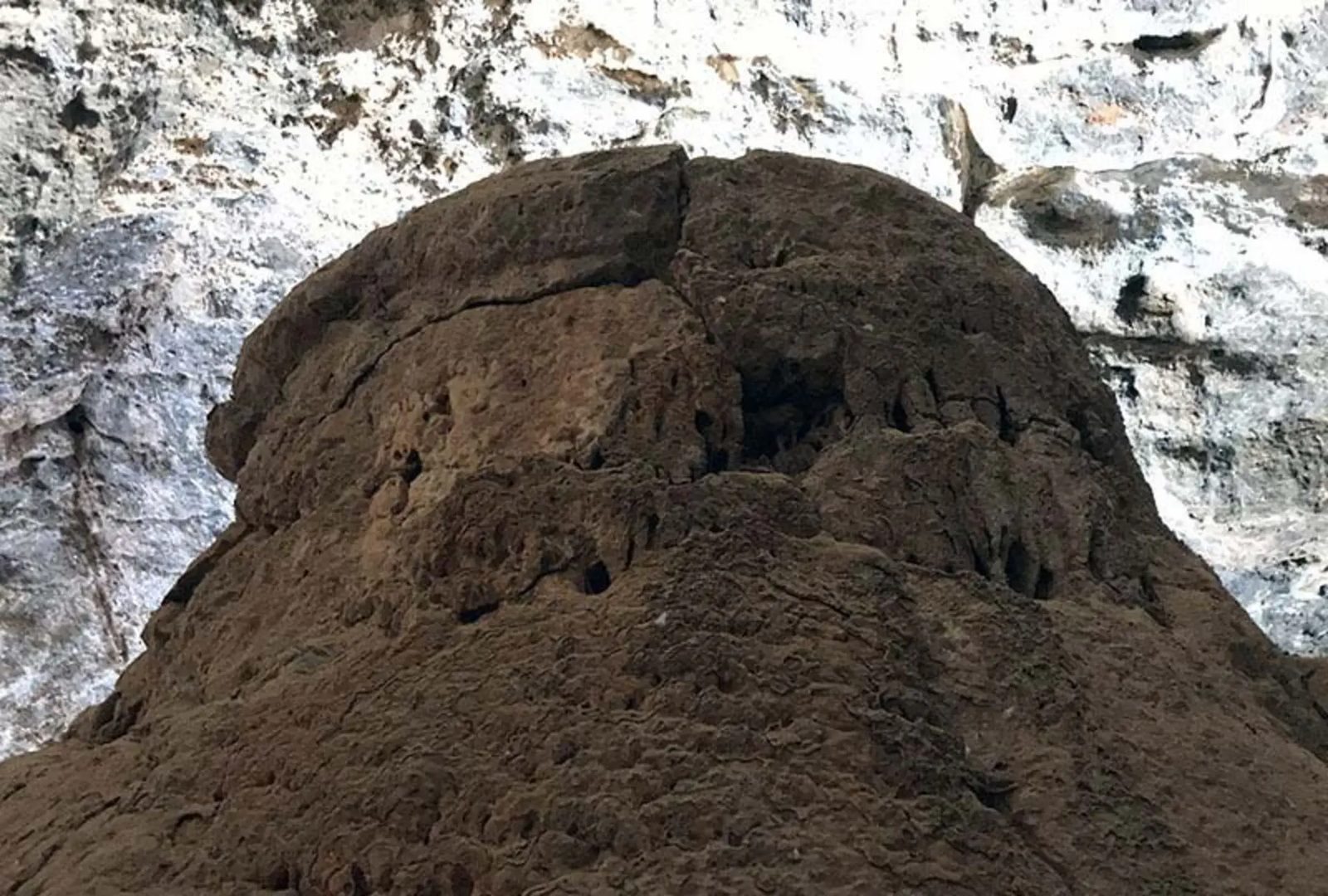
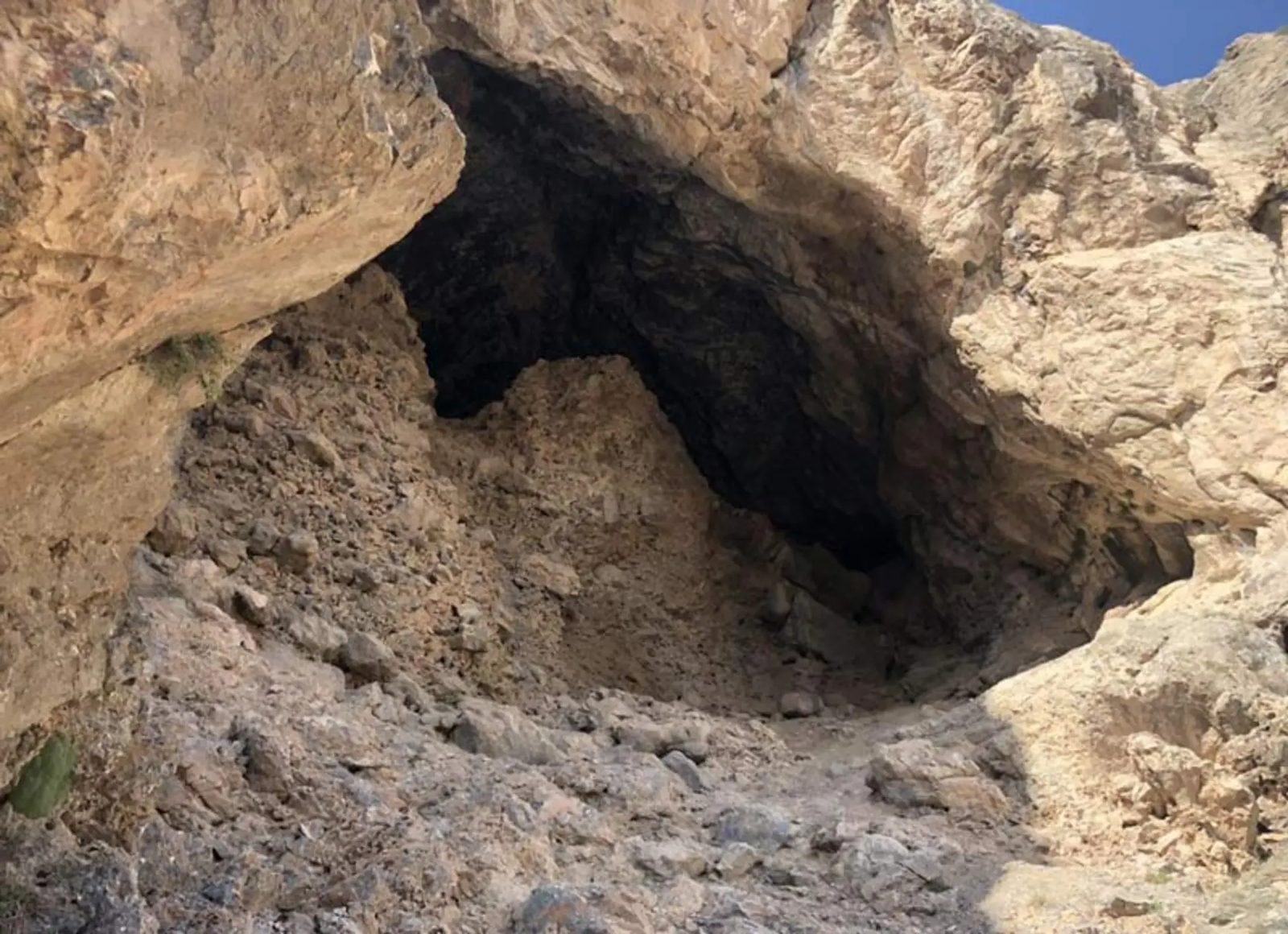
Geologists place the formation of Ashkeft Cave in the Quaternary period and estimate its stalactites at over two million years old. Inside, long limestone drips hang above shallow pools, and the sound of water falling into them follows you through the chamber. Three stalagmites rise in the middle: one stands 3.8 metres tall, the other two around 1.2 metres, and all three measure close to 40 centimetres across. The interior surfaces are coated in white, sugar-candy crystals, the botryoidal calcite that catches a torch beam and glows, and this crystalline skin also slows the cave's erosion, so its shape should survive a long time unchanged. Few hands have reached the interior, and the limestone decorations remain unbroken and unmarked, which places Ashkeft among the best-preserved large caves in Iran.
Why Zoroastrians hold it sacred
Ashkeft Cave was one of the most important gathering places of Zoroastrians in the past, and their rites were performed inside it through the year. The evidence is still in the chamber: three pools of varying size, remains of several structures, and the ash left by great fire altars, a site used for living and for worship alike. Mountaineers bound for the summit of Shaganf rested here for generations as well.
The central event belongs to the ninth century of the Hijri calendar. Zoroastrian records hold that the sacred fire burned here for thirty years, and the account of its journeys is precise: first from the Atashkadeh of Anahid to the village of Heftadr near Aghda, then to Torkabad in Ardakan, then to Ashkeft Cave. After thirty years it moved on to the Atash Behram of Yazd, the highest grade of Zoroastrian fire temple and one still functioning today. Some locals say the cave is called Yazdan precisely because that flame, the visible presence of God in Zoroastrian practice, rested within it for a generation.
For Zoroastrians the cave stands as a symbol of a pure place of worship, a house for the adoration of one God. The story did not end with the fire's removal: Zoroastrians from the villages around the mountain still climb to Ashkeft for their ceremonies, and on some religious occasions believers spend the night inside the cave.
What to bring and how to behave
Equipment and fitness. Full mountaineering and caving equipment, and genuine physical fitness. The cave sits above 2,200 metres and the access is very hard.
Not for everyone. This visit is not suitable for children, older travellers or people with physical disabilities.
No facilities. Nothing around the cave serves visitors or climbers: no kiosk, no shelter, no water point. The historic supply was the Shahriar well nearby. Carry everything you need.
Group and plan. Organise the visit as a group and tell your companions and the locals around the cave your planned ascent before you set out. Someone from Hefahr who knows the mountain makes the difference between a fine day and a rescue.
Leave it untouched. Damage nothing inside. The stalactites are beautiful only in place, and prying one loose as a souvenir destroys that. Take your rubbish back down and stay on the marked footpath.
When to go
The last days of winter through mid-spring, and the first days of autumn. Do not pick hot days for this trip: the sun above the mountain is strong, and heatstroke is a real risk on an exposed climb with no water on the trail.
Hours, tickets and the practical facts
Entry: free. There is no charge to visit Ashkeft Cave.
How long to allow: three to four hours for the hike up and down with time inside the chamber, plus the driving time.
Opening hours: none. This is an open natural site, so daylight and weather set your working hours.
Heritage status: inscribed on Iran's national list of historic places.
Difficulty: high. The approach crosses a steep mountain track and the final ascent needs fitness and, near the mouth, hands as well as feet.
What else is worth the same trip
The Ardakan and Nadooshan arc pairs naturally with the cave, and most visitors cluster it into one long day with a hired car. Chak Chak, the Zoroastrian pilgrimage shrine near Ardakan, is a place of worship built into a mountain whose entrance reads like a cave mouth; its traditional ceremony falls with the Mehragan festival in the first days of autumn. Aghda, the historic village the road from Ardakan passes through, holds monuments from before and after Islam and has guesthouse accommodation. Nadooshan adds its historic qanat, the white travertine water stones in a nearby valley and the White Castle of stone and mudbrick east of town.
Planning the trip
Base yourself in Ardakan or Yazd. Book the intercity leg with Mehyar Buses or Mehyar Flights into Yazd, then set the mountain transfer as a Mehyar Taxi booking so the car is waiting at Hefahr when you climb down. Plan the rest from our Yazd travel guide, and read your first trip to Iran before you fix dates, because a two-day weather window above Ardakan beats a rigid itinerary. Go early, go with someone who has done it, and you will come back with two million years of calcite and a thousand years of prayer in the same chamber.