
Ali Qapu, meaning the Sublime Gate, is one of the most historically significant structures in Ardabil. It served as the grand ceremonial entrance to the Sheikh Safi al-Din shrine ensemble, the UNESCO World Heritage Site that anchors the spiritual and architectural identity of the city. The gate also functioned as the Naghareh Khaneh, the drum house where musicians played kettledrums and trumpets to mark prayer times, royal decrees, and religious ceremonies. Though the original structure faced demolition in the twentieth century, its memory and cultural importance endure, and restoration efforts have brought elements of the gate back to life. This guide covers the history, architecture, and practical details for visiting Ali Qapu in Ardabil.

The history behind Ali Qapu
The story of Ali Qapu begins with the Safavid dynasty. When Shah Ismail I established the Safavid state in 1501, he elevated the shrine of his ancestor, Sheikh Safi al-Din Ardabili, from a Sufi lodge into a dynastic mausoleum of imperial significance. The shrine complex grew over the following centuries, and the grand entrance gate, known as Ali Qapu, became the symbolic threshold between the secular city and the sacred precinct.
The name Ali Qapu appears across the Safavid world. The most famous Ali Qapu stands in Isfahan on Naqsh-e Jahan Square, but the Ardabil Ali Qapu predates its Isfahan counterpart and carries a different function. Here, the gate was not a palace facade but a working entrance to a living shrine. Pilgrims, court officials, and ordinary worshippers all passed through this gate to reach the tomb of the Sheikh and the surrounding religious buildings.
The gate reached its most elaborate form during the reign of Shah Abbas II in the seventeenth century. He commissioned a reconstruction that gave the gate its distinctive seven-arched facade. In Sufi cosmology, the number seven carries deep meaning. The seven arches were understood to represent the seven gates of divine love, the stages a seeker must pass through on the path to spiritual union. This symbolism connected the physical act of entering the shrine with the inner journey of the Sufi adept.
The Naghareh Khaneh and ceremonial life
Ali Qapu was not merely a doorway. It served as the Naghareh Khaneh of the shrine complex, the place where naghareh (kettledrums) and other instruments were played at specific times throughout the day. This tradition, common across the Islamic world, served both practical and spiritual purposes. The sound of the drums announced the five daily prayers, marked the beginning and end of Ramadan, and accompanied royal processions and funerary corteges.
The musicians who performed at Ali Qapu held an official position within the shrine's administration. They were not casual entertainers but custodians of a sonic tradition that shaped the daily rhythm of life in Ardabil. Visitors to the shrine would hear the drums before they saw the tilework, and the sound created an atmosphere of reverence and anticipation that prepared them for the sacred space beyond the gate.
During the month of Muharram, Ali Qapu took on an even more central role. The neighborhood surrounding the gate became the staging ground for mourning processions, including the Tash-Gardani ceremony, in which participants carried trays of symbolic objects through the streets. The gate served as both a gathering point and a symbolic passage, linking the grief of the present to the sacred history of the shrine.
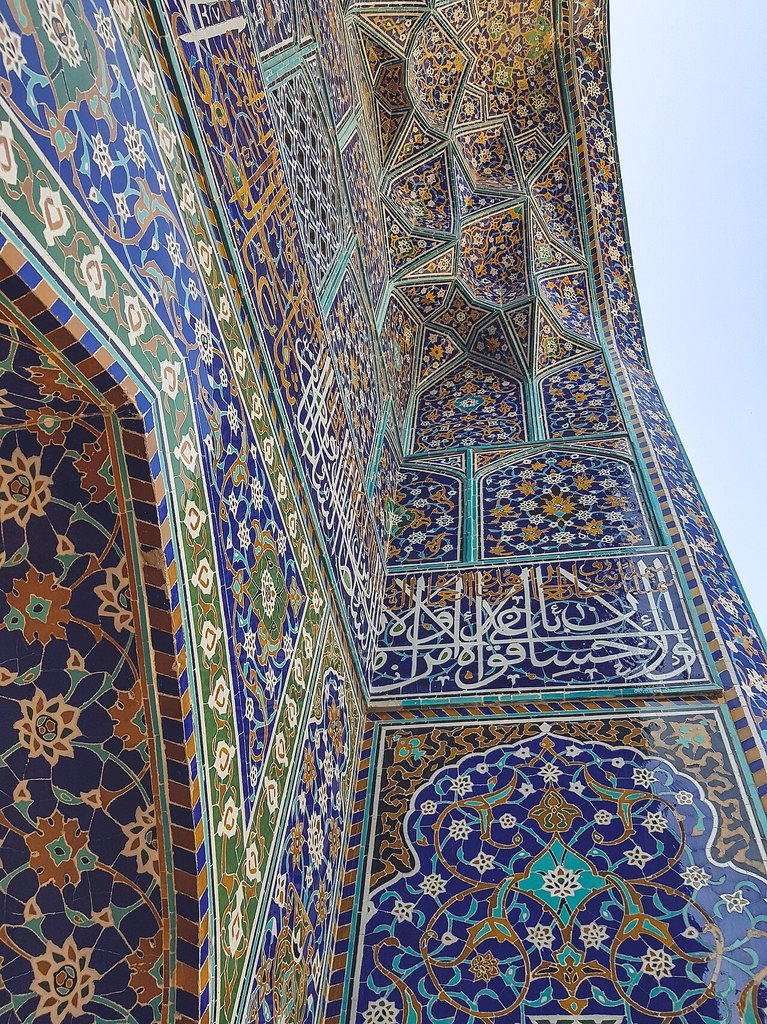
Architecture and decorative arts
The original Ali Qapu gate featured the kind of elaborate decorative program that characterizes the rest of the Sheikh Safi ensemble. Mosaic faience tilework covered the facade in geometric and floral patterns executed in turquoise, cobalt, and white. Inscriptions in Thuluth and Nastaliq calligraphy ran along the arches, combining Quranic verses with praise of the Sheikh and the Safavid imams.
The gate structure rose two stories above the entrance courtyard. The lower level contained the main arched passage through which pilgrims entered, while the upper level housed a prayer hall and a small room for the Naghareh Khaneh musicians. The prayer hall was divided into separate spaces for men and women, reflecting the social conventions of the period while ensuring that all worshippers could participate in the shrine's ceremonies.
The seven arches of the facade were not purely decorative. Each arch framed a specific view of the shrine complex beyond, creating a sequence of visual revelations as visitors approached the gate. The central arch, the tallest and most ornate, aligned with the main axis of the shrine and offered the first direct view of the Allah Allah Dome rising behind the courtyard.
The twentieth century and restoration
By the early twentieth century, the Ali Qapu gate had fallen into a state of serious disrepair. Centuries of use, earthquakes, and neglect had weakened the structure. In 1321 SH (around 1942), the gate was demolished due to concerns about structural collapse. The loss was deeply felt by the community, as Ali Qapu had been a landmark of Ardabil for over three centuries.
The demolition removed the physical gate, but it did not erase the memory. The neighborhood retained the name Ali Qapu, and locals continued to refer to the area around the shrine entrance by the old name. In recent years, restoration efforts have sought to reconstruct elements of the gate using historical photographs, surviving tile fragments, and architectural plans from the Safavid period. The restored gate incorporates traditional mosaic tilework and follows the proportions of the original seven-arched design as closely as the evidence allows.

Visiting Ali Qapu today
Today, the Ali Qapu area is best visited as part of a broader exploration of the Sheikh Safi al-Din ensemble. The restored gate stands near the main entrance to the shrine complex, on what is now Ayatollah Moruj Ardabili Boulevard. It serves as a starting point for understanding the scale and ambition of the Safavid building program in Ardabil.
The mosque adjacent to the gate area has two floors with separate prayer halls for men and women. Entry to the mosque is free, and visitors can enter before or after the daily prayers. The tilework inside the mosque, while not as extensive as that of the main shrine, includes fine examples of Safavid-era decorative arts and offers a quieter space for contemplation.
The surrounding neighborhood retains much of its historic character. The Ardabil Bazaar, one of the oldest covered markets in northwestern Iran, stretches nearby and offers a glimpse into the commercial life that has accompanied the shrine for centuries. The Folklore Museum, located within walking distance, houses ethnographic exhibits on the daily life, crafts, and traditions of the Ardabil region.
Address: Ali Qapu, Ayatollah Moruj Ardabili Boulevard, Ardabil
Hours: Mosque open before and after daily prayers; shrine complex 8:00 to 20:30 (first half of year), 8:00 to 17:30 (second half)
Getting to Ardabil and getting around
Reaching Ardabil is straightforward. The city has an international airport with daily flights to Tehran, and an extensive bus network connects it to most major Iranian cities. From Tehran, the journey by bus takes seven to eight hours via Qazvin and Zanjan. From Tabriz, the trip takes about five hours via Sarab.
Within Ardabil, the city is compact and many attractions are within walking distance of each other. Taxis are plentiful and affordable. For visitors, the easiest way to navigate is to use Mehyar Taxi, which offers clear pricing and the ability to pay through your Mehyar wallet. This means you do not need to carry large amounts of cash or explain your destination in a language you may not speak.
Combining your visit with other Ardabil attractions
Ali Qapu is a natural complement to a visit to the Sheikh Safi al-Din ensemble itself, which is the only UNESCO World Heritage Site in Ardabil province. The ensemble includes the Paradise Mosque, the China House, the Chella House, and the Allah Allah Dome. Allow two to three hours to explore the full complex.
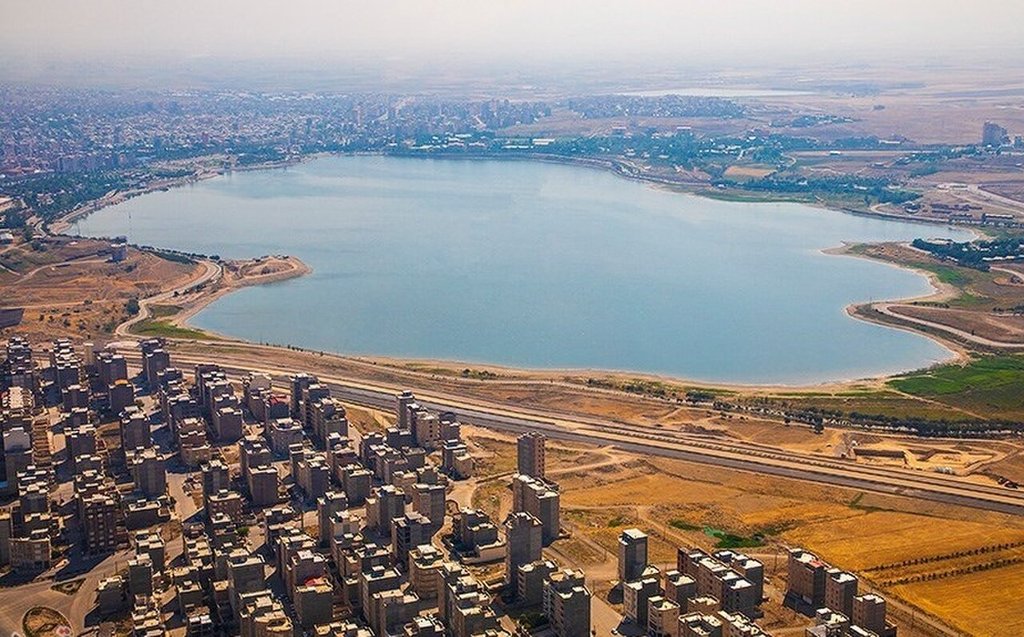
Beyond the shrine, Ardabil offers a rich range of experiences. Shourabil Lake, the only urban lake in Iran, provides a pleasant evening setting with cycling paths and cafes. The dormant Sabalan volcano rises to 4,811 meters west of the city, and its crater lake is a challenging two-day climb. The hot springs of Sar'eyn, a short drive from Ardabil, offer therapeutic soaking in mineral-rich waters. For a scenic drive, the Heyran Pass connects Ardabil to the Caspian coast through some of the most beautiful mountain scenery in Iran.
For travelers planning a longer trip through northwestern Iran, Ardabil pairs naturally with a visit to Tabriz, which is about five hours to the west. Our Tabriz guide covers that city's UNESCO bazaar and rock village of Kandovan. For those starting in the capital, our first trip to Iran article covers visa and payment basics. For guidance on managing money during your journey, see our paying in Iran guide.
Ali Qapu is more than a gate. It is a threshold between the ordinary and the sacred, a place where sound and silence, history and memory, tilework and prayer converge. Whether you are drawn by the Safavid architecture, the Sufi symbolism of the seven arches, or simply the atmosphere of a neighborhood that has centered Ardabil's spiritual life for five centuries, Ali Qapu offers a doorway into the deeper story of this remarkable city. Open Mehyar, find your way to the shrine, and step through the Sublime Gate.