
Why Visit Kermanshah
Kermanshah sits in a wide valley of the central Zagros, where the roads from the Iranian plateau descend toward the Mesopotamian plain. For thousands of years, this corridor has been one of the most important passages in western Asia, and the civilizations that moved through it left their marks on the cliffs and hillsides around the city. The result is a place where a single day trip can take you from a 2,500-year-old Achaemenid inscription to a third-century Sassanid rock relief, and then to a Kurdish bazaar where the language, music, and food belong to a tradition entirely different from the Persian-speaking center of the country.
The city itself is the ninth-largest in Iran, with a population of roughly 900,000, and it has a character shaped by its Kurdish identity, its mountain setting, and its position on the ancient trade route to Baghdad. Kermanshah is not a city that appears on most tourist itineraries, but for travelers interested in the deep history of the Iranian world, the living culture of its Kurdish communities, and the dramatic landscapes of the Zagros Mountains, it is one of the most rewarding destinations in the country.
The cuisine alone is worth the journey. Kermanshah is famous across Iran for its sweets: nan-e berenji (rice cookies), kak (spiced date cookies), and nan-e nokhodchi (chickpea cookies) are produced here in quantities and qualities that you will not find elsewhere. The city's traditional foods, from kabab barg-e Kermanshahi to the herb-heavy stews of the Kurdish table, reflect a cuisine that draws on the pastoral traditions of the Zagros and the spices of the western trade routes.
Getting to Kermanshah
By Air
Kermanshah's Ashrafi Esfahani International Airport (IATA code KSH) serves the western region of Iran. The airport is located just 3 kilometers from the city center, near Imam Khomeini Square, making it one of the most conveniently located airports in the country. Domestic flights connect Kermanshah to Tehran, Mashhad, and other major cities. From the airport, a taxi to the city center takes about 10 minutes.
Open Mehyar and check Flights for current schedules and fares. The flight from Tehran to Kermanshah takes approximately one hour and fifteen minutes.
By Road
The most direct route from Tehran to Kermanshah covers about 520 kilometers and takes 6 to 7 hours. The road passes through Qom, Arak, and Malayer before entering the Zagros foothills. The scenery becomes increasingly dramatic as you approach Kermanshah, with the mountains rising on either side of the highway.
Intercity buses run regularly between Kermanshah and major cities. Use Mehyar's Buses section to find schedules and fares. The railway connection to Kermanshah is still in its early stages. Once you arrive, open Mehyar and tap Taxi for rides within the city.
Bisotun: The Rosetta Stone of Persia
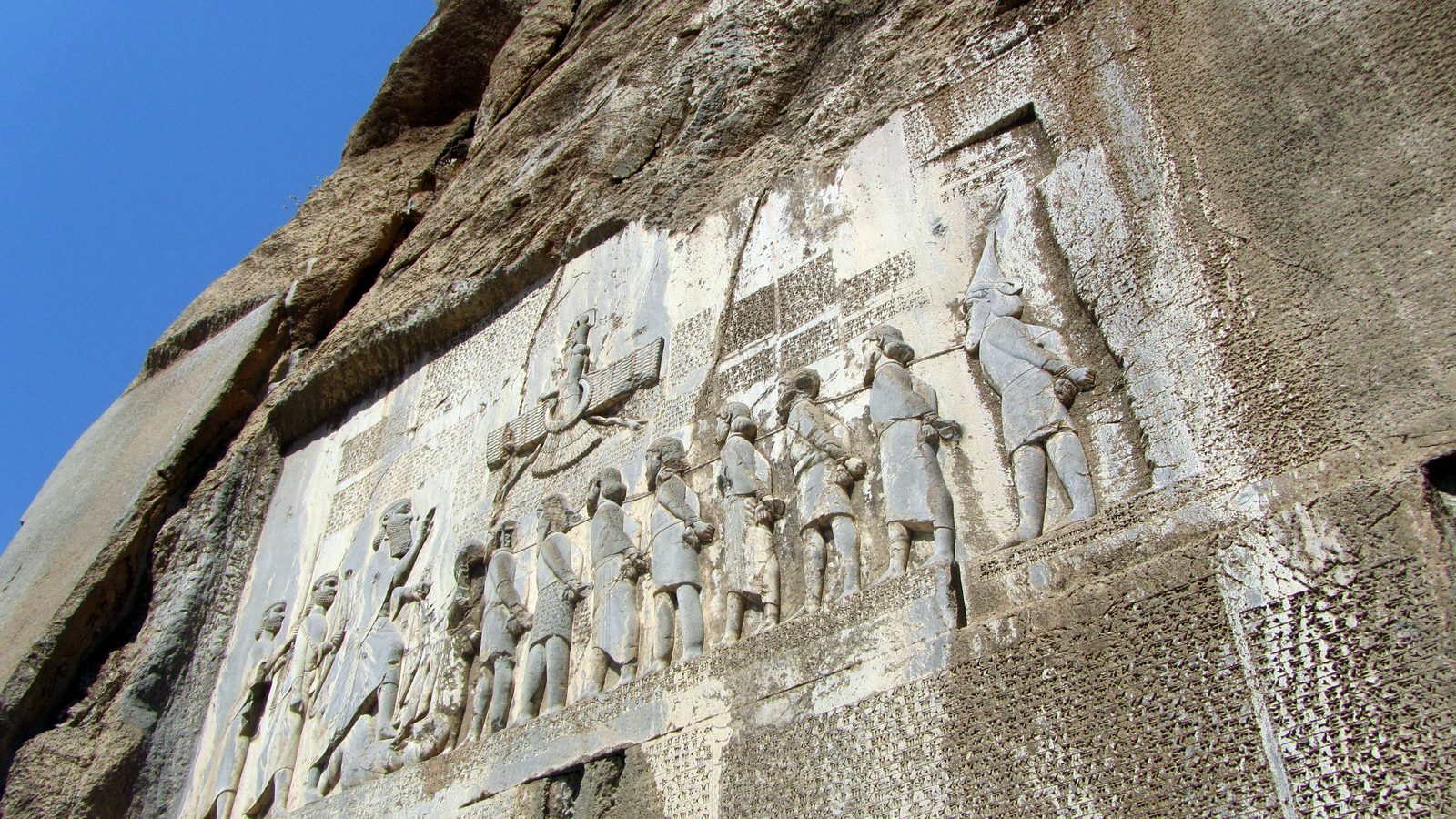
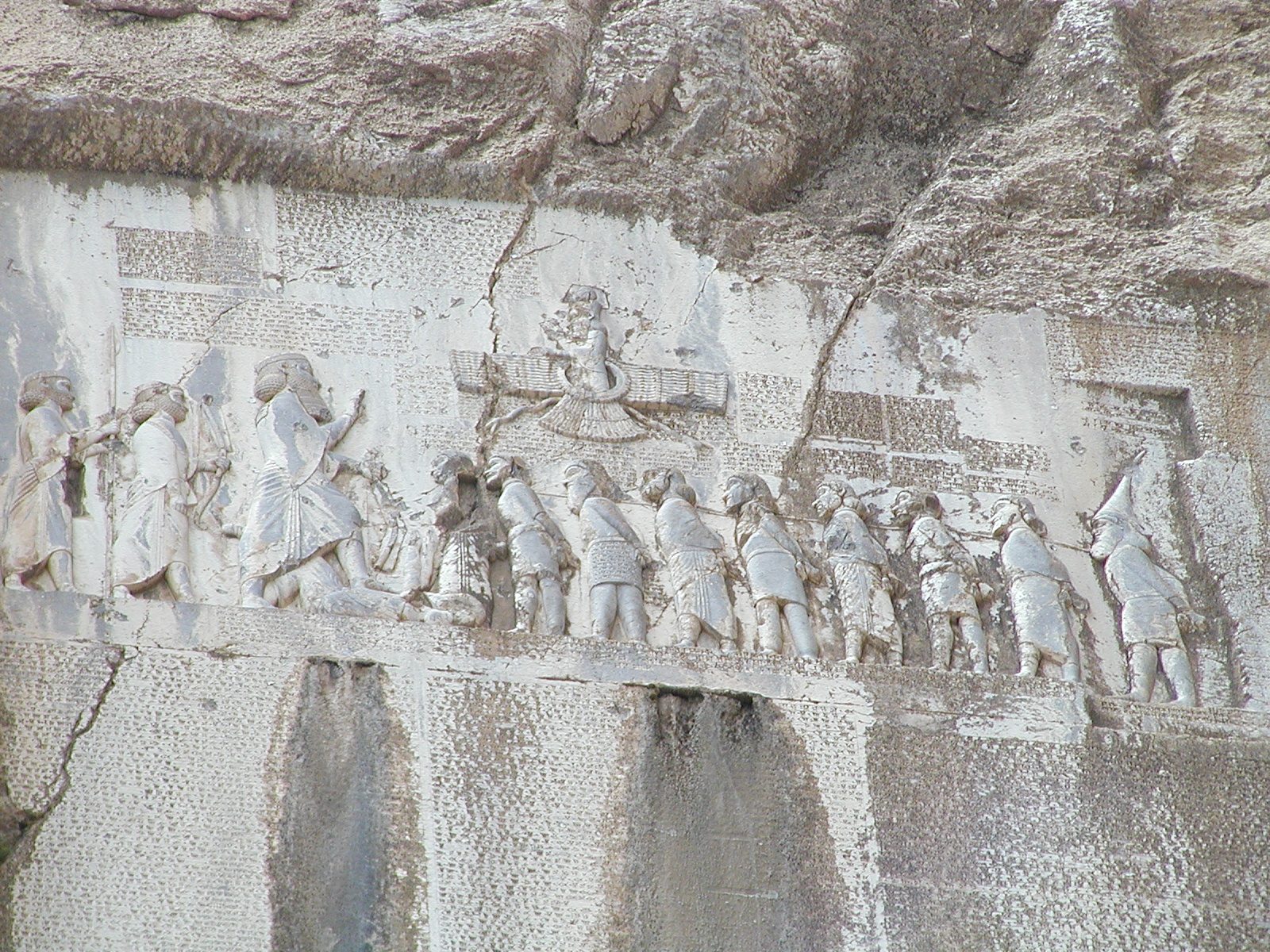
About 30 kilometers east of Kermanshah, on the old road to Baghdad, the cliff face of Mount Bisotun carries one of the most important inscriptions in the history of human civilization. In 521 BCE, King Darius I of the Achaemenid Empire ordered a large relief and trilingual inscription to be carved into the rock high above the plain, recording his victories over the rebels who challenged his accession to the throne.
The inscription is written in three languages: Old Persian, Elamite, and Babylonian, each in its own script. In the 1830s, the English scholar Henry Rawlinson risked his life to copy the texts, climbing the cliff face with ropes and ladders. The trilingual nature of the inscription allowed Rawlinson and later scholars to decipher cuneiform script, just as the Rosetta Stone had unlocked Egyptian hieroglyphs. For this reason, Bisotun is sometimes called the Rosetta Stone of Persia.
The site was inscribed as a UNESCO World Heritage Site in 2006. The relief itself shows Darius standing with his foot on the chest of Gaumata, the imposter king, while bound captives wait behind him. The figure of Darius is life-size, and the detail of his robes, weapons, and attendants is remarkable after 2,500 years of exposure to the elements.
A small museum at the base of the cliff provides context, and there are steps leading to a viewing platform. The site is open daily, and admission is around 30,000 tomans for foreign visitors. The best time to visit is in the morning, when the light falls directly on the relief and the mountains behind it are clearly visible.
Taq-e Bostan: Sassanid Grandeur in Stone
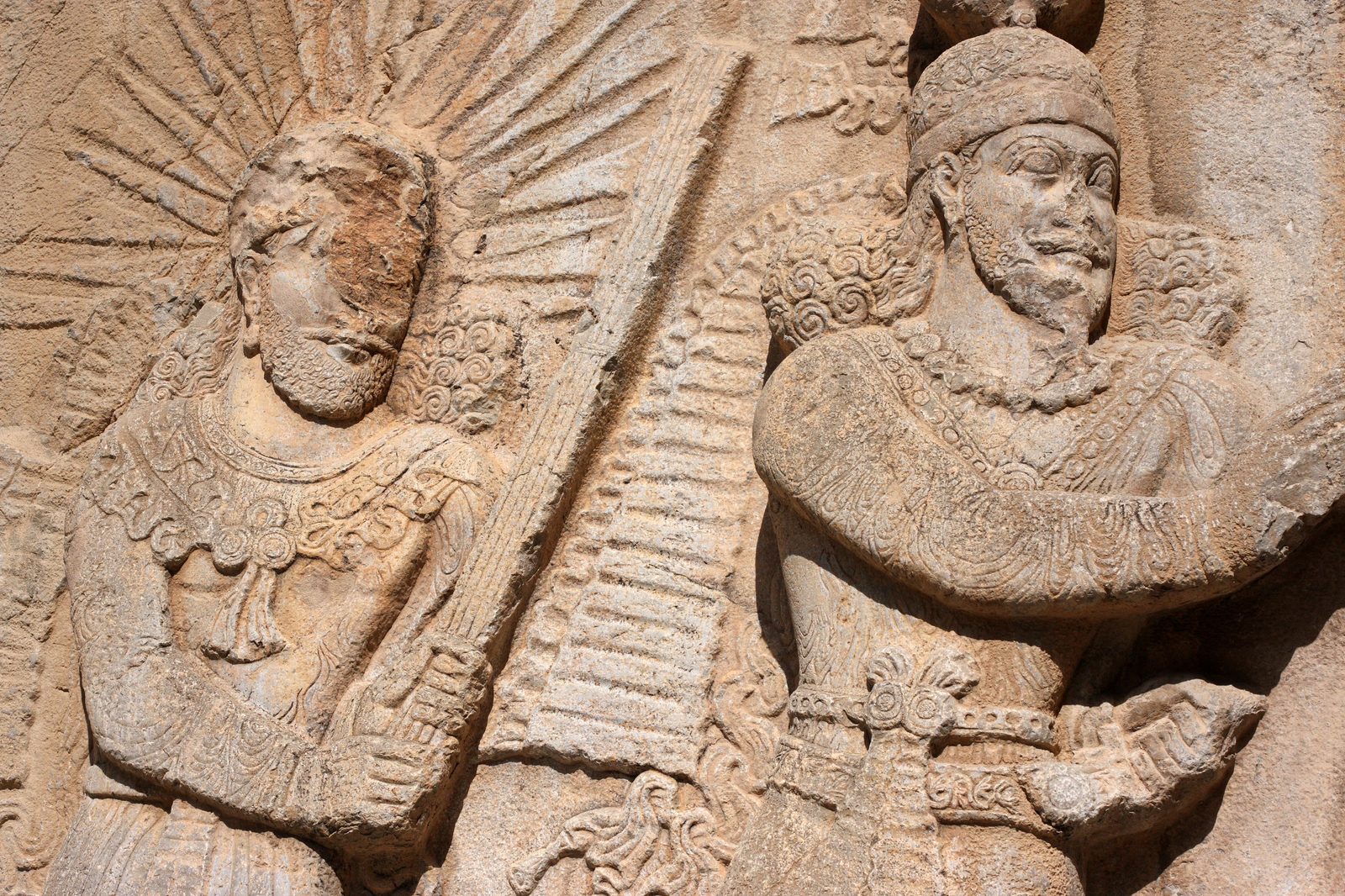
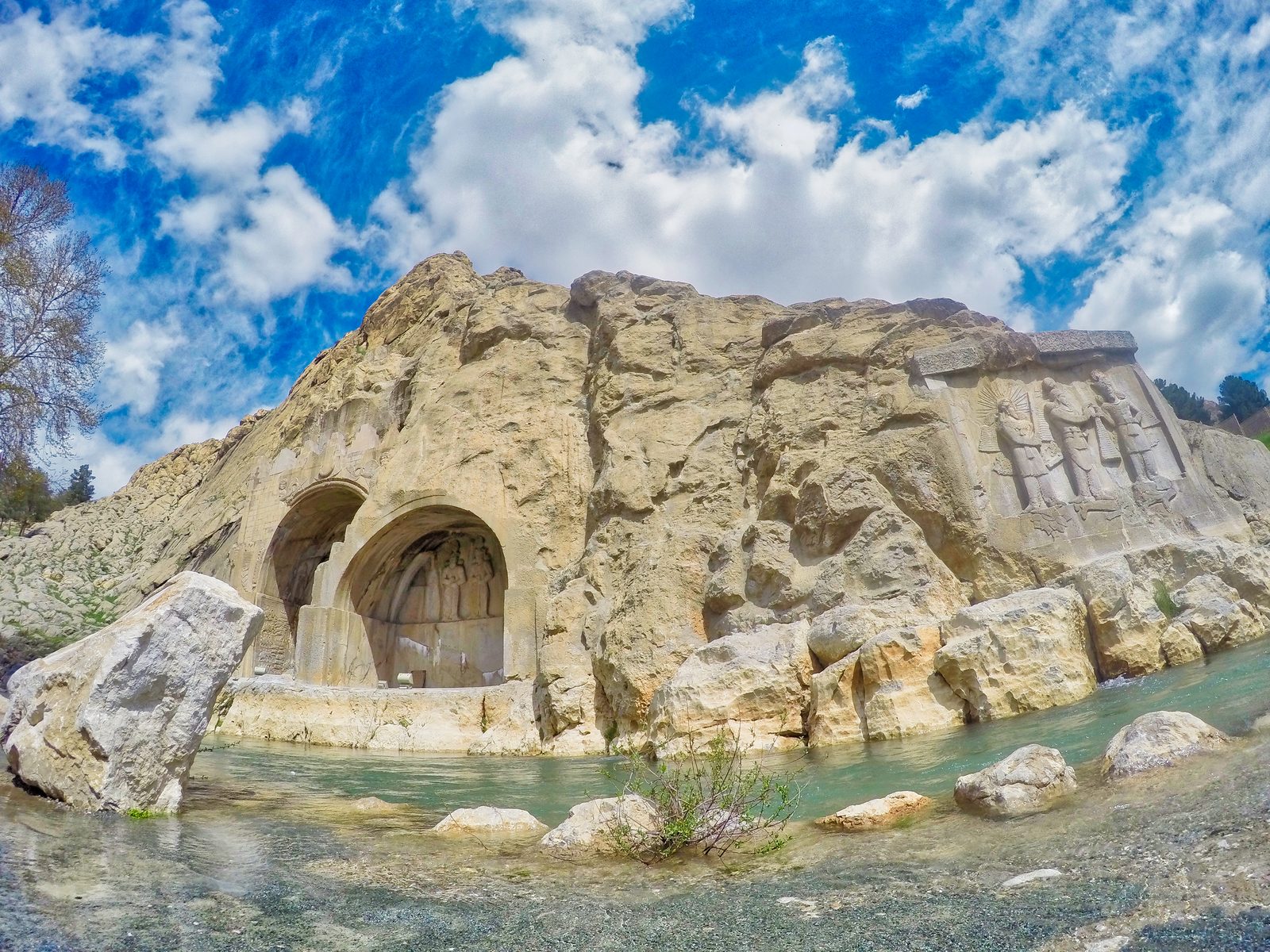
Five kilometers northeast of Kermanshah, the rock face of Taq-e Bostan preserves some of the finest examples of Sassanid art anywhere in Iran. Carved during the third and fourth centuries CE, the site consists of two large arches and several smaller reliefs, all cut directly into the living rock of the Zagros foothills.
The larger arch, about 8 meters wide and 12 meters high, depicts the coronation of Khosrow II, the last great Sassanid king. The relief shows Khosrow standing in the center, flanked by the figures of Ahura Mazda and the goddess Anahita, who present him with the ring of kingship. Above the king's head, a winged crown floats in the rock. The detail of the royal costume, the jewelry, and the ceremonial objects is extraordinary.
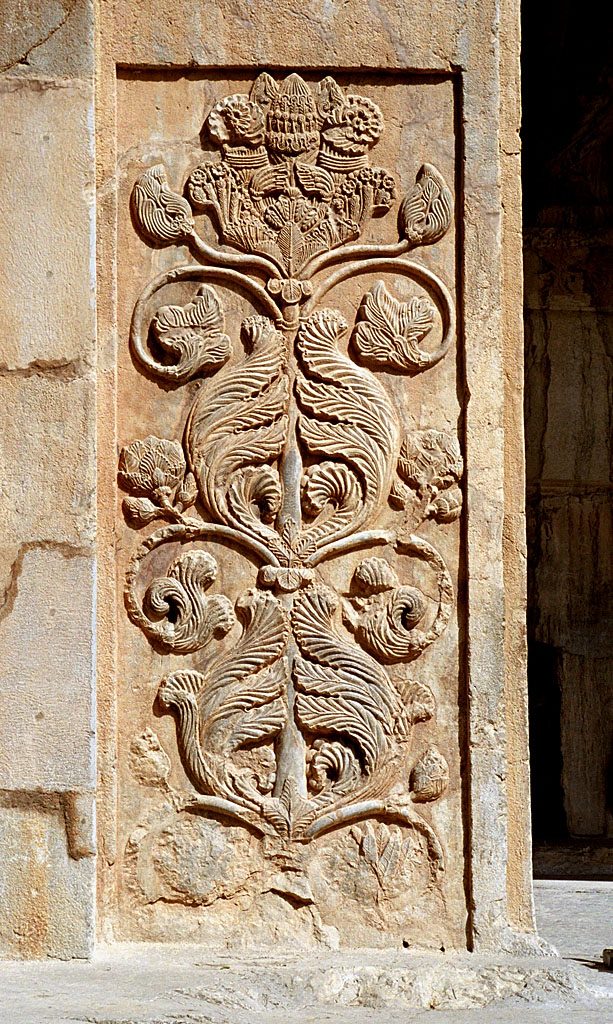
The smaller arch, between the large arch and the relief of Ardeshir II's coronation, shows scenes of Shapur II and Shapur III. The hunting scenes carved on the interior walls of the large arch, showing the king pursuing boar and deer, are considered among the finest examples of Sassanid narrative art. The famous "tree of life" motif, carved above the main arch, is one of the most reproduced images from ancient Iran.
The site is set in a beautiful location, with a spring-fed pool at its base, green spaces, and a small lake where ducks and geese swim. A stone museum nearby displays artifacts from the area. The site is open daily, and admission is around 20,000 tomans. Allow at least two hours to see the reliefs properly and walk around the grounds.
The City of Kermanshah
The Grand Bazaar
The Grand Bazaar of Kermanshah is one of the oldest and most atmospheric in western Iran. Built during the Qajar period, it is a classic covered market with vaulted corridors and domed chambers, organized by trade. The sweet sellers' quarter is the most fragrant, with stalls piled high with nan-e berenji, kak, and other local confections. You will also find Kurdish textiles, woven rugs, metalwork, and spices.
The bazaar is free to enter and is a good place to experience the rhythms of Kurdish commercial life. Open Mehyar and load your Wallet before visiting, so you can pay at any stall by card.
Tekyeh Moaven ol-Molk
One of the most striking buildings in Kermanshah, Tekyeh Moaven ol-Molk is a Hussainiya, a venue for the mourning ceremonies of Ashura. What makes it extraordinary are the tile work and paintings that cover its interior walls. The tiles depict scenes from Persian epic and history, as well as religious imagery, in a vivid palette of blues, greens, and golds. The building was restored after damage during the 2017 earthquake, and the colors have been brought back to their original intensity. Visits are usually possible outside of ceremony times.
Shafei Mosque
The Shafei Mosque is one of Kermanshah's most important religious buildings, notable for its architecture and its role in the city's Sunni community. The mosque features elegant minarets and a spacious courtyard, and its design reflects the blend of Kurdish and Iranian architectural traditions.
Kurdish Culture and People
Kermanshah is one of the major Kurdish cities in Iran. The population speaks Kurdish, primarily in the Kermanshahi dialect, with sub-dialects including Kalhori, Sanjabi, and Zanganeh. Some residents also speak Laki. Kurdish is the language of the bazaar, the home, and the street, and visitors to Kermanshah will immediately notice the difference from the Persian-speaking cities to the east.
Kurdish traditional dress, with its colorful layers and distinctive jewelry, is worn more widely in Kermanshah than in many other parts of Iran. The clothing has roots going back thousands of years, with the Kurdish trousers tracing its origins to the Parthian period. The jewelry, often made from brass alloys and sometimes copper, features bold geometric designs.
Music is central to Kurdish culture. Kermanshah has produced some of Iran's most celebrated musicians, including Kayhan Kalhor, the master of the kamancheh (spike fiddle), and Shahram Nazeri, one of the country's most beloved singers. The tanbur, an ancient stringed instrument, holds a special place in Kurdish musical tradition, and is played during religious ceremonies and seasonal festivals.
The people of Kermanshah are known across Iran for their hospitality and their resilience. The devastating earthquake of November 2017, which measured 7.3 on the Richter scale and caused enormous damage in Kermanshah province, tested the patience and endurance of the population. The recovery has been slow, but the spirit of the community has remained strong.
Food and Sweets
Kermanshah's culinary reputation in Iran rests largely on its sweets, and for good reason. Nan-e berenji, the delicate rice cookies made with rice flour, sugar, butter, and cardamom, are the city's most famous product. They are light, crumbly, and melt in the mouth. Kak, the spiced date cookies filled with walnuts, cardamom, and sesame, are equally beloved. Nan-e nokhodchi, made from chickpea flour, complete the trio of essential Kermanshahi sweets.
These confections are produced by bakeries throughout the city, but the most traditional shops are found in and around the Grand Bazaar. Buying them fresh, still warm from the oven, is an experience that no packaged version can match.
The savory cuisine of Kermanshah is equally distinctive. Kabab barg-e Kermanshahi, a local style of kebabs, is known for its marinade of saffron, onion juice, and spices. Ash-e doogh, a cold yogurt soup with herbs and meatballs, is a summer staple. Kurdish cuisine also features herb-heavy stews, stuffed vegetables, and a variety of breads baked in clay ovens.
When to Visit Kermanshah
The best time to visit Kermanshah is from April through June and from September through October. During these months, temperatures are mild, around 20 to 28 degrees Celsius, and the surrounding mountains are green and accessible. The outdoor sites, particularly Bisotun and Taq-e Bostan, are most enjoyable in pleasant weather.
Summer, from July through August, can be hot, with temperatures reaching 35 degrees Celsius or higher, though the mountain setting keeps Kermanshah cooler than many other parts of Iran. Winter is cold, with frost and snow common from December through February. The outdoor sites are less comfortable, though Taq-e Bostan's sheltered location provides some protection from the weather.
For travelers coming to Iran for the first time, our guide to planning your first trip to Iran covers visas, money, SIM cards, and the essentials you need. And since you will be paying for meals, taxis, and entrance fees along the way, our guide to paying in Iran as a foreign visitor explains how to set up a Mehyar wallet so you are never stuck without local currency.
Plan Your Trip to Kermanshah with Mehyar
Kermanshah is a destination for travelers who want to go beyond the well-trodden route. The combination of Bisotun's ancient inscription, Taq-e Bostan's Sassanid reliefs, the living Kurdish culture of the city, and a culinary tradition that produces some of the finest sweets in the Middle East makes it one of Iran's most distinctive and rewarding cities.
Open Mehyar to start planning. Use the Planner to build your Kermanshah itinerary, Hotels to find accommodation in the city, and Taxi for rides between sights and out to Bisotun. Whether you are flying in or driving from Tehran, Mehyar's Flights and Buses sections help you reach Kermanshah and explore the wider Zagros region.
If Kermanshah's ancient history appeals to you, the Achaemenid ceremonial capital at Persepolis and the royal necropolis at Naqsh-e Rostam extend the story further south, while our guide to first-time travel in Iran covers all the practical details of getting around the country.