
Iran's dramatic landscape of mountains, rivers, and arid plains has demanded mastery over water since the days of the ancient empires. While the qanat system represents the classical Persian solution to water scarcity, the modern era has brought a new chapter in the nation's relationship with its rivers. Today, Iran is home to some of the most impressive dams in the Middle East, structures that not only generate hydroelectric power and provide irrigation for millions of hectares of farmland but also create spectacular artificial lakes set against some of the most rugged terrain on earth. From the towering concrete arch of Karun-3 Dam in the Zagros Mountains to the vast earthen embankment of Karkheh Dam in Khuzestan, these engineering achievements are a source of national pride and, increasingly, destinations for visitors interested in industrial tourism, photography, and the sheer beauty of water meeting stone. This guide takes you on a tour of the most famous dams in Iran.

Karun-3 Dam: The Tallest in Iran
No discussion of Iranian dams can begin anywhere other than Karun-3. Rising to a height of 182 meters above its foundation, Karun-3 is the tallest dam in Iran and one of the tallest arch dams in the world. Completed in 2005, it impounds the Karun River, the only navigable river in Iran, in a dramatic gorge of the Zagros Mountains in Khuzestan Province. The dam's double-curvature arch design is an engineering tour de force, holding back a reservoir of nearly 3 billion cubic meters of water in one of the most seismically active regions of the country.
The setting of Karun-3 Dam is as impressive as the structure itself. The gorge walls rise steeply on either side, covered with sparse vegetation that gives way to bare rock above. The turquoise waters of the reservoir contrast vividly with the brown and gray limestone cliffs, creating a scene that has attracted photographers from across Iran. A viewing platform near the crest of the dam offers panoramic views, and the sheer drop from the top of the dam to the river below is a humbling experience. The dam generates 2,280 megawatts of hydroelectric power, making it one of the most productive power stations in the country.
Access to Karun-3 Dam is via the road connecting Izeh to the dam site, approximately 130 kilometers from Ahvaz. The journey through the Zagros foothills is scenic in its own right, with winding roads passing through small villages and across mountain passes. Mehyar Taxi can arrange transport from Ahvaz or Izeh to the dam, with the flexibility to stop at viewpoints along the way.
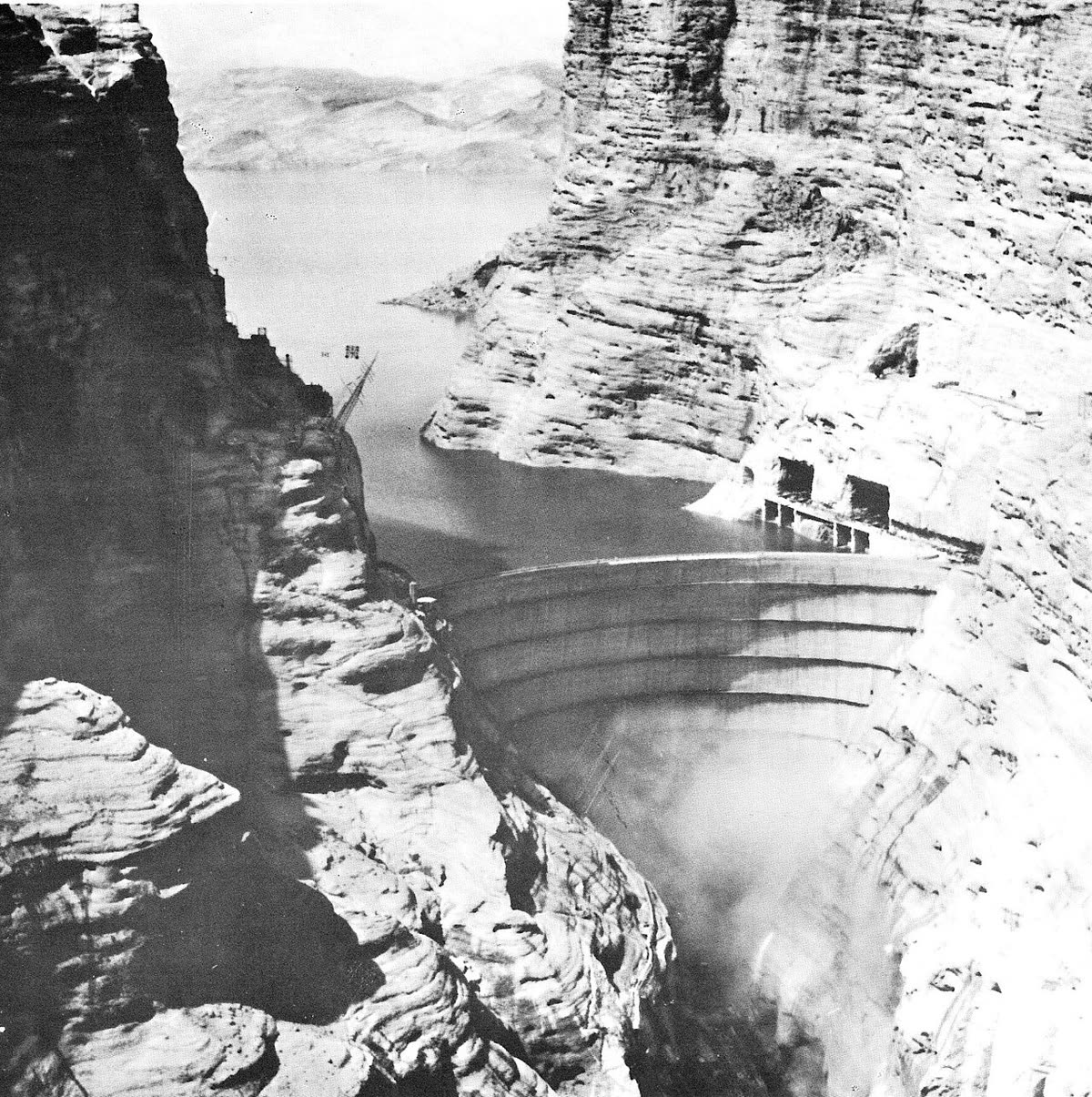
Dez Dam: The Pioneer of Iranian Hydropower
Dez Dam, completed in 1963, holds a special place in Iran's modern history as one of the country's first major hydroelectric projects and a symbol of the modernization drive of the Pahlavi era. Built on the Dez River, a tributary of the Karun, in northern Khuzestan, the dam rises 203 meters from its foundation (though only 187 meters above the riverbed), making it one of the tallest embankment dams in the world at the time of its construction. The reservoir it creates, stretching back through a narrow gorge surrounded by the Zagros Mountains, is one of the largest artificial lakes in Iran.
The Dez Dam project transformed the agriculture and economy of Khuzestan Province. Its waters irrigate vast areas of sugarcane fields and wheat farms on the Khuzestan plain, and its power station generates 520 megawatts of electricity. The lake has also become a recreational destination, with locals from nearby Andimeshk and Dezful coming to fish, picnic on the shores, and enjoy the cooler mountain air. Boat tours operate on the reservoir during the warmer months, offering visitors a unique perspective of the towering canyon walls from the water.
The area around Dez Dam is rich in natural beauty. The Dez River gorge, carved through limestone over millions of years, features dramatic cliff faces and hidden valleys. The nearby Dez Dam Lake recreational area provides basic facilities for visitors, and the combination of the engineering achievement with the surrounding natural landscape makes this one of the most rewarding dam visits in Iran.
Karkheh Dam: The Giant of the West
Karkheh Dam, situated on the Karkheh River in western Iran near the city of Andimeshk, is the largest dam in Iran by reservoir volume and one of the largest earthen dams in the Middle East. Completed in 2001, the dam stretches over 3,250 meters across the Karkheh Valley and stands 69 meters high. Its reservoir covers an area of approximately 165 square kilometers, creating a vast inland sea in the foothills of the Zagros that has transformed the microclimate of the surrounding area.
Karkheh Dam plays a critical role in flood control for the Karkheh basin, a region historically prone to devastating seasonal floods. Its 1,575 megawatt power station is one of the most productive hydroelectric facilities in Iran, and the water it stores supports irrigation for hundreds of thousands of hectares of agricultural land in Khuzestan and Ilam provinces. The scale of the project is difficult to grasp until you stand at the dam's crest and look out over the reservoir, which stretches to the horizon in some directions.
The Karkheh Dam area has become an important ecological zone. The reservoir attracts migratory birds, and the surrounding wetlands support a diverse range of wildlife. Birdwatchers have recorded numerous species in the area, making it an increasingly popular destination for eco-tourism in western Iran.

Latyan Dam: Tehran's Water Guardian
For residents and visitors to Tehran, Latyan Dam is a familiar landmark. Located just 25 kilometers northeast of the capital on the Jajrood River, this rock-fill dam with a clay core has been supplying water to the greater Tehran area since 1967. Standing at 75 meters high and stretching 420 meters along its crest, Latyan Dam creates a reservoir that is visible from many parts of northern Tehran, its waters glinting against the backdrop of the Alborz mountains.
Latyan Dam is particularly significant for Tehranis because of its proximity to the city and its role in the capital's water security. The dam is set in a scenic valley where the Jajrood River cuts through the southern foothills of the Alborz range. The surrounding area includes parks, picnic sites, and several restaurants that serve fresh trout caught from the cold river waters below the dam. On weekends, the road from Tehran to Latyan is busy with families heading out for a day of recreation in the foothills.
The dam is easily accessible from Tehran via Mehyar Taxi, which can take you from any point in the city to the dam in about 45 minutes, depending on traffic. The drive itself is pleasant, passing through the suburban areas of northern Tehran and into the greener, cooler foothills of the mountains. The area around the dam is particularly beautiful in spring when wildflowers carpet the hillsides.
Sefid Rud Dam: The White River Gateway
Sefid Rud Dam, also known as Manjil Dam, stands on the Sefid Rud river in Gilan Province, near the town of Manjil. Completed in 1962, it was one of the earliest large-scale dams built in Iran and remains a vital source of irrigation for the rice paddies of Gilan and a major hydroelectric power station with a capacity of 87 megawatts. The dam is 104 meters high and 460 meters long, creating a reservoir that stretches back into the forested mountains of western Gilan.
What makes Sefid Rud Dam particularly interesting is its location at a climatic crossroads. The area around Manjil is famous for its strong winds, which funnel through a gap in the Alborz mountains and make this one of the windiest places in Iran. This same wind that shaped the region's climate has been harnessed by the Manjil Wind Farm, one of the largest in the Middle East, whose turbines are visible from the dam. The combination of the dam, the wind farm, and the lush green landscape of Gilan creates an unusual and photogenic juxtaposition of energy technologies.
The Sefid Rud river basin is also ecologically significant, as it feeds into the Caspian Sea and supports diverse aquatic ecosystems. The reservoir area offers opportunities for fishing and birdwatching, and the nearby town of Manjil serves as a base for exploring both the dam and the wind farm.
Gotvand Dam: Engineering on the Karun
Gotvand Dam, the uppermost dam on the Karun River, is notable for its unusual construction history and its importance to the irrigation of the Gotvand region in Khuzestan. Completed in 2012, the dam stands 152 meters high and creates a reservoir that extends over 40 kilometers upstream. The dam was built primarily to regulate water flow for the extensive sugarcane plantations in the region and to generate 231 megawatts of hydroelectric power.
The area around Gotvand Dam is of archaeological as well as engineering interest. During the construction of the dam, significant ancient remains were discovered in the reservoir area, leading to extensive salvage excavations that revealed evidence of settlement stretching back thousands of years. The Gotvand region has been a crossroads of civilizations for millennia, and the dam project brought to light artifacts and structures that enriched understanding of the ancient history of Khuzestan.
Visitors to Gotvand Dam can appreciate both the scale of the modern engineering project and the deep historical roots of the landscape it occupies. The reservoir, set among the gentle hills of the Khuzestan foothills, offers a tranquil setting, and the dam's visitor facilities provide information about both the engineering and the archaeological discoveries.
Visiting Iran's Dams: Practical Information
Many of Iran's dams are accessible to visitors, though access to the dam structures themselves may be restricted for security reasons. In most cases, visitors can view the dams from designated observation points, picnic in the surrounding recreational areas, and enjoy the scenic beauty of the reservoirs. Photography is generally permitted in the exterior areas, but always check with local authorities before taking photos of infrastructure.
The best time to visit Iran's dams is during spring, when the rivers are at their fullest from snowmelt and the surrounding landscapes are green and blooming. Autumn also offers pleasant conditions, with warm days and cooler evenings. Summer visits can be very hot, particularly for dams in Khuzestan, where temperatures regularly exceed 45 degrees Celsius.
For travelers planning a road trip to visit multiple dams, Mehyar Taxi and Mehyar Buses offer flexible transport options across Iran's dam country. A circuit that includes Karun-3, Dez, and Gotvand dams, combined with visits to the historical cities of Ahvaz, Shushtar, and Dezful, makes for a rewarding week-long exploration of Khuzestan's engineering heritage and natural beauty. For more ideas on exploring this region, see our guide to Khuzestan's historical attractions.