
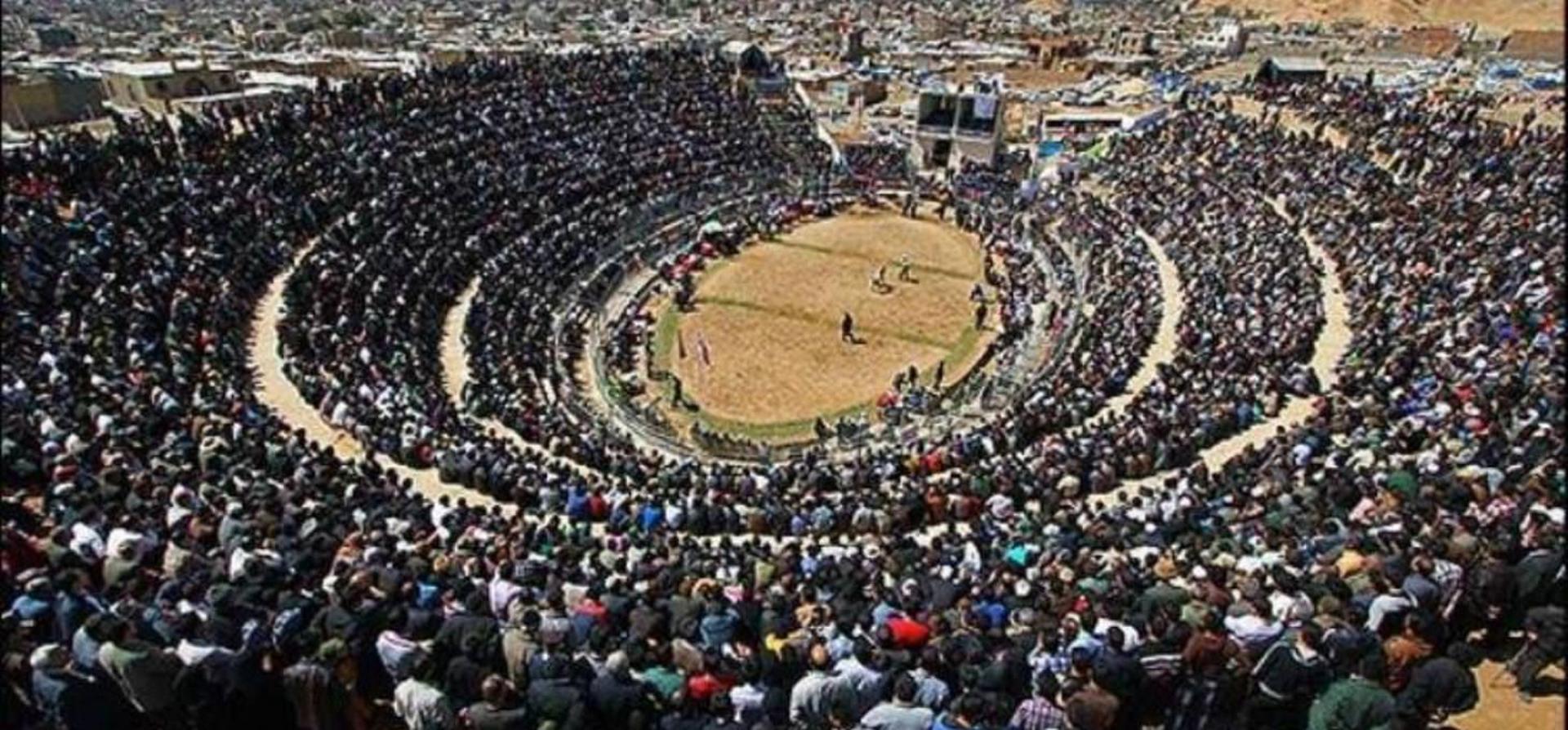
In the northeastern reaches of Iran, where the plains of North Khorasan stretch beneath wide skies, a tradition older than most living memory still thrives with extraordinary vigor. Chookhe wrestling, known locally as "Koshti ba Chookhe," is without question the most popular and most culturally significant local sport in Iran. Far more than mere athletic competition, Chookhe wrestling is a cultural ceremony rooted in the ideals of chivalry, strength, and community that permeate every aspect of life in the Khorasan region. Each year, tens of thousands of spectators gather to watch champions compete on soft earth, their contest accompanied by drums, celebration, and the ancient rhythms of Persian tradition.
The roots of Chookhe wrestling
Wrestling in Iran boasts an exceptionally long history, with its origins running parallel to the ancient heritage of the land itself. The sport has been practiced in various forms across Iran, Turkey, Greece, the former Yugoslavia, Russia, Japan, and Korea, each region developing its own distinctive style. Within Iran, the diversity of wrestling traditions is remarkable: in Khorasan there is Chookhe, in Mazandaran Lo Choo, in Gilan Gileh Mardi, baghal-be-baghal in Arsanzan, Gersh in Khuzestan, Kamar-be-Kamar in Turkmen Sahra, and the Pahlavani wrestling of the Zurkhaneh houses in Tehran and Qom, among many others. Yet above all these, Chookhe wrestling stands as the most celebrated and widely followed.
Chookhe wrestling emerged from the northern areas of Khorasan and has deep roots in the cultural and social life of the region. It was practiced in Kalat-e Naderi, Dargaz, Chapeshlu, Quchan, Shirvan, Chenaran, Bojnurd, and Esfarayen, and later spread to Mashhad, Neyshabur, Torbat-e Jam, and Ashkhaneh. The sport has always been most popular in villages, among tribes, and in nomadic communities, where it serves as both entertainment and a means of cultivating the warrior spirit that has defined Khorasani culture for centuries.
The name and its meaning
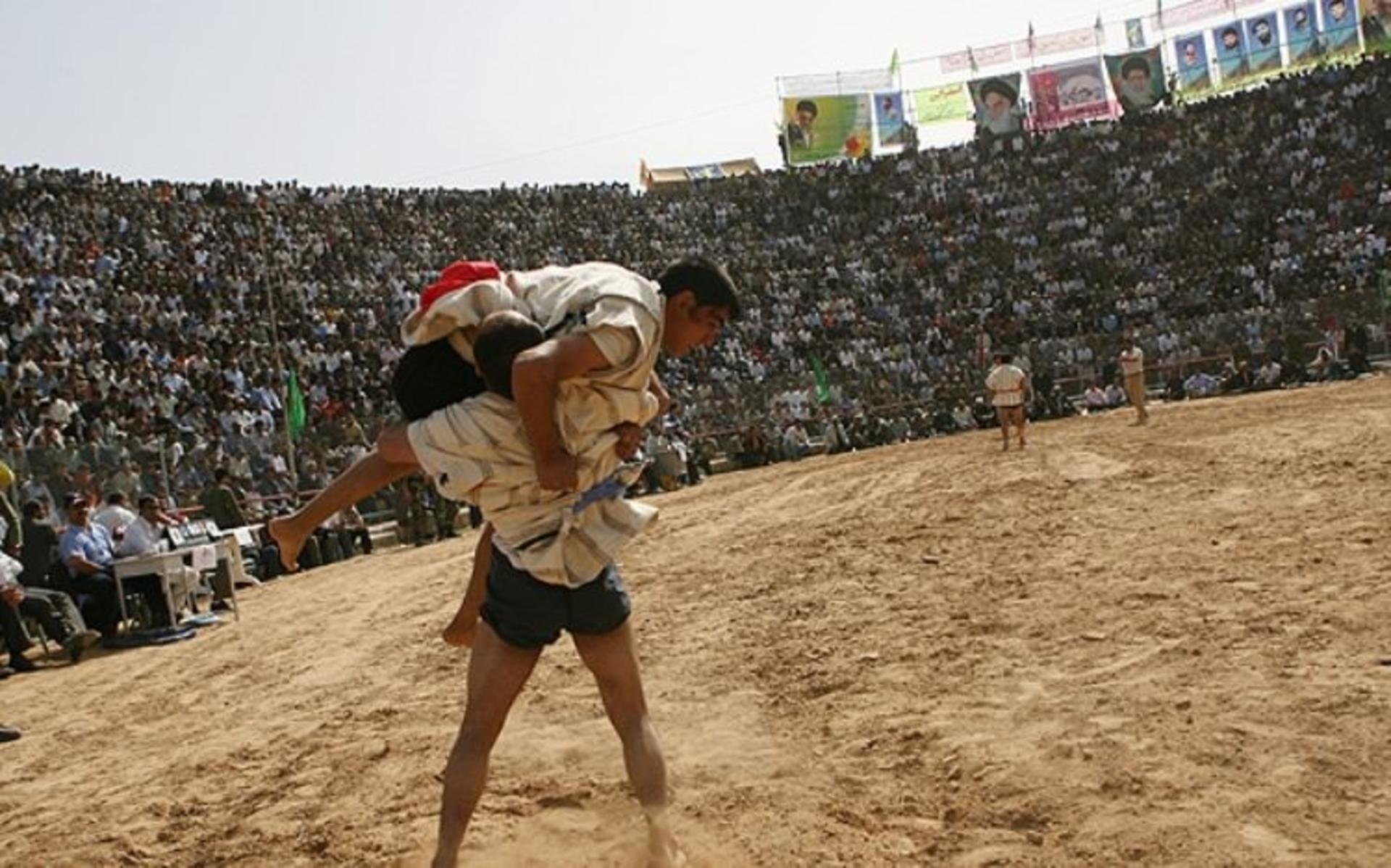
The word "Chookhe" itself carries a fascinating etymology. Consulting authoritative Persian dictionaries, the term derives from "Chookha," a type of woolen garment traditionally worn by shepherds and farmers. In the past, this garment was a thick, durable coat with sleeves, woven by women from the wool of ewes or goats. Today it has evolved into a sleeveless linen vest that wrestlers wear during competition.
In the Turkish language, the word appears in various forms including Chookha, Chufa, Chookna, and Chookhuya, all referring to a woolen undergarment or rough fabric worn by shepherds. According to the book "Chookhe-poshan-e Namdar" (Famous Chookhe Wearers) by the late Amani Amani, the word "Chookhe" is originally of Kurdish origin, meaning a short cloak that wrestlers secure with a belt. Since this sport was practiced from ancient times among the Kurdish population of North Khorasan, it became known as "Koshti ba Chookhe" (wrestling with Chookhe).
How the competition works
In its original form, Chookhe wrestling had no time limit. A wrestler was declared victorious only when he could throw his opponent onto his back or shoulders three times, a feat known as "sayeh andakhtan" (casting a shadow). The sport was held in the courts of khans, at weddings, on Eid al-Fitr, and on the 14th of Farvardin, always on soft grass or earth.
Modern competitions have been formalized. Matches now take place in timed rounds of ten minutes, with a five-minute overtime period if no winner is determined. Wrestlers compete in four or five weight categories, typically 70, 80, 90, and above 95 kilograms, though some events use categories of 65, 75, 85, and above 85 kilograms. Taking holds below the knee or working on the ground is considered a foul.
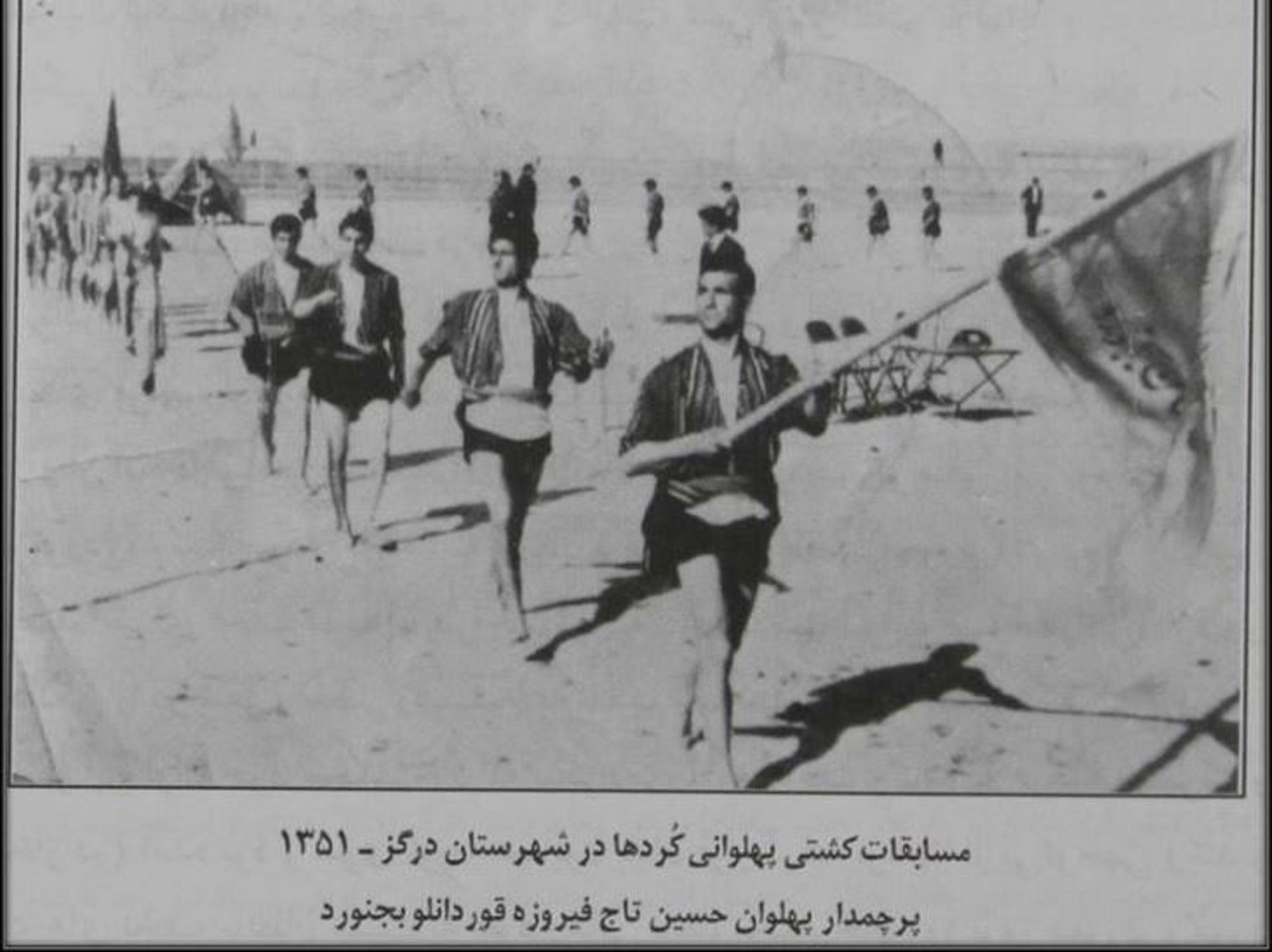
The wrestlers' attire is distinctive. They roll their sleeves up to the elbows, tie a cloth belt around their waist, and tuck the flaps of the Chookhe vest under the belt so it does not impede movement. Trousers are rolled up to the knees, and they wrestle barefoot under the watchful eyes of referees. The tradition of drums and music accompanies the matches, with spectators energetically encouraging the competitors.
Prizes and traditions
The prizes in Chookhe wrestling reflect the sport's deeply traditional and national character. Winners are awarded what is known as "Ghand" (sugar cone), a ceremonial honor. The first-place winner receives the first Ghand, with second and third places receiving lesser Ghand honors. In addition to these symbolic prizes, winners may receive camels, rams, carpets, sheep, household goods, cash, and gold coins. Traditionally, prizes are drawn from symbols of nomadic and rural life, including hand-woven carpets, jajims, and kilims made by local tribespeople. The specific prizes may vary by region, but the key principle is that they should befit the dignity of the sport and provide meaningful support to the wrestlers.
In ancient times, the prizes were even more colorful: the first-place winner received a horse, the second a cow or calf, and the third a ram. These agrarian rewards reflected the deep connection between the sport and the pastoral communities that created it.
The grand competition at Cheshmeh Zeyn Khan
The pinnacle of the Chookhe wrestling calendar takes place on the 14th of Farvardin (early April) at the Cheshmeh Zeyn Khan arena in Esfarayen County, widely regarded as the cradle of Chookhe wrestling in Iran. This single event draws tens of thousands of spectators from across North Khorasan and beyond, transforming the natural setting into a vast festival of sport, music, and community celebration. The arena is located in a recreational area surrounded by nature, consistent with the tradition of holding competitions in open-air settings.
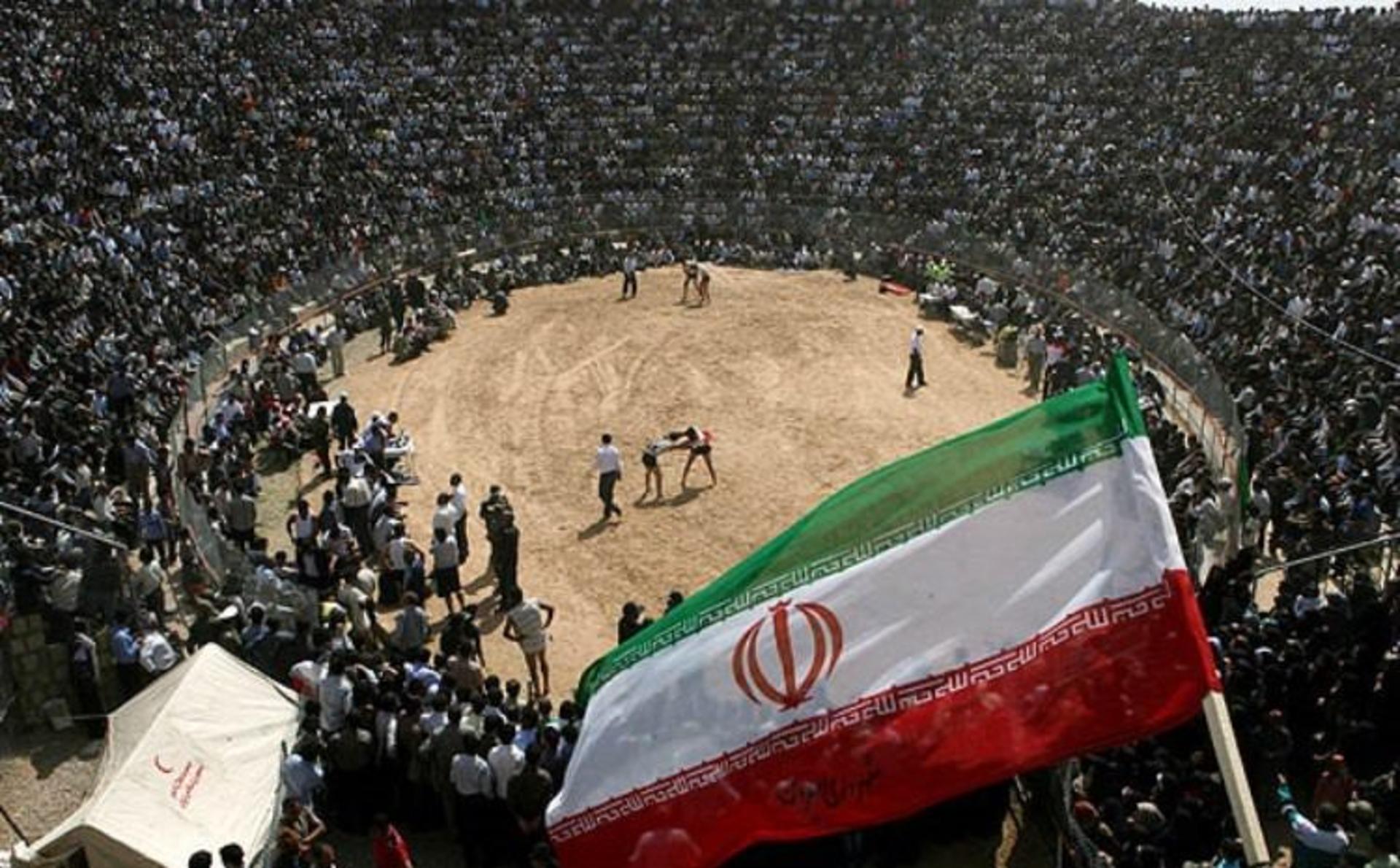
Other significant competitions take place throughout the year: in mid-Bahman (late January) in Maneh va Samalqan, on the 12th of Farvardin in Shirvan, and on the 13th of Farvardin in Bojnurd as a provincial event featuring the region's most celebrated champions. In the village of Rivvad in Jaghatay County, a competition is held in memory of the legendary Khorasani champion Pahloman Jajou.
Chookhe beyond Iran's borders
The influence of Chookhe wrestling extends well beyond Iran's borders. Following the independence of Central Asian republics, particularly Uzbekistan, the sport gained international dimensions. In Uzbekistan, Kazakhstan, and Tatarstan, variations of the same wrestling tradition are practiced under names such as "Goras," "Golish," and "Alish." Uzbekistan led efforts to internationalize the competition, and today teams from North Khorasan and Razavi Khorasan regularly participate in international Chookhe wrestling events, representing Iran on the world stage.
National registration and the path to UNESCO
Chookhe wrestling has been officially registered as a national heritage sport in Iran, and efforts are now underway to secure its inscription on UNESCO's Intangible Cultural Heritage list. The sport's advocates emphasize that Chookhe wrestling represents far more than physical competition. It is a cultural and social ceremony that embodies the values of chivalry, respect, and community solidarity that have defined Khorasani life for generations. In the event of UNESCO recognition, the sport would join a select group of Iranian traditions honored at the international level.
The social impact of Chookhe
Those who study the sport emphasize its capacity to address social challenges, particularly among young people. Chookhe wrestling offers a structured, culturally rooted physical activity that channels energy positively and fosters community bonds. Families attend competitions together, and the events serve as important social gatherings that strengthen communal identity. The sport's combination of physical challenge, cultural ceremony, and festive atmosphere makes it a uniquely powerful force for social cohesion in the regions where it is practiced.
Experiencing Chookhe wrestling
For travelers interested in witnessing this extraordinary tradition firsthand, the best opportunity is the annual competition at Cheshmeh Zeyn Khan in Esfarayen on the 14th of Farvardin, which typically falls in early April. Open Mehyar to plan your trip to North Khorasan, where you can arrange Hotels in Bojnurd or Esfarayen, use Taxi to reach the competition grounds, and take Buses between cities in the region. The atmosphere at Cheshmeh Zeyn Khan is electric, with drumbeats echoing across the plain as thousands of voices rise in encouragement. It is one of those rare cultural experiences that connects the visitor directly to the living heart of Iranian tradition.