Spanning the mighty Karun River in the heart of Khuzestan Province, the Black Bridge of Ahvaz is one of Iran's most evocative industrial-era landmarks. Officially known as the Victory Bridge, this 1,050-meter steel structure has carried trains, soldiers, and the hopes of a nation since 1930. Its dark metallic frame, striking against the warm brown waters of the Karun, tells a story that reaches back to the Sassanian Empire and forward to the modern identity of one of Iran's most vibrant cities.
Where Is the Black Bridge?
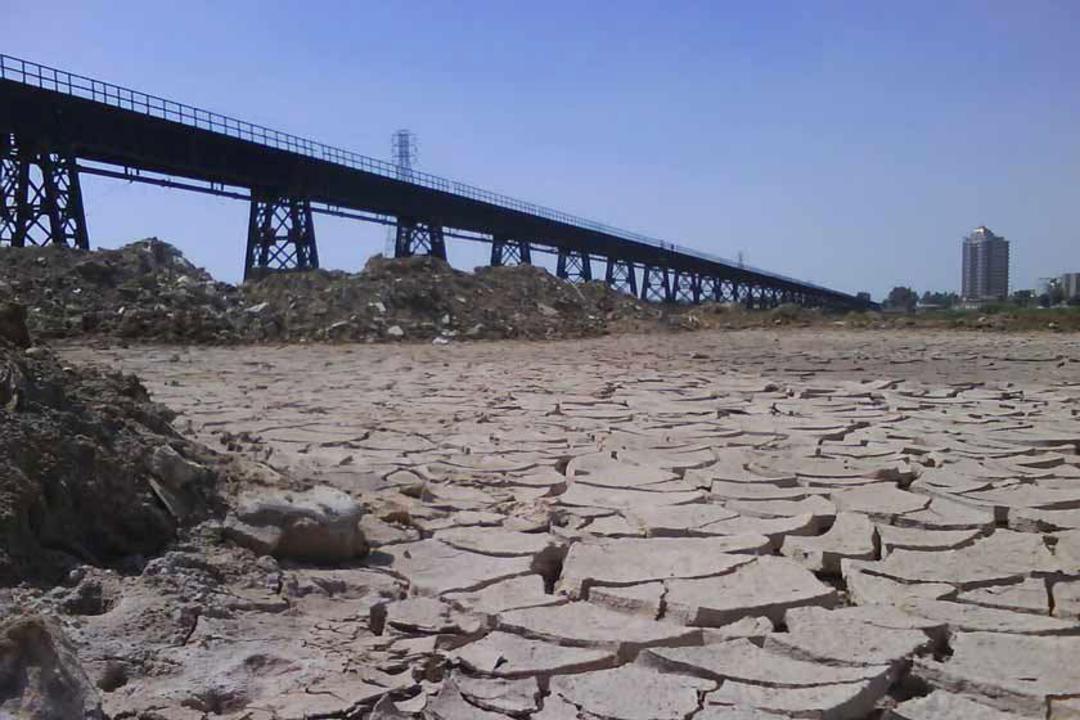
The Black Bridge stands in the center of Ahvaz, the capital of Khuzestan Province in southwestern Iran. It crosses the Karun River between the Third Bridge upstream and the Seventh Bridge downstream, near Mehr Hospital and the Island Park. The Karun, Iran's only navigable river, flows directly through the city, dividing it into eastern and western halves, and the bridges that span it form the arteries of urban life.
Ahvaz itself is a city of extraordinary character. Located in the heart of Khuzestan, the ancient land of Elam and the cradle of some of the earliest civilizations on Earth, it is a place where Arab and Persian cultures blend, where the scent of cardamom coffee mingles with the heat of the southern sun, and where the Karun provides a lifeline of green through a landscape otherwise dominated by oil fields and date palm groves.
How to Get There
Ahvaz is well connected to the rest of Iran by air, rail, and road.
By Air: Ahvaz International Airport (Ahvaz Shahid Dastgheib International Airport) receives regular flights from Tehran, Mashhad, Shiraz, and Bandar Abbas. The flight from Tehran takes approximately one hour and fifteen minutes. From the airport, the Black Bridge is about 15 minutes by taxi.
By Train: Ahvaz has a railway station on the national rail network, a fitting arrival point given that the Black Bridge itself was built to carry a railway line. Trains connect Ahvaz with Tehran and Bandar Imam Khomeini, among other destinations.
By Bus: Intercity buses serve Ahvaz from most major cities. The journey from Tehran takes about ten to twelve hours. [Mehyar](/) buses offer a comfortable option with online booking through the app, and the route passes through the scenic landscapes of central and western Iran.
By Car: The drive from Tehran covers roughly 820 kilometers via freeway and national highway, taking eight to nine hours. The route through Isfahan and then south into Khuzestan is rewarding, with the scenery gradually shifting from highland to palm-fringed lowland.
Once in Ahvaz, city taxis and ride-hailing services make it easy to reach the Black Bridge from any part of the city. [Mehyar](/) taxis offer reliable transport with professional drivers who can share local insights about the bridge and the surrounding area.
The History of the Black Bridge
The Black Bridge was constructed in 1930, during the early years of Reza Shah Pahlavi's reign, at the same time as Iran's Trans-Iranian Railway was being built. Its purpose was strategic and ambitious: to connect the railway line running from Bandar Imam Khomeini on the Persian Gulf to the Khorramshahr-Tehran railway, creating a continuous rail link across the Karun and linking the southern ports to the national network.
The bridge was built by the South Iran Shipping Company with engineering expertise drawn from European firms. Its all-metal construction, with each component bolted rather than welded, reflected the most advanced bridge-building techniques of the era. Every steel piece was manufactured abroad, likely in Germany, and then shipped to Iran for assembly on-site by a team of Iranian and European technicians.
What makes the location historically profound is that the Black Bridge was built directly atop the remains of the ancient Sassanian Shadervan Bridge, a stone structure from the third century CE that once served as one of the great crossings of the Sasanian Empire. The stone foundations of the Shadervan Bridge can still be seen beneath the modern steel structure, creating a remarkable visual palimpsest where two eras of Persian engineering, separated by more than a millennium, coexist in the same span of river.
Design and Architecture
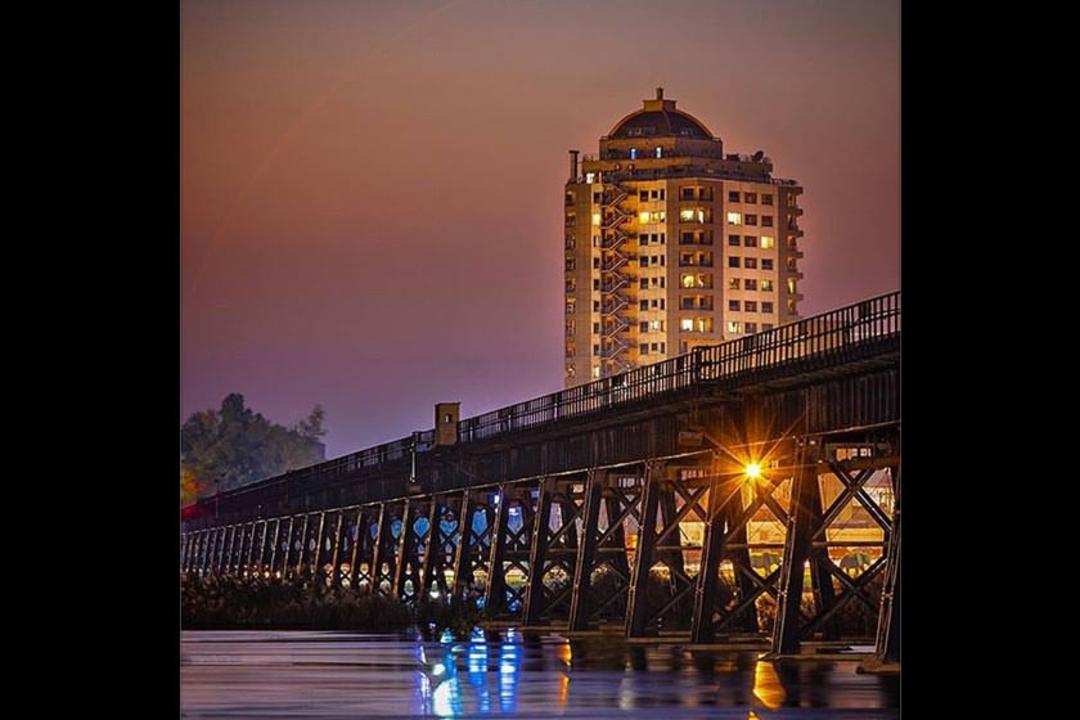
The Black Bridge is a marvel of early twentieth-century engineering. It measures 1,050 meters in length and 6 meters in width, supported by 52 concrete pillars embedded in the riverbed of the Karun. The total weight of the steel superstructure exceeds 20 tons. The bridge accommodates two railway tracks in the center, with pedestrian walkways on both sides, each 2 meters wide, allowing visitors to walk across and appreciate the structure up close.
The bridge's original black metallic color gave it its popular name, the Black Bridge, though locals also know it as the Victory Bridge, a name it earned during World War II. The Allies used it to transport munitions and supplies from the Persian Gulf to the Soviet front, and its strategic contribution to the war effort was significant. The name "Victory Bridge" remains popular among older residents of Ahvaz.
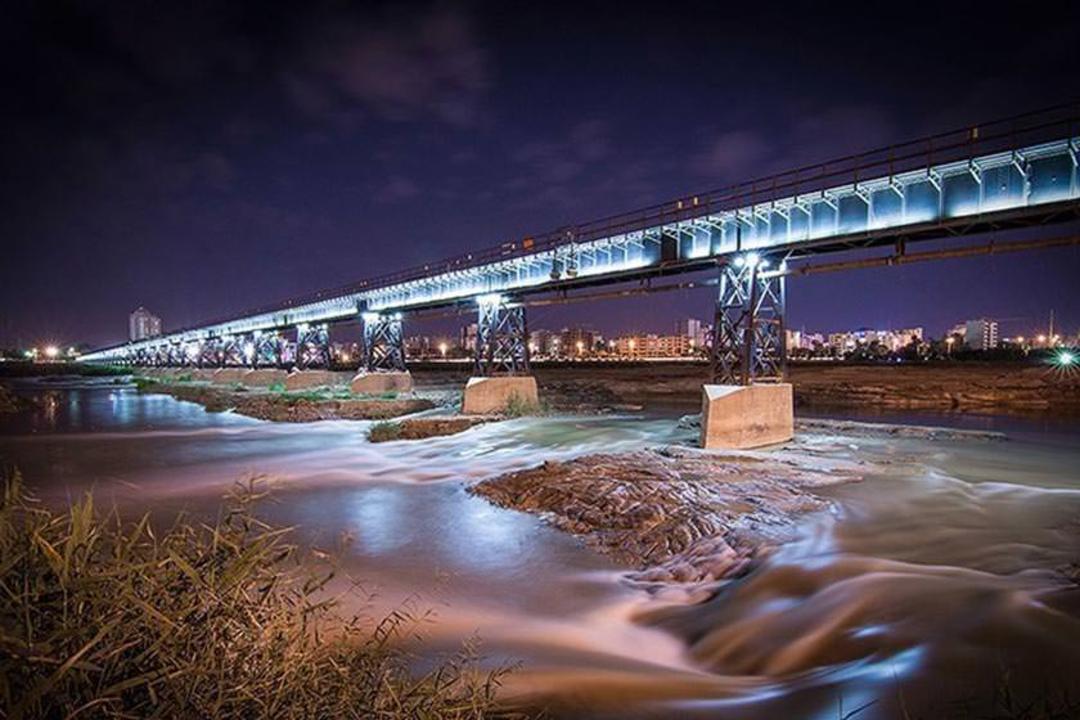
In 1999, the Black Bridge was inscribed on Iran's National Heritage List, with registration number 2599, recognizing its historical and architectural importance. Since then, restoration work has included structural repairs, repainting, and the installation of modern LED lighting that illuminates the bridge at night, casting a golden glow across the water and creating one of the most photographed scenes in Ahvaz.
Significant Events and Resilience
Since its construction, the Black Bridge has weathered significant events. During World War II, it served as a vital supply line for the Allied forces, earning its alternative name. In 1965, a serious fire damaged portions of the structure, but repairs were carried out and the bridge continued to function. During the Iran-Iraq War of the 1980s, Ahvaz came under bombardment, and while the bridges of the city were targeted, the Black Bridge survived, a testament to the robustness of its engineering.
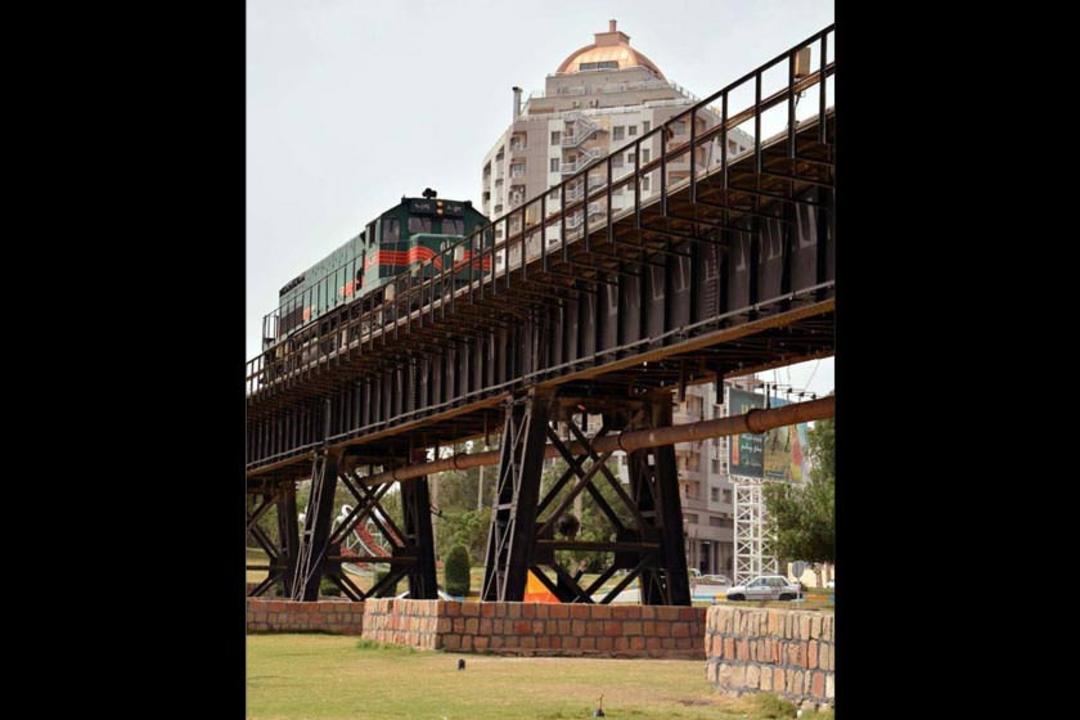
The bridge has also been a silent witness to the social and economic transformation of Ahvaz. What was once a frontier town on the edge of the Khuzestan oil fields has grown into a metropolis of over a million people, and the Black Bridge has been at the center of that urban story throughout. It continues to carry trains today, serving as a working piece of infrastructure rather than a museum exhibit, which gives it a lived-in authenticity that purely decorative landmarks lack.
The Black Bridge in Daily Life
For the people of Ahvaz, the Black Bridge is more than a historical monument. It is a daily companion, a landmark that orients the city. Commuters cross it every morning, students walk its pedestrian paths on their way to school, and families gather along its railings in the evenings to watch the Karun flow beneath them. The bridge is particularly beloved at sunset, when the fading light catches the steel frame and the water turns to molten copper.
Photographers are drawn to the bridge for its strong lines and dramatic presence. The combination of industrial-era engineering, the ancient Sassanian foundations below, and the tropical backdrop of palm trees and river mist creates photographic opportunities that are unique to Ahvaz.
Nearby Attractions
Ahvaz has much to offer beyond the Black Bridge. The Karun riverfront promenade, lined with parks and cafes, is ideal for evening strolls. The Abdolhamid Market, one of the oldest bazaars in the city, offers a vibrant taste of local commerce and cuisine. The Shrine of Ali Ibn Mahziar Ahvazi, a revered Shia scholar, is a short distance away and draws pilgrims from across the region.
Other notable bridges nearby include the Kianpars Nature Bridge, which connects two riverside parks and is popular for walking, located about 6.6 kilometers upstream. The White Bridge, Ahvaz's first suspension bridge over the Karun, is renowned for its stunning nighttime illumination, approximately 8.4 kilometers away. The Eighth Bridge, one of the longest cable-stayed bridges in Iran, and the Seventh Bridge with its famous artificial waterfall, the longest in the Middle East, complete the city's remarkable collection of river crossings.
For those interested in the broader heritage of Khuzestan, the ancient city of Susa, the ziggurat of Chogha Zanbil, and the watermills of Shushtar are all within day-trip distance. [Mehyar](/) can arrange excursions to these sites, combining historical depth with the comfort of modern transport.
Best Time to Visit
Ahvaz has a hot semi-arid climate, with summer temperatures frequently exceeding 45 degrees Celsius. The best time to visit is from late October through early April, when temperatures are mild, the evenings are pleasant, and the city comes alive outdoors. The Karun riverfront is especially inviting during these months, and walking across the Black Bridge becomes a comfortable and rewarding experience.
Spring brings the Khuzestan landscape into vivid bloom, with date palms heavy with fruit and wildflowers dotting the plains. Winter, while mild by northern Iranian standards, can bring occasional rain and cooler temperatures that are nonetheless welcome relief from the summer heat.
Plan Your Visit with Mehyar
The Black Bridge of Ahvaz is a destination where engineering, history, and daily life converge on the banks of Iran's only navigable river. Whether you are a student of industrial heritage, a photographer seeking dramatic subjects, or simply a curious traveler drawn to the stories that bridges tell, this remarkable structure delivers on every level. Let [Mehyar](/) arrange your transport to Ahvaz, your hotel, and your excursions to the broader treasures of Khuzestan, so you can focus on soaking in the atmosphere of this unforgettable city.