Step into the ancient world at Bisotun, one of Iran's most awe-inspiring historical sites. Rising from the rugged limestone cliffs of the Zagros Mountains in Kermanshah Province, this UNESCO World Heritage site preserves the monumental inscription and bas-relief of Darius the Great, carved in 521 BCE. Bisotun stands as a bridge between the modern traveler and the majestic past of the Achaemenid Empire, offering an unforgettable encounter with the art, language, and power of ancient Persia.
Where Is Bisotun?
Bisotun sits approximately 30 kilometers northeast of the city of Kermanshah in western Iran, nestled along the ancient trade route that once connected the Persian high plateau with Mesopotamia. The site rests at an elevation of about 1,620 meters above sea level, surrounded by the dramatic scenery of the central Zagros range. Its strategic position made it a natural focal point for empires seeking to control the flow of goods, ideas, and armies between the Iranian plateau and the fertile plains of Iraq.
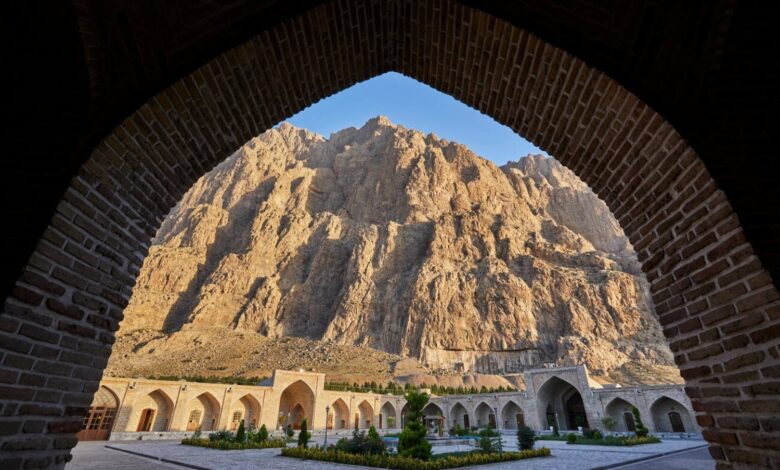
The town of Bisotun, a quiet settlement of modest size, serves as the gateway for visitors. The historical complex itself sprawls across a wide area at the foot of Mount Bisotun, where the famous Achaemenid relief commands attention from a cliff face some 100 meters above the ground. The surrounding landscape of rocky outcrops, walnut trees, and seasonal waterfalls creates a setting of striking natural beauty that complements the archaeological splendor.
How to Get There
Reaching Bisotun is straightforward for travelers based in Iran's major cities. Kermanshah, the provincial capital, is the nearest hub and can be reached by air, bus, or car.
By Air: Kermanshah Airport (Shahid Ashrafi Esfahani Airport) receives regular domestic flights from Tehran, Mashhad, and other cities. The flight from Tehran takes roughly one hour. From the airport, Bisotun is about 45 minutes by car.
By Bus: Intercity buses connect Kermanshah with Tehran (approximately six hours), Isfahan (about seven hours), and other major centers. Mehyar buses offer comfortable and affordable connections with online booking available through the app.
By Car: The drive from Tehran to Bisotun covers roughly 520 kilometers via the Tehran-Kermanshah freeway, taking about five to six hours. The route passes through the scenic valleys of the central Zagros, with mountain views that reward patient drivers. Rental cars and private drivers can be arranged through [Mehyar](/) for maximum flexibility.
Once in Bisotun, the archaeological site is easily accessible from the main road, with parking available near the visitor center.
The Achaemenid Inscription and Bas-relief
The crown jewel of Bisotun is the colossal bas-relief and cuneiform inscription of Darius I, carved high on the cliff face in 521 BCE. The relief depicts Darius standing victorious over the rebel Gaumata, who had seized the throne after the death of Cambyses. Darius holds his bow with calm authority while the fallen usurper lies beneath his foot. Behind the king stand nine bound figures representing the rebel leaders of the various provinces he subdued, each in distinctive costume. Above them hovers the winged figure of Ahura Mazda, the supreme deity of Zoroastrianism, blessing the king's sovereignty.
What makes this relief truly extraordinary, however, is the inscription that accompanies it. Written in three languages, Old Persian, Elamite, and Babylonian, the text recounts Darius's rise to power, his defeat of Gaumata, and his suppression of revolts across the empire. The trilingual nature of the inscription proved crucial for modern scholarship, serving as the key to deciphering cuneiform script in the same way the Rosetta Stone unlocked Egyptian hieroglyphs.
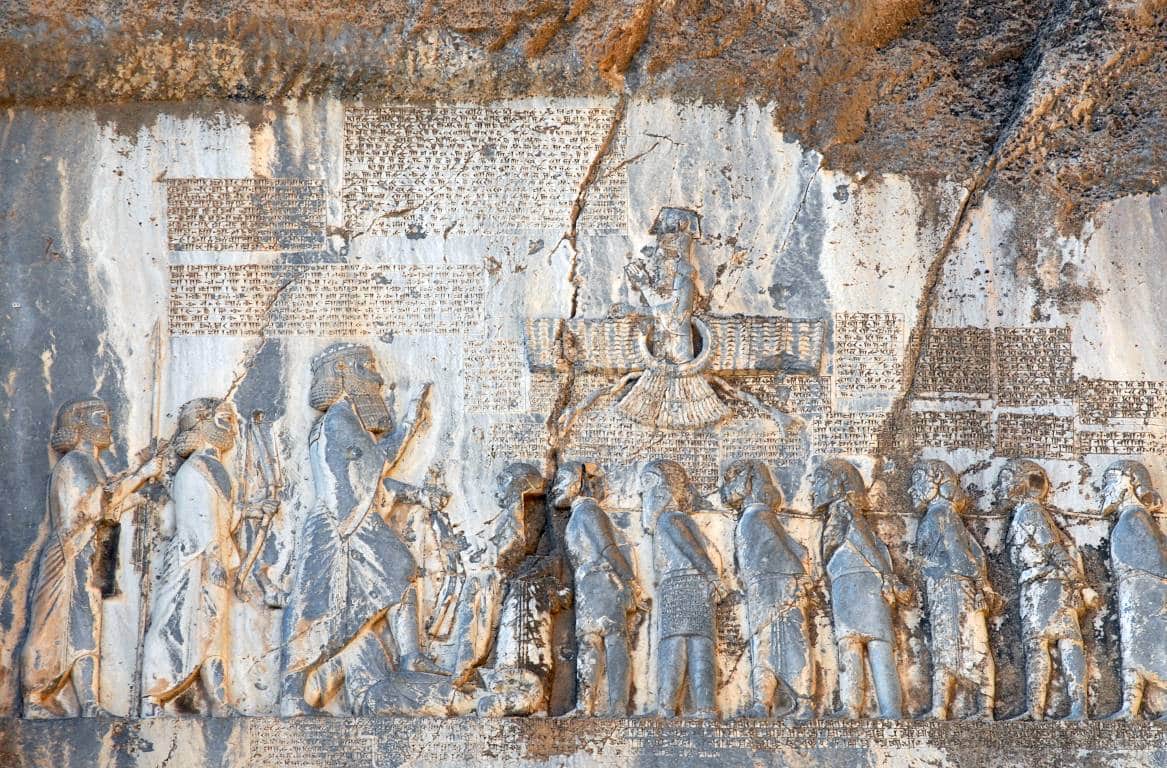
The inscription contains approximately 1,200 lines of text and spans a period from 522 to 521 BCE. It provides invaluable information about the organization of the Achaemenid Empire, the nature of its provinces, and the ideological foundations of Darius's rule. The text opens with a powerful declaration of divine sanction, as Darius attributes his kingship to the grace of Ahura Mazda, establishing a theological framework for royal authority that would endure throughout Persian history.
Beyond the Achaemenids: Layers of History
Bisotun is far from a single-period site. The cliffs and surrounding terrain contain evidence of human activity stretching back to prehistoric times. Archaeologists have uncovered artifacts from the Paleolithic, Neolithic, and Bronze Age periods, revealing that this location has served as a crossroads for thousands of years.
During the Median period, Bisotun likely functioned as a ceremonial or administrative center, though the evidence remains fragmentary. The Sassanian era left its mark as well, with rock reliefs and inscriptions from the third century CE adding another layer to the site's narrative. The Ilkhanid period saw the construction of the nearby Rab'e Rashidi complex, and traces of a Mongol-era settlement can still be detected in the surrounding hills.
Perhaps the most evocative non-Achaemenid monument at Bisotun is the unfinished Sassanian rock relief, sometimes called the "Sassanian Anahita Temple," carved into a grotto near the main inscription. This atmospheric space, with its rough-hewn walls and echoes of ancient water channels, offers a contemplative counterpoint to the grand imperial declaration above.
Exploring the Surrounding Area
The wider Bisotun complex rewards careful exploration. A small museum at the site displays artifacts recovered during excavations, including pottery, tools, and fragments of inscriptions. The museum provides context for the main inscription and helps visitors visualize daily life in ancient Persia.
A short walk from the main site leads to the Bisotun Waterfall, a seasonal cascade that tumbles over the limestone cliffs during spring and early summer. The waterfall, surrounded by verdant vegetation and walnut groves, offers a refreshing break from the archaeological exploration and a chance to appreciate the natural beauty that has drawn people to this location for millennia.
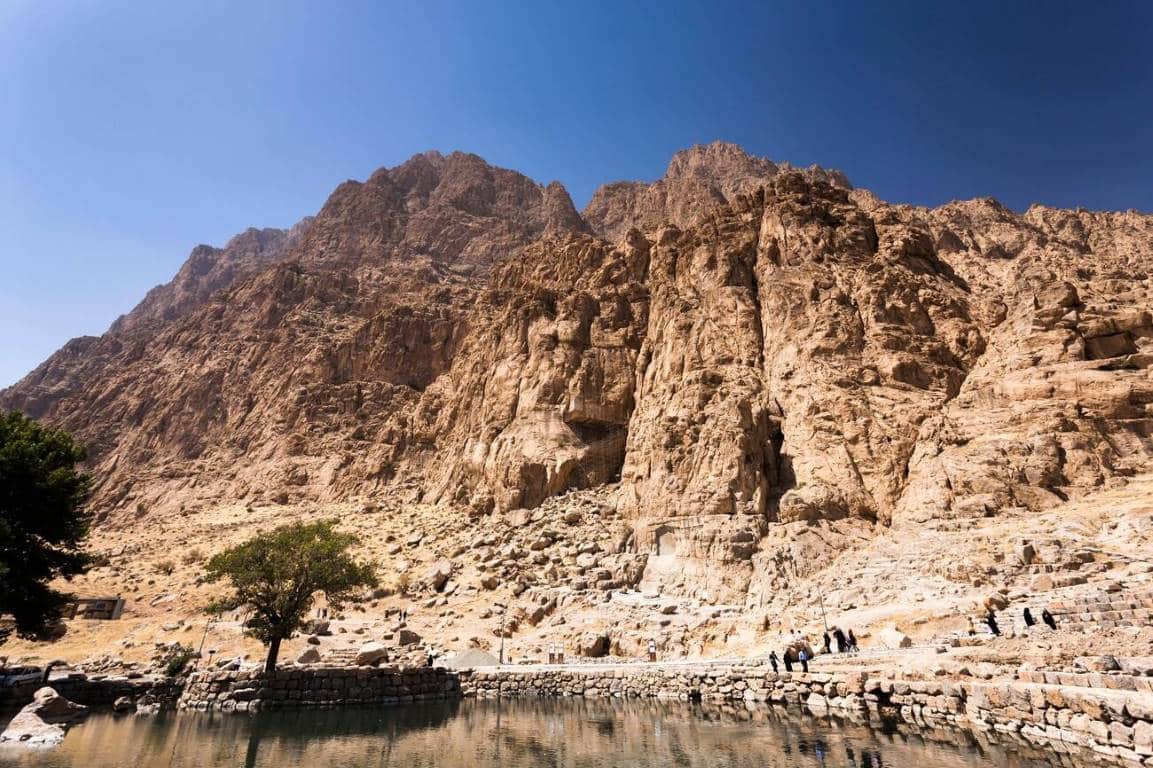
For more active visitors, hiking trails wind through the surrounding mountains, passing by lesser-known rock shelters and cave sites. The Parau Cave, one of the longest cave systems in Iran, lies nearby and attracts spelunkers from across the country. The rugged landscape of the Zagros provides endless opportunities for photography, birdwatching, and simply soaking in the grandeur of the terrain.
Hours, Tickets, and Practical Details
The Bisotun archaeological complex is open daily from early morning until late afternoon. A modest entrance fee grants access to the main inscription area, the museum, and the surrounding grounds. The site is managed by Iran's Cultural Heritage, Handicrafts and Tourism Organization, and guided tours are sometimes available on-site or can be arranged in advance through [Mehyar](/).
Facilities at the site include restrooms, a small parking area, and a few local vendors selling drinks and snacks. Visitors should bring water, sun protection, and comfortable walking shoes, as the terrain around the inscription is uneven and the climb to the viewing platform involves some steep steps.
The best months to visit are April through June and September through November, when temperatures in Kermanshah are mild and the surrounding landscape is at its most attractive. Spring brings wildflowers to the mountainsides, while autumn paints the walnut trees in shades of gold.
Nearby and Related Attractions
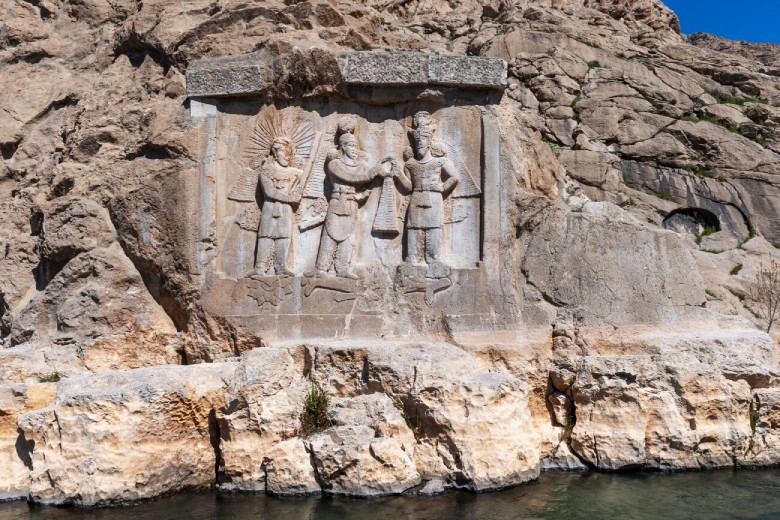
Bisotun is part of a rich constellation of historical sites in Kermanshah Province. The famous Taq-e Bostan rock reliefs, featuring massive Sassanian-era carvings set beside a tranquil reflecting pool, lie just 25 kilometers to the west in the city of Kermanshah. The city itself offers vibrant bazaars, excellent Kurdish cuisine, and the attractive Shariati Park.
Further afield, the Anahita Temple at Kangavar and the ancient site of Sarab-e Niloufar provide additional windows into Iran's layered past. For travelers exploring western Iran, combining Bisotun with Taq-e Bostan and the city of Kermanshah makes for a memorable two or three day itinerary that showcases the best of the Zagros region.
Plan Your Visit with Mehyar
A visit to Bisotun is a journey to the very roots of Persian civilization. Standing before the inscription of Darius the Great, carved more than two and a half millennia ago into the living rock of the Zagros, you feel the weight of history in a way that few archaeological sites can deliver. Let [Mehyar](/) organize your transport, accommodation, and tickets so you can focus on what matters, which is absorbing the grandeur of one of Iran's greatest treasures.