
Gilan is the Iran that surprises people. East of the Caspian's southern shore, between the Talysh mountains and the Alborz, the country turns soft and green: terraced tea gardens, rain that arrives in every season, rice paddies mirroring the clouds, and villages whose stepped houses climb a hillside so that one family's courtyard is another's rooftop. The provincial capital, Rasht, is the beating heart of it all, famous across Iran for its food and its unhurried, cafe-filled streets.
This is a province made for a road trip. Its sights split into three bands: the coastal plain around Bandar Anzali and Rasht, the green foothills of Lahijan and Rudbar, and the high summer pastures of Masal, Masuleh and Talesh, where you can watch the clouds pass beneath you. With Tehran about three and a half hours away by freeway, Gilan has long been Iran's favourite northern escape.

Where is Gilan?
Gilan province lies in northern Iran along the southwestern shore of the Caspian Sea, bordered by the Alborz and Talysh ranges and by neighbouring Mazandaran to the east and Ardabil to the west. Rasht, the capital, sits almost in the centre of the province, close to the Anzali lagoon and the mouth of the Sefid-Rud, or White River. From the sea coast to alpine meadows at two thousand metres, the range of landscapes is remarkable.
How to get to Gilan and around it
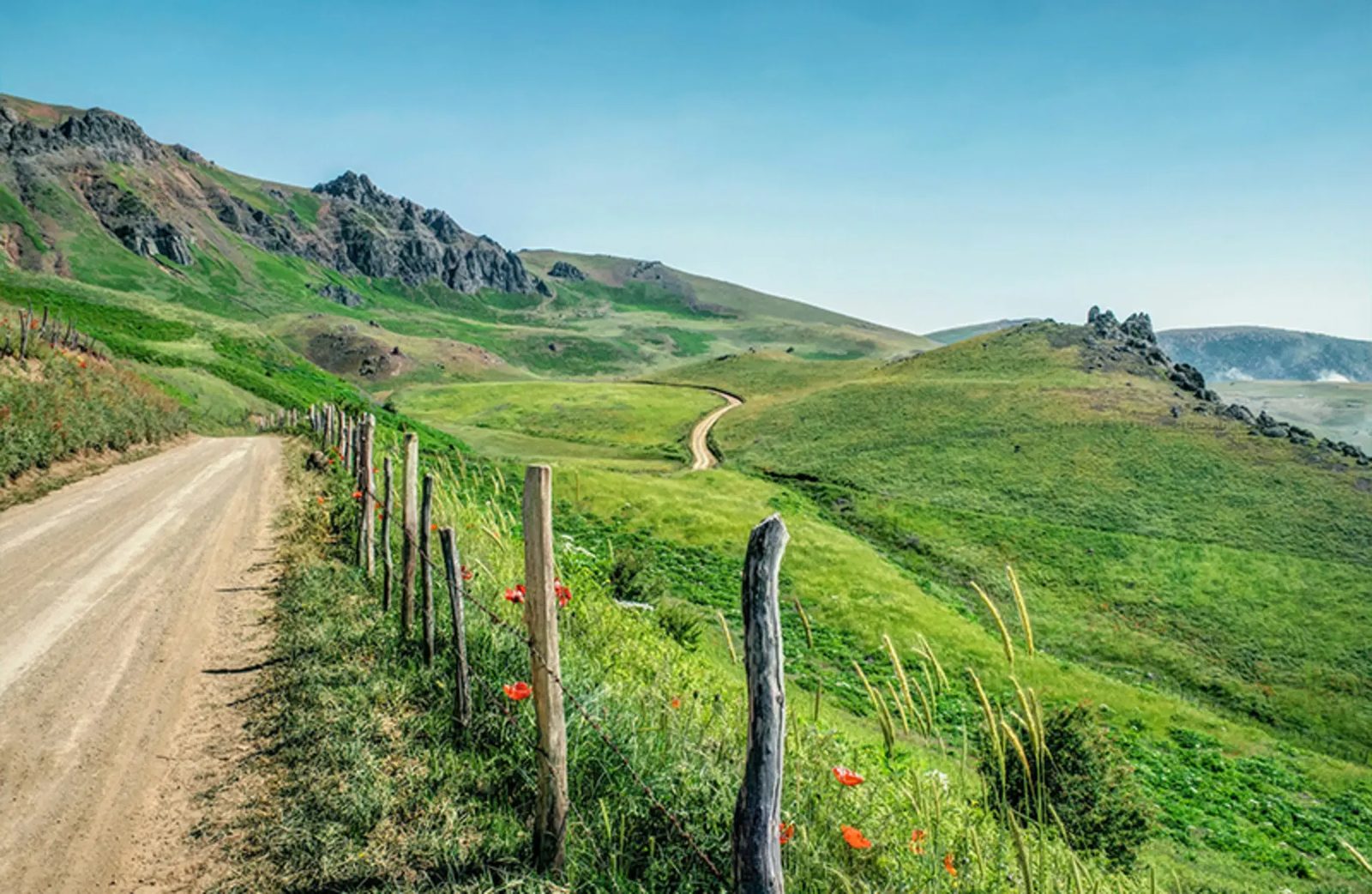
By Mehyar Flights to Rasht. Rasht has an airport, and the quickest way in from Tehran is a short flight, bookable through Mehyar with a car waiting; that saves road time on a tight schedule.
By Mehyar Buses. Frequent buses run the Rasht-Qazvin-Tehran freeway, a comfortable three to four hour ride that drops you in Rasht without the hassle of driving in the rain. This is the standard budget route.
By Mehyar Taxi or private car. For the flexible traveller, a car through Mehyar is the best way to see Gilan, because the highlands, lakes and castles are spread out and poorly linked by public transport; from Tehran it is about 320 kilometres to Rasht. Inside the province, plan on long, winding drives: the roads to Masal and to the Astara coast are spectacular but slow, and mountain tracks can be closed by fog or snow outside summer.
On the ground. Rasht and Bandar Anzali are walkable at their cores, but to combine coast, tea hills and pastures you want your own car or a hired driver through Mehyar Taxi.
The highland summer pastures
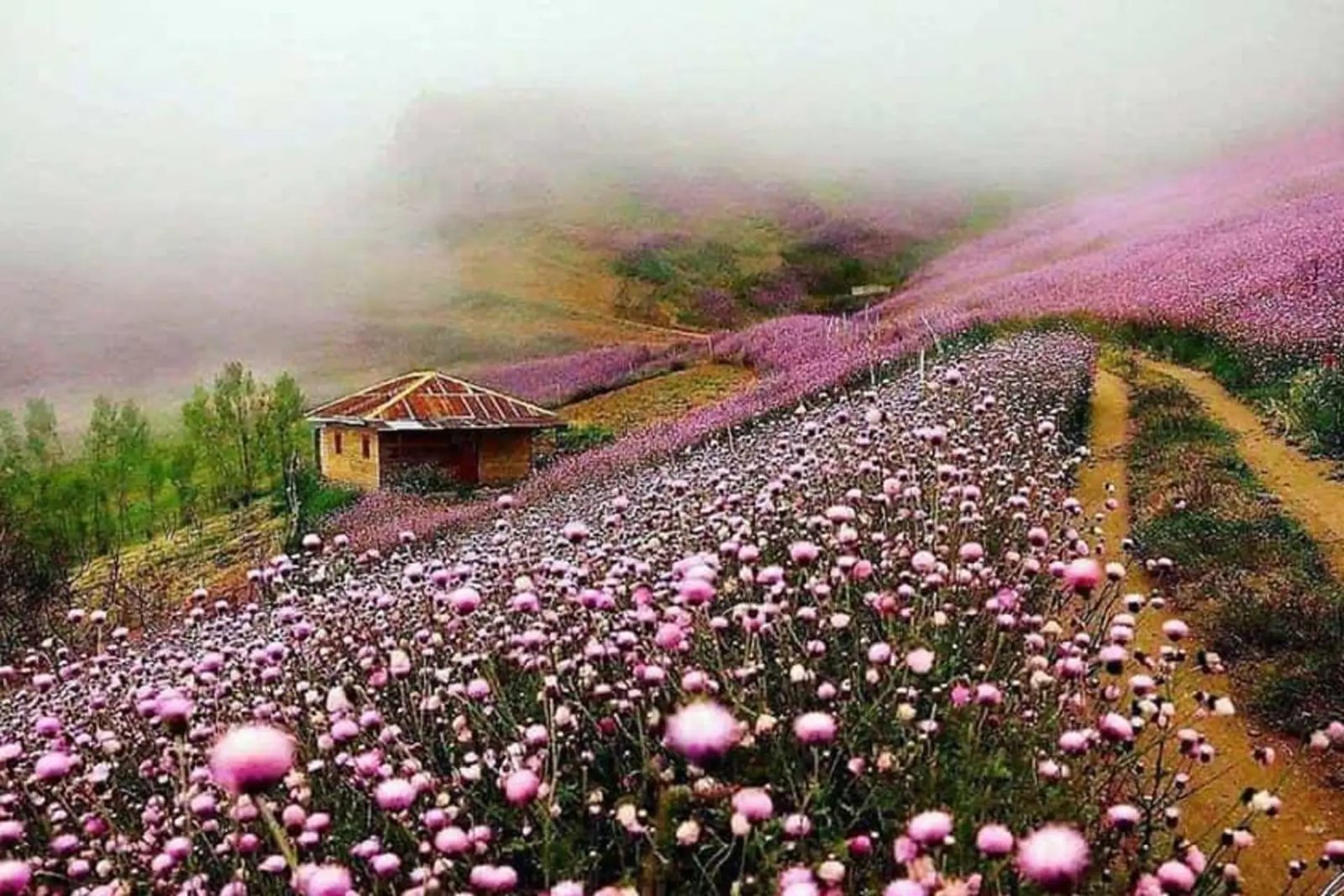
Gilan's mountain villages are its signature, cooler than the coast and green from spring to autumn.
Masal and Olasbelangah. The road from Masal up to the Olasbelangah pasture is one of the great drives of northern Iran: at the top, on a clear day, you look down on a sea of cloud with the whole town of Masal and Talesh spread beneath. Sucaleh, Telargvah and the other small pastures around it reward an overnight in a shepherd's hut.
Masuleh. The stepped village of Masuleh, in Fuman county, is registered as a cultural and natural heritage site and is the postcard of Gilan: houses stacked up a slope, each roof a courtyard for the home above, balconkins bright with geraniums. It is crowded on Iranian holidays, and best in the shoulder seasons.
Suvtan, Khorgam, Deylaman and Damash. Farther afield, Suvtan in Talesh is high meadow country of springs and old huts near Lake Neour; Khorgam in Rudbar sits above two thousand metres and is often wrapped in cloud; Deylaman, above Lahijan, suits those who want a hillside villa and a strong local lunch outdoors; and Damash, near Rudbar, is celebrated for its wild lilies and rented summer houses.
Coast, lagoon and lakes
Anzali Lagoon. The great freshwater wetland at Bandar Anzali is one of Iran's most important lagoons, best seen from a boat that threads the reed channels among the water lilies. Boat tours and waterside restaurants make it an easy half day; water levels and the lily bloom vary with the season.
Gisoom Forest and Beach. In Talesh, on the Astara road, Gisoom is that rare thing: a Hyrcanian forest that runs straight down to an empty stretch of Caspian beach. It has facilities, a boardwalk and a range of activities from horse riding to paragliding, and it is one of the most photogenic spots in the province.
Saravan Lake and Forest Park. Close to Rasht on the freeway, Saravan is a small lake almost entirely carpeted in bright green moss, so it reads at first as a meadow; you can paddle a boat across it, walk the forest, and reach the Sefid-Rud and Siah-Rud rivers at the park's eastern edge for a picnic.
Saghalkesar Lake. Eighteen kilometres south of Rasht, Saghalkesar is a quiet reservoir lake formed by an earth dam, known locally as one of the cleanest lakes in Iran because villagers keep its shores tidy. It suits walking, picnics, camping and a night in an eco-lodge.
Chamkhaleh and Sadaf beaches. On the coast, Chamkhaleh near Langarud is a busy resort beach with accommodation, a promenade and every water toy from jet skis to banana boats; Sadaf, near Astara, is the family beach of the far northwest, with separate swimming areas for men and women, gazebos, kiosks and tent grounds.
Castles, ruins and old houses

Rudkhan Castle. The largest brick fortress in Iran, Rudkhan sits deep in a forest near Fuman and is reached by climbing roughly 1,600 steps, of which about 935 are the original stone stair, which is why people call it the Castle of a Thousand Steps. Opening hours are short and there is a modest entry fee; cafes and craft shops line the approach, where traditional Gilani costume photos are popular.
Marlik Hill. In Rudbar, the Bronze Age mound of Marlik dates back some three thousand years and stayed unknown until archaeologists began digging in the early 1960s. Its tombs yielded pottery, Chinese-made vessels and bronze and clay figures and swords, and it is one of Iran's great archaeological discoveries.
Rasht's old centre. At Meydan-e Shahrdari, the old City Hall, the post museum and the former Hotel Iran building form a Pahlavi-era square with a strong nostalgic air. Nearby, Mohtasham Garden, the city's oldest park from the Qajar period, holds the handsome multi-sided Kolah Farangi pavilion.
Langarud. In Langarud, the Brick Bridge, built of brick and saruj mortar over the river, is the town's emblem and once joined its two halves; the Monjembashi House is a grand Qajar home of one of the town's leading families, with inner and outer quarters, a mosque and a bathhouse.
Sacred sites. The tomb of the revered mystic Sheikh Zahed Gilani stands near Lahijan, and the Imamzadeh Ibrahim shrine in Shaft is a place of pilgrimage; both are holy sites rather than ordinary mosques and deserve the quiet respect you would give any Iranian shrine.
Where to stay and when to go
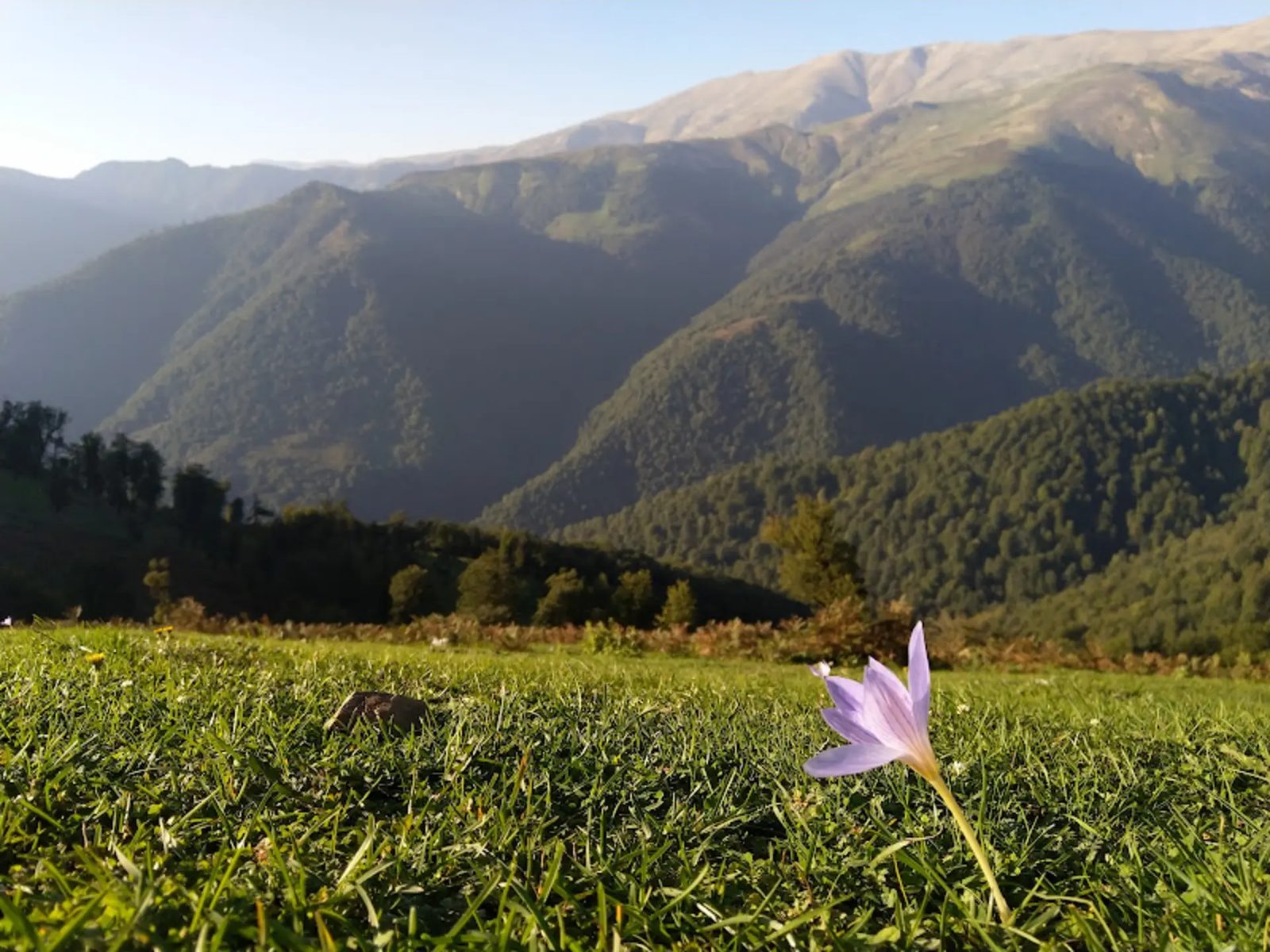
Base yourself in Rasht for food and central access, or in Lahijan or Bandar Anzali for the coast, or take a night in a Masuleh or Masal guesthouse or an eco-lodge at Saghalkesar to feel the highlands at dawn. Accommodation fills fast on Iranian holidays, especially around Nowruz in spring, so book through Mehyar Hotels well ahead for those dates and for summer weekends.
Gilan is a year-round destination, but the rhythm is seasonal. Spring and early summer are the greenest and liveliest, when the pastures open and the terraces steam after rain. Midsummer is humid on the coast and wonderful in the hills, though rain can fall any day. Autumn clears the crowds and turns the forest gold; winter is cool, grey and drizzly on the plain, with snow closing the high roads, so leave the mountains out of the cold months unless you are prepared.
Practical notes for your trip
Expect rain and plan a rain layer and waterproof shoes whatever the season. Gilani food is a central reason to come, so budget for long lunches of local rice, herbs and sour dishes; Rasht's cafes and the lakeside restaurants at Anzali are the natural places to stop. Cash still matters in the villages and at small guesthouses, so sort out money before climbing to the pastures. Because the highland and lagoon sights are scattered, the most valuable thing to arrange in advance is transport through Mehyar Taxi or Mehyar Buses, which turns a province of far-flung green corners into a trip you can actually complete.