
Ardabil takes its name from an Avestan root meaning something close to "the holy city", and for more than three thousand years it has behaved as though the name were a promise. Set high in the mountains of northwestern Iran beneath the dormant volcano of Sabalan, Ardabil sat on a branch of the Silk Road, and the caravans, armies and courts that passed through left behind an extraordinary stack of monuments: turquoise-domed shrines, fortress-temples older than writing, and stone caravanserais built for the Safavid shahs.
For the modern traveller, Ardabil is unusual because it is a genuine four-season destination. Its historic core can be walked in half a day; its lakes, forests and ski slopes are reached within an hour of the centre; and in July, when the rest of Iran bakes, the air here stays cool. This guide maps the sights that matter, the realistic way to get there, and the timing that makes the most of each.

Where is Ardabil?
Ardabil is the capital of Ardabil province, in the far northwest of Iran, close to the border with the Republic of Azerbaijan. It lies at a high altitude beneath Mount Sabalan, which keeps its summers mild and its winters cold and snowy. The city is ringed by natural sights to the north and east, and by a belt of Safavid-era caravanserais that mark the old trade routes out toward Tabriz and the Caspian.
How to get to Ardabil
From Tabriz. Tabriz is the usual gateway, about 135 kilometres to the west, roughly two to two and a half hours by road over the Tabriz-Ardabil highway. By Mehyar Taxi, a private car between the two cities is comfortable and flexible, letting you stop at the roadside Safavid caravanserais on the way. It is the easiest option if you are continuing onward to the shrine towns and lakes around Ardabil.
From Tehran. Tehran is around 580 kilometres to the southeast, a long drive; many travellers instead fly. Check fares and schedules for Ardabil's own airport in Mehyar Flights, which can turn a full day on the road into a short hop, then arrange the onward legs locally with Mehyar Taxi.
By road and bus. Regular buses connect Ardabil with Tabriz, Tehran and Rasht. For the city itself these are fine; for the dispersed sites (Neor Lake, Fandeghloo forest, Alvars) a hired car makes the difference between seeing two sights and seeing six. Book the intercity leg in Mehyar Buses and the local running around the province in Mehyar Taxi.
The Safavid monuments
Ardabil's historic significance is inseparable from the Safavid order, which rose here before founding a dynasty.
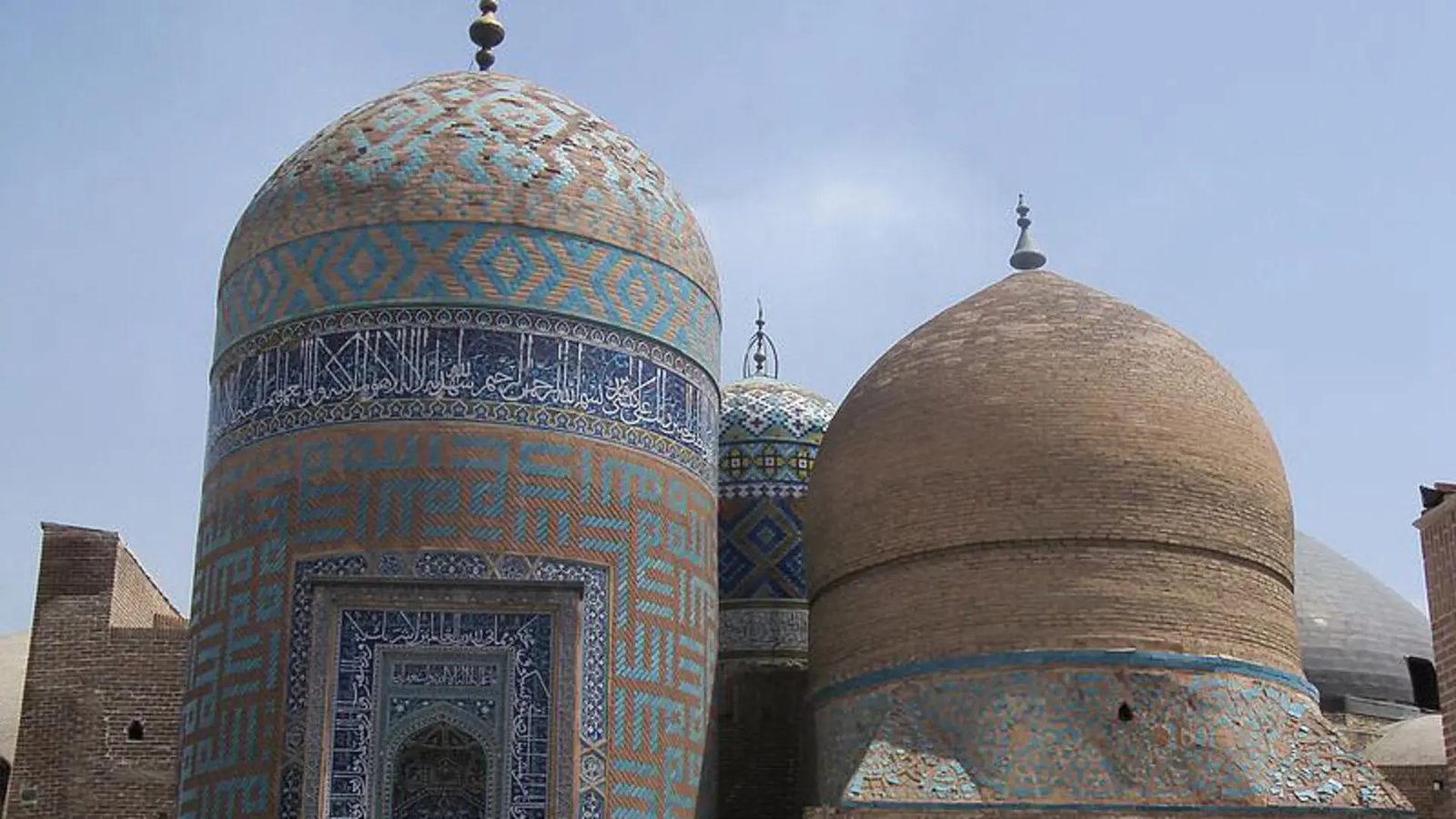
Sheikh Safi al-Din Ardabili Shrine Complex. This is the city's masterpiece and a UNESCO World Heritage site: the burial complex of Sheikh Safi al-Din, eponym of the Safavid line, where Shah Ismail I and several Safavid notables are also interred. It is considered a high point of Islamic architecture, built over an earlier Mongol-era structure and rich in tilework, muqarnas, carved windows and brickwork. Within the complex sit specialist museums, including an archaeology museum, a stone museum and the celebrated Chinikhaneh (Porcelain House), a gallery roughly four centuries old on the east side of the main portico, attributed in design to the great Safavid polymath Sheikh Bahai.
Sheikh Amin al-Din Jibrail Complex. A near-contemporary masterpiece of Safavid funerary architecture, this shrine of the sheikh's father combines a defensive wall, a courtyard, a front portico, arcades and cells around an asymmetric main building, and is one of the clearest ways to read the region's religious architecture.
Jameh Mosque (Friday Mosque) of Ardabil. A Seljuk-era mosque raised beside an earlier Zoroastrian fire temple site, notable for a plan that departs from the usual four-iwan Seljuk layout, with corridors beneath the main hall arranged in a deliberate grid. Its cube-shaped core survives today.
The historic bazaar. A Safavid market that flourished under Shah Tahmasp I, once organised into long rows of specialists, the caesaria cloth row, the coppersmiths, the goldsmiths, the saddle-makers and more. Strolling it remains one of the best ways to feel the city's commercial past.
The caravanserais. The Silk Road traffic produced a constellation of lodges around the city. The Saein Stone Caravanserai, about 50 kilometres southwest of Ardabil and registered both as a national monument and within the UNESCO-listed series of Persian caravanserais, is a Safavid build of remarkable quality. Naqdikandi Caravanserai faces the Naqdikandi valley beside a river of the same name and keeps a cemetery beside it, probably from its working days. Sarbaz Vatani (Qanli Bolaghi) is the only known four-iwan Safavid caravanserai and sits only around 800 metres from the border strip with the Republic of Azerbaijan, its four halls flaring outward into pentagonal towers. Shorgol Caravanserai stands on a low mound built throughout of rough stone, and pottery found on site points to a date between the fifth and late eighth century AH.

Older still, and stranger
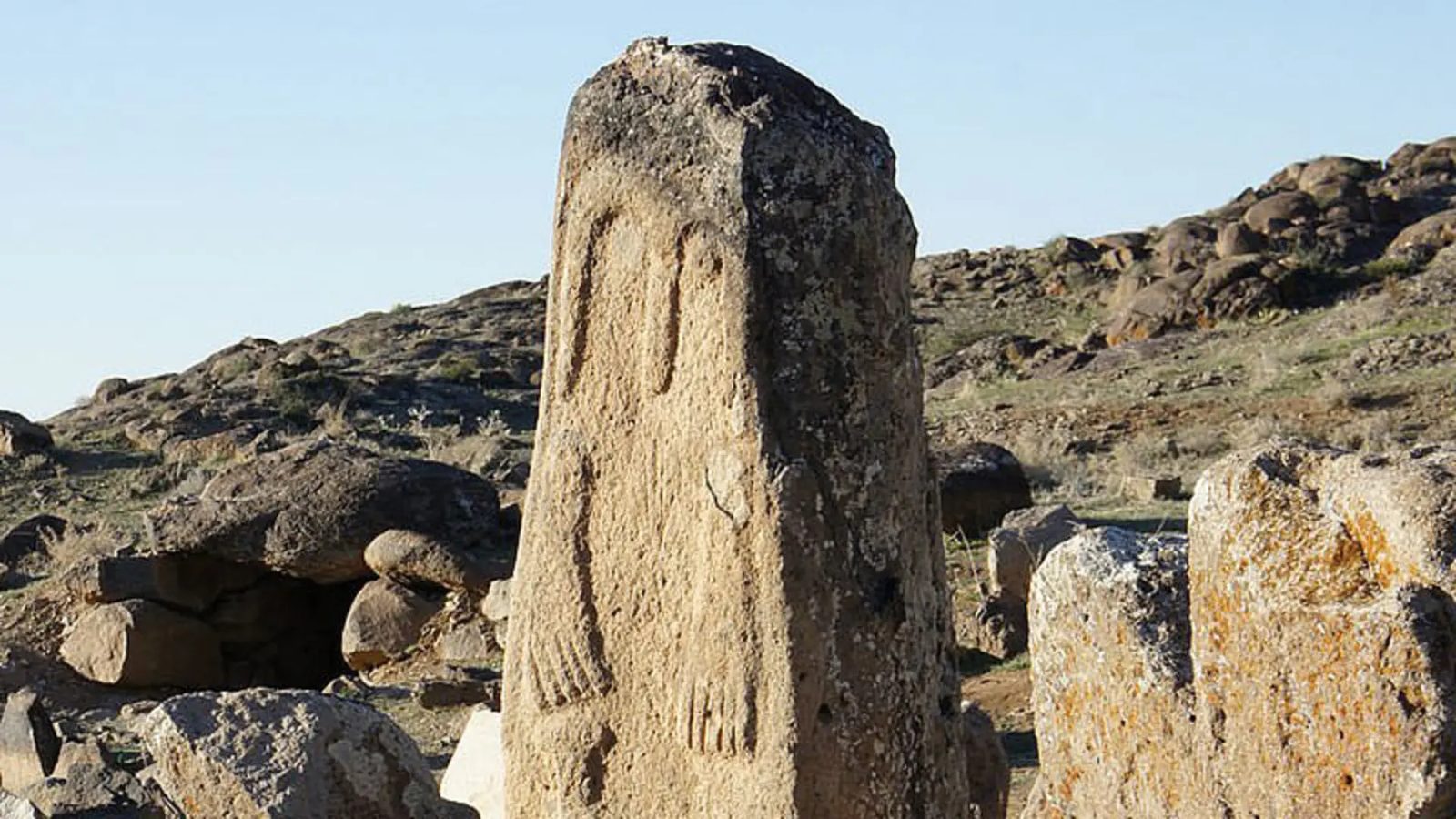
Shiri (Yeri) city. Near Meshgin Shahr, this vast 400-hectare archaeological precinct divides into a military fortress, a temple and the Qusha Tepe mound. The fortress and temple are dated to around 1,450 BC, while Qusha Tepe goes back to roughly 7,000 BC, pushing human settlement in the Ardabil region into the Chalcolithic. More than 300 standing stones rise across the site, many carved into faceless human figures with no mouths.
Tep Nadari (Naderi Hill). A mound three kilometres along the Ardabil-Tabriz road, registered as a national monument late in the Pahlavi era. Tradition holds that Nader Shah ordered his soldiers to pile earth with their fists so he could address them from the top; the undecorated pottery recovered here is largely Islamic-period.
Baba Davood of Anbaran. In the town of Anbaran, about 38 kilometres from Ardabil, a rock relief some 20 metres high is carved into the shape of a forward-gazing human face, and is often compared to the Sphinx.

Water, forest and snow
Shorabil Lake. One of the city's favourite leisure spots, sitting within Ardabil itself along the university boulevard. It is an older body of water than Lake Urmia, is protected as a no-hunting zone, and offers recreation, sports and cultural facilities; it is being developed into a model tourism area.
Neor Lake. The largest natural lake in Ardabil province and one of the country's bigger freshwater lakes, with an average depth around five metres and pockets reaching 13 metres across more than 200 hectares. As an environmentally protected zone it also matters for ecotourism, beekeeping and grazing.
Balighlu Chay. The "fishy river" rises on Mount Sabalan, runs through the city and on to the Qarasu, and its banks, lined by parks and bridges, have become part of Ardabil's own scenery.
Fandeghloo Forest. A hazel woodland whose roots are said to run back millions of years, bearing wild hazelnut, apple, sloe, medlar, quince, raspberry and strawberry. The Hirran cable car that crosses it is among the most modern in the country, and beside the forest a grass-ski slope at about 1,700 metres hosted Iran's first grass-ski championship in 2013.
Alvars Ski Resort. On the high slopes of Sabalan near the village of Alvars, this is the largest ski resort in Iran, served by a chairlift and a ski lift. Late-season snowfall has been recorded here even in some summers.

Where to stay
Ardabil has a compact centre that puts the shrine complex, the bazaar and the museums within reach on foot, which is convenient for a first night. For ski-season visitors, Alvars and the resort-side accommodation near Sabalan reduce the morning transfer to the slopes. Either way, book early around Nowruz and the summer holiday season; use Mehyar Hotels to compare availability across the city and the resort belt before you commit.
The best time to visit
- Spring floods the rivers and greens the slopes around Sabalan, and is the loveliest season for Neor Lake and the forest roads, though snowmelt can keep the highest passes closed into early summer.
- Summer is Ardabil's peak, the season when heat-seeking travellers from across Iran come up for the cool, dry air and long days in the hills.
- Autumn turns Fandeghloo and the oak country gold and red and empties the lakesides, the best time for photography without crowds.
- Winter is for skiers: reliable snow on Alvars, cold in the city, and the shrines almost quiet.
Where to go next
Pair a visit to Ardabil with Tabriz to the west, and with the shrine culture of the Caspian provinces to the east. The Meshgin area to the north adds hot springs and the ancient world of Shiri to a short loop. If you are threading a northwestern circuit through Iran, see the Tabriz travel guide for the western anchor and use the Ardabil destination page as your base for the mountain days.