
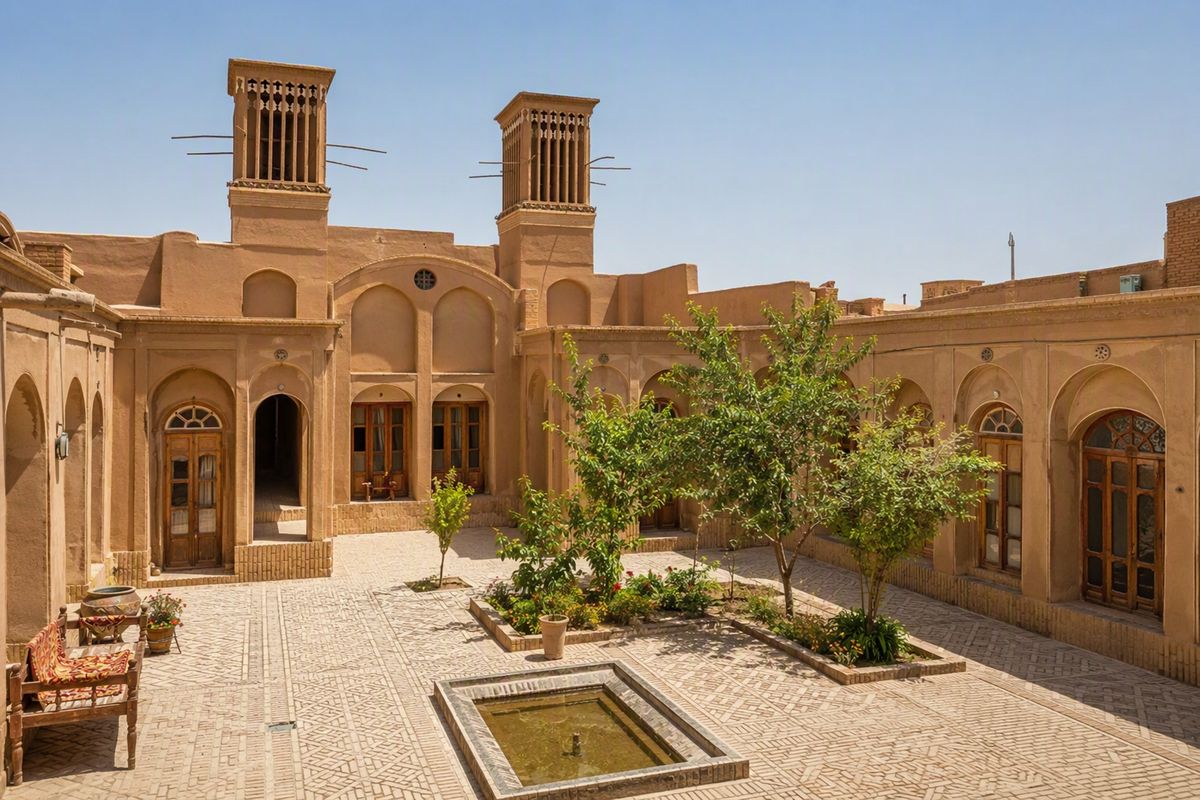
In the quiet Cherkhab neighborhood of Ardakan, a desert city in Yazd Province, a remarkable collection preserves one of Iran's most enduring craft traditions. The Ardakan Carpet Museum occupies the Malek Afzali Historical House, a beautifully restored Qajar-era residence whose thick clay walls and elegant windcatchers provide the perfect setting for an exploration of carpet weaving in central Iran. The museum was founded by Mr. Mohammadi, a local collector and enthusiast, who assembled a collection of carpets, rugs, flatweaves, and weaving tools that trace the evolution of the Ardakan weaving tradition over generations. For visitors interested in the textile arts of the Iranian plateau, this intimate museum offers a focused and rewarding experience that connects craft, architecture, and desert life in a single visit.
The Malek Afzali House: Architecture as Part of the Story
The building itself is as much a part of the museum experience as the carpets on display. The Malek Afzali House dates to the Qajar period, when Ardakan was a prosperous trading center on the routes connecting Yazd to the eastern provinces of Iran. Like many grand houses of the era in this region, it was designed to cope with the extreme desert climate while maintaining a sense of dignity and comfort.
The structure is organized around a central courtyard, a hallmark of traditional Persian domestic architecture. Thick clay walls, sometimes more than half a meter deep, provide natural insulation against the searing summer heat. Windcatchers, or badgirs, rise above the roofline to funnel cool breezes into the interior rooms. In winter, these same walls retain heat from the low-angle sun, keeping the rooms comfortable even on cold desert nights. The interplay of light and shadow in the courtyard, the geometric patterns of the brickwork, and the simple elegance of the wooden doors and windows all contribute to an atmosphere that feels like a natural extension of the carpets inside.
Walking through the rooms of the house, visitors notice how the architecture frames the textiles. The niches and alcoves that once held oil lamps and household items now display small rugs and weaving samples. The covered corridors, or iwans, that open onto the courtyard provide shaded spaces where larger carpets are hung, allowing natural light to reveal the subtleties of color and pattern.
The Carpet Collection: Patterns Born of Desert Life
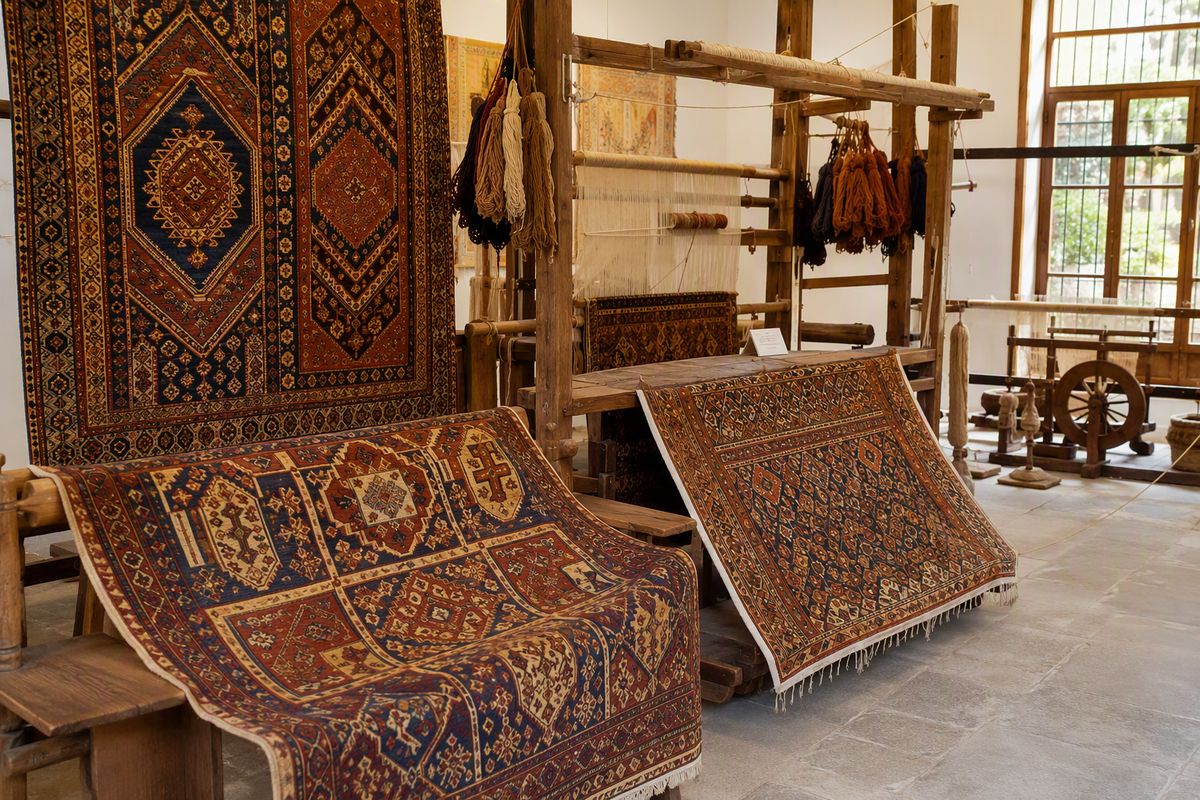
The museum's collection focuses on the weaving traditions of Ardakan and the surrounding villages of the central desert. Unlike the floral carpets of Isfahan or the pictorial weaves of Kashan, the Ardakan tradition is rooted in geometric abstraction and a restrained palette drawn from the landscape itself. The dominant colors are the warm browns and ochres of the desert soil, the deep reds derived from madder root, and the indigo blues that recall the vast night sky over the central plateau.
Among the highlights are several antique carpets that predate the museum's founding by a century or more. These pieces show a remarkable consistency of design language, with repeating geometric motifs that encode local symbols and beliefs. The boteh, or paisley pattern, appears frequently, as do stylized representations of animals, plants, and celestial bodies. Each village in the Ardakan area had its own variations, and the museum's collection allows visitors to compare and contrast these regional differences side by side.
The tools of the trade are also on display. Traditional wooden looms, some of which were used by the weavers whose works hang nearby, stand in rooms where the craft was once practiced. Spindles, carding combs, shears, and natural dye vats help visitors understand the full process, from raw wool to finished carpet. The museum occasionally hosts live demonstrations, where local weavers work at portable looms and explain their techniques to interested visitors.
The Cherkhab Neighborhood: A Walk Through Desert History
A visit to the carpet museum naturally extends to an exploration of the Cherkhab neighborhood itself, one of Ardakan's oldest residential quarters. The narrow lanes, lined with high clay walls and punctuated by heavy wooden doors, follow a layout that has changed little over the centuries. The design of the neighborhood reflects the practical wisdom of desert living, with houses clustered closely together to provide mutual shade and protection from sandstorms.
As you walk, you will pass a small Imamzadeh, a shrine dedicated to a descendant of the Imams, which serves as a focal point for the local community. The architecture of the shrine, with its simple dome and tiled entrance, is typical of the vernacular religious buildings found throughout the Yazd region. Nearby, a few traditional houses remain occupied, their residents continuing the rhythms of daily life that have defined this neighborhood for generations.
The quiet of Cherkhab is one of its most appealing qualities. Unlike the major tourist sites of Yazd, Ardakan sees relatively few international visitors, and the experience of walking its neighborhoods feels authentic and unhurried. Local shopkeepers and residents are generally welcoming and curious about visitors, and a simple greeting can lead to a conversation about the history of the area or the best places to find traditional crafts.
Connecting the Museum to the Wider Region
The Ardakan Carpet Museum sits within a broader cultural landscape that rewards exploration. The city of Ardakan itself has several attractions, including the old town with its qanat system, traditional water reservoirs known as ab-anbars, and the remains of the city's historic fortifications. The Yazd province is home to some of Iran's most significant examples of desert architecture, and the carpet museum serves as an excellent introduction to the aesthetic principles that govern the region's built environment.
For those traveling from Yazd, the journey to Ardakan passes through a landscape that provides context for the museum's collection. The central desert, or Dasht-e Kavir, stretches in every direction, its flat, shimmering expanse broken only by distant mountain ranges and occasional clusters of date palms around village oases. Understanding this landscape is key to understanding the carpets, whose designs and colors are direct responses to the environment in which they were made.
Practical Information for Your Visit
Getting There
Ardakan is located roughly 60 kilometers northeast of Yazd city. Yazd is well connected to Tehran by road, rail, and air, with frequent buses and flights making it easy to incorporate Ardakan into a broader itinerary. From Yazd, local buses and shared taxis run to Ardakan throughout the day. A private transfer from Yazd covers the distance in under an hour, with the option to stop at viewpoints and historical sites along the way.
Opening Hours and Tickets
The museum is typically open daily, with free or nominal entry. Hours tend to follow the standard pattern for Iranian cultural sites, opening in the morning and closing in the early evening. It is advisable to arrive before late afternoon, as some smaller museums in the region close their doors earlier during the shorter winter days. Allow one to two hours for a thorough visit to the collection and the house itself.
Best Time to Visit
The best time to visit Ardakan and its carpet museum is from October through April, when daytime temperatures are mild and comfortable for walking. The Yazd Province summers are extremely hot, with daytime temperatures often exceeding 40 degrees Celsius, making outdoor exploration difficult. Spring, particularly March and April, is the most popular season for desert tourism, and the countryside around Ardakan comes alive with wildflowers after the winter rains.

Tips for Visitors
Photography is generally welcome, but ask permission before photographing people in the neighborhood. If you are interested in purchasing handwoven carpets or textiles, Ardakan has several workshops and shops where you can see weavers at work and buy directly from the source. The museum staff can often provide recommendations. Wear comfortable walking shoes for exploring the neighborhood, as the lanes are uneven in places. Bring water and sun protection during the warmer months, even in the early morning, as the desert sun is intense at this latitude.
The Ardakan Carpet Museum may be small, but its impact is significant. It preserves a craft tradition that has shaped the cultural identity of this desert region for centuries, and it does so within a building that is itself a masterwork of adaptive desert architecture. For anyone with an appreciation for textiles, design, or the ingenuity of traditional building methods, this museum is a highlight of any visit to Yazd Province.