
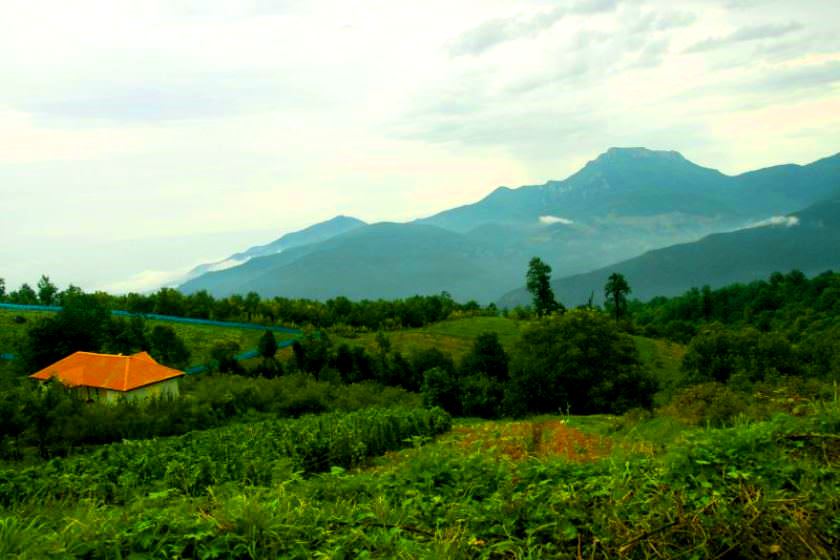
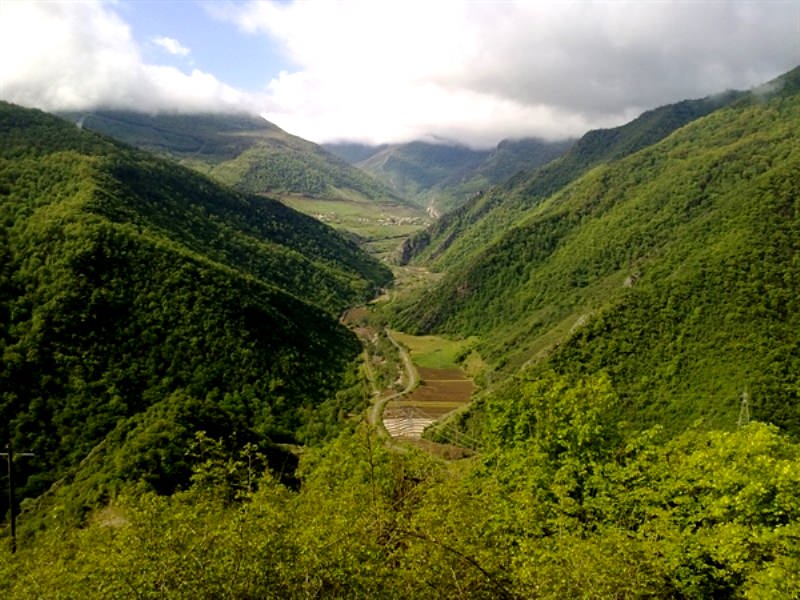
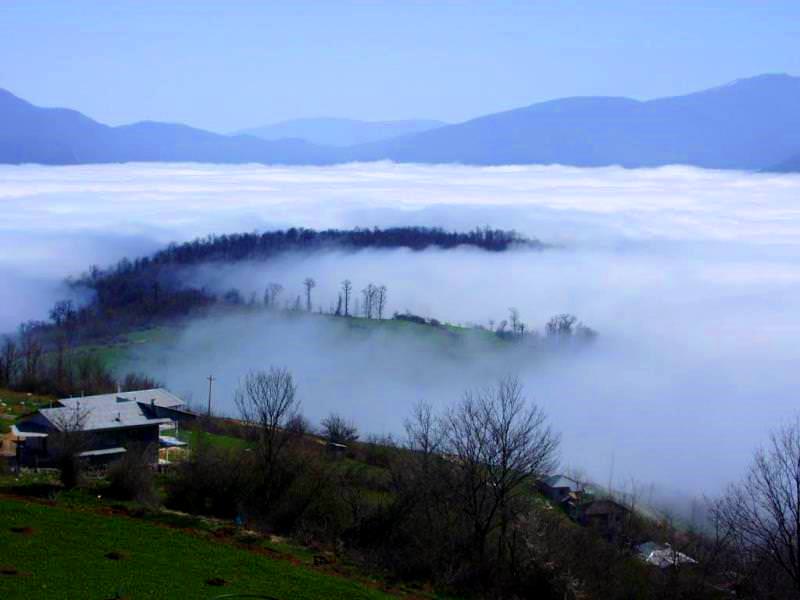
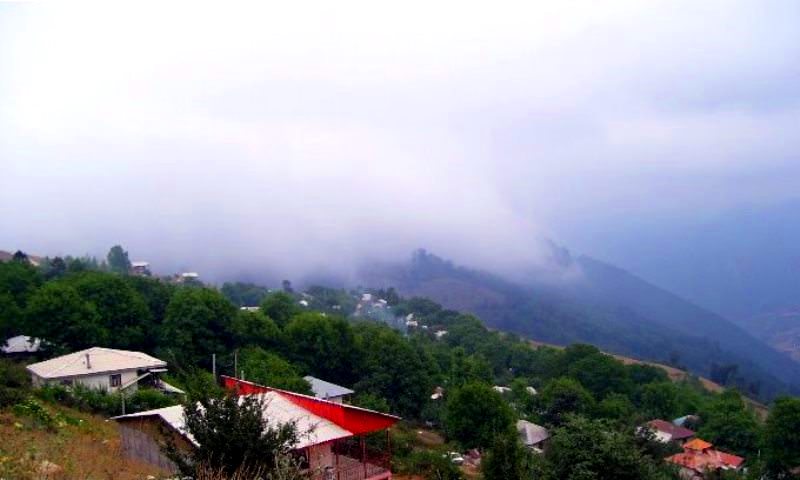
There are forests, and then there are living fossils. The woodland surrounding Afratakhteh belongs firmly to the second category. These are Hyrcanian forests, a lineage that stretches back roughly 190 million years and survived the Ice Age in this narrow refuge along the southern Caspian coast. UNESCO recognised their extraordinary value by inscribing them on the World Heritage list, and walking among the yew trees of Afratakhteh makes the designation feel entirely earned. The village itself clings to a mountainside at 1,550 metres, wrapped in fog that arrives without warning and lifts just as suddenly, revealing valleys so green they look painted.
Where is Afratakhteh Village?
Afratakhteh sits near Aliabad-e Katul in Golestan Province, in the forested foothills of the Alborz mountain range. Aliabad-e Katul lies roughly 45 kilometres southeast of Gorgan, the provincial capital, and about 350 kilometres northeast of Tehran. The village is positioned between three named peaks: Mount Afratakhteh to the north, Takiano to the east, and Maliarto to the west. A valley of the same name stretches to the south. The entire surrounding area is a protected wildlife zone where hunting is strictly prohibited, and the ecosystems within are monitored by environmental authorities.
The forest and its wildlife
The Hyrcanian mixed forest around Afratakhteh is a living relic of the Ice Age. During the last glacial period, much of the Northern Hemisphere's temperate forests were buried under ice sheets. In this narrow band along the Caspian Sea, however, the climate remained mild enough for species to survive. The result is a forest containing tree species that have existed for tens of millions of years elsewhere only as fossils.
Yew trees, known locally as sorkh-dar, dominate the canopy. Their dark, dense foliage creates a cathedral-like atmosphere where sunlight barely reaches the forest floor. Some individual trees are over a thousand years old, their trunks wider than a person is tall. The ground beneath them is carpeted with ferns, mosses, and wildflowers that thrive in the perpetual moisture.
About 150 hectares of this ancient forest fall within Afratakhteh's immediate surroundings. The density is such that in places, branches intertwine so thickly overhead that no light penetrates to the ground below.
Wildlife in the protected zone includes the Persian leopard, Caspian red deer, wild boar, and numerous bird species. Because hunting is forbidden and the area is monitored, animals here are less wary of human presence than in hunted territories. Birdwatchers in particular find the diversity remarkable, with species ranging from raptors soaring above the ridgelines to small forest birds hidden in the understorey.
The village and its history
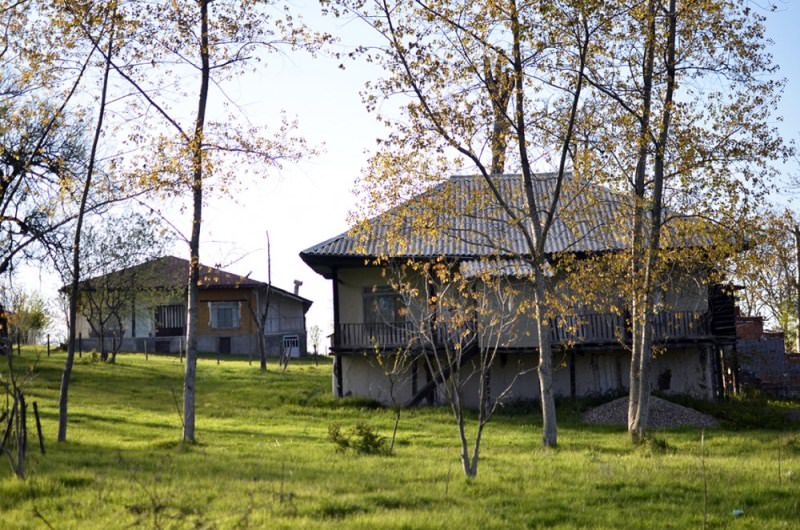
Afratakhteh is divided into two parts, an upper village and a lower village, each reached by a separate path. The population is small, and life here follows the rhythms of the seasons. In spring and summer, families tend their gardens and livestock on the high pastures. In autumn, many descend to lower elevations for the winter, a pattern of seasonal migration known as yeylaq and qeshq that has shaped rural life in the Alborz for centuries.
Despite its modest size, Afratakhteh carries traces of great age. Scattered around the village are several archaeological sites that hint at continuous habitation over many centuries. A stone well of unknown antiquity sits near the village centre. The ruins of Pir Ala, an ancient structure whose original purpose is debated locally, stand on higher ground. A Gabri cemetery, named for the pre-Islamic Zoroastrian inhabitants of the region, contains weathered gravestones that face the forest. And an old bathhouse, known as Kohneh Hammam, speaks of a community that once valued public infrastructure enough to build one at this altitude.
Some of these sites require a short walk of about two kilometres from the main village, making the visit as much a small trek as a cultural excursion.
Local life, food, and crafts
The people of Afratakhteh are warm and welcoming to visitors, a trait common across Golestan's villages. Traditional dress is still worn here, more so than in many Iranian villages that have modernised. Men typically wear a jacket and trousers paired with a woollen vest and felt hat. Women wear long dresses with vests and headscarves, often in colours and patterns specific to the region.
Local cuisine draws on the forest and the pasture. Dishes include various ash (thick soups), abgoosht (meat and chickpea stew), kebabs grilled over wood fire, and a range of stews flavoured with wild herbs gathered from the surrounding slopes. Fresh local bread, dairy products such as yogurt, butter, and cheese, and forest mushrooms all feature prominently. Visitors are often invited to share a meal, and the simplicity of the ingredients, sourced within walking distance, is precisely what makes the food memorable.
The village produces several items that make excellent souvenirs. Local honey, harvested from hives tended in the forest clearings, is considered among the finest in Golestan. Dairy products are sold fresh each morning. Handwoven carpets, woollen chador-shab (night covers), embroidered tablecloths, felted napkins, chokha (a local woollen garment), woollen leg warmers, and turned wooden vessels are all made by village artisans. Nothing here is mass-produced or imported for tourists; these are objects made for daily life that visitors are welcome to purchase.
How to get there from Tehran and Gorgan
Reaching Afratakhteh requires commitment, which is part of what keeps it unspoiled.
By car from Tehran. Take the eastern highway towards Semnan and then Gorgan. The total drive is approximately 350 kilometres and takes about five to six hours, depending on traffic leaving the capital. Once in Aliabad-e Katul, head south into the forested highlands toward Afratakhteh. The village is 32 kilometres from Aliabad-e Katul. From the main road, take the first turn toward the village of Minoocheh and follow the road to its end through the forest.
By car from Gorgan. Gorgan is 45 kilometres northwest of Aliabad-e Katul. Drive southeast through Aliabad-e Katul and then follow the same forest road south. The mountain road is paved, though conditions can deteriorate in wet weather, and sections are steep with sharp bends.
By Mehyar Taxi. Open Mehyar and choose Taxi from either Gorgan or Aliabad-e Katul for a direct ride to the village. A private car gives you the flexibility to stop at viewpoints along the forest road and to wait while you explore the trails. This is the most comfortable option if you do not have your own vehicle.
By Mehyar Buses. Intercity buses connect Tehran with Gorgan regularly. From Gorgan, a local taxi reaches Aliabad-e Katul, and from there a Mehyar Taxi continues to Afratakhteh. Check the Mehyar app for bus schedules and book your seat in advance.
By organised tour. Several tour operators in Gorgan and Tehran offer day trips to Afratakhteh, particularly in autumn when the foliage is at its peak. These typically include transport, a local guide, and sometimes a meal in the village.
On-site mobility. The village itself is small and walkable. Exploring the surrounding forest trails, archaeological sites, and spring water sources requires comfortable walking shoes and a willingness to climb. The terrain is uneven and can be slippery when wet.
Important access note. The forest road to Afratakhteh is frequently shrouded in dense fog, particularly in the early morning and during cooler months. In heavy fog, visibility drops to a few metres and the steep mountain road becomes hazardous. The village can become completely cut off when fog settles thickly. If you are driving, check conditions before departing and be prepared to wait for the fog to lift. Vehicles with good ground clearance and four-wheel drive are strongly recommended, and in poor conditions, an experienced local driver is invaluable.
What to see and do
Forest trails. The primary activity is simply walking through the forest. There are no formal marked trails, but paths wind through the trees in several directions. Follow the valley floor for gentler walking, or climb toward the ridgelines for panoramic views when the fog clears. Allow at least three to four hours for a satisfying forest walk.
Mineral springs. Several mineral water springs exist in the area, with waterfalls ranging from 300 to 2,500 metres apart. The water is cold and mineral-rich. Locals consider it healthful, and you will see them filling bottles at the springs.
Photography. Afratakhteh is a photographer's destination. The fog creates dramatic atmospheric conditions that change by the minute. Light filtering through the ancient canopy, dew on fern fronds, the texture of thousand-year-old tree bark, and the sudden appearance of a deer on a misty trail all reward patience. Bring a camera with weather protection.
Archaeological walk. Visit the stone well, Pir Ala ruins, Gabri cemetery, and Kohneh Hammam. These sites are spread across a couple of kilometres around the village and make for a pleasant half-day exploration combining walking and local history.
Village guesthouses. Basic guesthouses in the village offer simple accommodation and home-cooked meals. This is not luxury tourism; expect clean bedding, shared facilities, and food prepared with ingredients from the surrounding land. Staying overnight allows you to experience the forest at dawn, when the fog is thickest and the atmosphere most otherworldly.
When to visit
Late spring through early autumn, from May to September, offers the most reliable access. Roads are clearer, temperatures are comfortable at 1,550 metres, and the forest is at its most vibrant.
Autumn, particularly October and early November, brings spectacular foliage. The broadleaf trees turn shades of gold, orange, and red that contrast dramatically with the dark green of the yew canopy. This is the most photogenic season, but also the busiest with day-trippers from Gorgan and Tehran.
Winter brings snow and cold that can seal the village off entirely. The frozen landscape is dramatic, but access is unreliable and conditions are harsh. Only visit in winter with a local guide and proper equipment.
Spring brings wildflowers and the return of pastoral life to the high meadows, though late-season rain and lingering fog can make the road treacherous.
What to bring
Waterproof clothing is essential regardless of season. The fog brings moisture, and the forest floor is perpetually damp. Sturdy walking shoes with good grip are necessary for the uneven, sometimes muddy trails. If you plan to camp or stay in basic guesthouses, bring a sleeping bag liner and a torch. There is limited mobile phone signal in the village and almost none on the forest trails, so download maps and inform someone of your plans before heading in. Carry sufficient water and snacks for day hikes, though the village guesthouses can provide meals if arranged in advance.
Practical details
Address: Near Aliabad-e Katul, Golestan Province, Iran
Hours: Open access, daylight hours recommended
Tickets: Free
Best season: May to September for accessibility; October to November for autumn foliage
Phone: N/A
Distance from Aliabad-e Katul: 32 kilometres south into the forested highlands
Elevation: Approximately 1,550 metres above sea level
For a complete Gorgan city guide, explore the other natural and cultural attractions of Golestan Province, including the Golestan National Park and the Caspian coastline.