
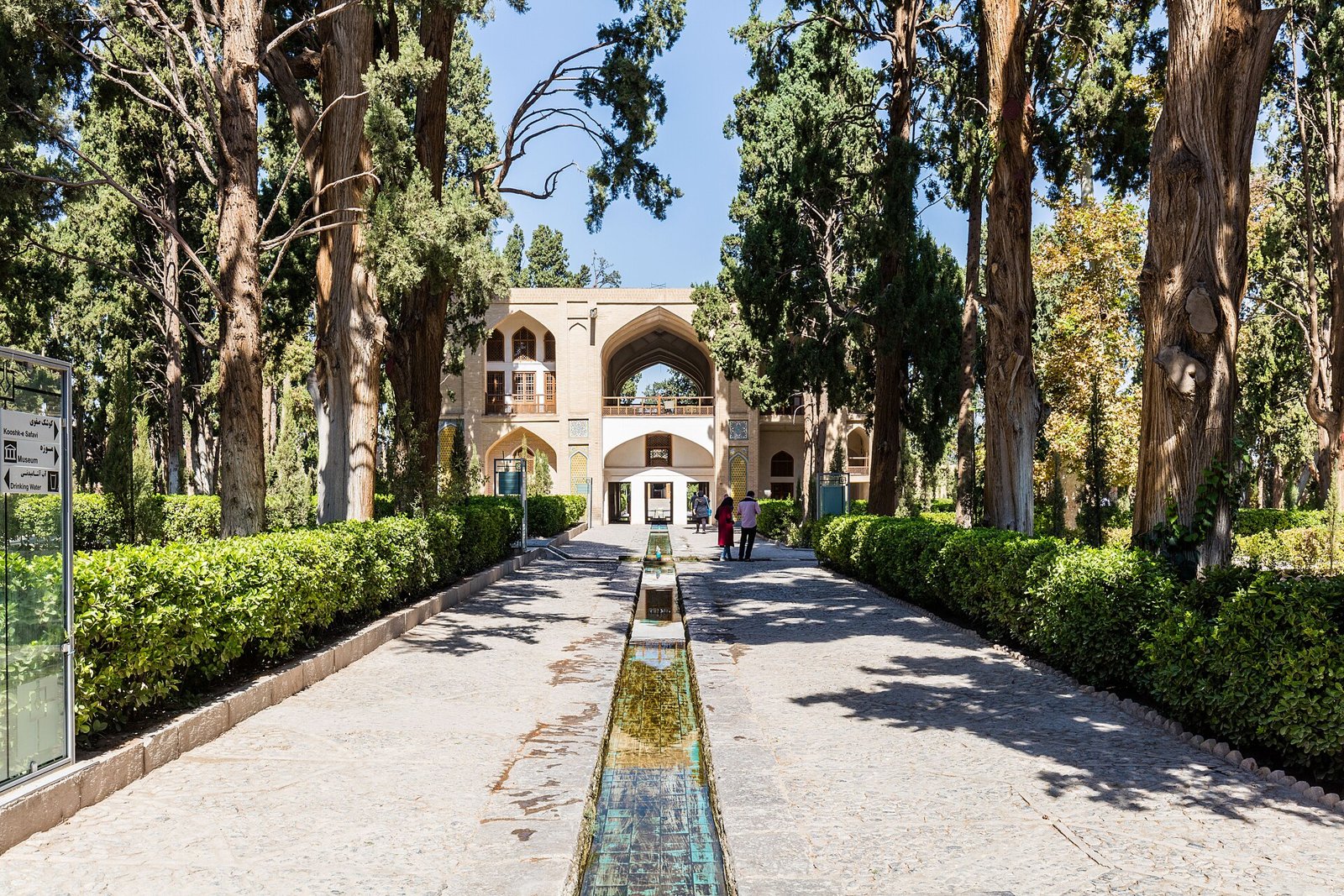
There is a moment when you step through the entrance of Fin Garden and the noise of the street simply falls away. Before you, a long turquoise channel runs straight toward a pavilion, fountains play in perfect rhythm, and cypress trees that have stood for five centuries lean over the water. This is Bagh-e Fin, the Fin Garden of Kashan, and it is arguably the most complete, most visited, and most emotionally complicated Persian garden in all of Iran.
This guide covers what the garden is, the history you should know before you walk in, what to see once you are inside, opening hours and ticket guidance, and the practical details of getting there from Kashan, Tehran, or Isfahan. Mehyar can handle the transport and the stay, so you can spend your energy on the garden itself.
Where Is Fin Garden?
Fin Garden sits about 6 to 9 kilometers southwest of Kashan's city center, at the end of Amir Kabir Street, beside the old village of Fin-e Kuchak. Kashan itself lies in Isfahan Province, roughly 220 kilometers south of Tehran and about 86 kilometers south of Qom, on the edge of the central Iranian desert. The garden is fed by the Soleymaniyeh Spring, which rises just above it, and that spring is the reason this green place exists at all in such an arid landscape.
The address commonly used for navigation is: Kashan, end of Amir Kabir Street, near the historical Fin village. If you are using a map application inside Iran, searching for "Bagh-e Fin" or "باغ فین" will take you directly to the entrance.
How to Get to Fin Garden
From Inside Kashan
The simplest way is to open Mehyar, choose Taxi, and set your destination to Fin Garden. A ride from the city center typically takes 15 to 20 minutes depending on traffic, and the fare is modest by international standards. Shared taxis also run along Amir Kabir Street and can drop you near the entrance, but for a first visit, a private Mehyar Taxi removes the guesswork, especially if you are carrying bags or traveling with family.
If you prefer public transport, minibuses from the city center toward Fin operate during daylight hours. They are cheap and frequent enough, but they will not take you to the gate itself, so expect a short walk at the end.
From Tehran
The drive from Tehran to Kashan takes about three hours via the Tehran-Qom Freeway and then the Qom-Kashan Freeway. If you are not driving, the comfortable options are a bus from Tehran's southern terminal or a train to Kashan station, which takes around two and a half hours. From Kashan station, open Mehyar, choose Taxi, and ride to Fin Garden, or ask your hotel to arrange a pickup.
From Isfahan
Kashan is roughly 210 kilometers from Isfahan, about two and a half hours by car or bus. Buses run regularly between the two cities. Once you arrive in Kashan, use Mehyar Taxi for the final leg to the garden. If you are planning a broader trip, our guide to Isfahan pairs naturally with a Kashan stop.
A Short History of Bagh-e Fin
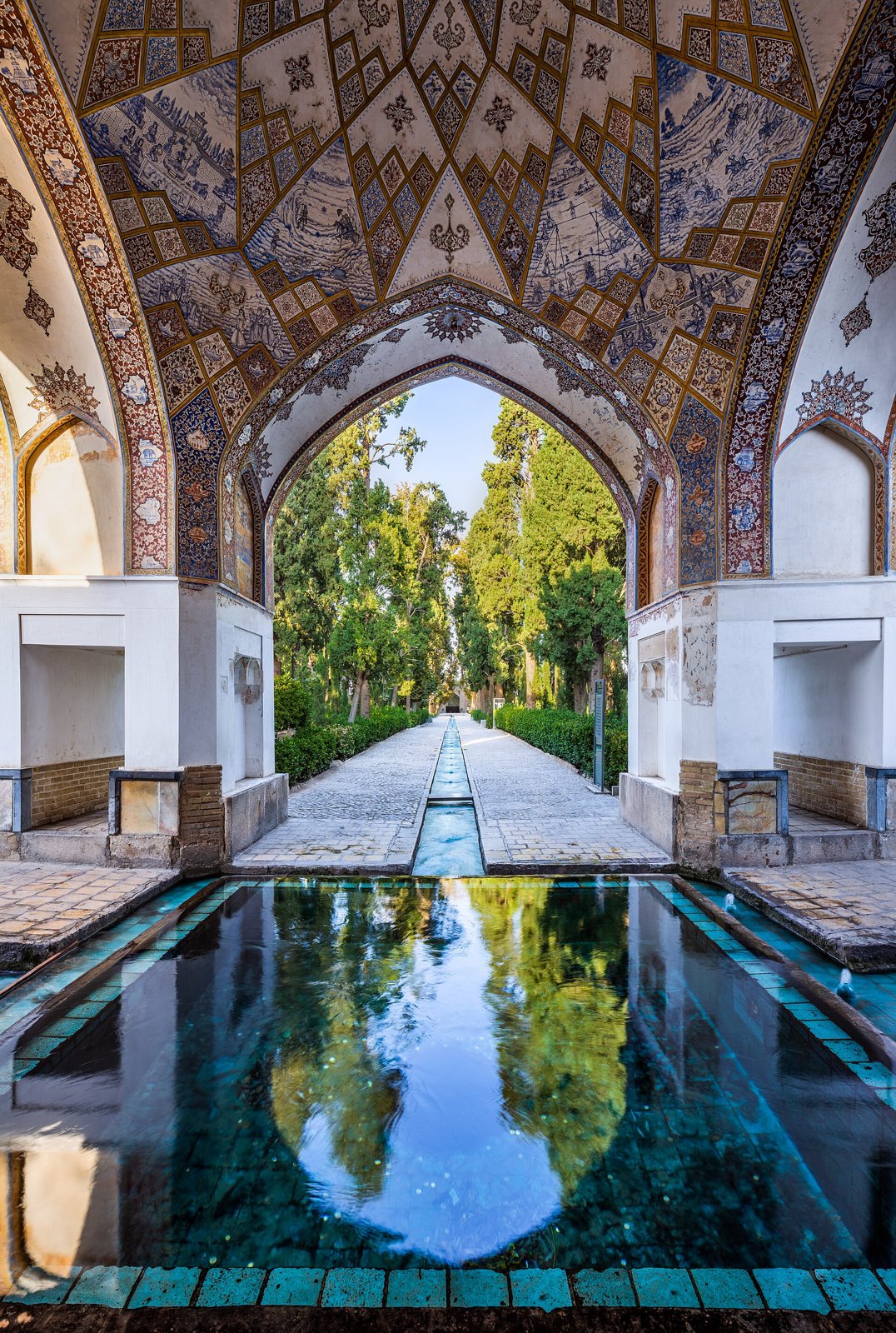
The garden you walk through today is largely the work of the Safavid king Shah Abbas I, who reigned from 1588 to 1629 and ordered the garden laid out in its current form near the Soleymaniyeh Spring. Some sources push the origins of the site further back, but the Safavid design is the foundation of what survives. Later, the Zand and Qajar periods added and restored structures, and the garden took on the shape visitors see now.
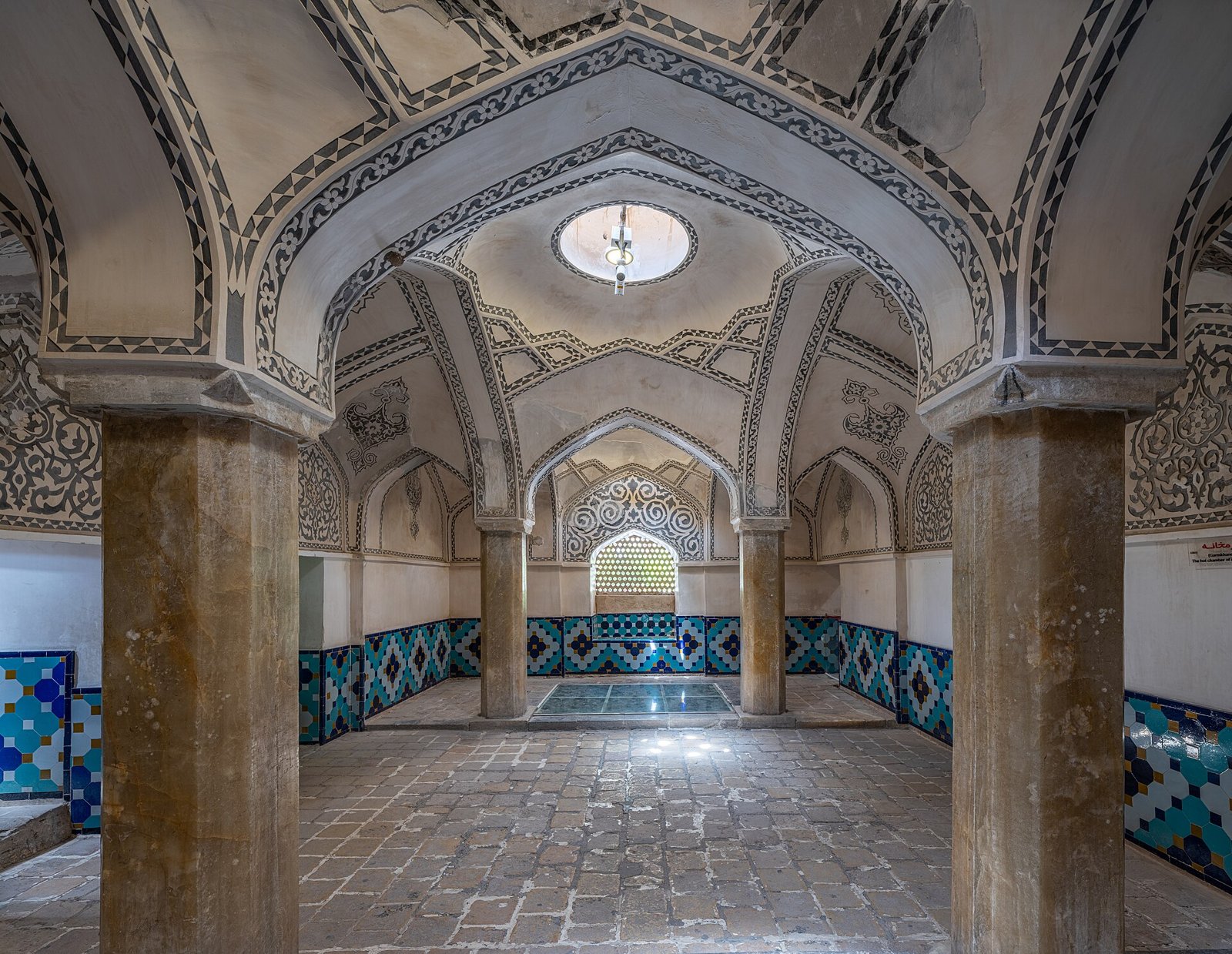
Two things make Fin Garden historically heavy. First, it is one of nine Persian gardens inscribed on the UNESCO World Heritage List in 2011 under the collective title "The Persian Garden." Second, it is the site of one of the most painful political murders in Iranian history. Amir Kabir, the reforming prime minister of Nasir al-Din Shah, was confined and killed in the small bathhouse here in 1852. That event gives the garden a quiet, somber layer beneath its beauty, and it is the reason many Iranians visit with a sense of pilgrimage as much as leisure.
What to See Inside Fin Garden
The Water System
The genius of Fin Garden is its water. The Soleymaniyeh Spring feeds the garden by gravity alone. No pumps, no modern machinery: just the natural slope of the land and a carefully engineered network of channels, pools, and fountains. The water arrives in a large pool, then divides along the main axis and side channels, cooling the air and giving the garden its unmistakable sound. Look for the way fountains are spaced, and notice how the sound changes as you move from one section to another.
The Main Pavilion and the Central Axis
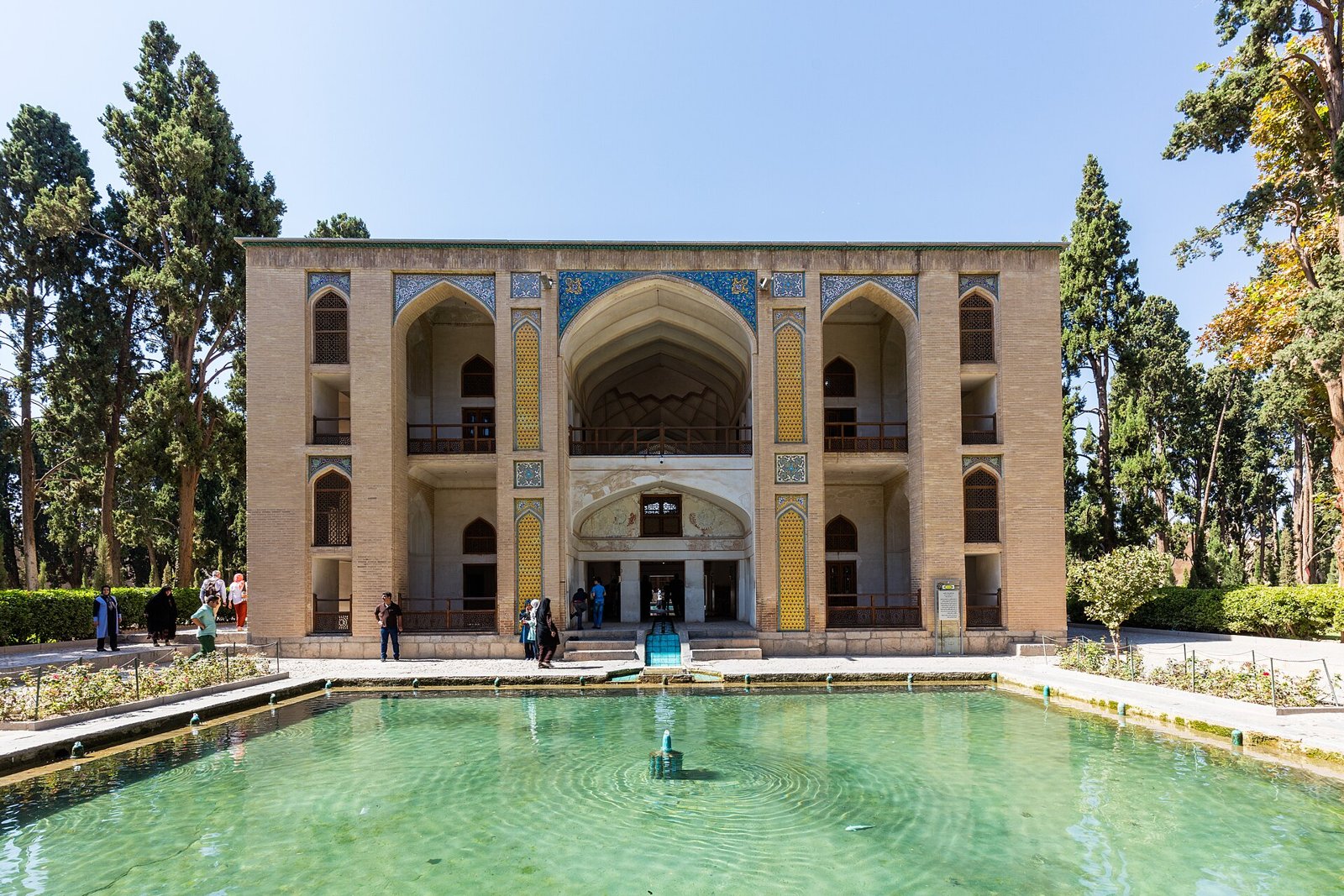
The central axis runs from the entrance pool toward the main pavilion, a two-story structure that once served as lodging for the royal court. The reflection of the pavilion in the long pool is the classic Fin Garden photograph, and it is worth pausing there before you walk further.
The Bathhouses
On one side of the garden are the bathhouses, including the small bath where Amir Kabir was killed. The tilework, the domed ceilings, and the contrast between the warm interior and the cool garden outside are striking. This is not a cheerful sight, but it is an essential part of understanding the garden's place in Iranian memory.
The Cypress Trees
Fin Garden is home to cypress trees that are estimated to be up to 500 years old, along with orange trees that perfume the air when they blossom in spring. The combination of evergreens and fruit trees is deliberate: shade, fragrance, and a microclimate that keeps the garden bearable even in Kashan's punishing summer heat.
The National Museum of Kashan
A small museum within the garden grounds, reopened in 2011 after a period of closure, displays artifacts and context for the region. It is a useful stop if you want to understand what you are looking at before you continue through the rest of Kashan.
Hours, Tickets, and Practical Notes
Opening hours at Fin Garden shift with the seasons and with Iranian holidays. In broad terms, the garden opens in the morning around 9:00 and closes in the late afternoon, with longer hours in the first half of the year and shorter hours in the second half. The safest approach is to check the current schedule the day before your visit, either through your hotel or through a current listing, and to arrive earlier rather than later.
Ticket prices in Iran change frequently, and foreign visitors typically pay a higher rate than Iranian nationals. Treat any figure you see online as a rough guide only, and confirm at the gate or through your hotel. Payment at the ticket office is normally in Iranian rial or toman, and cards issued outside Iran generally do not work in Iran, so plan to have cash or use your Mehyar wallet balance if you have topped it up. Our guide to paying in Iran explains the practical side in more detail.
A few notes that make a real difference on the day:
- The garden is mostly outdoors, so wear a hat and carry water in summer.
- The ground is uneven in places, and the bathhouse interiors have steps. Comfortable shoes matter.
- Fridays and Iranian public holidays are busier. Weekday mornings are calmer.
- The garden is generally not open on certain religious mourning days, so if your visit falls near Ashura, Tasua, or the death anniversary of Imam Ali, check in advance.

Nearby and Around Kashan
Fin Garden is the headline, but Kashan rewards at least a full day. The historic houses of the city, such as the Tabatabaei House, the Borujerdi House, and the Abbasian House, are among the finest examples of Qajar residential architecture in Iran. The traditional bazaar, the Agha Bozorg Mosque and school, and the Sultan Amir Ahmad Bathhouse are all within reach of the center.
If you have more time, the underground city of Noushabad, the desert landscapes around Maranjab, and the rosewater workshops of Qamsar are all worthwhile. Our Kashan guide goes deeper into these, and if you are shaping a broader trip, Tehran and best time to visit Iran will help you plan the calendar around your visit.
Where to Stay and When to Come
Kashan has a strong collection of boutique hotels housed in restored historic homes, along with more conventional hotels and budget guesthouses. Open Mehyar, choose Hotels, and filter by your dates and budget. Booking ahead matters in spring, especially during the rosewater season in Ordibehesht (late April to late May), when Kashan fills with domestic travelers.
On timing: spring and autumn are the most comfortable seasons in Kashan. Summer is genuinely hot, often exceeding 40°C, and winter nights can drop below freezing. If you visit in summer, plan Fin Garden for the early morning and spend the middle of the day in the bathhouses, the bazaar, or a museum.
Start Your Visit with Mehyar
Fin Garden is easy to reach once you decide to go. Open Mehyar, set your destination, and let a Mehyar Taxi handle the road from Kashan, Tehran, or Isfahan. Book your stay through Mehyar Hotels, keep your wallet topped up so small payments are simple, and let the app carry the logistics while you stand at the edge of that long turquoise pool. When you are ready to plan the rest of your Iranian journey, our guides to Kashan and paying in Iran are the natural next reads.