
The road across the flat plains of western Khorasan is not dramatic. There are no mountains to frame the horizon, no rivers to follow. The landscape is open, agricultural, and ancient. Then you reach Sabzevar, a city whose historical name, Bayhaq, carries weight far beyond its modest modern appearance. Bayhaq was one of the great cultural centres of medieval Iran, a city that produced historians whose works remain among the finest achievements of Persian prose, and poets whose verses are still recited. Walking the older streets of Sabzevar, past the surviving monuments and the quiet courtyards of the historical quarters, you are moving through a landscape shaped by a thousand years of intellectual and architectural tradition.
This guide covers the history of Bayhaq, what to see in the historical streets and monuments of Sabzevar, the cultural legacy, and practical information for a visit. Mehyar can help with transport and accommodation for your Khorasan journey.

Where is Bayhaq?
Bayhaq is the historical name for the region and city now known as Sabzevar, located in Razavi Khorasan province in northeastern Iran. The city sits on the broad plain between Nishapur to the west and Mashhad to the east, approximately midway along the route that connects the two. In the medieval geography of Iran, Bayhaq was one of the principal districts of Greater Khorasan, the vast eastern province that stretched from the central desert to the frontiers of Central Asia.
The name Bayhaq appears in historical sources from the early Islamic period onward, though the settlement history of the area is considerably older. The city was at its height during the Buyid and Ghaznavid periods (tenth to eleventh centuries), when it served as a regional capital and a centre of learning and literary production. The Mongol invasion of the thirteenth century devastated the city, and though it recovered to a degree under the Timurids and later dynasties, it never regained the prominence it had enjoyed in the early medieval period.
Today, the modern city of Sabzevar covers the site of historical Bayhaq. The older quarters and streets preserve traces of the medieval city, and the surrounding countryside still bears the name Bayhaq in local usage. For a broader view of the region, see the Mashhad travel guide.
What to See in the Historical Streets
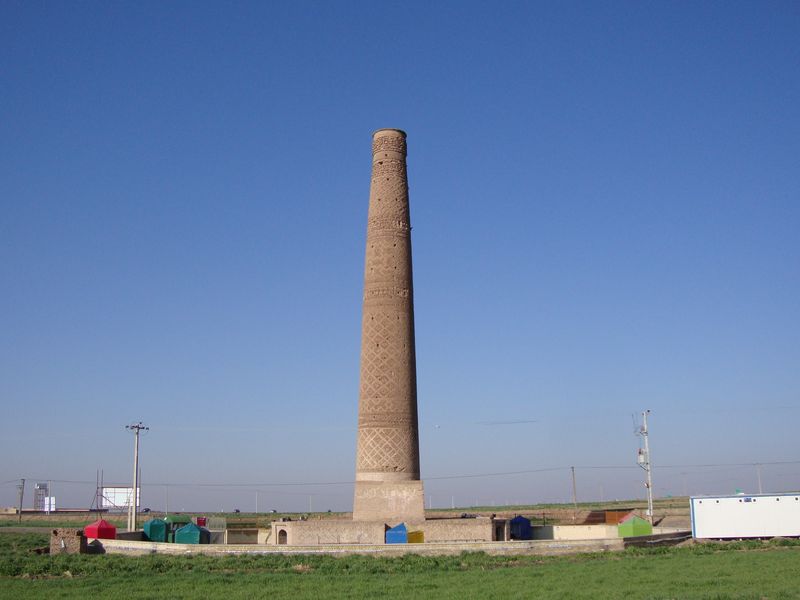
The historical core of Sabzevar contains a concentration of monuments that attest to the importance of Bayhaq across several centuries. The streets around the city centre pass sites from the Seljuk, Ilkhanid, Timurid, and Safavid periods, and the architectural remains reveal a city that was once far more significant than its current provincial status might suggest.
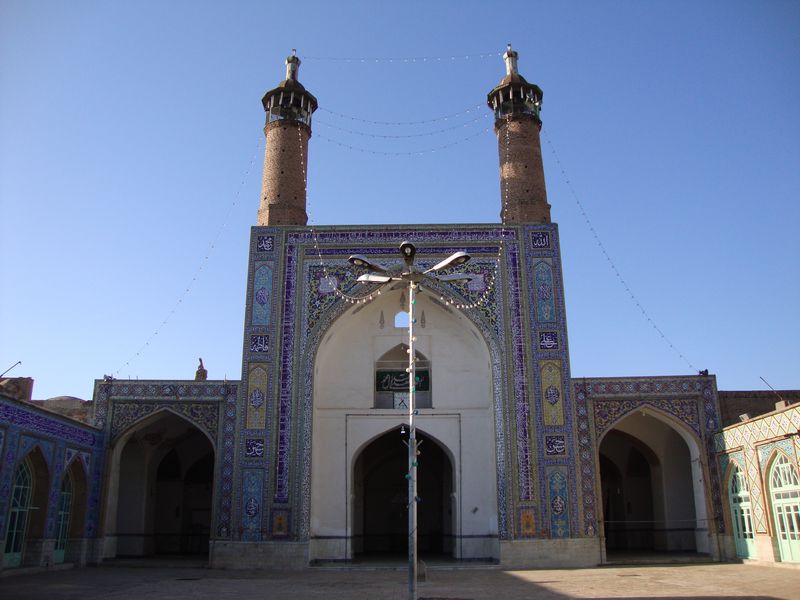
The most important historical monument in Sabzevar is the Tomb of Yahya ibn Zayd, located in the central part of the city. Yahya ibn Zayd was a descendant of the Prophet Muhammad who settled in the region in the early eighth century, and his tomb has been a place of pilgrimage and veneration for over a thousand years. The current structure dates primarily from the Timurid and Safavid periods, with decorative tilework and inscriptions that rank among the finest in Khorasan.
The Masoudieh Castle, a mudbrick fortress on the outskirts of the city, is a reminder of the military history of Bayhaq. Though much of the structure is ruined, the scale of the fortification conveys the strategic importance of the site. The castle dates from the early medieval period and was part of the defensive network that protected the cities of the Khorasan plain.
The old bazaar of Sabzevar, though smaller and less grand than the great bazaars of Isfahan or Tabriz, retains the covered vaults and cellular shops of a traditional Iranian market. The bazaar was the commercial heart of Bayhaq, and its layout reflects the economic geography of a medieval city. Walking through the bazaar, you pass shops selling spices, textiles, metalwork, and the local agricultural products of the Khorasan plain.
The Cultural Legacy of Bayhaq
The name Bayhaq is inseparable from the great historian Abu'l-Fazl Bayhaqi (995 to 1077), whose Tarikh-e Bayhaqi (History of Bayhaq) is widely regarded as one of the masterpieces of Persian prose. Bayhaqi served as a court official under the Ghaznavid sultans, and his history covers the reign of Sultan Mahmud of Ghazni and his successors with a level of detail, psychological insight, and literary elegance that has no parallel in early Persian historiography. Reading Bayhaqi, you encounter a writer who combines precise documentation with a novelist's eye for character and scene, and whose work has influenced Persian literary style for a thousand years.
The historical streets of Sabzevar are the landscape that produced this tradition. The city was a centre of administration and learning, and the court culture that Bayhaqi describes was based in the palaces and chancelleries of Bayhaq. Though the Ghaznavid buildings themselves have not survived, the cultural memory of the place endures in the streets and in the local identity.
Other notable figures from Bayhaq include the poet and writer Asadi Tusi, who was born in the broader region, and a succession of scholars, administrators, and religious figures who contributed to the intellectual life of Khorasan over several centuries.
The Historical Streets and Urban Fabric
The historical streets of Sabzevar follow a pattern common to medieval Iranian cities, with a central bazaar area radiating outward into residential quarters, each with its own mosque, public bath, and local market. The street plan is organic rather than grid-based, reflecting centuries of gradual accretion and adaptation. In the older quarters, the streets are narrow and shaded, designed to provide relief from the hot summers of Khorasan. The houses are built around central courtyards, with wind towers (badgirs) for ventilation, a feature shared with the architecture of the broader eastern Iranian plateau.
In recent years, there has been growing attention to the preservation of the historical urban fabric of Sabzevar. Restoration projects have targeted several of the key monuments, and efforts are underway to protect the traditional street patterns and architectural character of the older quarters. Visitors walking through these streets encounter a city that is still in active use, where daily life continues in settings that are centuries old.
Practical Information
Hours and access. The historical monuments of Sabzevar are generally accessible during daylight hours. The Tomb of Yahya ibn Zayd is open to visitors, though as a place of pilgrimage and worship, appropriate dress and behaviour are expected. The bazaar operates during business hours, typically from morning until early evening. The Masoudieh Castle is accessible as an exterior visit, as the interior is not fully open to the public.
Tickets. Entrance fees for the major monuments are modest, typically in the range of 20,000 to 100,000 Iranian rials. Some sites may be free.
Duration. A thorough visit to the historical sites of Sabzevar requires half a day to a full day. The monuments are concentrated in the city centre and are within walking distance of each other. If you want to explore the surrounding countryside and the villages of the Bayhaq district, allow additional time.
Facilities. Sabzevar is a functioning city with full amenities. Hotels, restaurants, and shops are available throughout the city. The historical quarters have cafes and small restaurants where you can rest and eat.
How to Get There
By Mehyar Taxi. If you are already in Sabzevar, open Mehyar and book a taxi to the historical monuments. The sites are concentrated in the city centre and are easily reached by taxi. Mehyar Taxi operates in Sabzevar and the surrounding towns.
By Mehyar Buses. Sabzevar is well connected by intercity bus to Mashhad (approximately four hours), Nishapur (approximately two hours), and Tehran (approximately eight hours). Check the Mehyar app for schedules and booking.
By private car. Sabzevar is on the main east-west highway across Khorasan, and is accessible from Mashhad, Nishapur, and other cities in the region. The drive from Mashhad covers approximately 230 kilometres and takes about three hours on a good road.
For accommodation in Sabzevar, use Mehyar to browse and book hotels directly.
Best Time to Visit
The best time to visit Sabzevar is in spring (March to May) or autumn (September to November), when the weather on the Khorasan plain is mild and pleasant. Summers are hot, with temperatures regularly exceeding 35 degrees, and the historical streets offer limited shade. Winters are cold, though the region does not typically receive heavy snowfall.
Spring brings mild temperatures and the agricultural landscape around Sabzevar is green and productive. Autumn has clear skies and comfortable walking weather. Either season is suitable for a visit to the historical monuments and a walk through the old streets of Bayhaq.
For a Khorasan itinerary combining Sabzevar with Mashhad, Nishapur, and the other historical cities of the region, use Mehyar to plan your transport and accommodation across the full journey.