
Step off the busy streets of downtown Rasht and into a space where time seems to slow down. Sabzeh Meydan, literally the Green Square, sits in the western part of Rasht, just steps from the famous Shahrdari Square. Tall plane trees stretch overhead, their canopy filtering the northern light into soft patterns on the ground. Pigeons flutter between branches, chess players concentrate over their boards, and the scent of rain-soaked earth mingles with the smell of fresh herbs from nearby market stalls. This is not just a park. It is the living room of Rasht, a gathering place where locals and travelers share the same benches and the same quiet pleasure of being in a beautiful spot.

A Square Born from a Meadow
The story of Sabzeh Meydan goes back to the Qajar period. Before it became a formal public space, this area was an open meadow that stretched between two old neighborhoods of Rasht called Ostad Sara and Kiab. The meadow extended all the way toward Chinarsara. At one end stood a small pool, and nearby was a graveyard where executed criminals were buried. It was hardly a place of beauty.
Everything changed when Mozafar al-Din Shah Qajar sat on the throne. His governor of Rasht, Mohammad Vali Khan Tonkaboni, known by the title Nasr al-Saltaneh, decided to transform this neglected stretch of land. He ordered the area to be landscaped with gardens, pathways, and rows of trees. He gave it the name Sabzeh Meydan. The graveyard was closed and the neglected pool, which only filled with rainwater and became a swamp for frogs each year, was filled with city waste. An open ditch that ran from the Sabzeh Meydan bazaar toward Pir Sara and the Gohar Rud river was covered with brick arches. Nasr al-Saltaneh then offered plots of the surrounding land to builders, mostly khans from Fuman, Shaft, Tolem, and Kasma, on the condition that they construct proper houses and shops.
Within a short time, gardens and streets appeared. On the southern side of the square, a school called Ashraf Mozaffari was built. In 1955, the school was transferred to the Ministry of Education. After it closed, the municipality purchased the building and demolished it to widen the southern street of the square. Over the decades, the meadow around Sabzeh Meydan turned into what is now Taleghani Street, and the old pool became a cinema.
What to See and Do in Sabzeh Meydan
Today, Sabzeh Meydan covers an area of 29,700 square meters. It remains one of the most beloved green spaces in Rasht and one of the top attractions in Gilan province. The park is dense with old, towering trees that provide cool shade throughout the warm months. On any given day, you will find locals gathered in small groups, playing chess or dominoes on stone tables scattered across the park. The atmosphere is warm, unhurried, and genuinely inviting.
One of the most distinctive features of Sabzeh Meydan is the collection of busts honoring famous figures from Gilan. These statues are placed throughout the park and serve as a quiet tribute to the region's cultural and intellectual heritage. Among them are statues of Shaygan Fomani, the celebrated Gilaki poet known for his witty and poignant verses in the local dialect. You will also find busts of Professor Fazlollah Reza, a pioneer of Iranian surgery, Dr. Mahmoud Behzad, the father of Iranian social work, Professor Majid Samii, the world-renowned neurosurgeon, and Professor Hassan Akbarzadeh, a distinguished scholar. Walking among these statues feels like a brief tour through the achievements of a province that has contributed enormously to Iranian culture and science.
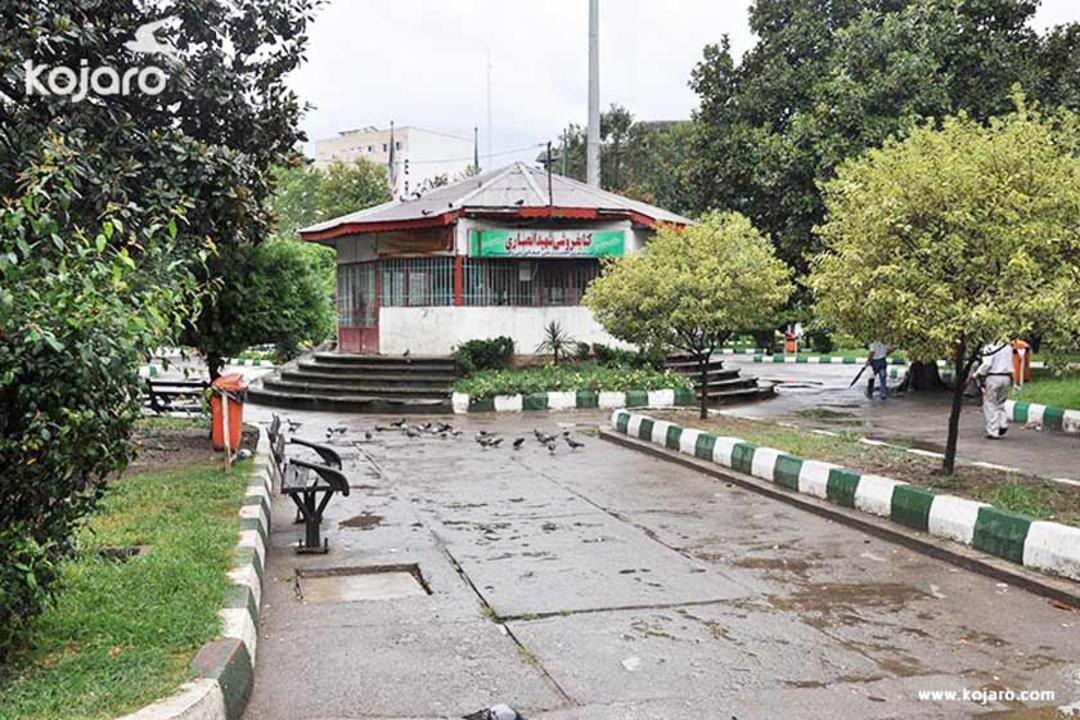
The square is especially pleasant in the late afternoon, when families come for a stroll, children chase the pigeons, and street vendors sell roasted corn and sunflower seeds. If you visit during the Nowruz holidays or other national celebrations, the square comes alive with music, food stalls, and a festive energy that is hard to find elsewhere in Iran. It is one of those places where you can sit on a bench, watch the world go by, and feel genuinely connected to the city.
The Neighborhood Around the Square
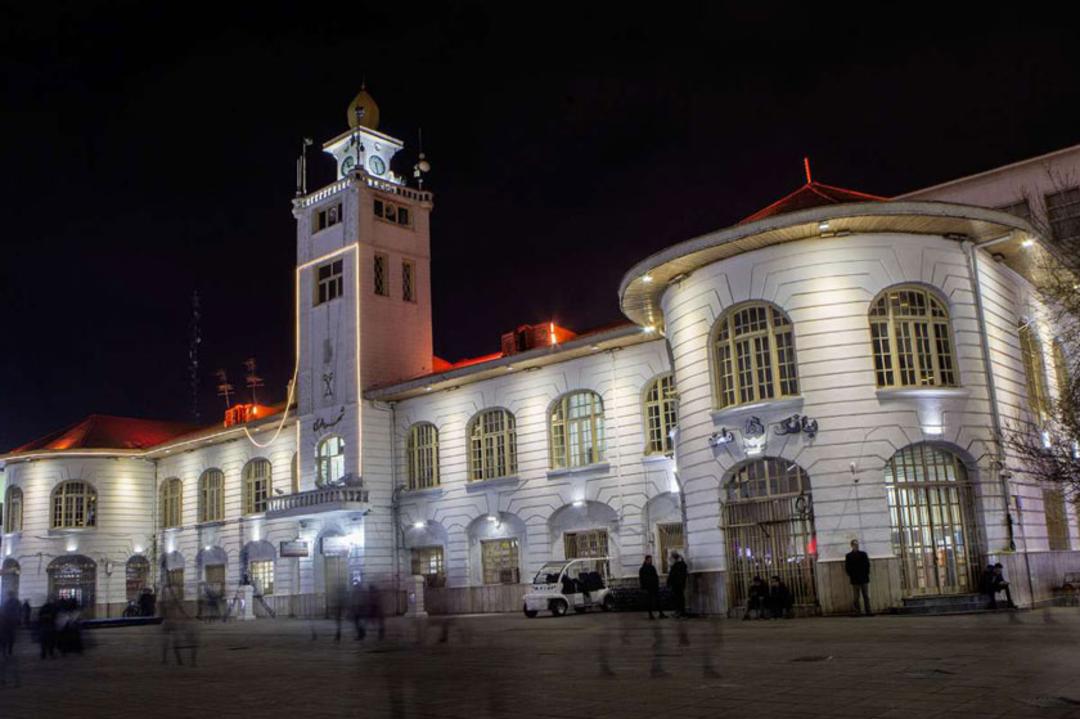
Sabzeh Meydan does not exist in isolation. It sits at the center of one of the most historically rich neighborhoods in Rasht. The streets of Lakani, Bisotun, and Ostad Sara all lead directly to the square. Alamolhoda Street connects Sabzeh Meydan to Shahrdari Square, the iconic civic center of Rasht with its white municipal palace and famous clock tower. A walk between these two squares takes about ten minutes and passes through the commercial heart of the city.
Just a few steps from Sabzeh Meydan, you will find the Rasht Grand Bazaar, one of the most colorful and atmospheric markets in northern Iran. The bazaar dates from the Qajar and early Pahlavi periods and is built around two main courtyards with 14 historic caravanserais. Inside, you can buy everything from fresh Caspian fish and fragrant herbs to handwoven baskets, olive paste, and the famous sour pomegranate paste of Gilan. The fish market section is particularly memorable, with vendors calling out the catch of the day in rapid Gilaki.
Also nearby are the Tamadon Passage and Sepidroud Passage, two of the oldest shopping arcades in Rasht. The Tamadon Passage sits right next to Sabzeh Meydan Park and has been a favorite destination for shoppers and visitors for decades. The Rose Shopping Center, located on Sabzeh Meydan Street near Alamolhoda, is another popular spot for affordable clothing and accessories.

For those interested in history, the Postal Museum and the old Iran Hotel building are both located in the Shahrdari Square complex. The old Iran Hotel was one of the first modern hotels in northern Iran and its Art Deco facade is a striking reminder of Rasht's early twentieth-century modernization. The National Library of Rasht is also in the immediate vicinity, housed in a building of architectural interest.
How to Get There
Sabzeh Meydan is located in the western part of central Rasht, the capital of Gilan province. The city of Rasht lies approximately 250 kilometers northwest of Tehran, along the southern coast of the Caspian Sea. Getting to Rasht is straightforward. You can fly from Tehran to Rasht's Sardar Jangal Airport in about an hour, or take a scenic road trip through the Alborz mountains via the Qazvin-Rasht freeway, which takes roughly three to four hours. The Rasht train station connects the city to the national rail network as well.
Once in Rasht, Sabzeh Meydan is easy to reach. It sits in the downtown area and is accessible from Imam Street, Shariati Street, and Alamolhoda Street. From Shahrdari Square, walk west along Alamolhoda Street for about ten minutes. Local taxis are abundant and affordable. Mehyar Taxi offers convenient rides across the city, whether you are coming from the airport, the bus terminal, or your hotel. If you are staying in Rasht, most central hotels are within walking distance of the square.
Hours and Practical Information
Sabzeh Meydan is an open-air public park with no entrance fee. It is accessible every day of the week and is typically busiest in the late afternoon and evening. The best time to visit is during spring and early summer, when the trees are in full leaf and the weather in Gilan is mild and pleasant. Autumn is also beautiful, as the plane trees turn golden, but winter rains can make the paths muddy. There are no formal opening hours since the square is open to the sky, but most visitors come between 4:00 PM and 9:00 PM. Public restrooms are available near the park entrance, and benches are plentiful.
Tips for Your Visit
If you are planning a trip to Rasht, consider combining your visit to Sabzeh Meydan with a walk through Shahrdari Square, where you can listen to the municipal orchestra perform live music on many mornings and special occasions. The clock tower of the municipal building chimes on every hour, a sound that has been part of the city's daily rhythm for decades.
For accommodation, Mehyar Hotels lists a range of options in Rasht, from budget-friendly guesthouses near the bazaar to upscale hotels in the Golsar neighborhood. The Golsar area, located northwest of the city center, is home to the Iranianan Shopping Center, the Golsar Commercial Complex, and some of the best restaurants in town.
If you want to explore further, the Gilan Rural Heritage Museum, located about 20 kilometers outside Rasht on the road to Saravan, offers a fascinating open-air exhibit of traditional architecture from villages across the province. The museum features relocated historical houses, workshops, and agricultural structures, giving visitors a comprehensive view of Gilan's rural heritage.
Food lovers should know that Rasht has been recognized by UNESCO as a Creative City of Gastronomy. The local cuisine is among the most diverse and flavorful in Iran, featuring dishes like mirza ghasemi, baghali ghatogh, and kateh. Around Sabzeh Meydan and the bazaar, you will find numerous small restaurants and food stalls serving traditional Gilaki meals at very reasonable prices.
In short, Sabzeh Meydan is more than a tourist stop. It is a place where the everyday life of Rasht unfolds under the shade of ancient trees. Whether you are drawn by history, architecture, local culture, or simply the desire to sit in a green and peaceful spot in the middle of a lively city, this square delivers. It is, in every sense, the green heart of Gilan.
