
Some provinces in Iran reward a detour; Kurdistan rewards a deliberate journey. The Zagros here does not roll, it stacks. Ridge behind ridge runs down to deep valleys where a river has been cutting for a million years, and in the folds of those valleys sit villages built on such steep slopes that the courtyard of one house is the roof of the house below it. Kurdish hospitality is not a slogan in this part of the country either. Expect to be invited for tea more than once in a single afternoon, and expect the conversation to move slowly and pleasantly.
Based in the provincial capital Sanandaj, a first trip to Kurdistan mixes three kinds of material: a historic city core of Qajar houses, bathhouses and a covered bazaar; a set of natural sights that includes a large freshwater lake, a torrential spring waterfall and one of the longest hand-cut caves in Iran; and the stepped villages, which are the reason most photographers put Kurdistan on their list at all.

Where is Kurdistan?
Kurdistan sits in western Iran, bordering Iraq to the west. Sanandaj, the provincial capital, lies at roughly 1,400 metres above sea level on the Zagros flank, about 480 kilometres west of Tehran and some 185 kilometres north of Kermanshah. The province is often confused with its neighbours: Kermanshah lies to the south and has its own share of Zagros scenery, while Ilam fronts the southwest. Kurdistan is the higher, colder, greener of the group, and in spring the change is dramatic. Snowmelt fills the valleys with short-lived, extremely photogenic waterfalls, and the city of Sanandaj itself turns into a series of green terraces.
The main travel axis is the Tehran-Qazvin-Hamadan-Sanandaj road, which makes the capital an easy base. From Sanandaj, the town of Marivan and Zarivar Lake lie to the northwest, Baneh and the border markets to the west, Bijar to the northeast, and Saqqez to the north, each with its own sights.
How to get to Kurdistan
By road from Tehran. The drive covers roughly 480 kilometres and takes five to six hours without long stops. Mehyar Taxi covers the route with door-to-door pickup and a fixed agreed fare, which is the most comfortable option if you are travelling with camera gear or with a second passenger. Mehyar Buses run the same corridor at a much lower price and are a sensible choice for a night departure.
By air. Sanandaj has an airport with regular services from Tehran, and the flight is short. Because schedules shift seasonally, check current availability when you build the itinerary and book the onward transfer at the same time so you are not negotiating with airport taxis at midnight.
Around the province. Distances between sights are moderate but the roads wind. A private car with a driver makes a one-day loop of Palangan and the valley roads below it practical; without one, you will spend more time waiting for shared taxis than looking at anything. Booking the car for the full day through Mehyar Taxi is cheaper than hiring locally village by village, and it solves the return leg, which is the part that goes wrong.
Sanandaj on foot
The old quarter of Sanandaj is compact enough to walk in a morning, and it holds a surprising density of registered monuments.
Start at the Asaf Vaziri Mansion, the oldest surviving house in the city and now known locally as the House of Kurds. It is a four-thousand-square-meter complex that grew in layers across the Safavid, Qajar and Pahlavi periods, which makes it unusually readable as a history of Kurdish domestic architecture. The grounds include a historic bathhouse and the Kurdistan Anthropology Museum, the largest ethnographic museum in Iran devoted to a single ethnic tradition, and the exhibits on dress, instruments and nomad life are worth an hour.
A short distance away, the Sanandaj Museum occupies the Salareh Saeed mansion, a Qajar house built by Molla Lutfollah Sheikh ol-Islam. Its collections run from prehistoric material through the historic and Islamic periods, with a temporary-exhibitions wing. Look up at the windows: the coloured glass of the orsi screens throws patterned light across the rooms in the late afternoon.
The Grand Mosque of Sanandaj, known as Dar ol-Ehsan, was completed in 1227 AH under Amanollah Khan Ardelan. It is not the mosque visitors expect from this region. Seven-colour tilework covers the iwans, the floor is laid with glazed bricks, and the prayer hall rests on twenty-four stone columns; a central court, two iwans, a minaret and twelve cells complete the plan. Nearby, the Khan Bathhouse, also called Pir-Zeyhir and dated 1220 AH, has been restored room by room since the late 1990s. Its sequence of entrance, octagonal hall, cold room, corridor, changing room and treasury is a textbook of the traditional Persian bathhouse, and today it works as a traditional restaurant, which is the best reason to go inside.
Two more buildings round out the historic core. Khosrowabad Mansion and Garden, dated 1223 AH, served as a seat of the Ardelan governors and keeps its royal palace, iwan, bathhouse and gatekeeper's rooms on a formal garden axis. The Bazaar of Sanandaj, whose domed memory goes back to the Safavid period, is laid out as a rectangular, non-linear maze of vaulted lanes; the section where women's Kurdish cloth hangs in stacked bright bolts is the most photographed stretch of the covered market.
Abidar, the balcony over the city
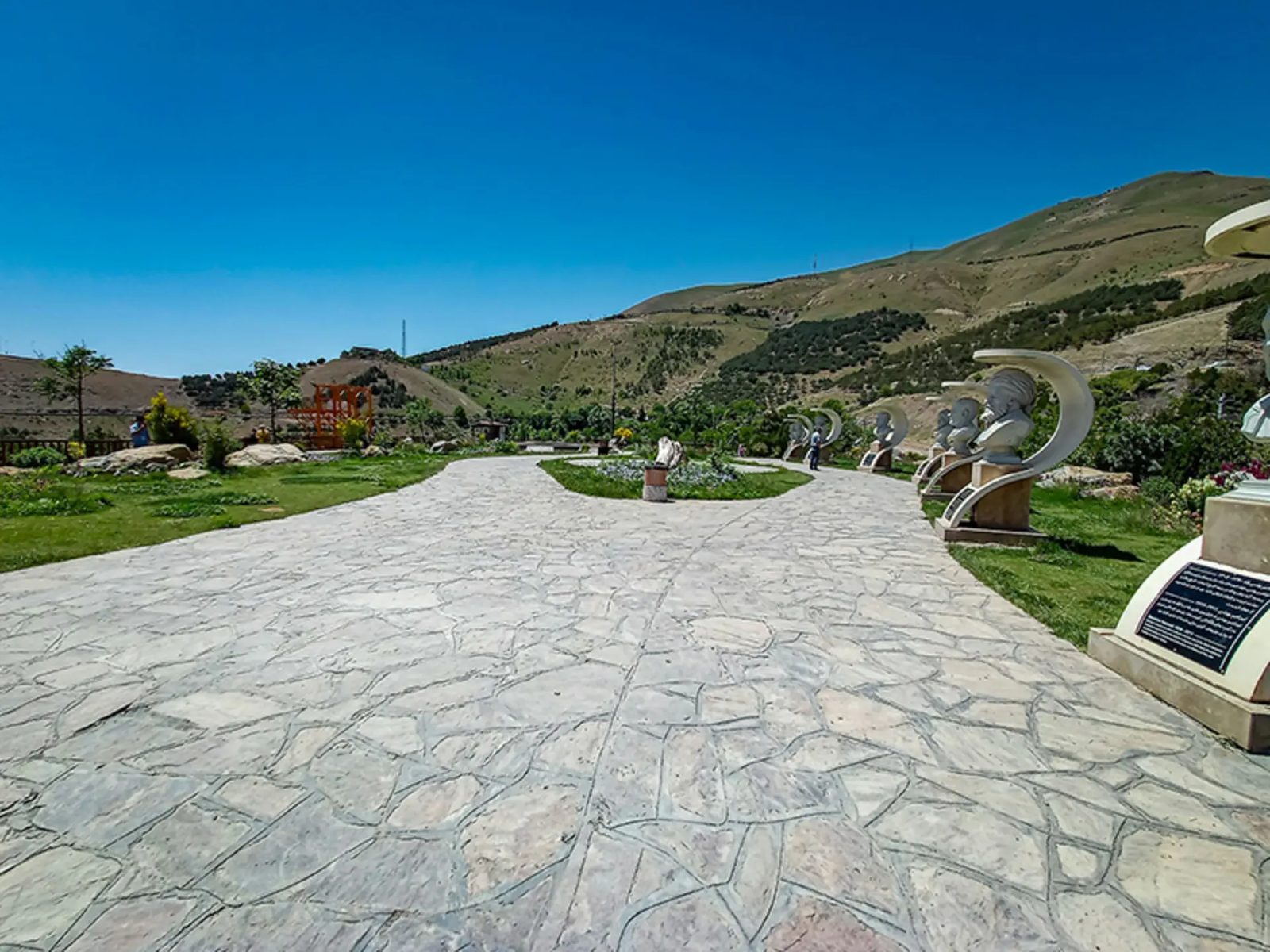
Sanandaj solves the question "where do I look at this city from?" with a park on a high hill inside the town. Abidar is where families go at the weekend, and it is where you should go in the hour before sunset. From the top the whole grid of Sanandaj lies below you with gardens, springs and a zoo spread across the slopes, and on clear days the ridges behind carry snow long into spring. Come early enough to walk, stay late enough to see the lights come on, and eat something from the stalls rather than hurrying back to the hotel.
Zarivar Lake and the water country
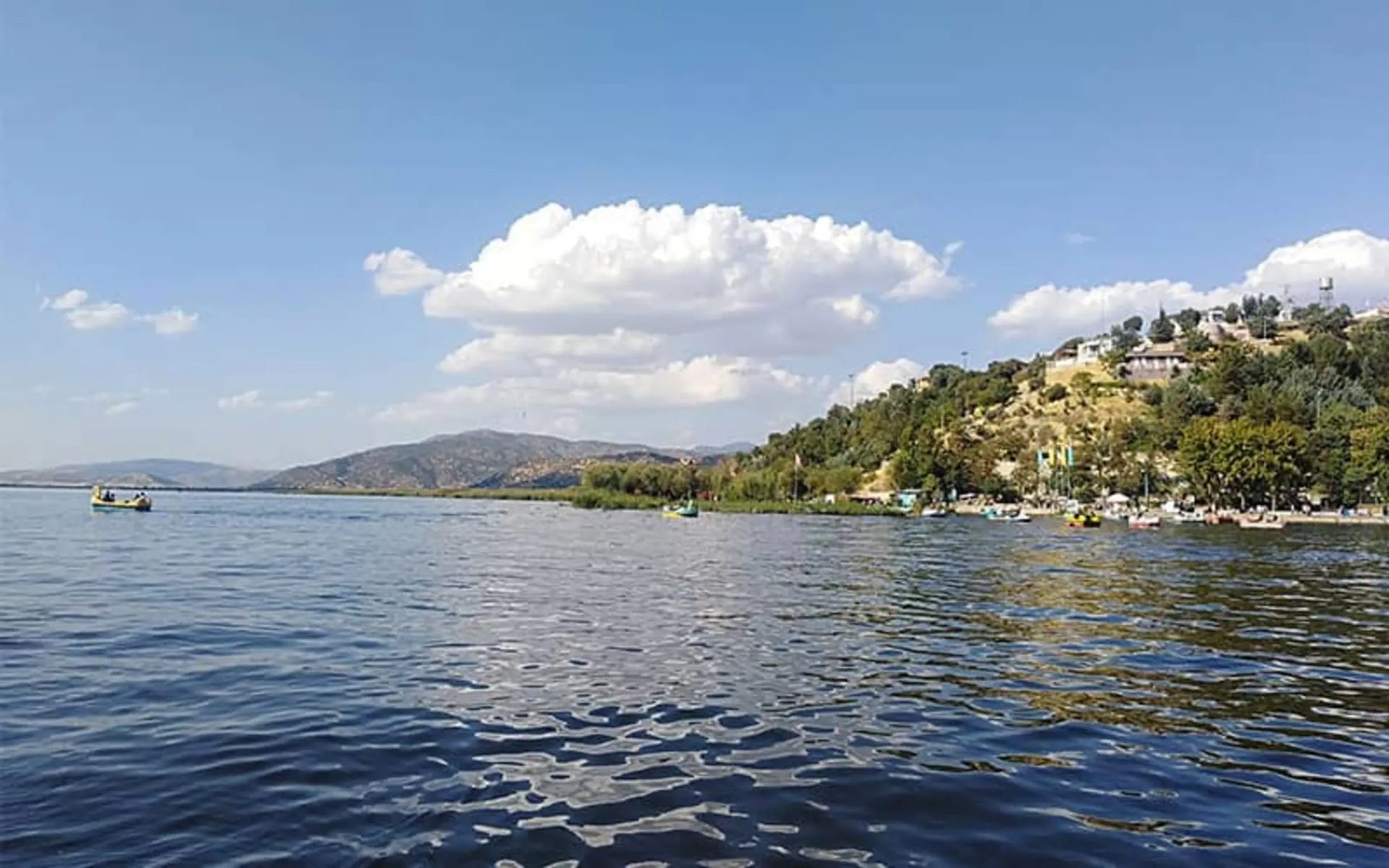
Northwest of Sanandaj, near the town of Marivan and the Iraqi border, Zarivar is one of Iran's largest freshwater lakes. It has no single dramatic inflow; the bed is fed by springs, and the rain and snow of the surrounding heights do the rest, which is why the water stays clear and cold. The lake is registered as a natural heritage site. Boating is the ordinary summer activity, paragliders launch from the ridge above, and fishing is seasonal. The real reason most travellers stop, though, is lunch: grilled lakeside fish at Zarivar has a genuine claim to being the best in Iran, and it is served simply, with rice and lemon, at the terraces along the shore.
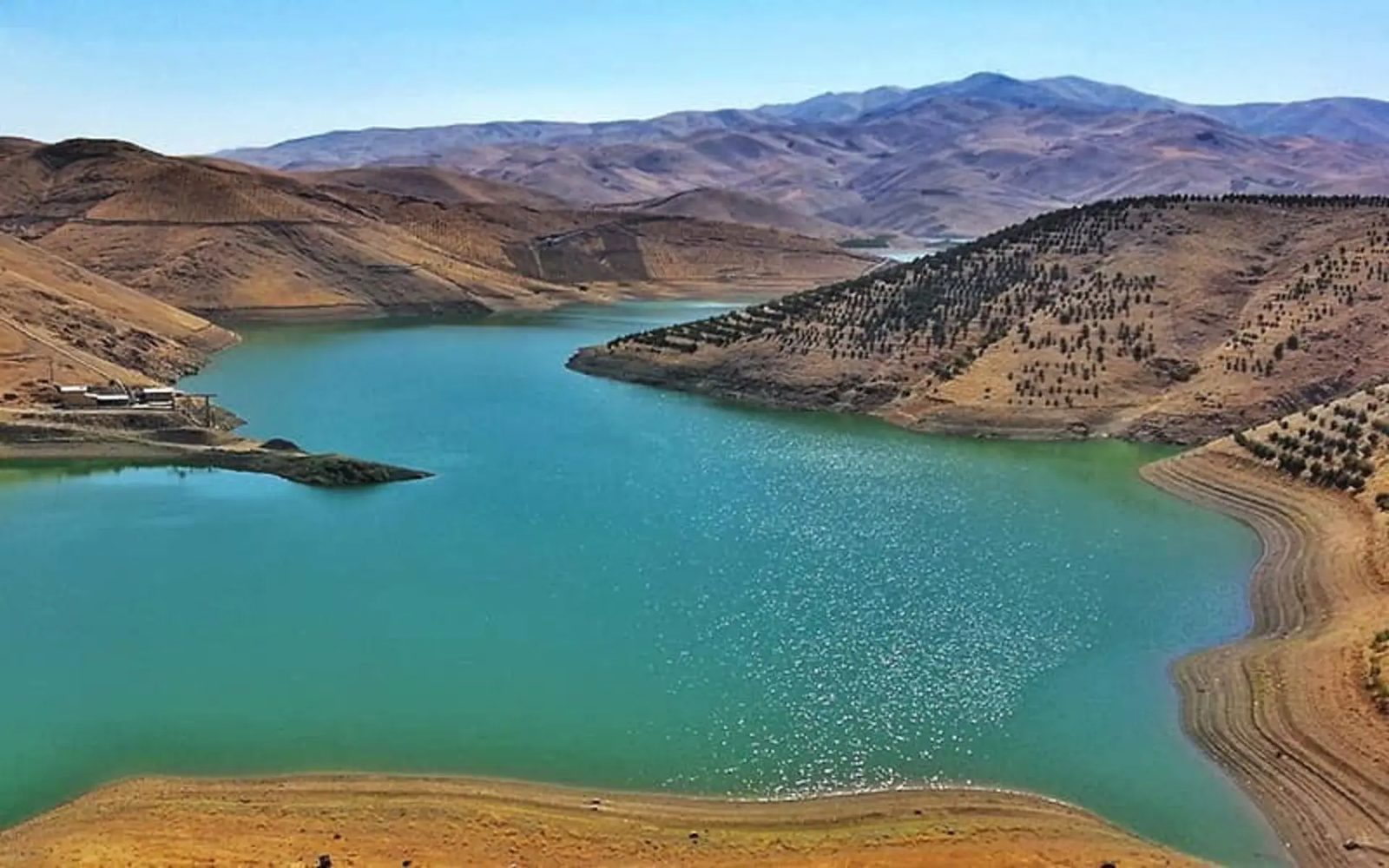
Closer to the capital, the Qeshlaq Lake formed by the Vahdat dam sits twenty kilometres north of Sanandaj. It has a dock, water sports, and populations of silver carp, roach and tench that support a serious recreational fishing scene. It is an easy half-day and the sunset is unusually good for a reservoir.
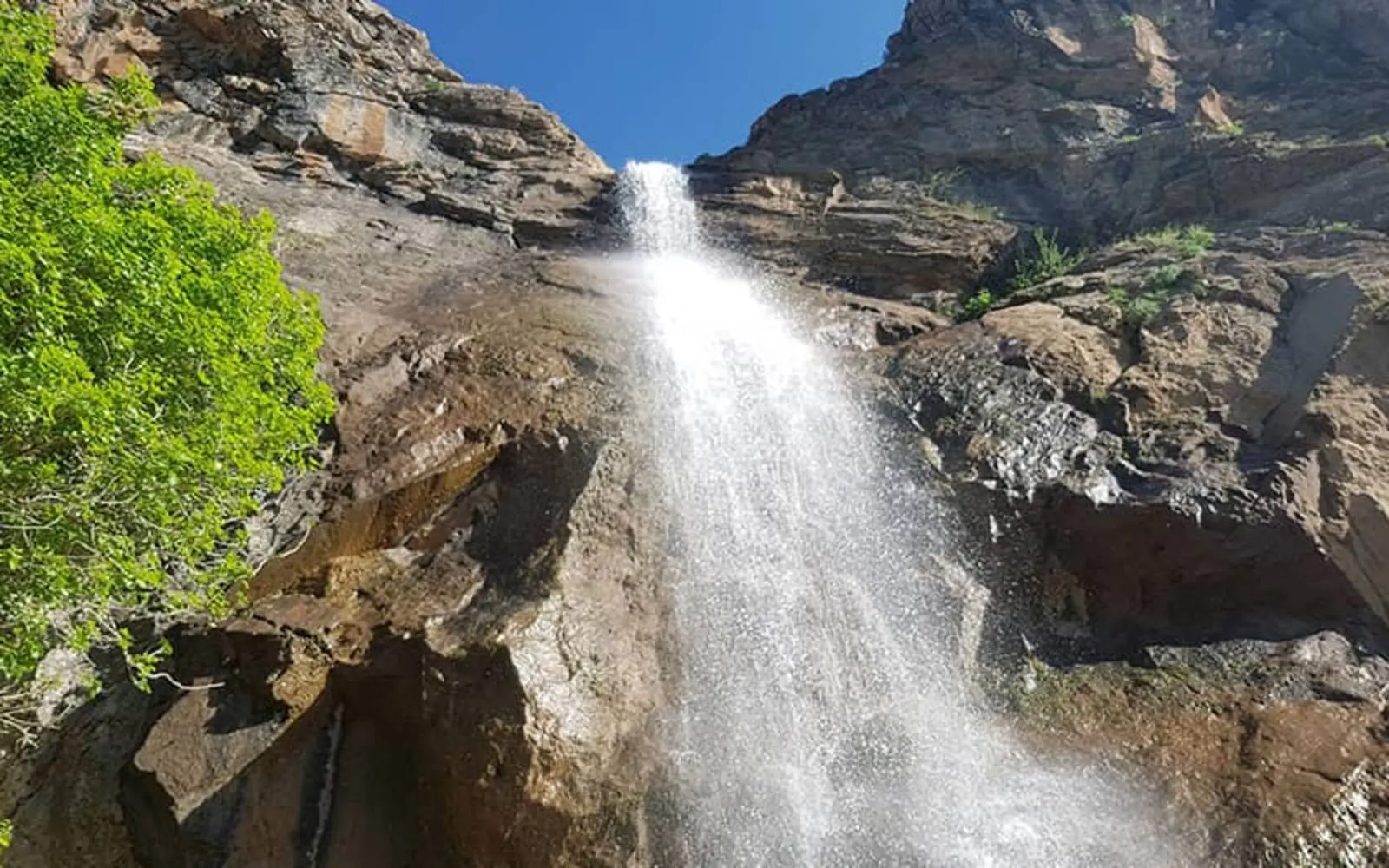
For waterfalls, the answer is Goyleh, on the Saqqez-Marivan road at the edge of the border forests. It drops more than fifty metres, and in spring it is genuinely torrential, loud enough that you raise your voice to be heard. The pull-off is about a kilometre off the asphalt. Go in late spring for volume; go in autumn for the walk.
Karaftu Cave
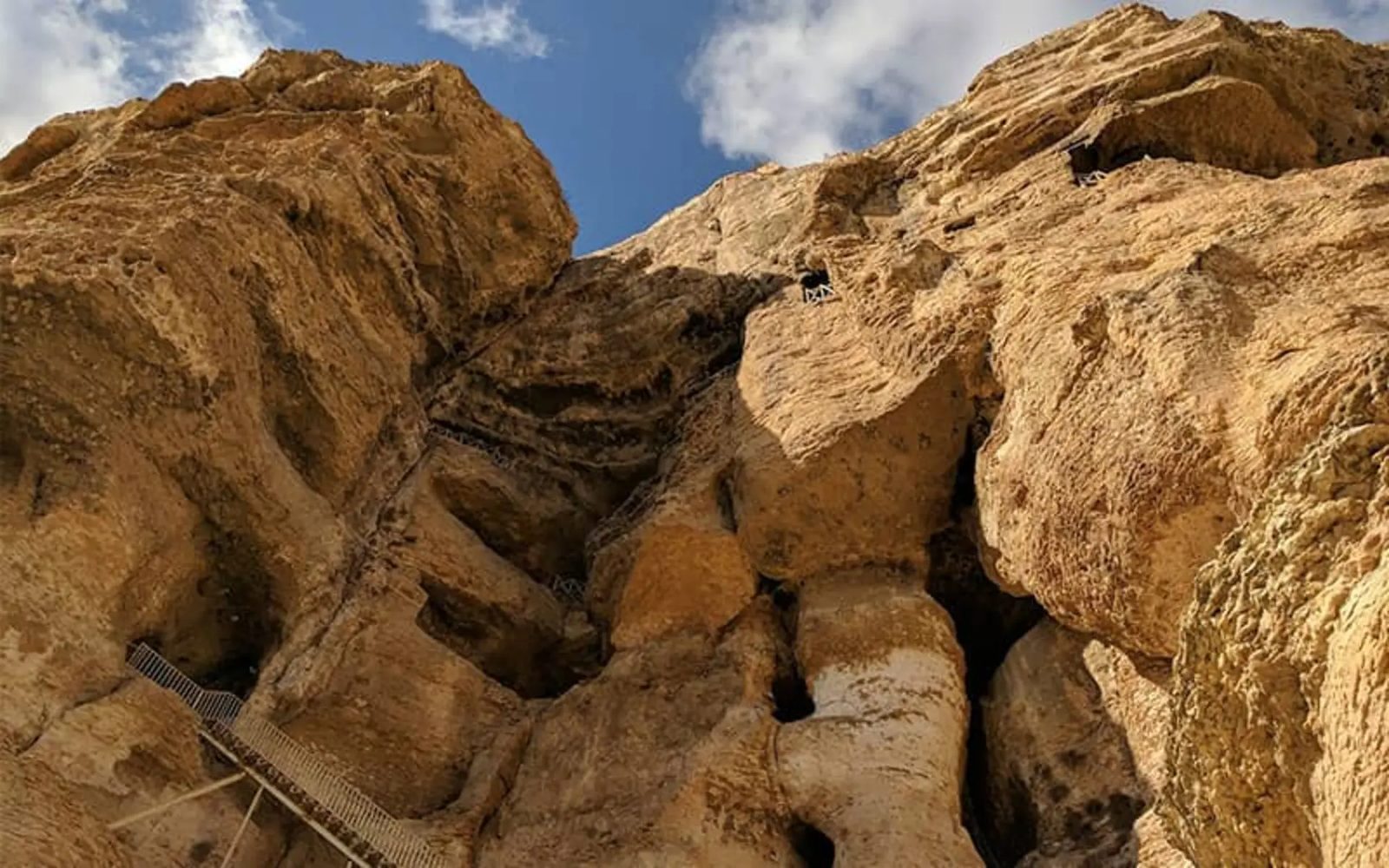
Karaftu is one of the longest and most important caves in Iran, and the part visitors walk is largely man-made: over centuries people cut the galleries deeper into the rock, which is why it is described as the largest hand-carved cave in the country. Traces of human use run from prehistory through to the eighth century of the Hijri calendar, and the cave was registered as a national monument in 1940. A stream runs along the floor of the main chamber, the ceilings disappear into darkness, and the air is cold year round. Bring a jacket and shoes with grip. The visit is a few kilometres of walking with a real climb, and lighting is not generous, so a headlamp is worth carrying.
The province's other sacred sites use the same stone. Imamzadeh Hamzeh Arab, a shrine of the line of Musa ibn Jafar, sits on a mountainside; the route is partly by car and then about six hundred steps on foot. In the Sertapoleh quarter of Sanandaj, the Tomb of Hajar Khatun is registered as a national monument and is traditionally given as a sister of Imam Reza who died on the journey to Khorasan. North of the province in Saqqez, the Two-Minaret Mosque is an Afsharid brick portal with yellow tilework, and the odd name is exactly what it looks like: two minarets on one gate.
The stepped villages
This is the headline. Palangan is the village most often compared to Masouleh: a steep cluster of houses arranged so that each roof serves as the courtyard above, split down the middle by a rushing river, with gardens and boiling springs in the Tangivar valley below and a hilltop fortress above the rooftops that was inhabited until the tenth century Hijri. Come in the late afternoon light, when the whole village turns gold, and be considerate: people live there, laundry is hanging, and the main lane is someone's front step.
Howeye, between Sanandaj and Marivan, is stepped in the same way and divided into two quarters, Vargeh-ga and Maleh-ga, with the peaks of Rizhde Khani, Se-Bid, Shiane and Re Jal Ga above it and the springs of Hano Sheykhe and Hano Havasi below. It sees fewer visitors than Palangan, which shows. Tangi Sar is the third of the group: stepped, unusually intact, and known for the colour of local dress against the grey stone.
Springs, shrines and the smaller wonders
Southeast of Qorveh, the village spring of Babagorgor runs reddish and sometimes lemon-yellow, stained that way by its mineral load. The water is sulphurous and has a long local reputation as a remedy for skin and digestive complaints; the shrine of Imamzadeh Seyyed Jalal, known as Babagorgor, stands in the same village, so the two visits make one stop. South of Qorveh, Sarab Qorveh (also called Sarab Kowsar) is a cold spring-fed pool with a small lit island at its centre, reached by an iron bridge, and it is the town's evening walk.
For something far older, Qomchqaya Castle in Bijar county occupies a rock ledge with walls that in places run to two hundred metres, reached by a passage so narrow travellers historically moved single file. It dates to the third millennium BC and holds an inscription in hieroglyphic and Hieratic script, among the oldest semi-pictographic texts found in Iran.
Where to shop
Kurdistan has a reputation as a shopping stop, and the reputation is mostly accurate. Baneh, near the border, is where Iranians come for appliances at prices that make Tehran look generous; the Aftab-e Derakhshan complex puts electronics on its lower floors with two floors of clothing above, selling wholesale and retail, while the Golestan mall runs cosmetics and clothing on two floors and appliances on two more. Marivan's border market, fifteen kilometres from the lake, carries appliances, bags, shoes and clothing, plus Marivan's own fabrics and handmade leather shoes; buy with the understanding that warranties are informal and authenticity is not guaranteed. The Bazaar of Bijar, a Safavid market damaged and rebuilt during the war years, is the place for handmade carpets. For second-hand goods, the Tanakura bazaar in Sanandaj has the local following.
When is the best time to visit Kurdistan?
Late April through early June is the best window. The snow has gone from the valley floors, the waterfalls are at volume, the stepped villages are green, and the temperature is comfortable for walking. July and August are warm but dry and high, and nights in Sanandaj stay cool enough to sleep without assistance. September and October bring the second good season, with clear air, autumn colour in the oak stands and thinner crowds.
November to March is cold, and snow can close the higher road passes; Palangan in fog and snow is beautiful and genuinely difficult to reach. If your plan is waterfalls and villages, do not go in winter. If your plan is caves, museums and bazaars, winter works.
Where to stay in Kurdistan
Stay in Sanandaj. It is central to everything, it has the widest choice of hotels, and it has a restaurant scene that the smaller towns lack. Book through Mehyar Hotels with a view to position rather than price: a hotel on the Abidar side gives you the hill walk and the panorama, while a hotel near the old quarter puts the bazaar, the Grand Mosque and the Khan Bathhouse within walking distance of dinner. Marivan is worth one night if Zarivar is a priority, mainly so you can have breakfast facing the lake.
Plan three days. The first belongs to Sanandaj on foot plus Abidar at dusk. The second is the northern loop: Zarivar, Goyleh if the water is running, and Howeye or Tangi Sar. The third is Palangan, ideally timed for late light, with Karaftu or the Bijar road if you have the hours. Kurdistan is not a province you pass through, and travellers who treat it as a one-night stop usually regret it.
For the next leg onward, most people pair Kurdistan with Tabriz to the north, where the rock-cut village of Kandovan offers stepped and troglodyte architecture in a different stone, or with Kermanshah to the south, which shares the same Zagros weather and the same long table.