
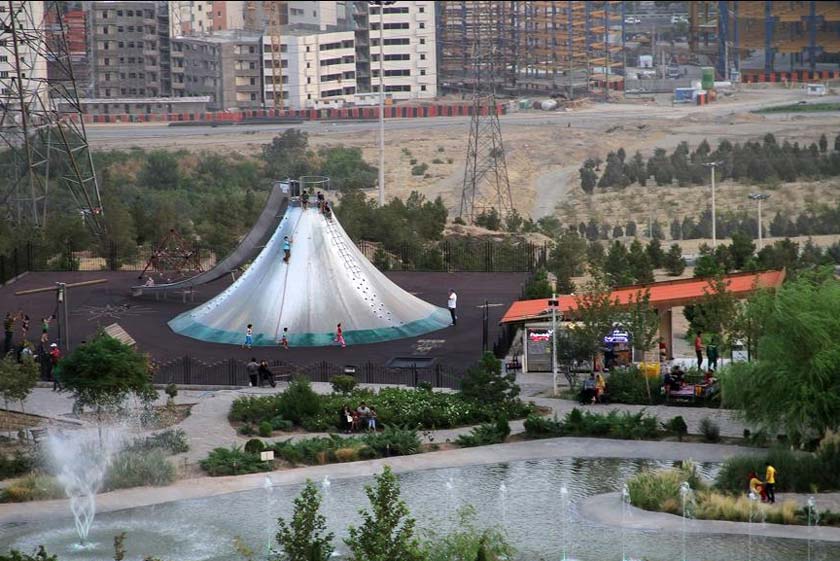
Tehran does not announce its western edge with a wall or a boundary. It lets the asphalt thin, the air cool, and the ground begin to climb. Drive up Hemmat Expressway to its final stretch, past the last roundabout before the mountains, and you arrive at a park that was built to give this slope an identity. Tehran Waterfall Park, known locally as Abshar-e Tehran, is two hundred hectares of terraced gardens, stone ponds, and engineered waterfalls rising step by step up the hillside opposite Chitgar Lake. It is not a natural landscape. Every cascade, every pool, every gazebo was placed by hand. But the design draws on the old Persian garden tradition, and the effect, especially in the evening light, is closer to something organic than you would expect from a project this large.
The park was conceived to extend the green belt across northern Tehran and to give the western heights a recreational destination that matched the popularity of the parks further east. The result is a place where the city's noise drops away, the air carries the sound of running water, and the view from the upper terraces stretches across the lake below to the Alborz range beyond. On any given weekend evening, the paths fill with families, couples, and solo walkers who have discovered what Tehran's own tourism office quietly promotes: that the best hours here are not the bright midday ones, but the soft, blue-lit stretch after sunset, when the waterfalls catch the park lighting and the whole hillside glows.
This guide covers where the park sits in Tehran, how to reach it by car or taxi, what each terrace holds, the facilities available, the best time to come, and how to combine a visit with Chitgar Lake on the other side of the highway.
Where is Tehran Waterfall Park?
The park occupies the hillside at the western terminus of Hemmat Expressway, at the end of Shahid Kharrazi Highway, in the twenty-second district of Tehran. The address, as signed locally, is Tehran Province, Tehran, end of Hemmat Expressway West, Shahid Kharrazi Highway, Abshar-e Tehran exit. The park sits directly opposite Chitgar Park and Chitgar Lake, which are on the other side of the highway. The elevation is noticeably higher than the city centre, which means the air is cooler and cleaner, especially in the early morning and the evening.
The coordinates are approximately 35.7671 north, 51.2174 east. The park covers roughly two hundred hectares, making it one of the largest urban green spaces in western Tehran. The waterfall itself, the feature that gives the park its name, sits at the highest point of the terraced complex, and the water flows downward through a series of stone channels and ponds from top to bottom.
How to get there
Tehran Waterfall Park is not served by a metro station or a city bus stop at its gate. The nearest metro access is Iran Khodro station on Line 4, which is still several kilometres away and requires a taxi for the last stretch. For most visitors, the practical options are private car or taxi.
By car
From central Tehran, take Hemmat Expressway west. Continue to the very end of the expressway, where it meets Shahid Kharrazi Highway. After passing the Bagheri Town exit, signs for Abshar-e Tehran appear on the right. Follow them to the park entrance and the parking area. The drive from central Tehran takes thirty to forty-five minutes in normal traffic, longer on Thursday and Friday evenings when the park is at its busiest. Parking is available at the entrance and fills quickly on weekends and holidays.
By taxi
Open Mehyar, choose Taxi, and set your destination to Abshar-e Tehran. The app covers rides across Tehran, including the western districts, and gives you a fare estimate before you confirm. A taxi from central Tehran to the park typically takes thirty to fifty minutes depending on traffic. If you are coming from the eastern or southern parts of the city, allow extra time for the cross-city drive.
From other cities
If you are visiting Tehran as part of a wider Iran trip, Mehyar Buses and Mehyar Flights connect the capital to most major cities. From Isfahan, the bus takes roughly five to six hours and the flight about an hour. From Shiraz, allow eight to nine hours by bus or a one-hour flight. From Mashhad, the bus is a long overnight journey and the flight is about an hour and a half. Once in Tehran, Mehyar Taxi handles the last stretch from your hotel or the bus terminal to the park.
What to see on each terrace
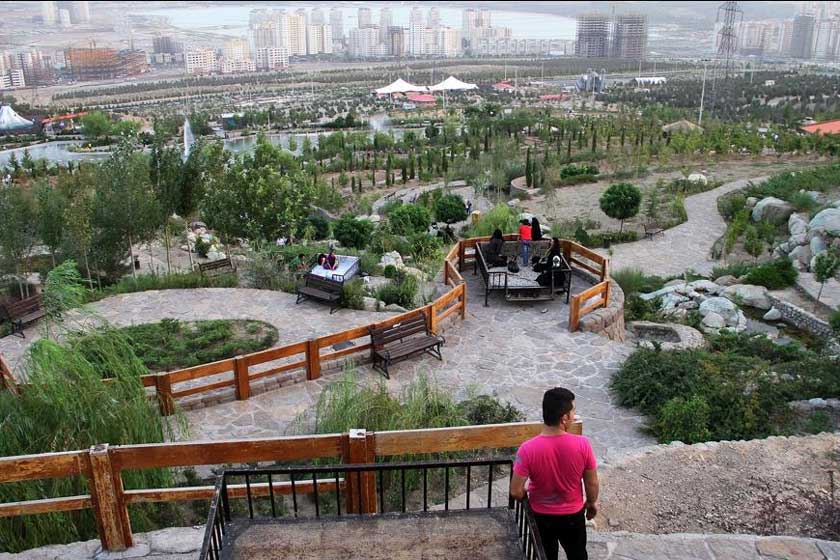
The park is built as a series of terraces, rising step by step up the hillside. Each level has its own character, its own gazebos, and its own ponds, and no two levels are designed alike. This terraced approach has a practical advantage: if you do not want to climb the full height, you can enjoy the lower levels and turn back, and if you have the energy, you can continue all the way to the waterfall at the top.
The green spaces and the trees
The landscape design draws on the old Iranian garden tradition, and the planting reflects that heritage. Throughout the park, you will find a mix of ornamental trees and fruit trees: cherry, walnut, oak, and vine along the walking paths, and palm trees in the areas designed to evoke a marshland setting. The contrast between the broad-leaved oaks and the tall palms, with the water running between them, is one of the park's most distinctive visual features.
The total green area is substantial, and the planting is dense enough that, once you are inside the park, it is easy to forget you are still within the Tehran city limits. The air carries the scent of the herb gardens and the flower beds, and the sound of birds nesting in the towers that rise above the gazebos.
The stone ponds and the waterways
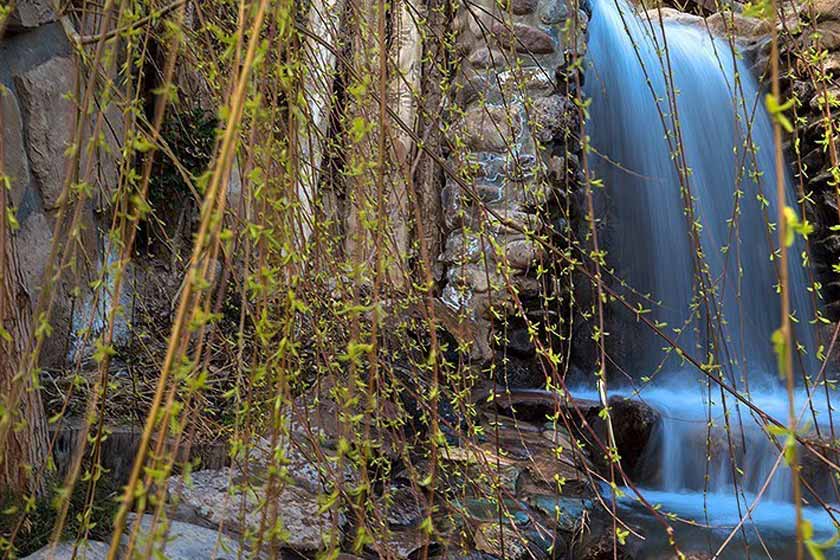
The park contains approximately eight stone ponds, covering a combined area of roughly 7,500 square metres. The ponds are arranged at different levels, connected by channels and small cascades that feed from the main waterfall above. The water that flows through the ponds and the waterfall comes from the Latmal forest water system and is filtered enough to support the birds, fish, and other aquatic life in the ponds, but it is not suitable for drinking.
The ponds are surrounded by flower beds planted with colourful seasonal varieties, and by ornamental bushes including cactus and American sumac, which add texture and colour to the waterside planting. Bird nests have been built into the towers above the gazebos, and the birds that use them are a regular feature of the park's atmosphere. From the highest gazebo, you can see the entire sequence of ponds laid out below you, large and small, stepping down the hillside.
The gazebos
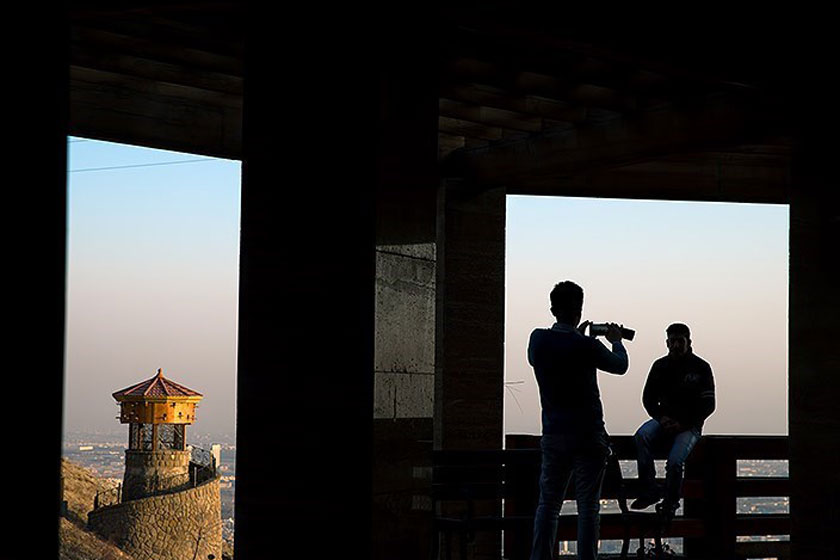
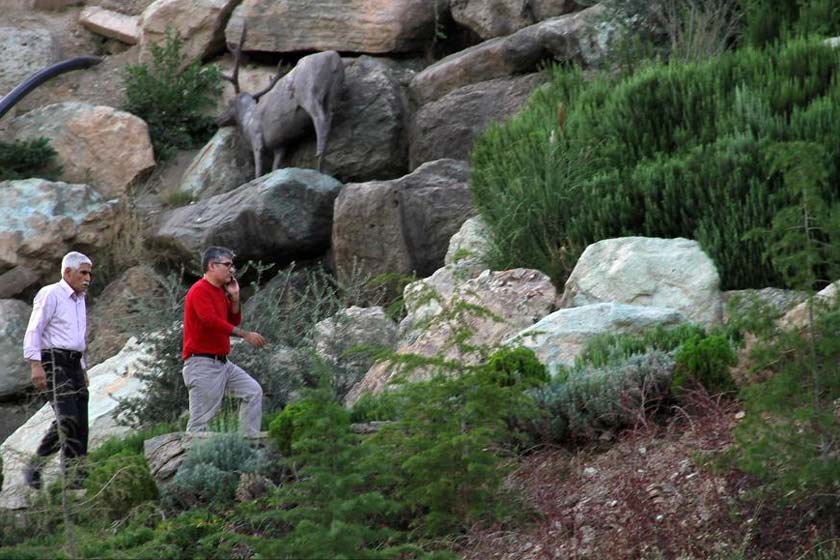
The gazebos at Tehran Waterfall Park are not the standard concrete-and-tin structures you find in most Iranian urban parks. They are built on stone towers and constructed from Russian wood, which gives them a distinctive appearance and a durability that handles the mountain air well. There are approximately thirty gazebos scattered across the terraces, each one slightly different in design, and they serve as shaded resting points for visitors. On a hot day, the gazebos are the most sought-after spots in the park, and they fill quickly.
The advantage of the terraced design is that the gazebos at every level offer a different view. The lower ones look across the entry ponds and the flower gardens. The middle ones frame the cascade of waterways flowing downward. The highest ones, on the towers nearest the waterfall, give a panoramic view of the entire complex and, beyond it, of Chitgar Lake and the Alborz mountains.
The flower gardens and the medicinal herb gardens
One of the most beautiful sections of the park is the area dedicated to flower gardens and medicinal herb gardens. As you walk toward this part of the complex, the scent changes: rose, lavender, and other aromatic herbs replace the greener smell of the trees and the water. The medicinal herb gardens are a deliberate reference to the traditional Persian garden, where utility and beauty were never separated, and the planting is maintained carefully through the growing season.
The view of Chitgar Lake
From several points in the park, and especially from the upper terraces, you can look across the highway and see Chitgar Lake below. The lake is a large artificial body of water, surrounded by its own park and recreational facilities, and the view from above gives it a perspective that you cannot get from its own shores. The combination of the lake, the park, and the mountains behind it is one of the most photographed scenes in western Tehran, particularly in the evening, when the lights of the city and the park reflect in the water.
Facilities and practical information
Tehran Waterfall Park is designed for day-long visits, and the facilities reflect that ambition.
Hiking trails. The park includes approximately 25 kilometres of marked hiking and walking trails that wind through the terraces and up the hillside. The trails range from paved, gentle paths suitable for families to steeper, rougher routes for those who want a more serious walk. The mountain air at this elevation is noticeably cleaner than in the city centre, and the trails are popular with Tehran runners and hikers who use the park as their training ground.
Mosque. A mosque is available inside the park for visitors who wish to pray. It is located near the main facilities area.
Restaurants and food. Traditional restaurants operate inside the park, and there are food kiosks at several points along the paths. The restaurants serve standard Iranian park fare: kebabs, rice dishes, tea, and cold drinks. For a picnic, you can buy supplies before you arrive and use the gazebos as your dining area. Mehyar Wallet is useful here: top up before you visit and you can pay for food, drinks, and any small purchases without needing cash.
Children's playground. A dedicated children's playground is located within the park, with equipment suitable for younger visitors. It is one of the reasons the park is so popular with families on weekends.
Restrooms. Public restrooms are available at multiple points in the park.
Parking. A parking area is located at the park entrance. It is free and has space for a large number of vehicles, but it fills quickly on Thursday and Friday evenings and on public holidays. Arriving early or visiting on a weekday evening avoids the rush.
Entry fee. Admission to the park is free.

When to visit Tehran Waterfall Park
The park is open year-round, and each season has its own character, but the time of day matters more than the time of year.
Evening and night are the best hours. The park has almost no natural shade on the open terraces, which means that midday sun in summer is uncomfortable. After sunset, the temperature drops, the park lighting comes on, and the waterfalls become the visual centrepiece, illuminated against the dark hillside. The evening atmosphere is one of the reasons Tehran Waterfall Park is considered one of the best nighttime destinations in the city.
Spring (March to May) brings mild weather, green planting, and the flower gardens at their peak. This is the most comfortable season for a daytime visit, though the evenings remain the most atmospheric.
Summer (June to August) is hot during the day, but the park's elevation makes the evenings noticeably cooler than the city centre. Come after six in the evening, use the gazebos, and bring water.
Autumn (September to November) offers clear skies, mild temperatures, and the autumn colours in the oak and walnut trees. The crowds thin after the summer holiday season, and the park feels more relaxed.
Winter (December to February) is cold, and the higher terraces can be icy. The waterfall continues to flow, and the park remains open, but dress warmly and wear shoes with grip. The visit in winter is quiet and almost private.
Combining your visit with Chitgar Lake
Tehran Waterfall Park and Chitgar Lake face each other across the highway, and a visit to one can easily include the other. Chitgar Lake, also known as the Lake of the Martyrs (in Persian, Daryacheh-ye Shohada-ye Khalij-e Fars), is a large artificial lake surrounded by a recreational complex that includes cycling paths, boat rentals, cafes, and shopping centres. The drive between the two takes only a few minutes by car or taxi.
A popular itinerary is to spend the late afternoon at the waterfall park, climbing the terraces as the light softens, and then descending to Chitgar Lake for the evening, when the lakefront cafes and restaurants come alive. The combination gives you the hillside greenery and the waterside atmosphere in a single outing, and both are within easy reach of central Tehran.
For travelers planning a wider Tehran itinerary, our Tehran city guide covers the other parks, museums, and landmarks worth fitting in, and our guide to the best time to visit Iran helps you choose the season that works best for your trip.
Start your Tehran trip with Mehyar
Tehran Waterfall Park is one of the capital's most relaxed destinations, and it works best when the logistics are handled before you arrive. Open Mehyar to plan your visit. Use Mehyar Taxi to reach the park from your hotel or from any point in Tehran, and Mehyar Wallet to pay for food, drinks, and small purchases on-site without hunting for cash. If you are arriving in Tehran from another city, Mehyar Buses and Mehyar Flights cover the major routes, and a Mehyar SIM keeps you connected for maps, translation, and messaging throughout your stay. For accommodation, Mehyar Hotels lists options across Tehran, including several within easy driving distance of the park.
For travelers building a wider itinerary, our guides to Tehran, the best time to visit Iran, and a first trip to Iran cover the logistics that apply across the country.