
On the south-eastern edge of Kerman, the flat floor of the plain lifts suddenly into a shoulder of rock, and on that shoulder sit a few enormous walls of sun-dried brick. This is Ardeshir Castle, Qal'eh Ardeshir, a fortress attributed to Ardashir Babakan, founder of the Sasanian dynasty, standing about 150 metres above the plain. It is on the skyline wherever you are in the southern quarters.
Understand before you go that this is not a restored, narrated tourist site. There is no ticket office, no curated walkway, no interpretive panel at a gate. Ardeshir Castle is an eroded hilltop fortress that the modern city has grown around, and its interest lies precisely in that: you climb a genuine Sasanian defensive position, read the masonry yourself, and look out over the plain that made the site worth holding.

Where is Ardeshir Castle?
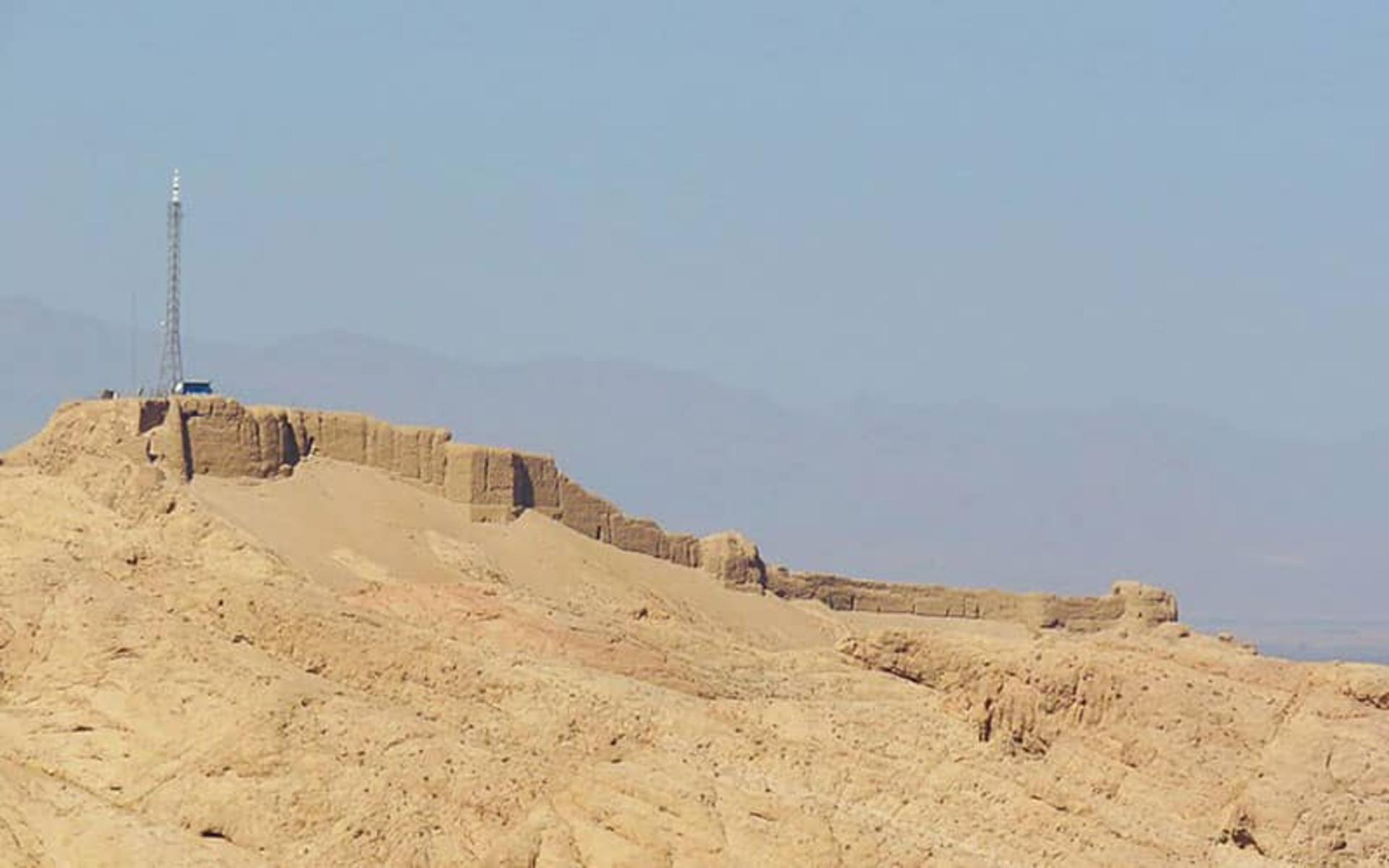
The castle sits on a hill in the south-east of Kerman, inside the urban boundary rather than outside it, with houses lining the slopes and a green belt planted around the monument in recent years. Because the hill rises well clear of the plain, the position controlled the old approach from the south-east, and that is why it was built at all. Mountain castles of this type served two ends in pre-Islamic Iran: they protected strongpoints and stored military assets, and in an invasion they sheltered the people of the plains. Ardeshir Castle belongs to that tradition, and scholars describe it as a fortification raised for military and defensive purposes.
Getting to the top of the hill
Kerman is the hub, and the castle is a short hop inside the city rather than an excursion. Plan ninety to a hundred and twenty minutes on the ground.
By Mehyar Taxi. The easiest way by a wide margin. Open Mehyar, choose Taxi, and set the castle as your destination. Ask the driver to wait, or book the return for a fixed time, because the summit is not on any route you will casually flag down. Kerman's old streets are narrow and one-way in places, so being set down at the right end of the hill saves a walk with no shade.
By Mehyar Buses or Mehyar Flights to Kerman, then a taxi. Kerman is a long-distance stop on the plateau corridors, and from either arrival point the castle is a straightforward ride. Book both legs in the same app, so you are not negotiating across town on your first afternoon.
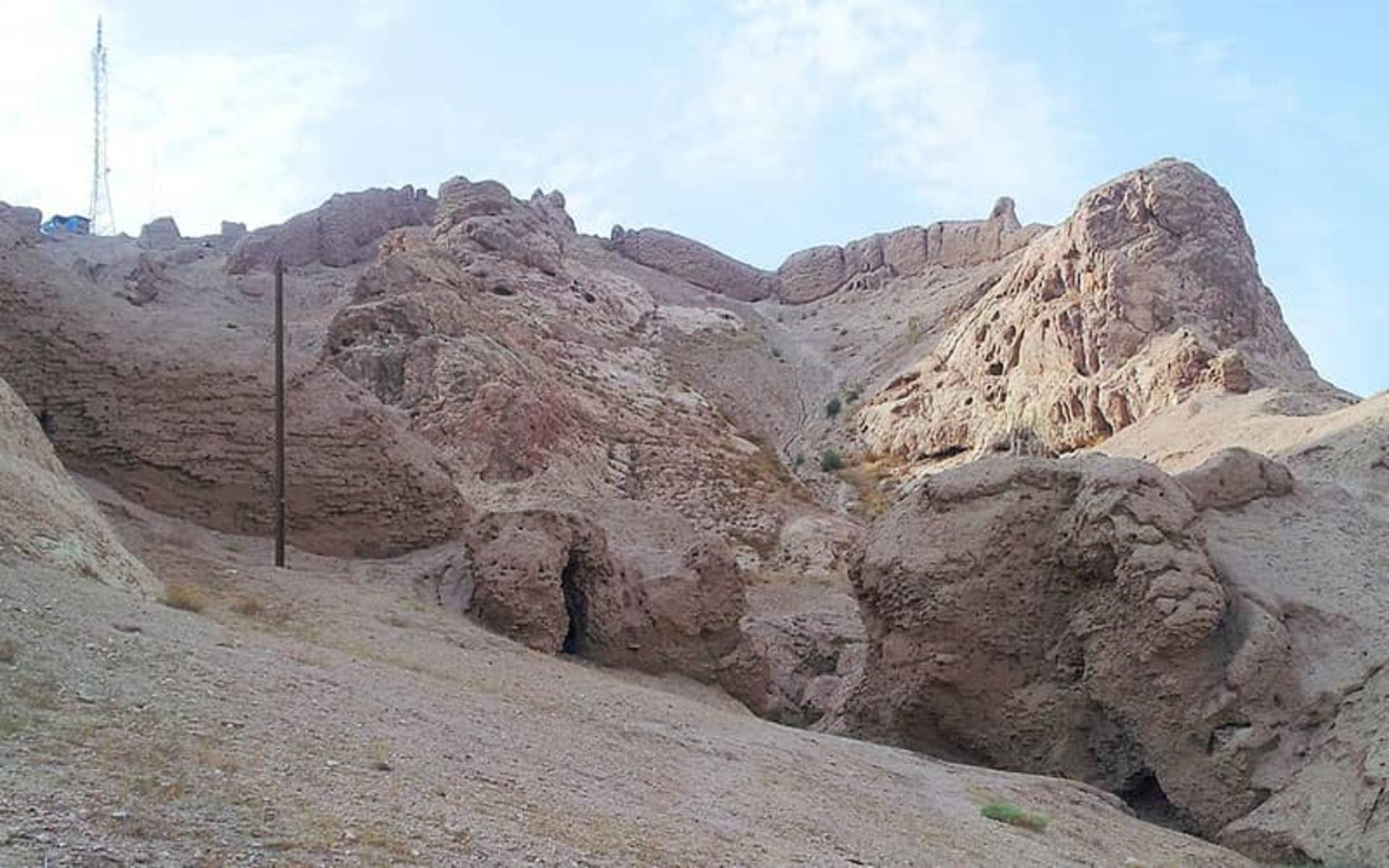
On foot, or by car. Staying low on the south-east side in kind weather, the walk up is part of the pleasure, since the terraced slopes show how the town has pressed against the monument for a century. Wear real shoes, because this is a hill path and not a staircase with handrails. You can drive part of the way, but parking near the summit is limited, so park on a side street at the base and climb.
Ardashir, Haftvad and the story in the Shahnameh
The castle carries the name of Ardashir Babakan because it is one of several fortresses credited to him in this region, others being built across what is now Fars province, including at Firuzabad. The pattern is consistent: a new dynasty cementing its authority with strongpoints at the mouths of plains and passes. Because this one was thrown up on a mountain crest, it is also called Qal'eh Kuh, the Mountain Castle.
The site also has a literary pedigree, unusual for a ruin of this class. Both the Karnameh Ardashir and Ferdowsi's Shahnameh carry the story attached to this hill. Haftvad, a man of power in Kerman, defeats the local governor and raises a mighty citadel on the heights near the town, which became known as the Fortress of Haftvad, and Ferdowsi writes that the whole city fell into his company. When Ardashir Babakan learns how Haftvad has risen, he marches on Kerman several times and is beaten back each time, succeeding only through a stratagem. He then builds a fire sanctuary on the mountain height and renames the strongpoint Ardeshir Castle. The same tradition records that the ruler of Kerman in those years belonged to the Ashkanian, the Parthian line, which places the story at the hinge between two empires. Read as history or as dynastic myth, it explains something real: this hilltop was continuously re-occupied and re-named.
What the builders left

Ardeshir Castle was an earthen fortress built of khesht-e khām, raw sun-dried brick, and the bricks here are larger than ordinary mudbricks. The surviving walls are about six metres thick at their base, mass enough to absorb attack from range.
The built-up area divides into two parts. One sits on the main hill to the south-east and forms the building block of the Mountain Castle. The other stands on a shorter hill nearby and is known locally as the fire temple of Anahid, Atashkadeh Anahid. The lower position, familiar to travellers as Qal'eh Dokht, is usually read as the religious annex of the upper fortress, a place of worship of the goddess Anahid, the two probably linked. Between the summits you can still pick out stubs of structures resembling palace rooms, chapels and the service buildings of a garrisoned site.
On the southern side there is a tall sheer face of rock, and the historic approach was cut into it: from roughly the middle of the cliff steps were chiselled, and the scholar Sacks counted 134 of them. Sacks and others identify this platform as the naqqareh-khaneh, the drum house, from which alarms and announcements were beaten out to the plain below. Fragments of glazed tile recovered here carry banquet imagery, the detail that has made scholars argue the place was not only military: some of its buildings hosted feasting and courtly display as well as drill.
The state of the monument today
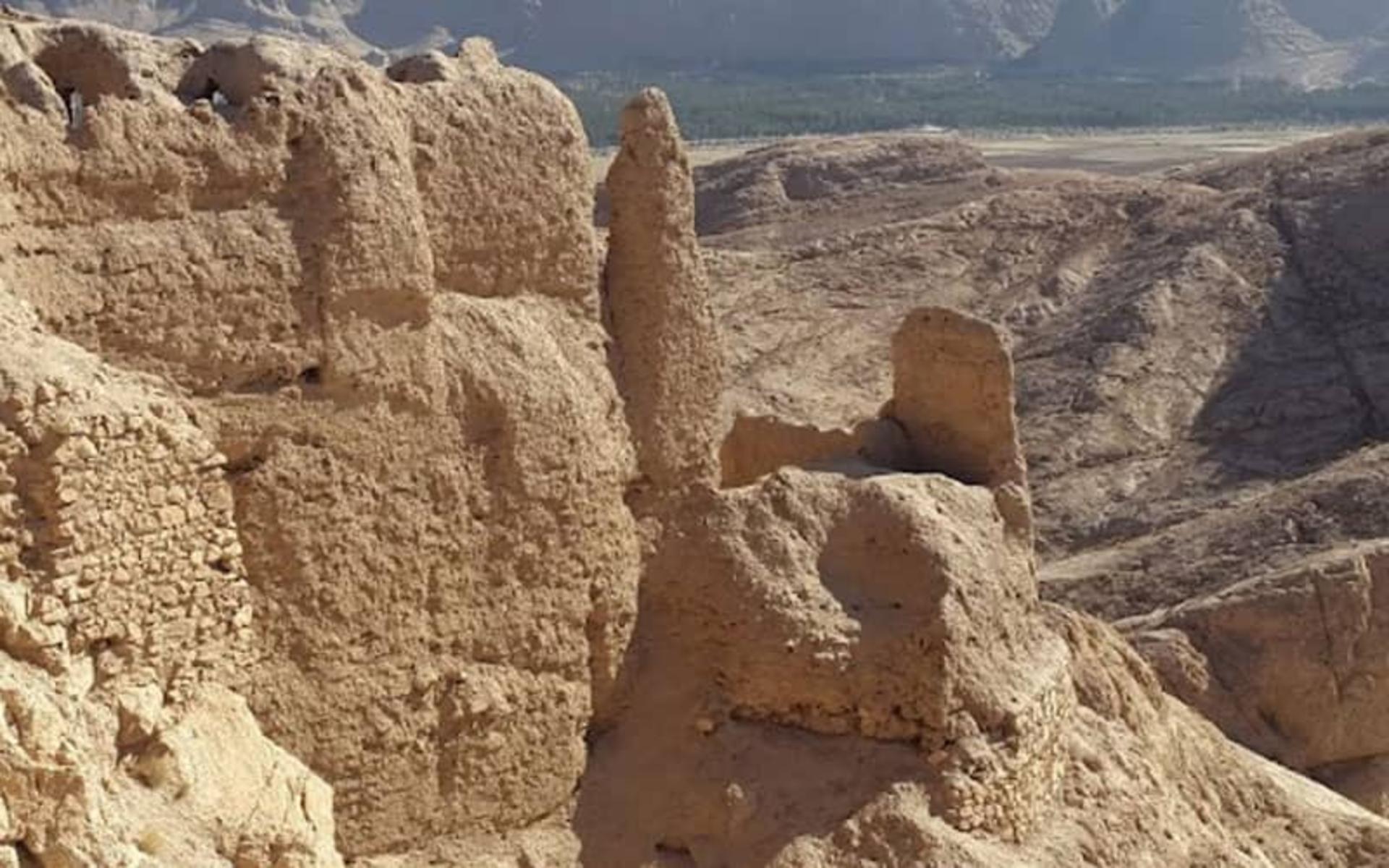
Much of a striking design is lost, and erosion has badly damaged both this fortress and its companion, Qal'eh Dokht. There is no protective fence or defined precinct around the monument. Telecom masts were once erected at the highest points with their bases set inside the fabric, and that caused real damage; local commentators conclude that a proper protected perimeter would have kept the structure safe from exactly this injury. The hilltop position closely resembles Falak-ol-Aflak in Lorestan, yet no serious archaeological study of the site has been carried out.
On the credit side, the distance from the dense historic core has shielded the castle from some modern construction. Kerman's provincial cultural heritage office reports that the land around it has become green space and that restoration was formally put on the agenda in 1395 in the Iranian calendar. During conservation work between 1395 and 1397 the excavated material included pottery, glazed tile in gold-filled and cut-tile techniques, moulded plasterwork, brick and architectural mudbrick: among the most important finds, wares that appear to be Parthian to Sasanian, a wide range of early, middle and later Islamic pottery, and the first examples of gold-filled tile identified from Kerman.
Hours, tickets and how long to stay
Entry: free. There is no charge to see Ardeshir Castle.
How long: between one and two hours, allowing for the climb, the walk around the two summits and the photography.
Hours: with no gate and no staffed entrance the site is effectively open access, and the practical limit is daylight and heat. Go early in the morning or in the last two hours before sunset, when the mudbrick turns gold. Midday in summer is punishing, with little shade on the exposed crown.
Access: the summit is reached on foot up a hill path. Take water and shoes with grip, and expect loose patches where the fabric has crumbled.
Registration: inscribed on Iran's national list of historic places on 1 Farvardin 1345.
Frequently asked questions
Where exactly is Ardeshir Castle? On a hill in the south-east of Kerman city, roughly 150 metres above the surrounding plain.
Who built it? Tradition attributes it to Ardashir Babakan, founder of the Sasanian Empire, alongside his fortifications at Firuzabad and elsewhere in Fars.
Which Shahnameh story is connected to it? The tale of Haftvad, who built a great fortress on the mountain edge near Kerman and was overcome only after Ardashir failed to take the city by force.
What condition is it in now? Apart from the telecom masts installed on it, the castle has no protective enclosure, and much of the structure survives only as eroded walls and footings.
Making it part of a Kerman day
Ardeshir Castle works best as the first or last item on a day in Kerman, the hilltop layer of the city before you go down into its streets and bazaars. Build the rest of your route from our Kerman travel guide, and sort the long legs and city hops in the same app you used for the taxi up the hill. Two practical notes: Kerman runs on cash, and small change matters for a driver who waits, so read paying in Iran before you arrive.
Climb while the light is low. The bricks were made from the same earth you are standing on, and at sunset the whole fortress looks as though it grew out of the plain rather than being built upon it.