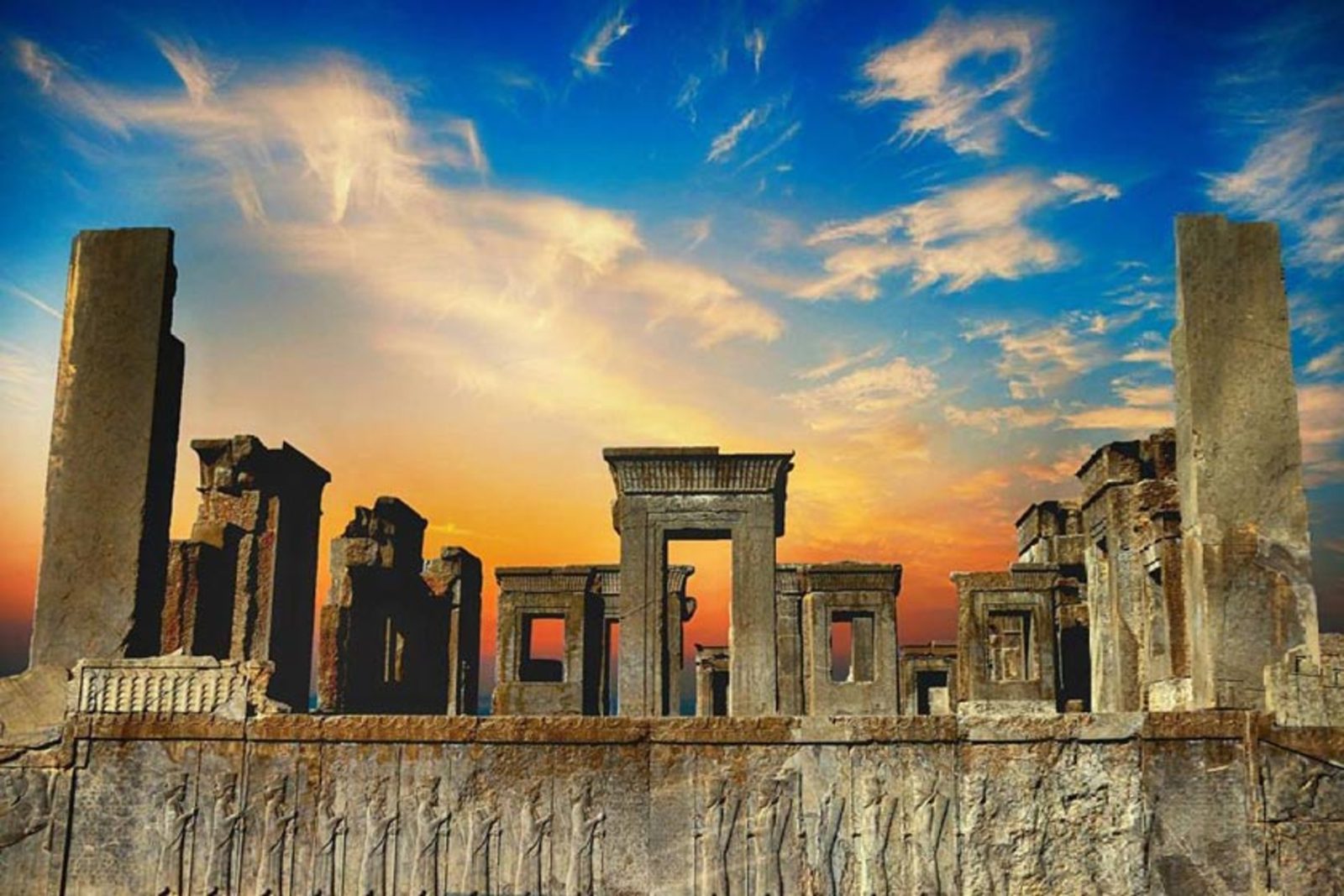
Persepolis is not merely a ruin. It is a memory set in stone, a vast ceremonial complex where the Achaemenid kings once received tribute from across their empire. Located in the Fars Province of Iran, about 60 kilometers northeast of Shiraz, this UNESCO World Heritage site remains one of the most extraordinary archaeological treasures on earth. This guide covers everything you need to plan a smooth and meaningful visit, from transport and tickets to the essential sights you must not miss.
Where Is Persepolis?
Persepolis sits in the Marvdasht plain, at the foot of the Kuh-e Rahmat (Mountain of Mercy). It is roughly 60 kilometers from Shiraz, the nearest major city and the capital of Fars Province. The site is close to the small town of Marvdasht, which serves as the last urban stop before the ruins. The ancient necropolis of Naqsh-e Rostam is just 12 kilometers away, and the tomb of Cyrus the Great at Pasargadae lies about 80 kilometers further north. This cluster of sites makes the region a natural day-trip destination from Shiraz.
How to Get There
The most practical way to reach Persepolis is from Shiraz. The drive takes about one hour each way, depending on traffic leaving the city.
By Mehyar Taxi
The simplest and most comfortable option is to book a ride through Mehyar Taxi. Open the Mehyar app, select Taxi, and set your destination to Persepolis. A private car for the round trip, including waiting time, gives you the flexibility to explore at your own pace and stop at Naqsh-e Rostam on the way back. This is especially useful if you want to avoid the rigid schedule of a group tour. You can also use the Mehyar wallet to pay for your ride, topping it up in advance so you do not need to carry large amounts of cash.
By Shared Tour or Bus
Many travelers join a shared tour from Shiraz, which usually includes hotel pickup, a guide, and stops at both Persepolis and Naqsh-e Rostam. These tours typically depart early in the morning and return by mid-afternoon. If you prefer public transport, there are occasional buses from Shiraz to Marvdasht, but from Marvdasht you would still need a taxi to cover the final 10 kilometers to the site. For most international visitors, a private or shared car is far more efficient.
By Car
If you are driving yourself, take the Shiraz–Marvdasht highway northeast. After passing Marvdasht, follow the signs for Takht-e Jamshid (the Persian name for Persepolis). The site has a large parking area near the entrance.
A Brief History
Construction of Persepolis began around 518 BC under Darius I, the third Achaemenid king. It continued under his successors Xerxes I and Artaxerxes I, spanning roughly 120 years. The complex served as a ceremonial capital rather than an administrative center. It was here that the empire celebrated Nowruz, the Persian New Year, and received delegations from its many subject nations.
In 330 BC, Alexander the Great conquered the Achaemenid Empire and set fire to Persepolis. The wooden ceilings, textiles, and many structures were destroyed. Yet the stone columns, doorways, and reliefs survived, buried under layers of ash and earth. They were rediscovered centuries later, and systematic excavation began in the 20th century. Today, the site is a UNESCO World Heritage Site and a symbol of ancient Persian civilization.
What to See
Persepolis is a large site, and a thoughtful visit takes at least two to three hours. The main structures are built on a raised stone platform, accessed via a grand staircase.
The Grand Staircase
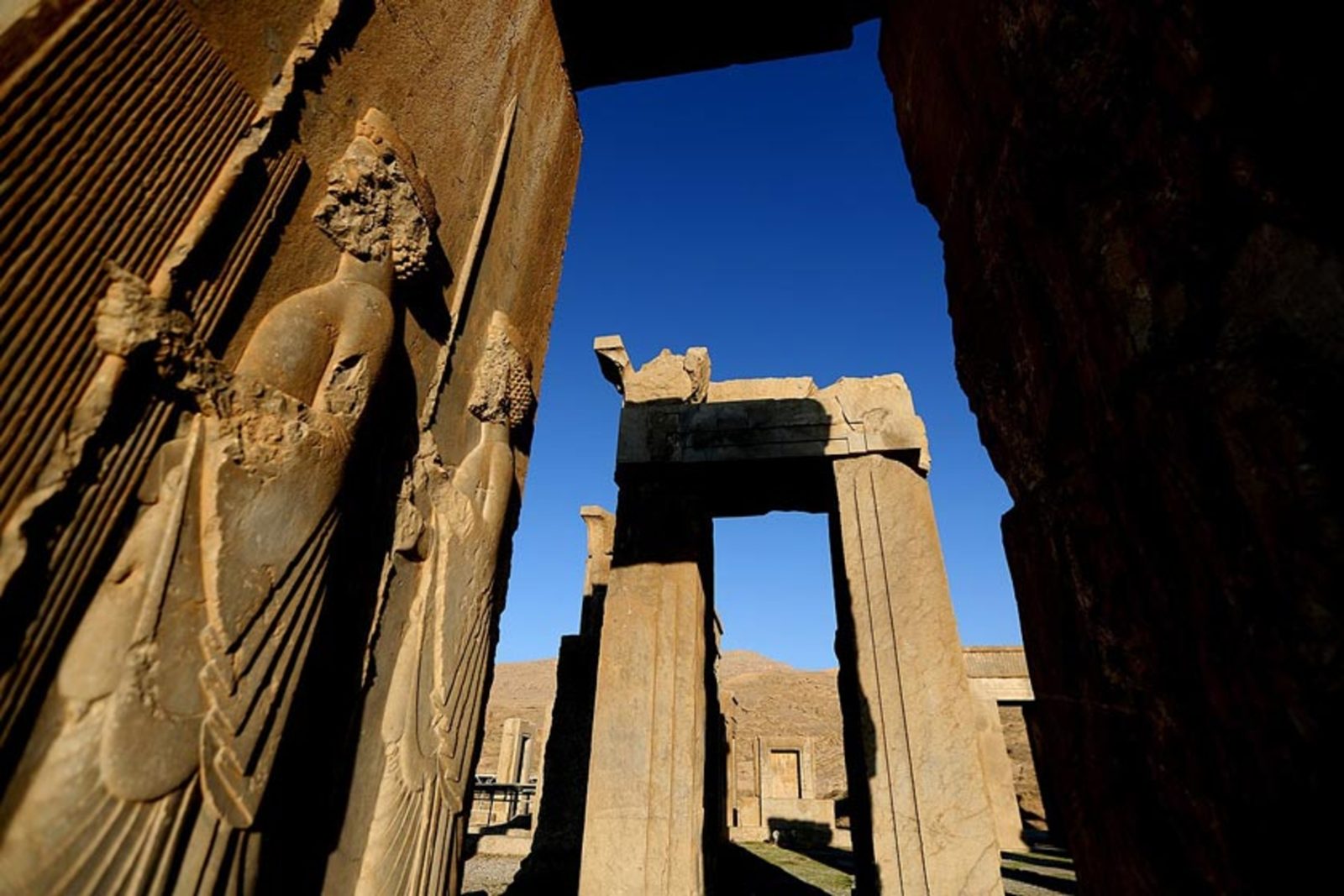
The first major feature you encounter is the monumental staircase leading up to the terrace. Its steps are shallow, designed so that even horses could ascend. The side walls are carved with processions of soldiers, guards, and representatives of different nations. These reliefs offer a vivid glimpse into the protocol and diversity of the Achaemenid court.
The Gate of All Nations
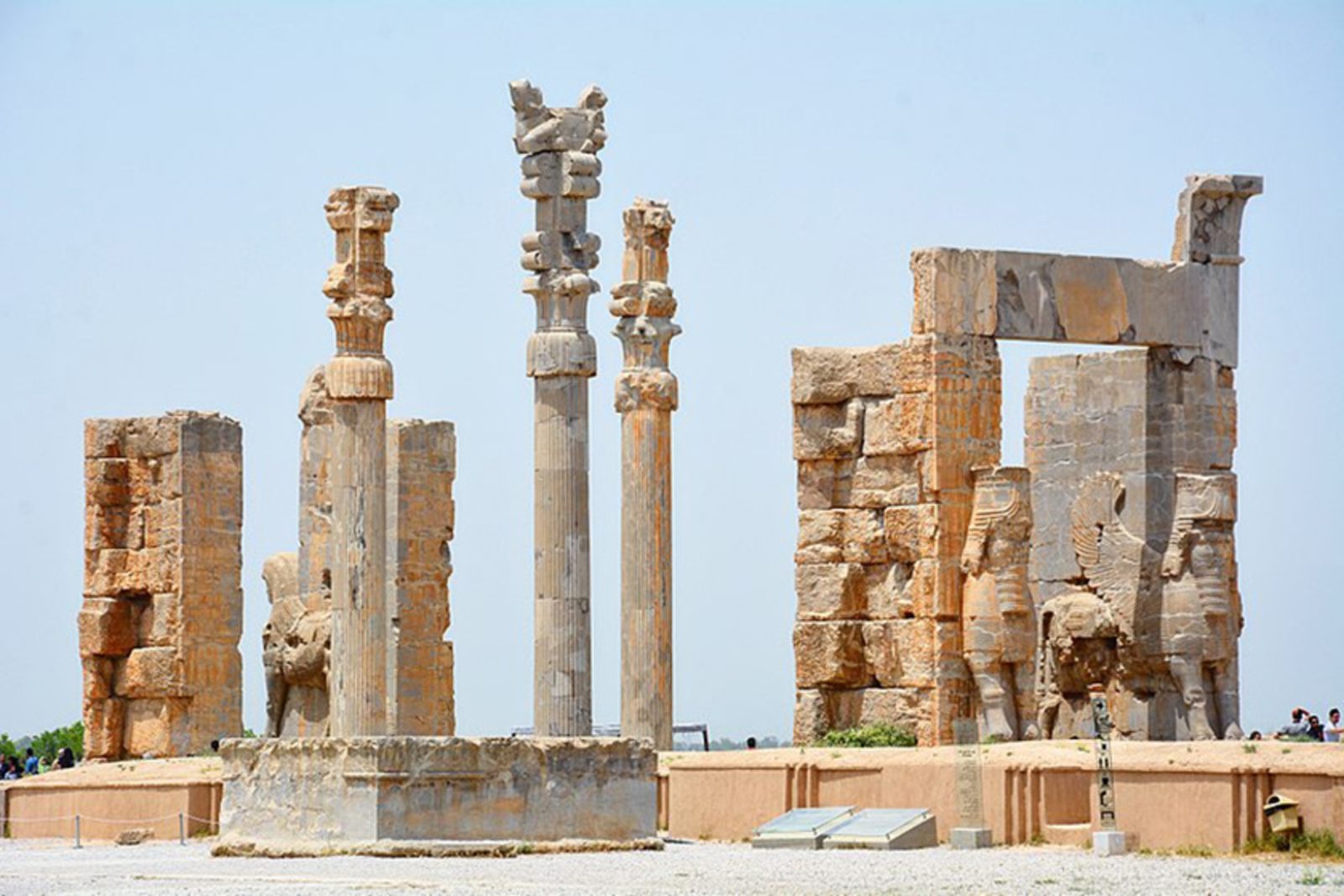
At the top of the staircase stands the Gate of All Nations, a monumental entryway built by Xerxes I. It is guarded by two colossal winged bulls with human heads, known as lamassu. The gate bears a trilingual inscription in Old Persian, Elamite, and Babylonian, declaring that Xerxes built it by the grace of Ahura Mazda. Walking through this gate, you follow the same path once taken by foreign envoys arriving at the heart of the empire.
The Apadana Palace
The Apadana is the largest and most magnificent palace at Persepolis. Built by Darius I and completed by Xerxes I, it was the main audience hall. Its central hall once had 72 columns, each about 20 meters high. Today, only a handful remain standing, but their bases and capitals give a sense of the original scale. The stairways of the Apadana are decorated with some of the finest reliefs at the site, showing 23 delegations from across the empire bringing gifts and tribute. You can see figures leading horses, camels, and lions, carrying textiles, vessels, and precious materials.
The Palace of Xerxes (Hadish)
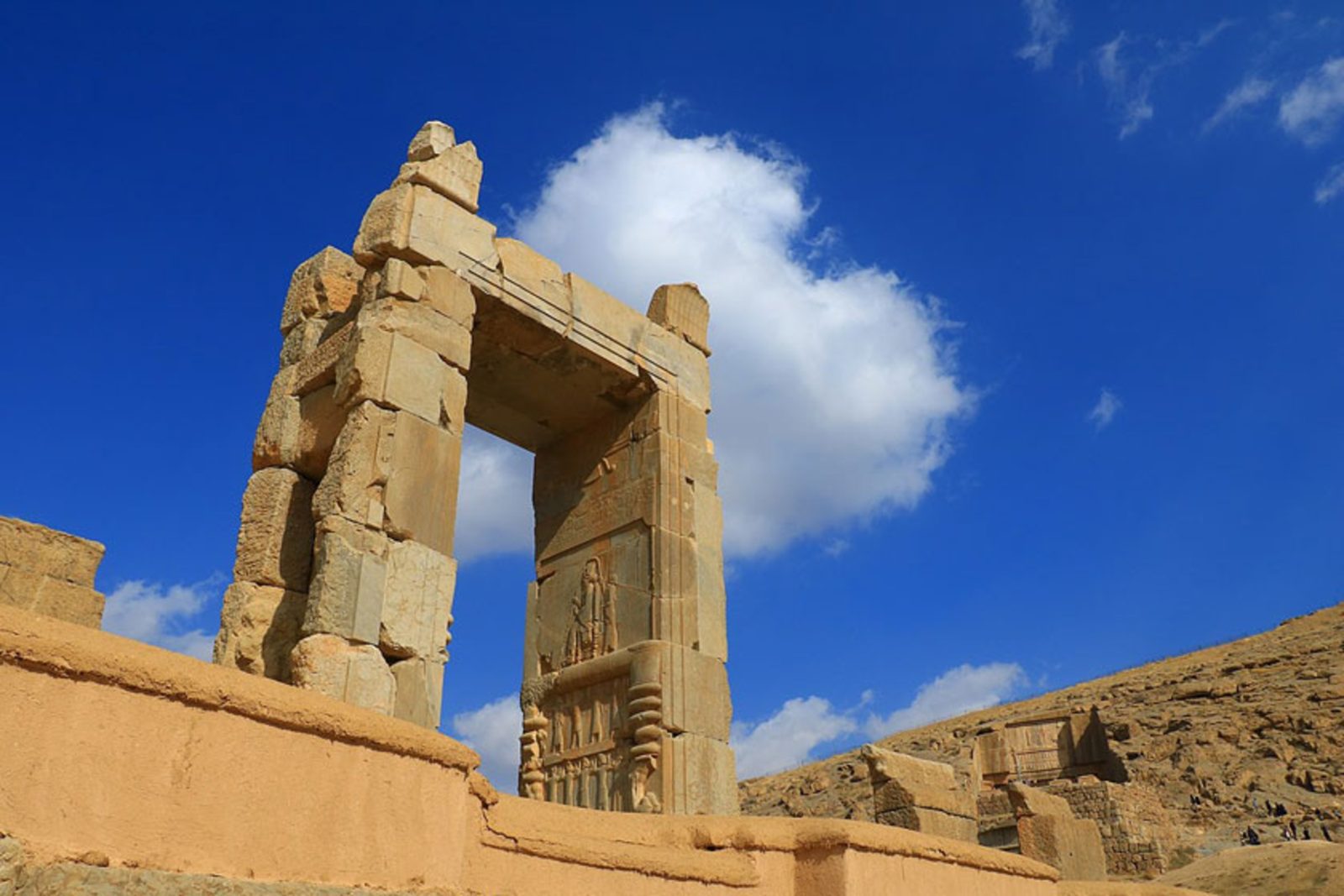
Also known as Hadish, this was the private palace of Xerxes I. It sits on a higher level and offers a view over the surrounding plain. The reliefs here depict Xerxes with attendants, and the stonework is notably refined. The palace was badly damaged by fire, but its remaining doorways and columns still convey its former elegance.
The Treasury
The royal treasury was a vast complex used for storing wealth and administrative records. It was here that archaeologists found thousands of clay tablets inscribed in Elamite, recording payments to workers, artisans, and officials. These tablets have provided invaluable insights into the Achaemenid economy and labor practices.
The Tomb of Artaxerxes
On the southern side of the terrace, rock-cut tombs of later Achaemenid kings are visible. The tomb of Artaxerxes II and Artaxerxes III are among those that can be seen, though they are less elaborate than the royal tombs at Naqsh-e Rostam.
The Persepolis Museum
Included in your entrance ticket is the small Persepolis Museum, housed in a restored Achaemenid building. It displays artifacts found at the site, including pottery, metalwork, and inscribed objects. It is a worthwhile stop to see some of the smaller finds that bring daily life in the empire into focus.
Hours, Tickets, and Practical Details
Opening hours vary by season. Generally, the site is open from 8:00 AM to 5:00 PM in the colder months, and until 7:00 PM or later in spring and summer. The last entry is usually one hour before closing.
Ticket prices for international visitors are set in Iranian rials and can change. As a rough guide, foreign visitors should expect to pay the equivalent of 5 to 10 euros. Iranian nationals pay a much lower rate. You can buy tickets at the entrance gate. Some travelers report that combined tickets for Persepolis and Naqsh-e Rostam are available, offering a small discount. Be sure to bring cash in rials, as card payments are not always accepted at the ticket office.
Persepolis is a vast, open site with little shade. Wear comfortable walking shoes, a hat, and sunscreen. Bring plenty of water, especially in summer. A local guide can greatly enhance your understanding of the reliefs and architecture, and many guides are available at the entrance. Photography is allowed, but tripods and drones may require special permission.
Nearby: Naqsh-e Rostam
Just 12 kilometers northwest of Persepolis lies Naqsh-e Rostam, an ancient necropolis carved into a cliff face. Here you will find the rock-cut tombs of four Achaemenid kings: Darius I, Xerxes I, Artaxerxes I, and Darius II. Below the tombs are magnificent Sasanian reliefs depicting investitures, victories, and royal ceremonies. The site also includes the Cube of Zoroaster, a mysterious stone tower with trilingual inscriptions.
Naqsh-e Rostam is typically included in the same day trip as Persepolis. It is open daily from 8:00 AM to 5:30 PM, with shorter hours in winter. Tickets are separate from Persepolis, and foreign visitors pay a similar rate. Allow about one hour to explore the site. The reliefs are best seen in the soft light of early morning or late afternoon.
When to Go
The best time to visit Persepolis is during the spring (March to May) and autumn (September to November). The weather is mild and comfortable for walking. Summer can be extremely hot, with temperatures often exceeding 40°C, making midday visits exhausting. Winter is cooler and quieter, but the days are shorter and some facilities may have reduced hours. If you visit in winter, aim for the middle of the day when the sun is warmest.
Where to Stay
Most visitors stay in Shiraz and make a day trip to Persepolis. Shiraz offers a wide range of accommodation, from boutique hotels in restored traditional houses to modern international chains. You can browse and book hotels through Mehyar Hotels. If you prefer to stay closer to the site, there are a few guesthouses and hotels in Marvdasht, but the choice is limited. For most travelers, Shiraz is the better base, offering more dining, shopping, and cultural options.
Practical Tips
- Start early to avoid the heat and the crowds. The site is usually busiest between 10:00 AM and 2:00 PM.
- Bring cash in rials for tickets, guides, and snacks. There are no ATMs at the site.
- Wear sturdy shoes. The ground is uneven, and there is a lot of walking.
- Consider hiring a guide at the entrance. Their knowledge of the reliefs and history adds depth to the visit.
- Combine Persepolis with Naqsh-e Rostam and, if you have time, Pasargadae for a full day of Achaemenid history.
- Use Mehyar Taxi for a comfortable and flexible round trip from Shiraz. You can also top up your Mehyar wallet in advance to pay for your ride and other services.
A Final Thought
Persepolis is a place that rewards preparation and curiosity. The more you know about the Achaemenid Empire before you arrive, the more you will see in the stones. Whether you come for the grand staircases, the intricate reliefs, or the sheer scale of the ruins, you will leave with a deeper appreciation for one of the world's great ancient civilizations.