
Kashan is the kind of city that rewards travelers who slow down. It sits at the edge of the central desert, halfway between Tehran and Isfahan, and it holds one of the finest collections of historic houses in Iran. For centuries this was a stop on the caravan routes, a place where merchants built courtyard homes with tall windcatchers, deep basements, and walls that kept the summer heat at bay. Today those houses are open to visitors, and the city has become one of the most rewarding overnight stops on any classic Iran itinerary.
This guide covers what to see, when to go, how to get there from Tehran or Isfahan, where to stay, and how to move around once you arrive. It is written for independent travelers who want practical detail, not just a list of names.
Where is Kashan?
Kashan lies in the north of Isfahan Province, on the edge of the central Iranian desert. It is about 220 kilometers south of Tehran and roughly 210 kilometers north of Isfahan, which makes it a natural midpoint on the road between the two cities. The city sits near the Karkas mountain range, so its climate is slightly milder than the open desert around it, though summers are still hot and dry.
The old city is compact. Most of the historic houses, the bazaar, and the main mosques sit within a walkable area, which is one reason a single overnight stay feels satisfying rather than rushed.
How to get to Kashan
Kashan is easy to reach from both Tehran and Isfahan, and most travelers arrive by road or rail.
From Tehran by car or bus
The drive from Tehran takes about two and a half to three hours via the Tehran-Qom and Qom-Kashan freeways. Buses leave from Tehran's southern terminals throughout the day, and the bus terminal in Kashan sits only a few kilometers from the city center. If you prefer not to navigate the freeways yourself, a private transfer is the simplest option, and you can arrange one through Mehyar Taxi before you leave Tehran.
From Tehran by train
The train from Tehran to Kashan takes around two and a half hours and is a comfortable, scenic ride. Kashan's railway station is about 10 kilometers from the center, so plan a short taxi ride at the end. You can check schedules and book rail or bus connections through the Mehyar app, which keeps your tickets and ride in one place.
From Isfahan
From Isfahan the drive takes about two and a half hours. Buses run regularly between the two cities, and a private car is a good choice if you want to stop at smaller sites along the way. If you are building the classic route, Kashan fits neatly between Tehran and Isfahan, and many travelers break the journey here for one or two nights.
By air
Kashan has an airport, but scheduled flights are limited and routes change often. For most visitors, road or rail is the reliable choice. If you do fly, confirm current routes before booking, since service is not guaranteed year-round.
A short history
Kashan is one of the oldest continuously settled places in Iran. The nearby archaeological site of Tepe Sialk shows human occupation going back thousands of years, and it is counted among the earliest urban settlements on the Iranian plateau. The city later grew into an important trading and textile center, and it flourished especially under the Safavids. The Qajar era brought the grand merchant houses that visitors come to see today, built by wealthy families who traded in textiles, carpets, and rosewater.
That trade left a lasting mark. Kashan is still known across Iran for its rosewater, its carpets, and its traditional architecture, and the city has kept much of its historic fabric intact.
What to see in Kashan
The historic houses
The merchant houses are the heart of a visit to Kashan, and you should plan to see at least two or three. The Tabatabaei House, the Borujerdi House, and the Abbasian House are the best known, and each shows a different variation on the same idea: a plain exterior that hides a rich interior of courtyards, stained glass, stucco, and mirrored ceilings. The Borujerdi House is often described as the most beautiful, and it was built as a marriage gift between two prominent families. The Tabatabaei House is famous for its carved stone and its symmetrical layout, while the Abbasian House is the largest and has several connected courtyards.
Allow about an hour for each house, and go early in the day when the light through the colored windows is at its best and the tour groups have not yet arrived. Tickets are modest, but prices change, so confirm current rates when you arrive.
Fin Garden
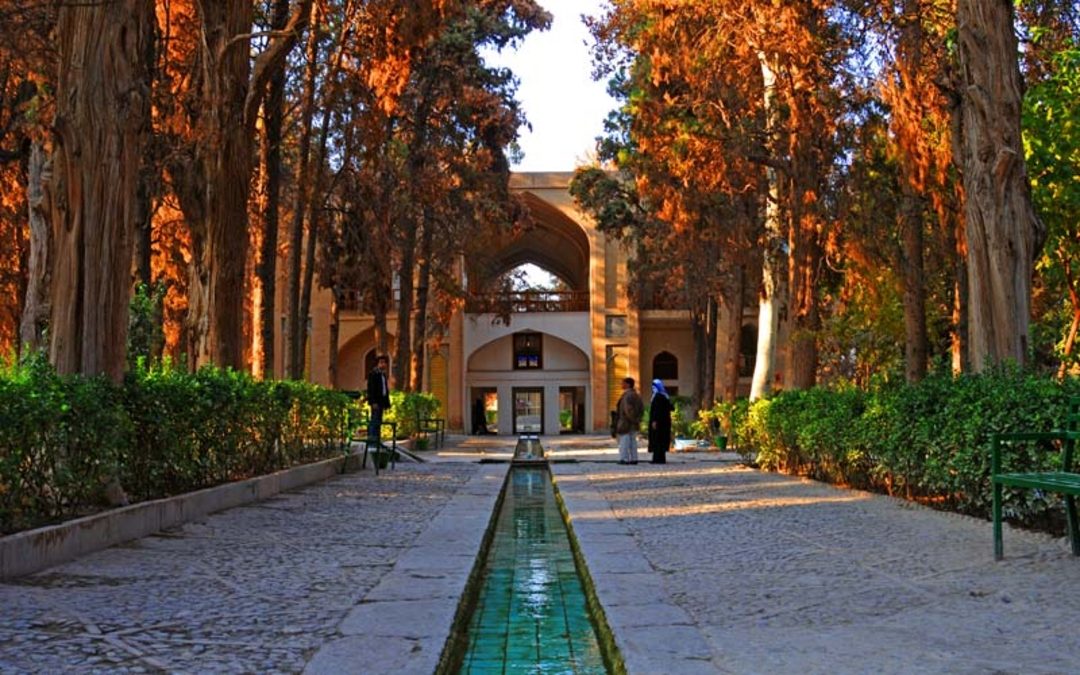
Fin Garden is the single most important site in Kashan and a UNESCO World Heritage property. It is a classic Persian garden, built around a spring-fed water channel that runs through cypress trees, pavilions, and tiled pools. The garden is beautiful in any season, but spring and autumn are the most comfortable times to walk it. Inside the garden is the historic Fin Bath, where the Qajar prime minister Amir Kabir was killed in the nineteenth century, a story that gives the site a somber weight beneath its calm surface. Fin Garden sits at the end of Amir Kabir Street, a short taxi ride from the old city. For a deeper look, see our dedicated guide to Fin Garden.
The traditional bazaar
Kashan's covered bazaar is one of the finest in Iran. It is a working market, not a museum, and the architecture alone justifies the visit. Look up as you walk: the brick vaults and domes are masterpieces of engineering, and the Amin al-Dowleh Timcheh, a domed trading hall, is the highlight. The bazaar is the place to buy rosewater, carpets, textiles, and copperware, and it is also where locals do their daily shopping. It is busiest in the late afternoon, which is also the most atmospheric time to wander.
Mosques and baths
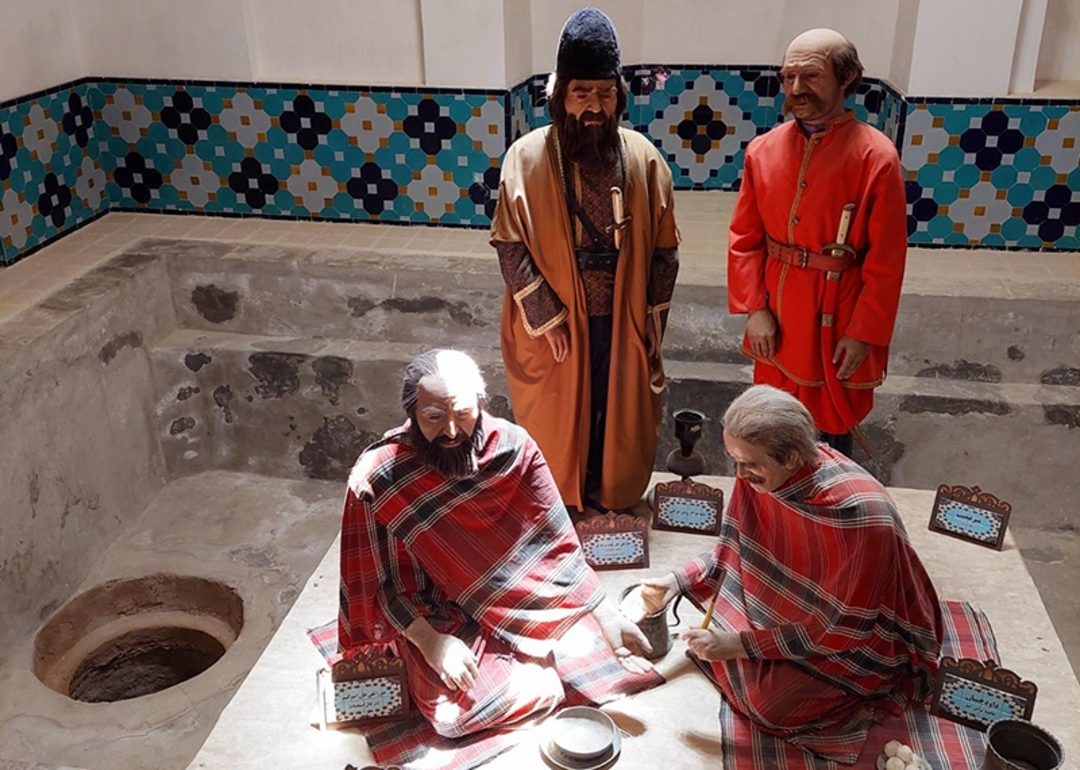
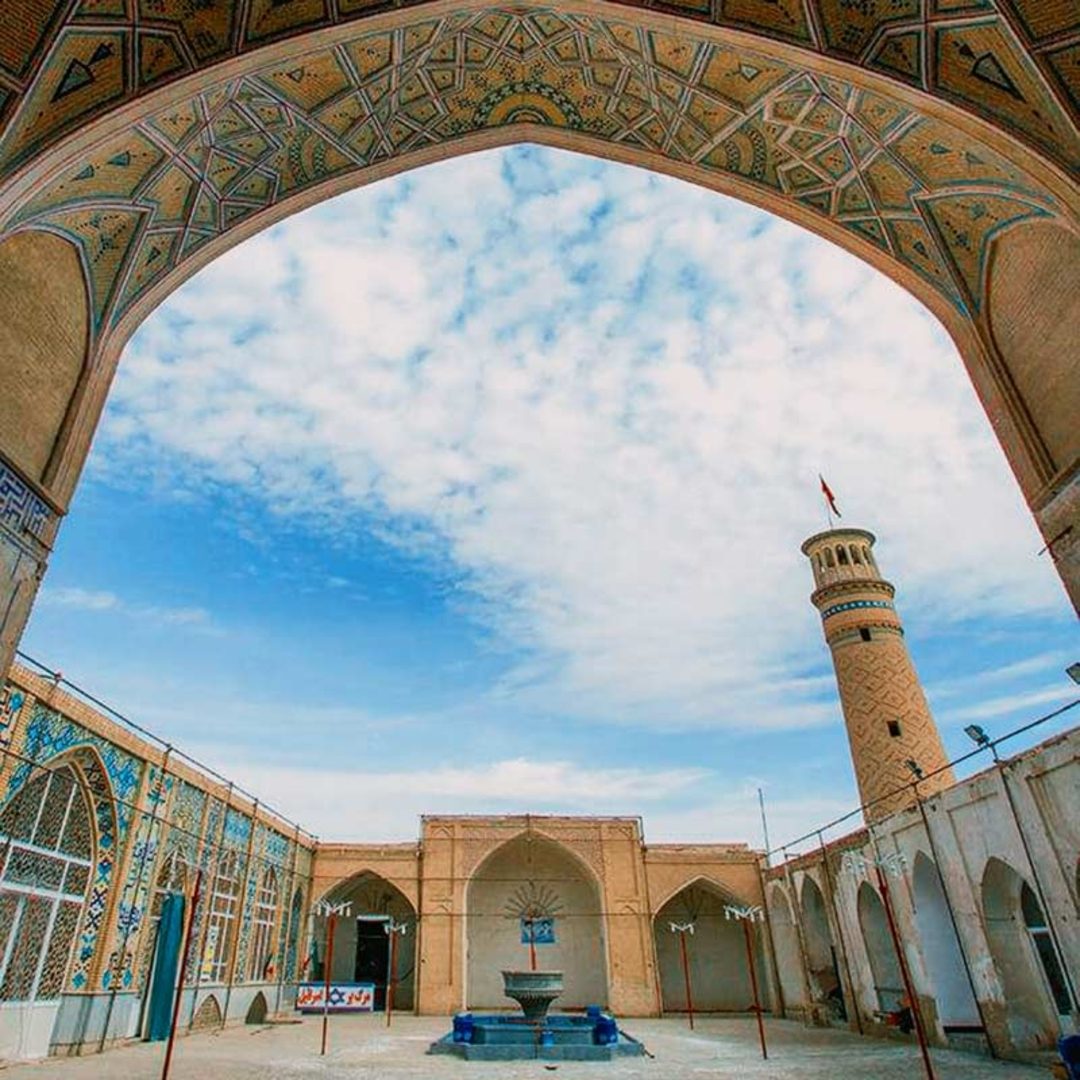
The Agha Bozorg Mosque and school is a Qajar-era complex with a striking central courtyard and a deep, symmetrical design that photographers love. The Jame Mosque of Kashan is older, with Seljuk roots, and the Sultan Amir Ahmad Bathhouse is a stunning example of tiled and painted bath architecture. Many travelers also climb to the bathhouse roof for a view over the old city.
Tepe Sialk
For anyone interested in archaeology, Tepe Sialk is worth the short trip to the southwestern edge of the city. The site is thousands of years old and offers a sense of how deep Kashan's history runs. It is a modest, open site rather than a polished museum, so bring curiosity and imagination.
When to go
The best months to visit Kashan are in spring and autumn. Spring, especially April and May, brings mild weather and the rosewater season, when the surrounding fields of Damask roses are harvested and distilled. This is the most atmospheric time to visit, but it is also the busiest, and hotel prices rise around the Nowruz holiday and the rosewater festival.
Autumn, particularly October and November, offers cool, clear days that are ideal for walking between the historic houses and out to the desert edges. Winter is cold and quiet, with occasional snow, and summer is very hot, often above 40 degrees Celsius in the daytime. If you visit in summer, plan indoor sightseeing in the middle of the day and save the gardens and bazaar for early morning and evening.
Getting around Kashan
The old city is small enough to explore on foot, and walking between the main houses, the bazaar, and the mosques is one of the pleasures of a visit. For longer hops, such as the trip out to Fin Garden or Tepe Sialk, use a taxi. Open Mehyar, choose Taxi, and set your destination; the app handles the fare and the route, so you do not need to negotiate or carry exact change. If you are staying overnight and want a car for a half day, you can arrange that through Mehyar as well.
Where to stay
Kashan has some of the best boutique accommodation in Iran, much of it inside restored historic houses. Staying in one of these houses is part of the experience, and many have courtyards, traditional restaurants, and rooftop views. The Saraye Ameriha is a large, elegant option with a tall windcatcher, and the Manouchehri House is a smaller, carefully restored property known for its textile workshop and café. For budget travelers, there are also simpler guesthouses and a handful of modern hotels near Fin Garden.
Because the best properties are small, they fill quickly in spring and autumn. Book through Mehyar Hotels as soon as your dates are set, and check the cancellation policy in case your plans shift.
Day trips from Kashan
Kashan is well placed for several half-day and full-day trips. The village of Abyaneh, with its red mud-brick houses stacked on a hillside, is about 80 kilometers away and makes a memorable excursion. The underground city of Noushabad and the desert edge at Maranjab are also within reach, and both are popular for stargazing and desert drives. For more on Abyaneh, see our guide to Abyaneh. If you are following the classic route, our 7-day classic loop shows how Kashan fits between Tehran and Isfahan.
Practical notes
Bring comfortable shoes, since you will walk on uneven brick streets and through courtyards. In warm months, carry water, a hat, and sunscreen. Cash is still useful in the bazaar, though card readers are increasingly common. For hotels, transport, and intercity tickets, the Mehyar app keeps everything in one place, and our guide to booking hotels and rides explains how to use it step by step. If you are continuing south, our Isfahan guide picks up where this one leaves off.
Kashan is not a city you rush. Give it a night, walk its lanes in the evening when the crowds thin and the courtyards glow, and you will understand why so many travelers remember it as the quiet highlight of their trip.