
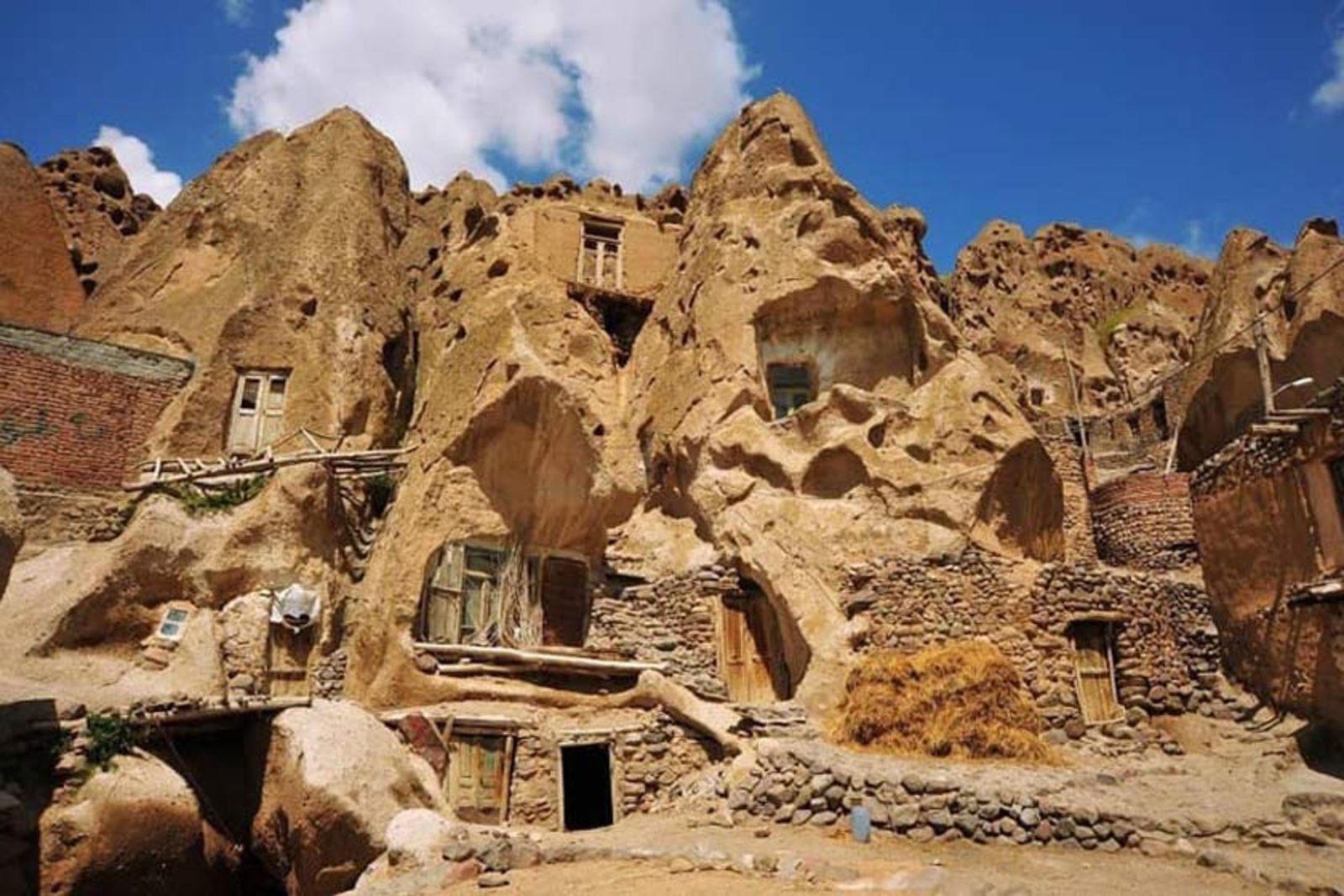
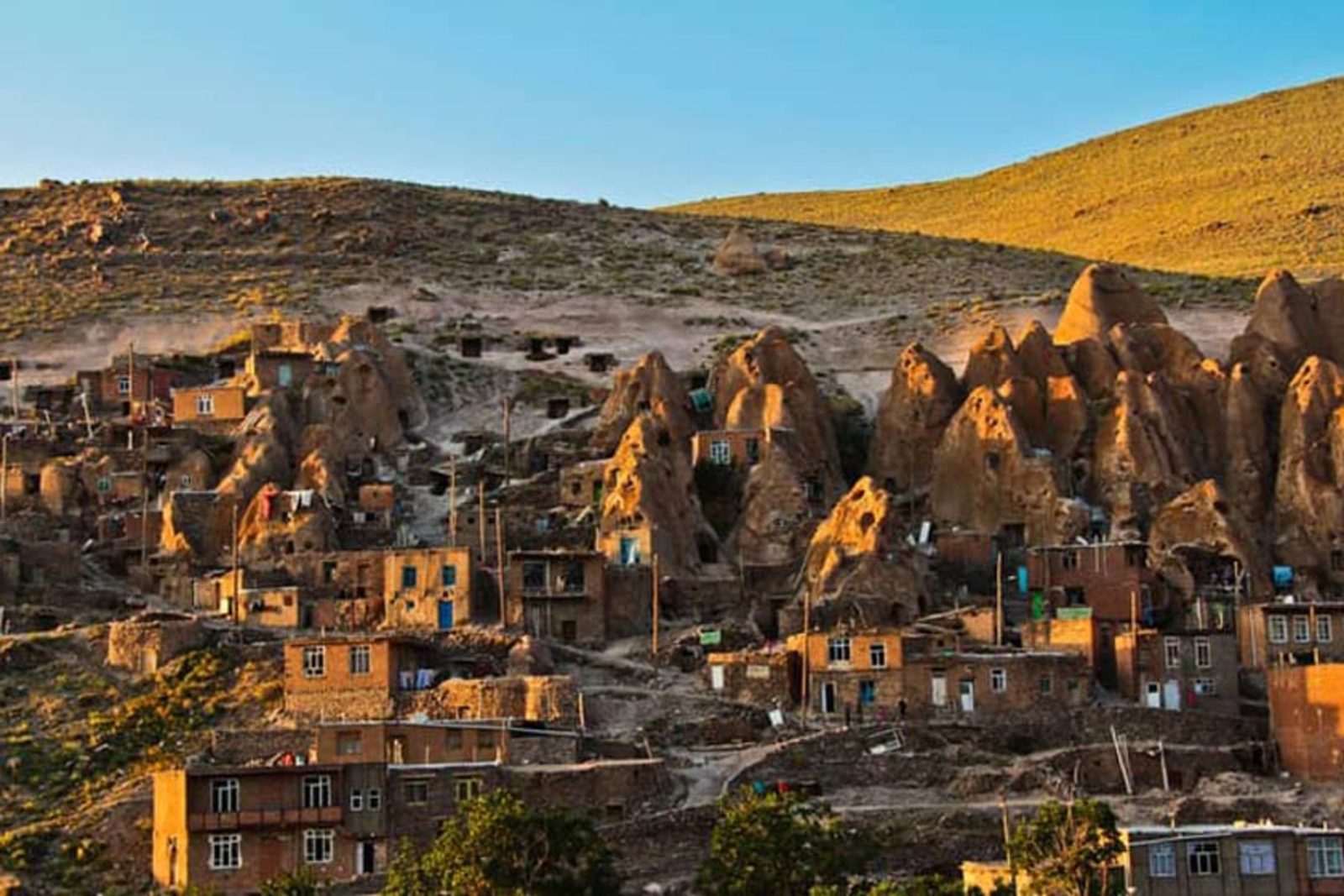
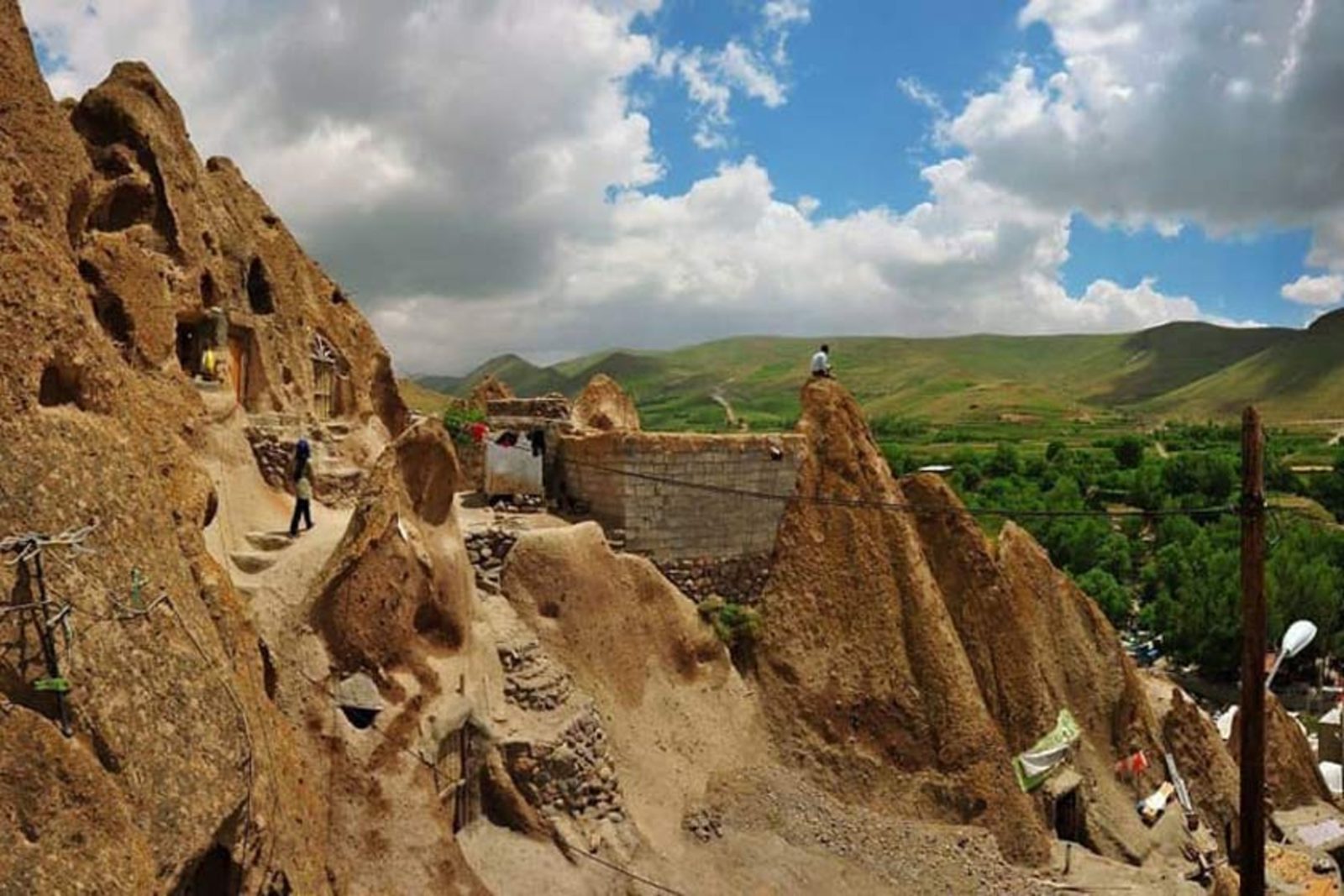
Some places in Iran are visited. Kandovan is inhabited. On the northern slopes of Mount Sahand in East Azerbaijan province, roughly an hour southwest of Tabriz, several hundred cone-shaped columns of volcanic rock rise out of a valley, and people still live inside them. Doorways are cut into the stone. Windows open onto narrow lanes. Smoke rises from chimneys carved into the peaks of cones that look, from a distance, like nothing so much as a field of enormous beehives.
This is not a reconstructed heritage site or an open-air museum. It is a working village at about 2,200 metres above sea level, where families keep honey, walnuts and dried herbs in stone storerooms and where the same thick rock walls that keep the summer sun out hold the winter warmth in. For international visitors building an Iran itinerary around Tabriz, Kandovan is the single most rewarding half-day or full-day trip in the region, and one of the few places on earth where you can sleep inside a rock cone that has been a home for centuries.
Where is Kandovan?
Kandovan sits in Osku county, in the Sahand rural district of East Azerbaijan province, in northwestern Iran. It lies about 60 kilometres southwest of Tabriz, roughly 18 to 22 kilometres south of the town of Osku, in a valley beside the Kandovan river, on the western flanks of the Sahand massif.
The village is built in a stepped layout up a slope that reaches roughly 70 degrees in places, so the roofs of one level often serve as the path or yard of the level above. Because of the altitude, the air here is noticeably thinner and cooler than in Tabriz, even in midsummer, and the surrounding meadows are used by nomadic herders in the warm months.
How to get to Kandovan from Tabriz
The journey is short, but it is not a place you simply "go to". Plan the transport and the day works beautifully.
By Mehyar Taxi from Tabriz. The simplest and most comfortable option is to open Mehyar, choose Taxi, and set Kandovan as your destination. The drive from central Tabriz takes about one hour in normal weather, following the road toward Osku and then turning south through Esfanjan and the village of Kohanmou. A private car lets you stop at the viewpoints along the way, wait while you walk the village, and bring you back the same evening. This is the option most international visitors choose, and it removes every last-mile problem, because public transport does not enter Kandovan itself.
By Mehyar Buses plus a local taxi. If you prefer to keep costs down, take a Mehyar Buses service from Tabriz toward Osku, then arrange a local taxi or shared car from Osku onward. This works, but the last stretch is less predictable, especially outside daylight hours and in winter, so build in extra time.
By organised day tour. Many travellers join a guided day tour from Tabriz that combines Kandovan with Osku and sometimes the Sahand foothills. Tours usually include transport and a local guide, and can be booked in advance. Check what is included before you commit, since some tours stop only briefly at the village.
By private car. If you are driving yourself, head from Tabriz toward Osku, continue south past Esfanjan, and follow the signs to Kandovan at the fork. The road is generally easy in normal weather, but snow and fog in winter can slow it considerably. Park at the entrance area rather than in the narrow lanes of the village.
A short history of the rock cones
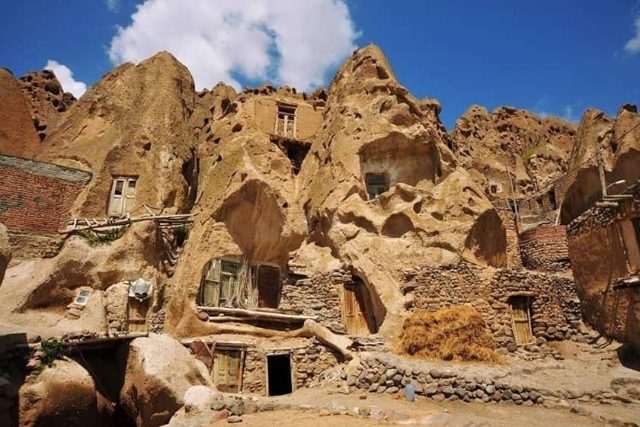
The cones themselves are the work of Mount Sahand, a dormant volcanic mountain whose eruptions, over many thousands of years, laid down thick layers of tuff, lahar and ignimbrite. Wind, rain, snow and frost then eroded the softer material away, leaving the harder cores standing as the pointed, hive-like columns you see today. Locally these dwellings are called karan, from a word meaning to carve or hollow out.
Who first moved in is debated. One widely told account links the village's growth to the Mongol invasions, when people from the nearby underground settlement of Hileh Var are said to have taken refuge in the cones and carved homes inside them. Other researchers point to far older seasonal occupation by nomads who used the hollowed cones as summer shelters before settling permanently. What is not in dispute is that Kandovan is one of the very few rock-cut settlements in the world that has never been abandoned. Cappadocia in Turkey and the rock dwellings of Dakota in the United States are the other famous examples, but both are essentially heritage sites. Kandovan is a lived-in village, and that is precisely its value.
The village was registered on Iran's national heritage list in 1997, under registration number 1857.
What to see in Kandovan
The rock houses come first. Each karan is a vertical stack, usually two floors and sometimes three or four. In the traditional arrangement, the ground floor served as a stable, the first floor as living space, the second as a guest room, and the top as storage. Access between floors was often from outside, up stone steps cut into the flank of the cone, which is why you will see stairways and small landings everywhere. Because the cones are carved rather than built, no two interiors are identical in size or shape.
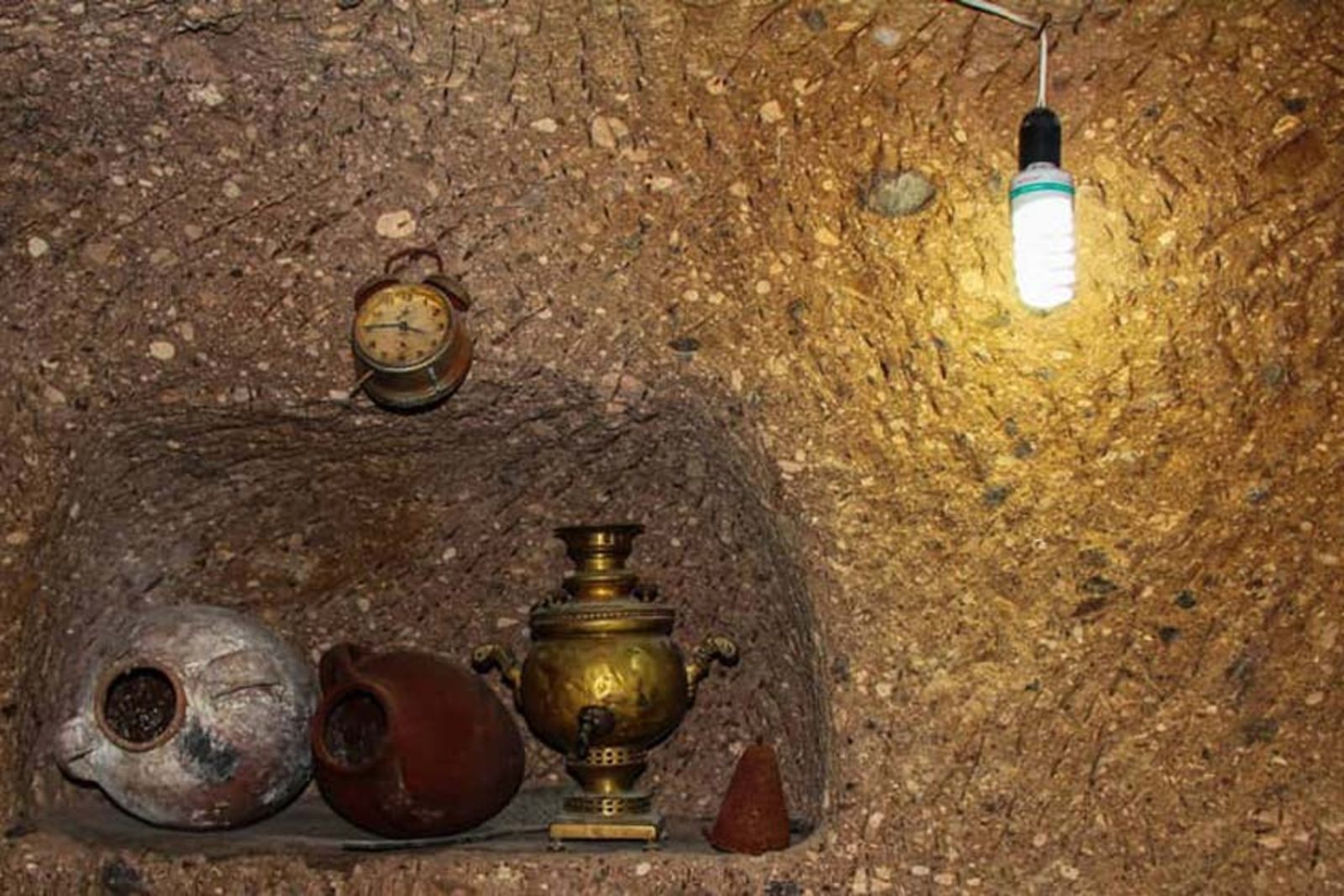
Inside, the thick volcanic walls moderate temperature remarkably well. Summers stay cool, winters stay warmer than the outside air, and the structures have proven surprisingly resistant to earthquakes. Ceilings are low and doorways are deliberately small, both to conserve heat and to avoid weakening the rock.
Beyond the houses, look for the mineral spring, whose cold calcium carbonate water is traditionally credited with benefits for kidney and skin complaints. It is a pleasant stop on a warm day. The small handicraft bazaar near the village centre sells honey, walnuts, dried fruit, medicinal herbs, grape syrup and hand-woven kilims, all produced locally. The village mosque, the old lanes and the valley views from the upper levels are the other highlights, and the light in the early morning and late afternoon is best for photography.
Hours, tickets and practical notes
Entry to the village is generally free, and there are no fixed opening hours, since Kandovan is a residential settlement rather than a ticketed attraction. Allow half a day at minimum, and a full day if you also want to eat, walk the upper lanes and visit the spring.
A few courtesies matter here. The cones are people's homes, not exhibits. Do not enter a courtyard or climb onto a roof without being invited, ask before photographing residents, and keep to the public lanes. The stone floors are uneven, and the stepped paths become slippery after rain or in icy conditions, so wear shoes with good grip.
There is no public transport inside the village, and card payment can be unreliable in the small shops. This is where Mehyar helps. Keep your Mehyar Wallet topped up before you leave Tabriz so you can pay for snacks, honey, tea and any taxi fare without hunting for cash, and use Mehyar Taxi for the return leg rather than relying on finding a car in the village.
Staying in a rock hotel
Kandovan is one of the only places in the world where you can spend the night inside a volcanic rock cone in genuine comfort. The best-known property is the five-star Laleh Kandovan Rock Hotel, built directly into the historic formations and recognised as one of Iran's pioneering boutique hotels. Rooms and suites are carved into the rock itself, with natural stone walls, underfloor heating for the cold months, and a rock-cut restaurant and café on site. Room categories range from standard doubles to jacuzzi suites and larger royal and imperial suites, and because every room occupies its own cone, no two are the same size or layout. Access is via traditional stone stairways, which is part of the experience and worth knowing if you have mobility concerns.
Smaller boutique guesthouses and traditional homestays also operate in the village, offering a simpler and often warmer introduction to local life. Availability in high season is limited, so book ahead through Mehyar Hotels rather than arriving and hoping. If you want a wider choice of rooms, restaurants and services, staying in Tabriz and visiting Kandovan as a day trip is the alternative, and Mehyar Hotels covers both.
One practical point: international debit and credit cards do not work in this part of Iran, so plan your payment through the Mehyar Wallet and top up before you travel. A brief cash backup is sensible for very small purchases.
When to go
Spring, roughly April to June, and early autumn, September to October, are the most comfortable seasons. In late spring the Sahand slopes are green, the orchards and meadows are at their best, and daytime temperatures are mild. Autumn brings clear light and colour to the valley.
Summer is also a good choice, and it is the season when Kandovan is at its most refreshing: while much of Iran swelters, the village at 2,200 metres stays cool and pleasant. This is also the busiest period, so mornings and late afternoons are calmer than midday.
Winter is genuinely cold, with long frosts and heavy snow that can block the approach roads for extended periods and limit services in the village. It is beautiful under snow and worth considering for the atmosphere, but check road conditions before setting out and allow extra travel time. Autumn rain arrives earlier here than in the lowlands, so pack a windproof layer whatever the season.
Nearby and day trips
Kandovan pairs naturally with Osku, about 18 to 22 kilometres north, and with the wider Sahand foothills. The nearby rock village of Hileh Var, roughly five kilometres to the east, is linked in local accounts to Kandovan's own history. The summer pasture village of Daghand, around twelve kilometres west, and the Oghan valley, about twenty kilometres south, are worth adding if you have a car and a full day. Tabriz itself, with its covered bazaar and historic centre, is the natural base for the region.
If you are still planning the wider trip, our guide to Tabriz covers the city properly, and First Trip to Iran walks through the practical groundwork before you arrive. For money matters, Paying in Iran explains the wallet and card situation in detail, and if you have more time, the Iran 14-Day Grand Tour shows how Kandovan fits into a longer route.
Visiting Kandovan with Mehyar
Kandovan rewards a little planning and almost no rushing. Start by opening Mehyar and checking Flights or Buses into Tabriz, then book your stay through Mehyar Hotels, whether that is a rock suite in the village or a hotel in the city. Top up your Mehyar Wallet before you leave Tabriz, and use Mehyar Taxi for the drive out and back, so the only thing you have to think about on the day is where to stand for the best view of the cones at sunset. Then read our Tabriz guide for what to do with the rest of your time in the region.