
A brick shaft 23 metres tall rises over a traffic corner in the middle of Tabriz, ringed by trees and parked fire engines, and almost nobody walking past reads it correctly. This is the Atshanshani Tower, the first fire service installation in Iran, built in the late Qajar period and named Yanqin, which means fire or conflagration in Azerbaijani Turkish. It is not a minaret, not a water tower and not a fort. It is a machine for seeing smoke, and the reason Tabriz, not Tehran, owns the country's oldest organised response to fire.
The tower is a registered national heritage site, listed under number 2011 in 1377 in the Iranian calendar with the cultural heritage organisation. Today the interior is closed to visitors, so the building is read from the pavement, and the story has to be assembled from the brickwork, the openings and the equipment preserved in the Tabriz Fire Museum.
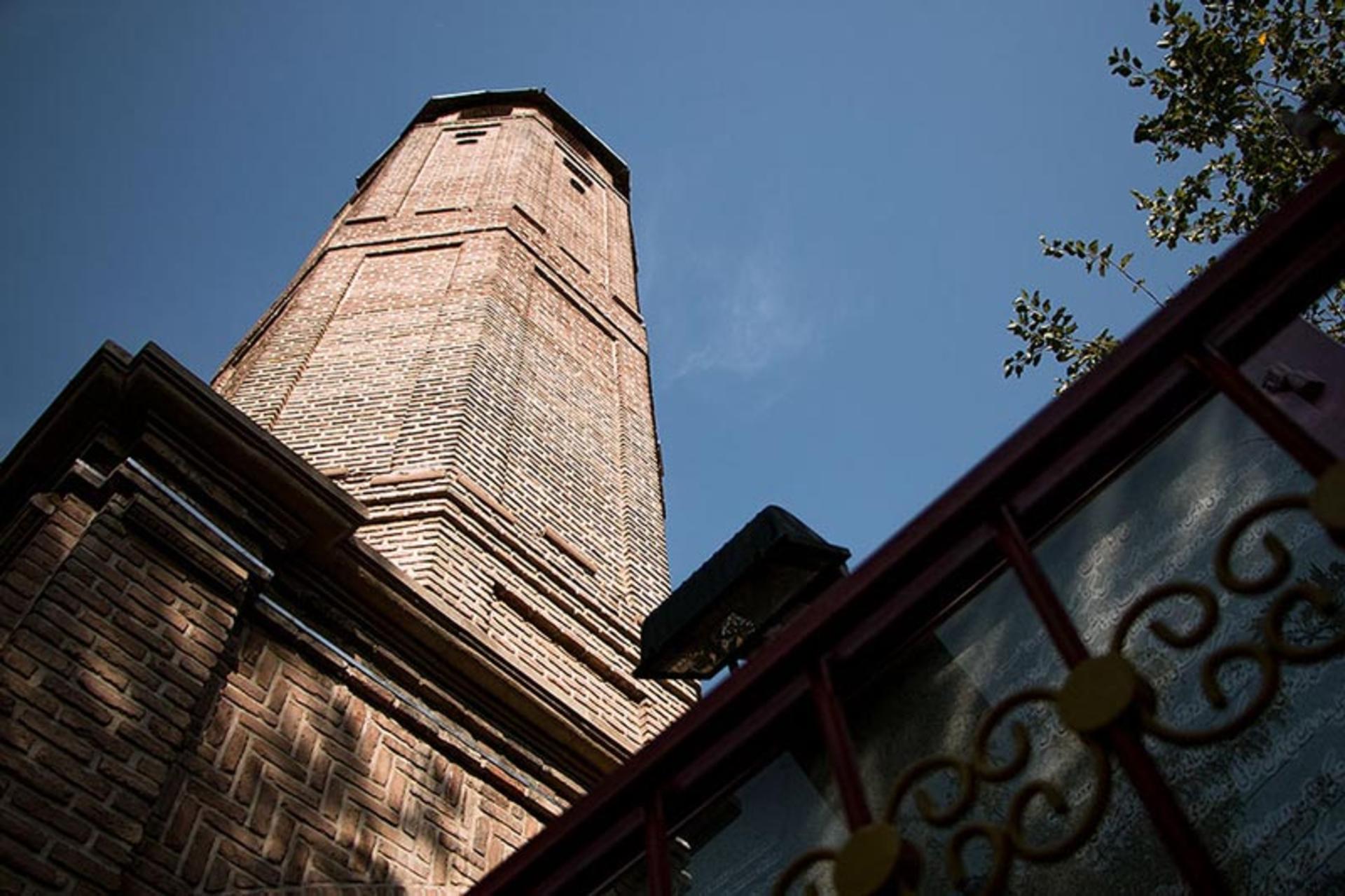
What is the Atshanshani Tower?
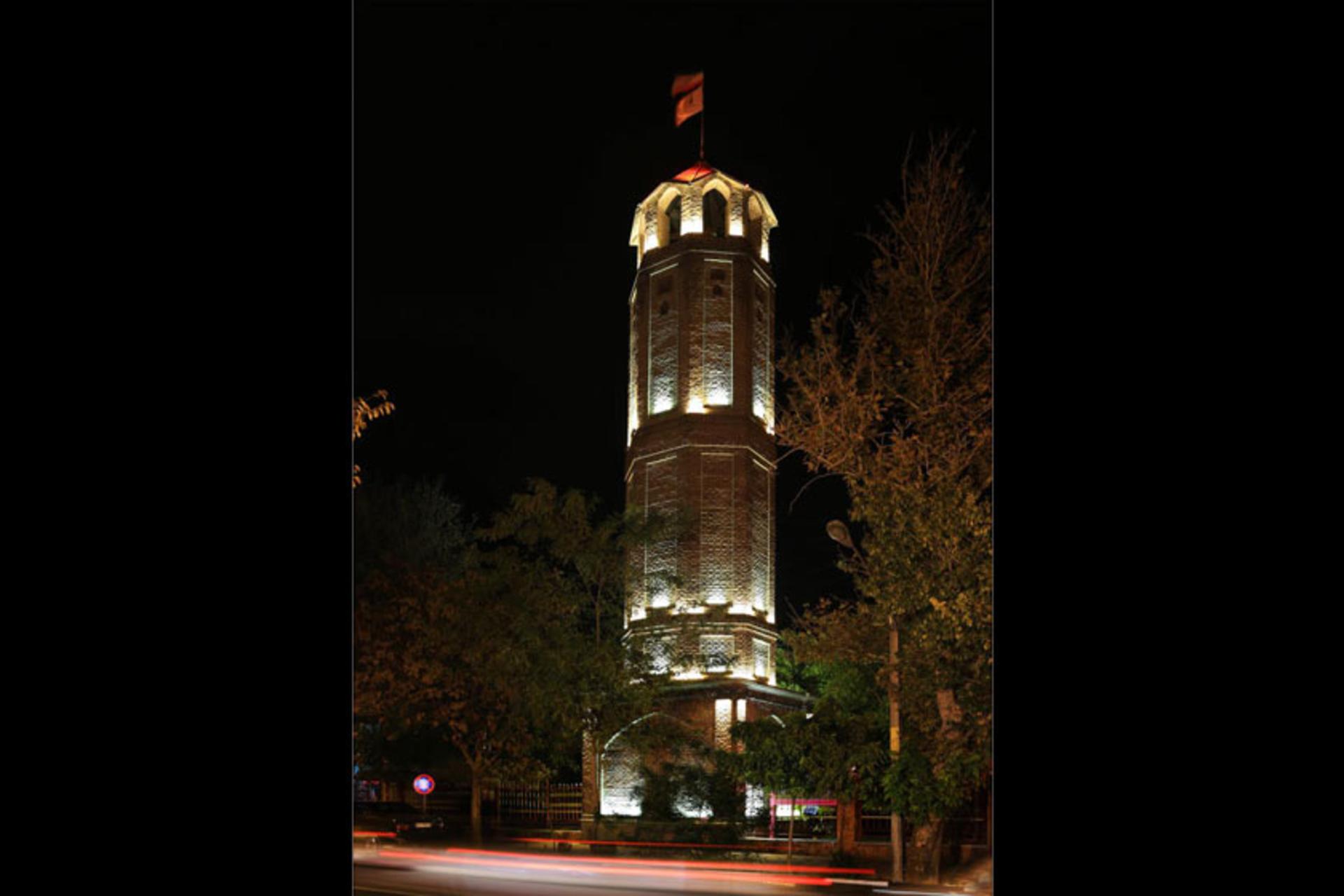
At its simplest, the tower is a lookout. Eight light openings pierce its upper stage and face different directions, so that a watchman at the top could scan the whole city at once, and a guard was always on duty up there. When he spotted fire and identified where it was, he rang the bell that hung from the roof. The firemen of Tabriz, described in the sources of the period as among the best equipped of their day, rushed out with their own gear and drew water from the cisterns of the neighbourhood to fight the blaze.
That arrangement, a fixed observation point plus a paid watchman plus a bell plus a trained crew, is what makes the building historically important. It turned firefighting from a private scramble into a public service with a command position. The tower is one of the rare examples of its type still standing anywhere.
How did organised firefighting start in Tabriz?
The first purposeful traces of an Iranian fire service lead back to the year 1221 in the Iranian calendar, and to Tabriz, where the country's first municipality, then called a beldeieh, was founded. The account in the sources is unusually candid about the motive. Agents of Imperial Russia, wanting to protect their own security and interests in the city, dedicated equipment to extinguishing fires: several double action manual pumps cast in bronze and copper. Those machines could put out a fire and nothing else, with no rescue role at all, which is perhaps where the name ātaš neshān, the fire lighter or fire queller, came from.
Tabriz then supplied the model. The second and third fire units in Iran were raised by the British, at Abadan and Masjed Soleyman, to protect the oil refineries there, and like the Russian equipment in Tabriz they did extinguishing only. A century later Iran has passed 1,200 fire stations, all of them descended from those pumps and that bell.
How the tower worked
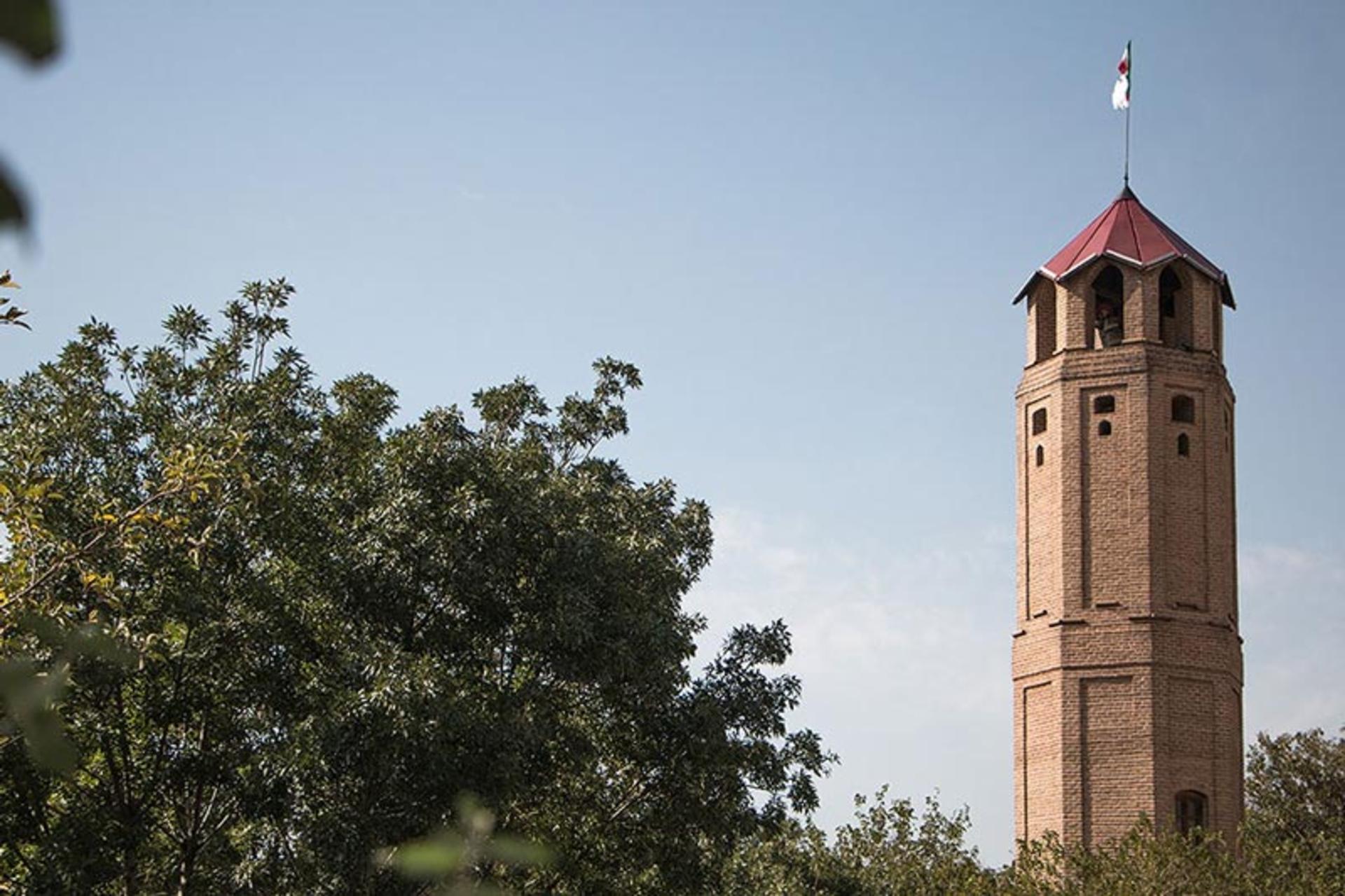
The Qajar engineers built for a single purpose: height, light and sound. The plan inside the tower is circular, and a spiral staircase, the same device used in Iranian towers and minarets, climbs to the upper cabin. In that cabin a lamp was kept lit at all times. Before telecommunications, the tower did the job of a switchboard, announcing incidents across the city faster than any runner could, and the light gave it a second function that a landlocked city should not have needed. With a great lamp burning at its crown, Yanqin became a lighthouse for Tabriz, and travellers arriving at night read it as proof that they had reached the edge of town and walked in to ask the way.
The fire itself was reported by sound. A large bronze bell was fitted at the top for exactly that purpose, and the crews loaded water barrels onto carts and hauled them toward whatever street was smoking, refilling from the cisterns of the houses nearby. The manual copper and bronze pumps of that first service survive and are kept in the Tabriz Fire Museum, which is the natural second stop after the tower.
The tower's reputation travelled. Some sources state that the design was copied by countries such as France, and even claim that the British built their own fire towers on the Tabriz model. The second claim rests on historical documents that still need further research, so treat it as an argument rather than a fact. The first is easier to accept: the system solved a real problem, and the tower still stands as the proof.
A tower that has mourned
Yanqin is not only a technical monument. It has become the emblem of the Iranian fire service, and when firefighters were killed in the Plasco building incident, a black flag was raised over the tower to show the mourning of the country's fire community. It is worth looking up at the flagpole before you move on, because the flag that flies there changes with the calendar.
Hours, tickets and what you can actually see
The interior of the Atshanshani Tower is not open to visitors, so there is no ticket office, no guided climb and no opening time to obey. The exterior can be seen at any hour on any day, free of charge. Most travellers spend between one and two hours on the visit, partly because the tower itself holds attention for ten minutes, and the bazaar streets and the Fire Museum fill the rest comfortably.
Choose your time for light rather than access. In daylight the brickwork reads properly: the recessed panels, the small windows, the arched entrance at the base and the eight openings of the watch stage. At night the floodlighting gives the tower a very different character, and the photograph of a lit shaft above traffic trails is one of the best in Tabriz.
How to get to the tower
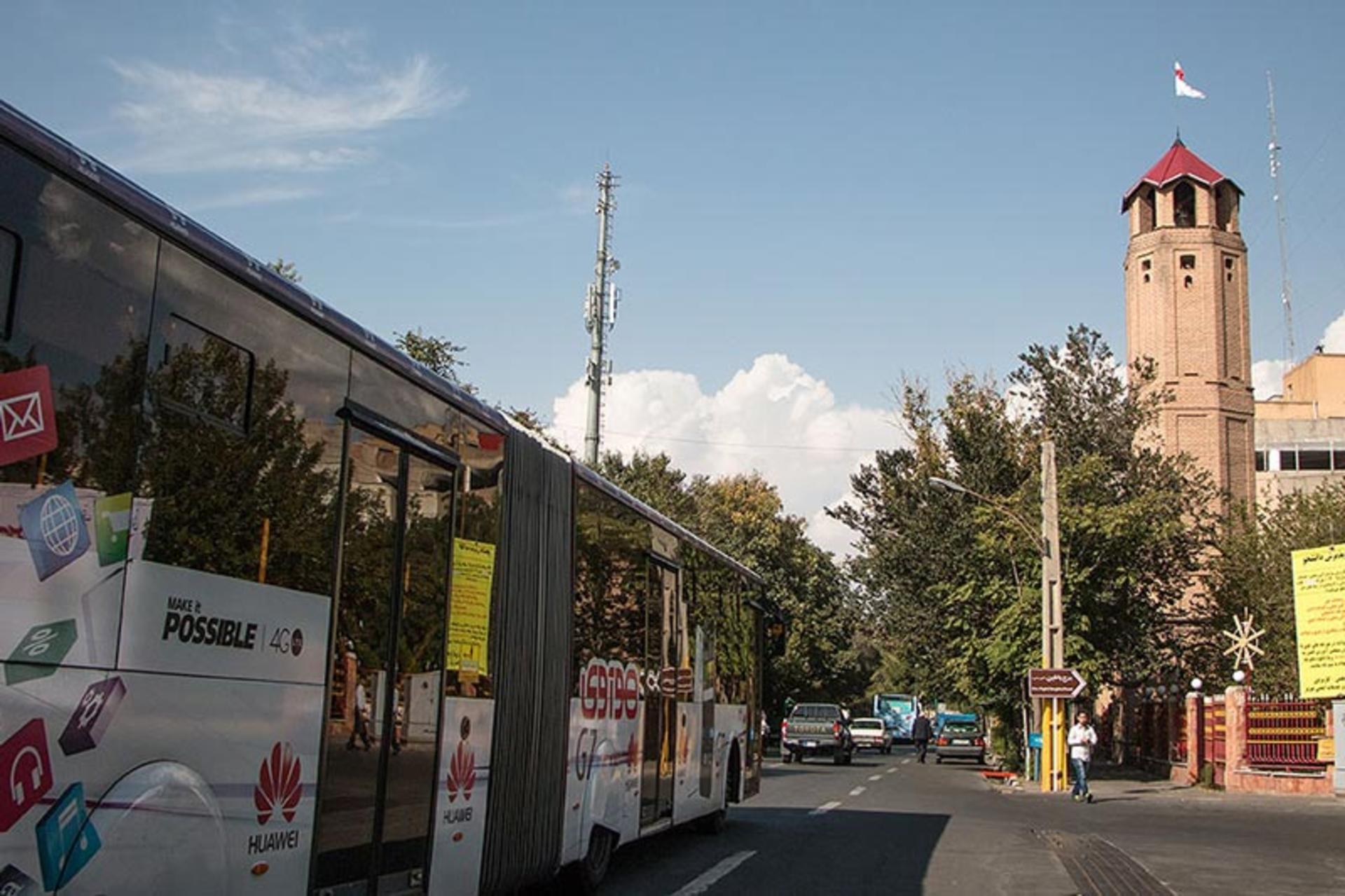
The tower stands at the corner of Khaghani and Bahadori streets, in the centre of Tabriz and within reach of the covered bazaar, which makes it an easy addition to a bazaar morning rather than a trip of its own.
By taxi. Book a Mehyar Taxi from your hotel and name the corner of Khaghani and Bahadori. This is the least stressful option because the approach streets are narrow and signposted confusingly, and the driver will know the one-way pattern.
By bus and BRT. If you use the city's rapid bus line, get off at the Blue Mosque station and walk about fifteen minutes. On ordinary bus lines, alight at the Khaghani terminal and walk seven minutes. Both routes drop you in the old commercial quarter, so you will pass shops, bakeries and tea houses on the way.
By car. Avoid it. Khaghani is one way, so if you are driving you must enter from the Daneshrasa Square side, on the bazaar flank, and parking in the area is scarce. If you are touring Tabriz by hire car anyway, leave it at your hotel with Mehyar Hotels and come into the centre on foot or by taxi.
Arriving in Tabriz. Mehyar Buses connect the city with Tehran and the northwestern provinces, and Mehyar Flights serve Tabriz from Tehran and other Iranian cities. From either arrival point the tower is a straight ride into the centre.
Atshanshani Tower FAQ
Where exactly is the tower? At the corner of Khaghani and Bahadori streets, in the centre of Tabriz, close to Daneshrasa Square and the bazaar.
When was it built? In the late Qajar period, as the lookout for the first fire service installation in Iran.
Can you go inside? No. The interior is closed, and visiting means the exterior, which can be seen at any hour.
What does it cost, and when is it open? Entry is free, every day, at any time, because there is no enclosed visiting space.
How long does the visit take? Between one and two hours if you combine the tower with the surrounding bazaar streets or the Fire Museum, where the original manual copper pumps are preserved.
Two more things to know before you go. The tower is best understood alongside the museum, because without the pumps the brick shaft looks decorative, and the corner is busy enough that photography means standing close to traffic. Plan it as part of a wider day in the old city with our Tabriz attractions guide, or build it into an itinerary with our best places to visit in Tabriz.