
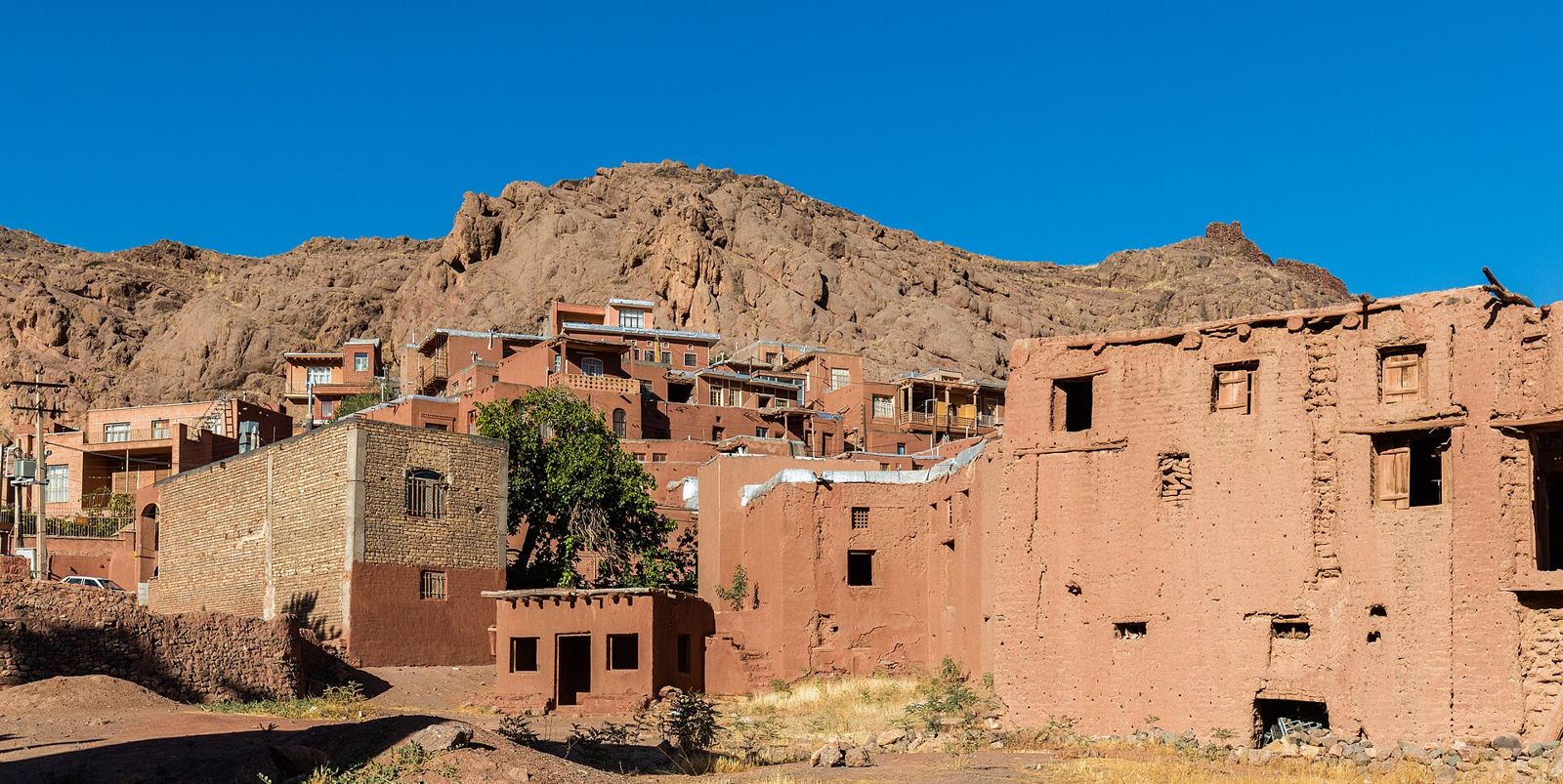
Abyaneh does not ease you in. The road climbs out of the Brzrud valley, the grey rock closes around the car, and then the village simply appears: a stack of ochre and crimson cubes pressed into the mountainside, so tightly packed that the roof of one house is the courtyard of the next. At 2,222 meters above sea level, this is one of the highest inhabited settlements in Iran, and the air alone tells you so. Mornings are sharp, afternoons are bright, and the red walls glow against the bare slope of the Karkas range like something lit from inside.
It is also one of the most photographed places in central Iran, which is both its fortune and its challenge. Abyaneh is genuinely old, genuinely lived in, and genuinely beautiful. It is also small, and on a spring Friday it can feel as though every tour bus in Isfahan has arrived at the same moment. The trick is knowing how the village works: where the entrance is, when the light is best, which lanes reward a slow walk, and how to fold Abyaneh into a wider Kashan itinerary without spending five hours in a car for ninety minutes of sightseeing. That is what this guide covers.
Where is Abyaneh?
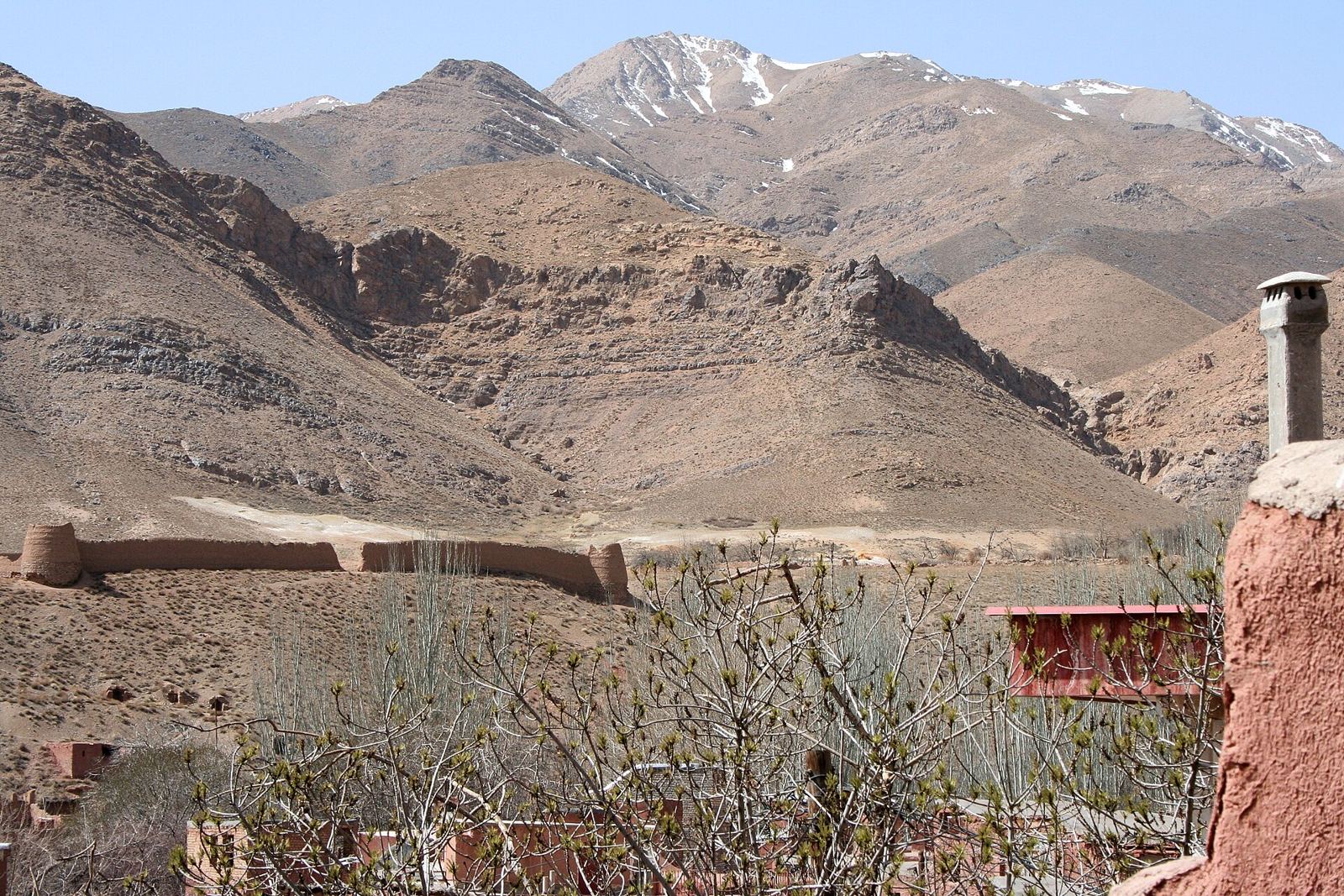
Abyaneh sits in the central district of Natanz county, in Isfahan province, on the northern flank of the Karkas mountains. The practical coordinates are 33.85°N, 51.51°E, but most travelers understand the location in relation to two cities. The village lies roughly 40 kilometers northwest of Natanz and about 70 to 90 kilometers south of Kashan, depending on which road you take. From Isfahan it is around 180 kilometers, a drive of two to two and a half hours.
The name itself has shifted over the centuries. Locals once called the place Viuna, usually explained as a reference to a willow grove, and over time the word passed through Aviana into the Abyaneh you see on road signs today. The village occupies three historic quarters, known as Pal, Yasmoun, and Horeh, with newer construction spreading toward the western entrance. The old core was registered as a national heritage site in 1975, and the local dialect, along with ceremonies such as palm-carrying and the jingling rattle rituals, was added to Iran's intangible heritage list in 2013.
How to get to Abyaneh
The overwhelming majority of visitors reach Abyaneh by road, and the road is good. If you are coming from Kashan, take the Kashan to Natanz highway and leave at the signposted Abyaneh exit. From there the route passes through the villages of Hanjan, Yarend, Kamjan, Barzah, and Tareh before climbing to Abyaneh itself. Allow about one hour and fifteen minutes from central Kashan, a little more if you stop for photographs, which you will.
From Isfahan, join the Isfahan to Kashan highway and follow the same Abyaneh exit. This is a longer drive, generally two to two and a half hours each way, which is why most travelers treat Abyaneh as a Kashan day trip rather than an Isfahan one. From Tehran, the route runs via the Tehran to Qom freeway, then the Qom to Kashan freeway, and finally the Kashan to Natanz road. The total distance is around 320 kilometers, so it makes sense only if you are already heading toward Kashan or Isfahan.
If you do not have a car, the honest answer is that Abyaneh is awkward by public transport. There is no useful train station, and the bus network serves Natanz and Kashan rather than the village itself. The cleanest solution for independent travelers is to open Mehyar, choose Taxi, and book a car with a driver for the day. This gives you the village plus a stop at Fin Garden or the historic houses of Kashan on the way back, and it removes the anxiety of finding a return ride from a place with a very small taxi supply. If you prefer to keep costs down, you can take a bus or shared taxi from Kashan to Natanz and negotiate the final 40 kilometers locally, but be prepared for waiting and for the possibility that the last leg simply does not run when you need it. For most visitors, the Mehyar Taxi option is worth the money.
A short history of the red village
Nobody knows exactly how old Abyaneh is. Estimates commonly settle around 1,500 years, which would place its origins in the late Sasanian period, and that number is plausible given the fire temple and the layers of construction that follow. What is certain is that the village was continuously occupied through the Seljuk, Safavid, and Qajar periods, and that each era left its own mark on the architecture and the local dialect.
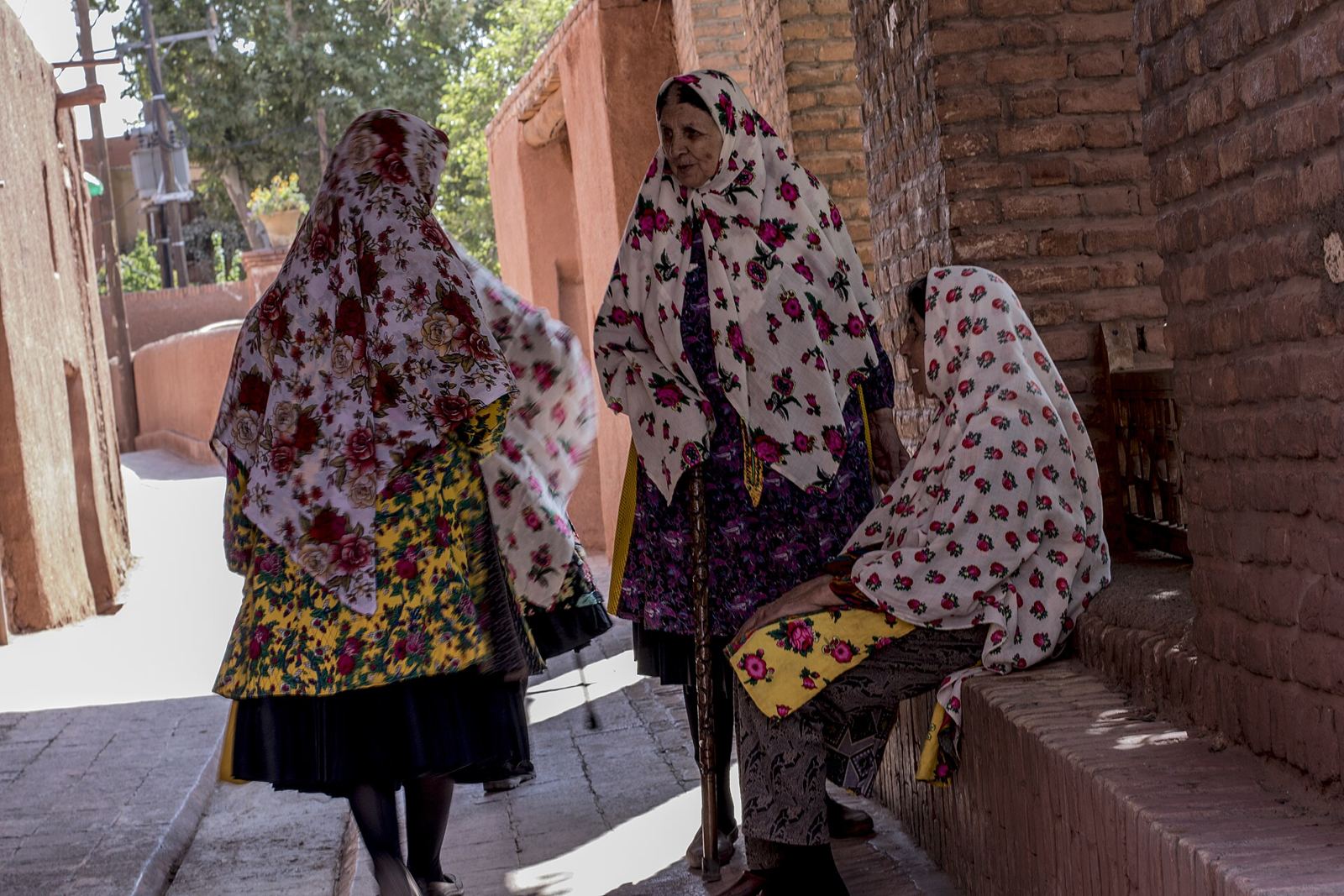
The redness of Abyaneh is geology, not paint. The soil around the village carries an unusually high concentration of iron oxide, and the builders used it deliberately. Mixed with clay and straw, the ochre earth was pressed into thick walls that harden further with every rainfall, and the result is the deep, warm color that gives the village its nickname. The remote location did the rest. Cut off from the major caravan routes and shielded by the Karkas slopes, Abyaneh preserved a form of Middle Persian, a distinctive local costume, and a calendar of rituals that had largely vanished elsewhere. Safavid courtiers heading to Natanz for the summer are said to have preferred staying here, which tells you something about how the village was regarded even then.
What to see in Abyaneh
The village rewards slow walking rather than a checklist, but a handful of sites are genuinely worth seeking out.
The fire temple
The Harpak fire temple is generally considered the oldest surviving structure in Abyaneh, a small Zoroastrian sanctuary built as a four-arch chamber on the village's main axis. The name is sometimes explained as a compound of local words for "below" and "step," though the alternative reading, Harpak, points to an Achaemenid and Median historical figure. Only the lower hall survives, but the building's three-story form is still legible, and the idea that a fire once burned here to guide caravans through the dark gives the site a quiet weight. You will pass it without trying.
The Jame Mosque
The congregational mosque is the village's most architecturally remarkable building, dating in its oldest parts to the eleventh century. Inside, the prayer hall is held up by a forest of wooden columns, and the walnut-wood mihrab is a Seljuk piece of real quality, carved with the patience of another era. The ceiling beams and the wooden minbar add to the sense that you are standing inside a very old, very dark, very beautiful room. It is a working mosque, so dress modestly and keep voices low.
The shrines of Shahzadeh Yahya and Shahzadeh Isa
In the eastern Horeh quarter stands the shrine complex attributed to two sons of Imam Musa ibn Ja'far, and it is one of the most peaceful corners of the village. An octagonal turquoise-tiled dome rises above a courtyard with a large reflecting pool fed by the village stream, and the interior contains restored inscriptions and an old wooden minbar looking out toward the southern hill. The simplicity is the point. Unlike the grand shrine complexes of Mashhad or Qom, this is a village sanctuary, and it feels like one.
The Nareh water reservoir and the old cemetery
Near the entrance, the restored Nareh ab-anbar shows what these underground cisterns looked like at their best, with a domed roof and a flight of steps down to the water level. Beside it lies the old cemetery, where the carved wooden tombstones have weathered into strange, almost abstract shapes. It is a quiet, slightly haunting place, and a good reminder that Abyaneh is not a stage set.
The lanes themselves
The real attraction is the texture of the village. The houses are built of thick adobe that acts as a thermal battery, keeping interiors cool in summer and warm in winter, and because openings face only one direction, the builders added roof lights for air and daylight. Wooden orosi windows, projecting wooden balconies, and carved doors appear around every bend. The lanes are deliberately narrow and crooked to break the force of the wind, and they are paved with stone worn smooth by centuries of feet.
Dress, costume, and local life
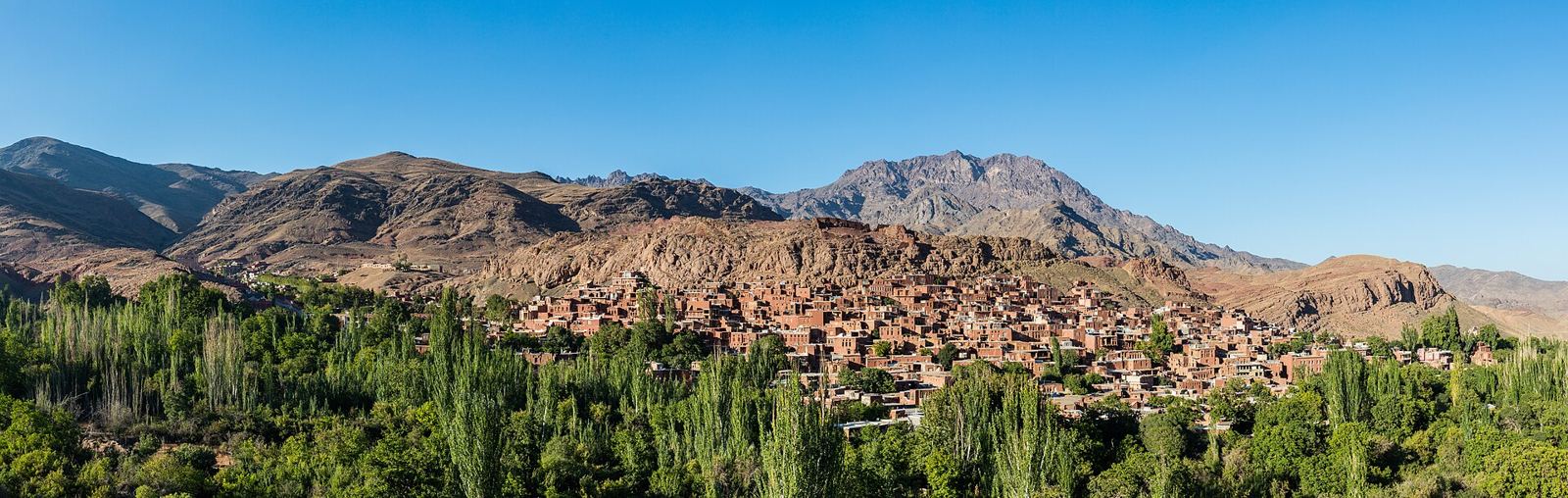
The image most travelers carry home is of Abyaneh's women in their traditional dress: a long floral shirt or dress, wide dark trousers, and a large white scarf printed with red flowers. Men wear loose black trousers and a vest. This is not a costume worn for tourists. It is what people here have always worn, and it survives because the village stayed isolated long enough for the habit to hold.
Abyaneh's economy has traditionally rested on agriculture, orchards, and herding, supported by seven qanats that still irrigate wheat, barley, potatoes, apples, plums, pears, apricots, almonds, and walnuts. Carpet weaving has grown in recent years, with around thirty workshops in the village, while the old craft of giveh weaving has declined. Many younger residents now live in Tehran or Kashan, and a large share of the people you see in summer are returnees. Winter is quiet, sometimes very quiet.
That said, the village is a living community, not an open-air museum. Residents have grown understandably tired of cameras pointed at them without a word. Always ask before photographing anyone, and accept a no gracefully. A simple greeting in Persian goes a long way.
Hours, tickets, and practical details
Abyaneh has no single ticket office for the village as a whole. Instead, there is an entrance fee collected at the gate on the road in, and this has been the norm for years. Prices change, so treat any figure you read online as a guide rather than a fact and carry cash in rials. The village is open year-round and there is no closing time as such, but daylight is the point, and arriving before nine in the morning or after four in the afternoon gives you better light and far fewer people.
Cars are not allowed inside the old village. You will park at the edge and walk in, which means comfortable shoes are essential, especially since the lanes are steep, uneven, and sometimes slippery after rain. There are a handful of small restaurants and traditional teahouses serving simple food, and several shops selling handicrafts, dried fruit, and local produce. Toilets are limited, so use the facilities at the entrance area before you start walking.
The address for navigation is Isfahan province, Natanz county, central district, Barzrud rural district, Abyaneh village. If you are using Mehyar's maps, the village pin is reliable, but mobile signal in the valley can be patchy, so download your route before you leave Kashan.
When to visit Abyaneh
Spring and early autumn are the best windows. From April to early June the valleys are green, the orchards are in leaf, and the temperature is pleasant at this altitude. Late September and October bring crisp air and good light. Summer days can be warm but the elevation keeps them bearable, and the evenings are cool. Winter is genuinely cold, sometimes with snow, and many businesses scale back, though the village under snow is spectacular for anyone willing to dress properly.
Midweek visits are noticeably calmer than weekends and public holidays, when domestic tour groups arrive in force. If you want the village to yourself, aim for a weekday morning in shoulder season and accept that you will still share the main lane with a few other photographers.
Pairing Abyaneh with Kashan and Fin Garden
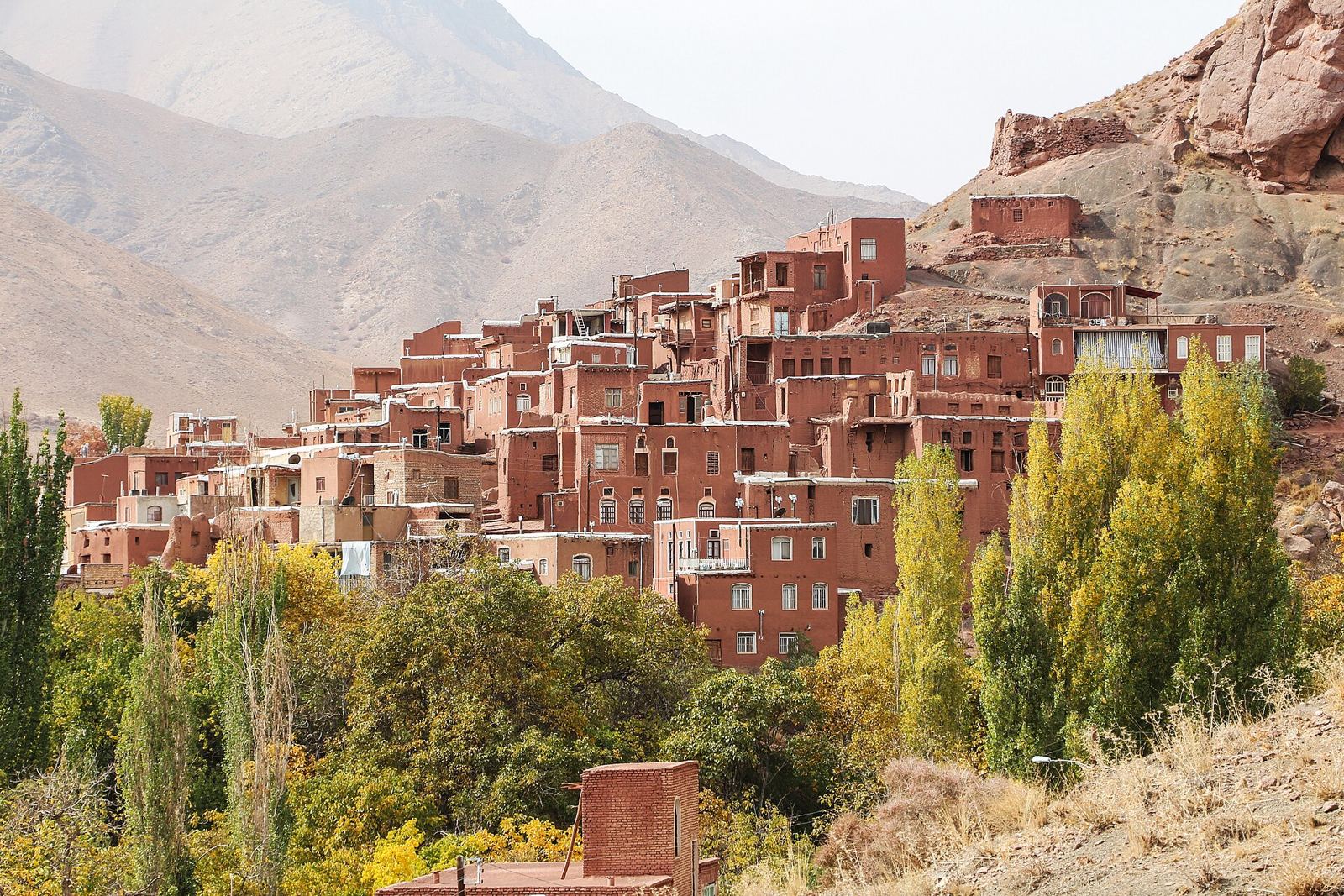
Abyaneh works best as one half of a day, not the whole day. The classic combination runs from Kashan in the morning, stops at Abyaneh around midday, and returns via Fin Garden in the late afternoon. Fin Garden is a Safavid-era Persian garden on the UNESCO World Heritage list, famous for its cypress avenues, its qanat-fed channels, and its fountains, and it is also the site where Amir Kabir, the reforming chancellor, was killed in 1852. It is about 85 kilometers from Abyaneh, roughly an hour and ten minutes by car.
If you have more time, the historic merchant houses of Kashan are worth the detour, particularly the Borujerdi House with its extraordinary plasterwork and its three-story underground chamber. The Tammeh waterfall, about 50 kilometers from Abyaneh near the village of Tammeh, is a good spring addition when the water is high, though it shrinks to a trickle in the dry months. Travelers continuing south toward Isfahan can treat Abyaneh as a natural stop on the highway, breaking the drive with two or three hours in the village.
For planning this kind of day, Mehyar's planner is the simplest way to sequence Kashan, Abyaneh, and Fin Garden without doubling back. Book your driver through Mehyar Taxi the night before, and top up your Mehyar wallet in advance so you are not hunting for cash at the entrance gate. If you are still sorting out payments generally, our guide to paying in Iran covers cards, wallets, and cash norms in detail.
Staying overnight, food, and weather notes
Abyaneh has a small number of guesthouses and homestays, most of them simple, family-run, and full of character. Staying the night transforms the experience. The tour buses leave, the lanes empty, and the village returns to itself. Mornings before eight are especially beautiful, with wood smoke in the air and almost no one on the steps. Book ahead in spring and autumn, when the good rooms go early, and confirm whether your host provides dinner, since restaurant options are thin after dark.
Food in the village is home-style: stews, rice, local bread, fresh dairy, and seasonal fruit from the surrounding orchards. Several teahouses serve tea with dried fruit and sweets, which is exactly what you want after climbing the lanes. If you have dietary requirements, bring what you need, because choice is limited.
Weather at 2,222 meters is not desert weather. Even in summer, evenings cool down quickly, and in winter the village can be genuinely harsh. Pack layers, a windproof outer layer, sunscreen, a hat, and sunglasses. If you are visiting in winter, add gloves and a warm hat, and check road conditions before setting out, because the approach road can ice over.
A closing note
Abyaneh is one of those places that survives partly by accident and partly by stubbornness. The iron-rich soil, the defensive slope, the narrow lanes, the language, and the clothing all exist because a community decided, over many generations, that this was how life should be lived. Visiting well means respecting that. Ask before you photograph, buy something small from the women selling produce, keep your voice down near the mosque and the shrines, and give yourself more time than you think you need. The village is small, but it is not quick.
When you are ready to go, open Mehyar, plan the route, and book your ride. And if Kashan is next on your list, our guide to the city's historic houses and bazaar is the natural place to continue.
Next reads: Kashan travel guide · Fin Garden · Isfahan · Paying in Iran