
Sculptures and monuments are more than works of art. Sometimes they tell the story of an event, of a tragedy, and of a people who refused to be broken. Standing on the heights of Abidar Forest Park above the city of Sanandaj, the Resistance Statue of Kurdistan is one of these works. It commemorates the innocent Kurdish civilians who suffered and died during the chemical bombings of the Iran-Iraq war, and it has become the most powerful symbol of remembrance in the region. For visitors to Sanandaj, it is an essential and deeply moving stop.
Where the Statue Stands
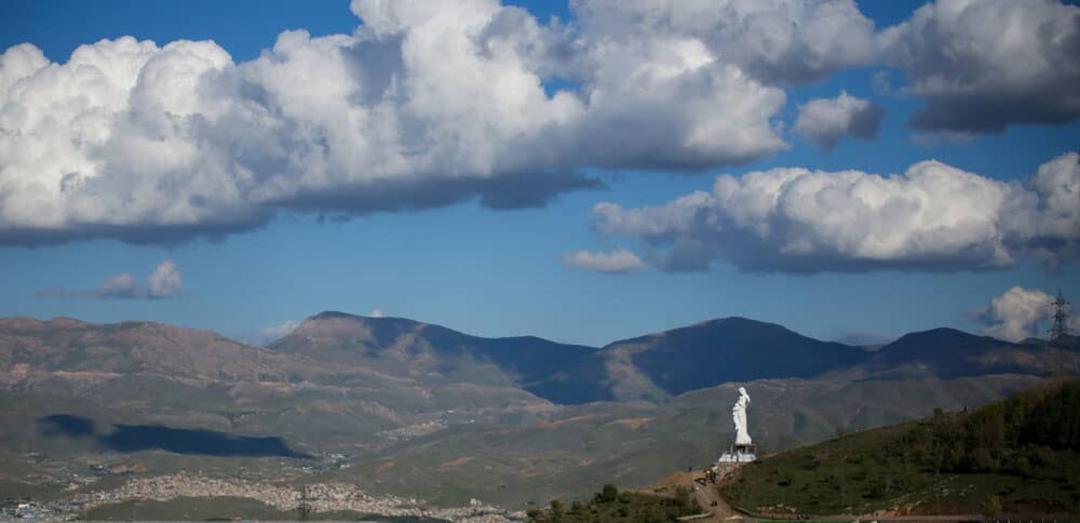
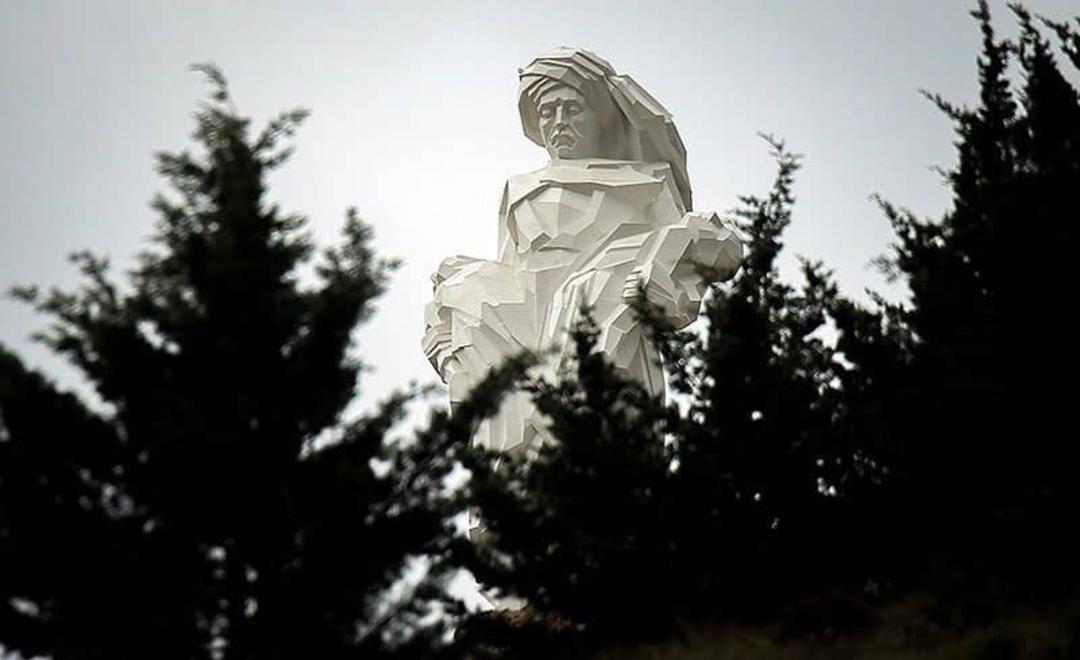
The memorial rises above the Abidar Forest Park, the largest green space in Sanandaj, which spreads across the southern slopes of Mount Abidar. From this elevated position, the statue looks out over the entire city, a guardian figure that watches over the capital of Kurdistan Province. To reach the statue, head to the Abidar park area southwest of the city center, then follow the road that climbs the hillside. Local taxis know the destination well, and the drive from central Sanandaj takes only about fifteen minutes.
The location was chosen deliberately. Originally, the memorial was intended for Qaleh-ji, one of the border villages that suffered directly from chemical attacks. But the sheer size of the finished sculpture, with its fifteen-meter body and twenty-one-meter base, made the hilltop above Sanandaj the more suitable setting. There, visible from almost every corner of the city, it reminds everyone of what the people of this region endured.
A Father Holding His Children
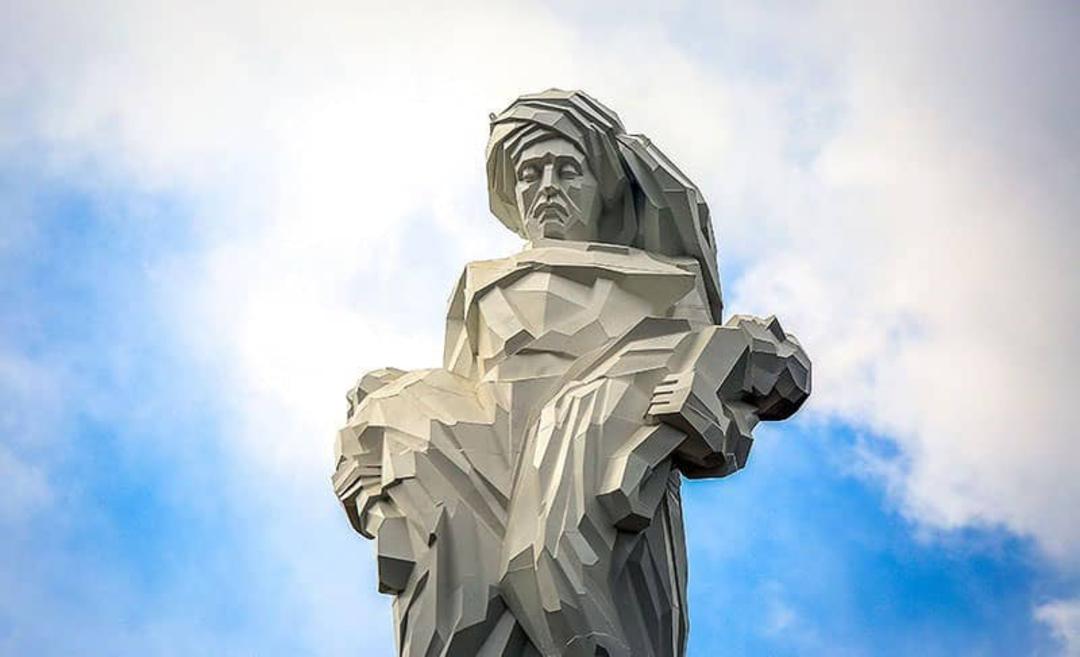
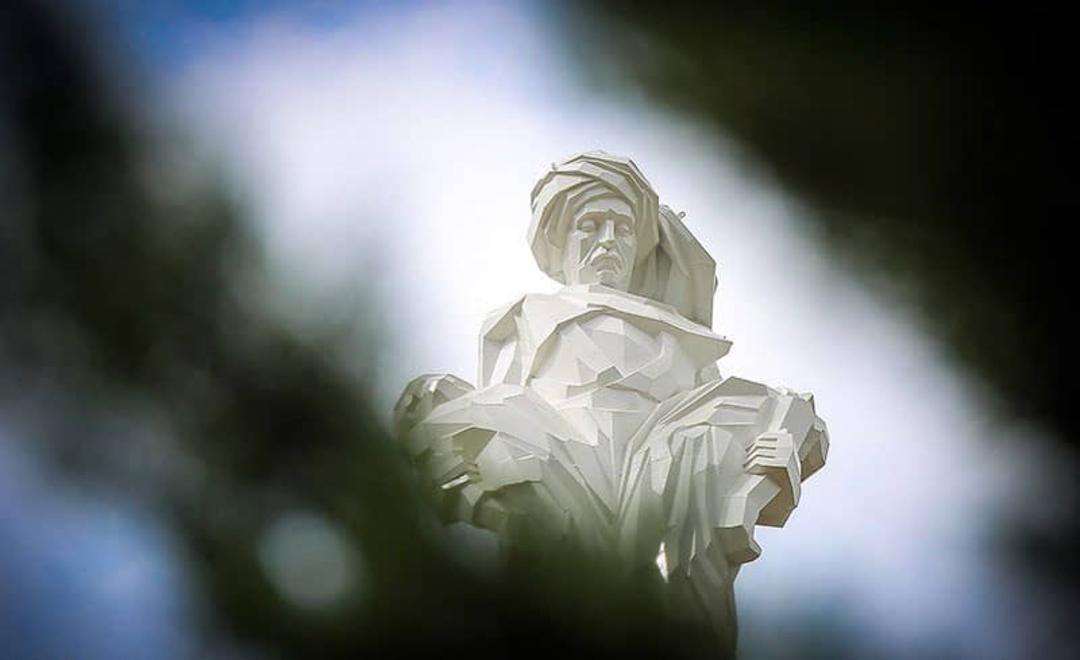
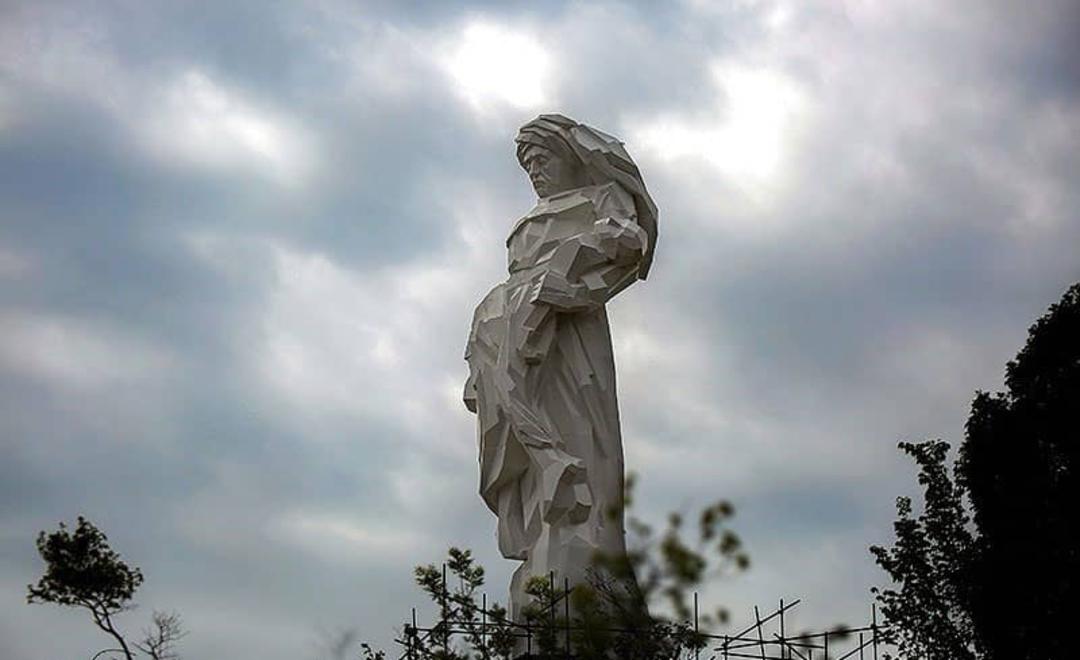
The statue depicts a Kurdish father dressed in traditional local clothing. In his hands he holds his daughter and his son, both of them martyrs. His face carries grief and dignity at the same time, pain and steadfastness fused into a single expression. The work captures the suffering of the people of Kurdistan during eight years of war and chemical bombardment, but it also captures their resilience. It is not a monument to defeat. It is a monument to endurance.
The scale of the work is extraordinary. The statue is assembled from five three-meter sections and weighs more than twenty tons. Its metal sheet construction gives the figures a raw, angular quality that heightens the emotional impact. At fifteen meters tall, rising from a base that brings the total height to twenty-one meters, it is the largest statue in Sanandaj and the largest memorial to the martyrs of chemical bombing in the entire country.
The Artist Behind the Work
The creator of the memorial is Hadi Ziaoddini, a sculptor and painter from Sanandaj. He worked with the artist Masoud Samimi and a team of skilled welders to bring the monumental design to life. The Sanandaj municipality supported the construction, and the statue was installed in Ordibehesht 1399, which corresponds to April and May of 2020.
The Resistance Statue was the fifteenth public sculpture of Ziaoddini's career. His works appear in cities across Iran and beyond, including Sanandaj, Mahabad, Isfahan, Qazvin, and the Iraqi cities of Erbil and Sulaymaniyah. Among his other celebrated pieces are the Freedom Statue and the Mir Emad calligrapher monument in Qazvin, the Relief of Liberation in the Children's Park of Isfahan, and the Ziwiye relief in Abidar Park itself. The memorial was commissioned in 1389, about 2010, by the Foundation for the Preservation of Sacred Defense Works of Kurdistan Province.
The History It Commemorates
The statue stands in memory of one of the darkest chapters of the Iran-Iraq war. During the eight years of conflict, the Baathist regime of Iraq attacked Iranian cities and villages with chemical weapons on numerous occasions. The bombing of Sardasht on 7 Tir 1366, corresponding to June 28, 1987, made that city the first in the world to be struck by chemical weapons against its civilian population. Thousands of ordinary residents were poisoned as they went about their daily lives.
The suffering did not stop there. Beginning on 25 Esfand 1366, the border villages of the Marivan region came under sustained chemical attack, with the bombardment continuing into Farvardin of the following year. Villages including Qaleh-ji, Nezhmar, Kani Dinar, Ni, Balk, Hejrat, Dargah Sheikh, Bahram Abad, Balbar, Marg, Sharani, Taze Abad, Kal Bala, and Darzian were hit. These attacks killed 120 people and left more than a thousand injured, and the toll continued to rise in the years that followed as survivors lived with the long-term effects of exposure.
Visiting the Memorial Today
The Resistance Statue is free to visit and open to the public at all times. Most people come in the late afternoon, when the sun softens over the mountains and the view across Sanandaj turns golden. The Abidar Forest Park itself is one of the most popular recreational areas of the city, with walking trails, tea houses, and picnic spots shaded by tall trees. Many visitors combine the statue with a longer walk through the park or an evening watching the city lights come alive below.
The site is also a place where locals come to remember. On anniversaries of the chemical attacks and during national mourning days, crowds gather at the base of the monument to lay flowers and honor the victims. Visitors should treat the site with respect, as it functions both as a tourist attraction and as a sacred memorial.
Why You Should Visit
For travelers interested in the history and culture of Iranian Kurdistan, the Resistance Statue offers something that no museum can. It places you face to face with the recent history of this region, rendered in steel on a scale that cannot be ignored. The story it tells is a hard one, but it is also a story of survival, dignity, and the unbreakable spirit of a people who rebuilt their lives after unimaginable loss.
Sanandaj itself rewards visitors with its rich Kurdish culture, its historic houses and bazaar, and its reputation as one of the most welcoming cities in Iran. The statue on Abidar is the perfect introduction to this deep and complex place. Come at sunset, stand beneath the father holding his children, and let the view of the city below complete the story.