
Some places in Iran feel less like destinations and more like discoveries. Alamut Valley is one of them. Tucked into the western Alborz mountains of Qazvin province, this narrow valley holds the remains of nearly fifty fortresses built by the Nizari Ismailis in the eleventh century. The most famous among them, Alamut Castle, was the headquarters of Hasan Sabbah, the man European Crusaders called the Old Man of the Mountain and whose followers became known in the West as the Assassins. Today, the valley is a place of striking natural beauty, where red-rock canyons, alpine meadows, and quiet villages sit beneath fortifications that once shaped the politics of an empire. This guide covers what to see, how to get there, and how to use Mehyar to handle transport and logistics along the way.

Where is Alamut Valley?
Alamut Valley lies in the western Alborz mountain range, within Qazvin province in northwestern Iran. The valley runs roughly east to west, flanked by steep slopes that rise to peaks above 3,000 meters. The main access road follows the Alamut River from Qazvin city, passing through a series of villages before reaching the castle sites. The valley is remote enough to feel untouched but close enough to Tehran for a long day trip or a more comfortable two to three day visit. There is no single town called "Alamut." The valley encompasses several villages, the most notable being Moalem Kalayeh (also called Shahr-e Alamut), Gazar Khan, Razamiyan, and Andej.
How to get to Alamut Valley
From Tehran
Tehran to Alamut Castle is about 240 kilometers, taking roughly four hours by car. The route goes through Qazvin first, then follows the winding mountain road northwest into the valley. You can book a taxi or arrange a private driver through Mehyar for a comfortable and direct journey. The Mehyar app lets you see the fare upfront, which is important for a trip of this distance.
From Qazvin
Qazvin to Gazar Khan, the village at the base of Alamut Castle, is about 110 kilometers and takes roughly two and a half hours. Qazvin to Razamiyan, the turnoff for Lambesar Castle, is about 65 kilometers. Both routes follow paved roads through increasingly dramatic mountain scenery. The road from Qazvin into the valley is one of the most scenic drives in Iran, passing through gorges and over passes with views that stretch for kilometers in every direction. For travelers coming from the capital, our Tehran guide covers logistics for getting out of the city and heading northwest.
Getting around the valley
Public transport in Alamut Valley is limited. Shared taxis and school buses run between the villages and Qazvin, but schedules are infrequent and unreliable for visitors. The most practical way to explore is with a private car or a taxi hired for the day. You can arrange this through Mehyar, which also handles your accommodation bookings if you plan to stay overnight. The roads are paved but winding, and the mountain passes can be steep. Driving is best done during daylight hours.

A short history of Alamut
The story of Alamut begins in the late eleventh century, when Hasan Sabbah, a charismatic Ismaili missionary, seized the fortress of Alamut in 1090. From this impregnable perch, he and his followers built a network of nearly fifty castles across the Alborz slopes. These fortresses became the base of the Nizari Ismaili state, which resisted the Seljuk Empire and later the Mongol invasions for nearly two centuries.
Hasan Sabbah ruled from Alamut for thirty five years, never leaving the fortress after his initial arrival. He was known as an ascetic and a scholar, spending his time in prayer, study, and the governance of a state that stretched across multiple mountain strongholds. The castle included a famous library, which attracted scholars and astronomers, though it was destroyed during the Mongol conquest in 1256.
The Mongols, led by Hulagu Khan, systematically dismantled the Ismaili fortresses. Alamut Castle was besieged and eventually surrendered, and much of it was demolished. What remains today is a fraction of the original structure, but enough to convey the scale and strategic brilliance of the site. The castle was registered as a national monument of Iran in 2002.
What to see in Alamut Valley
Alamut Castle (Hasan Sabbah's Fortress)
Alamut Castle is the most famous site in the valley and the one that draws most visitors. It sits atop a rocky outcrop at 2,163 meters above sea level, overlooking the village of Gazar Khan and the surrounding valley. The approach to the castle begins 700 meters past the village square, where a stone staircase leads upward through the mountainside. The climb takes about twenty to forty five minutes depending on your pace, and the final sections are steep. Bring water, sunscreen, and a hat, as there is very little shade on the Alborz slopes.
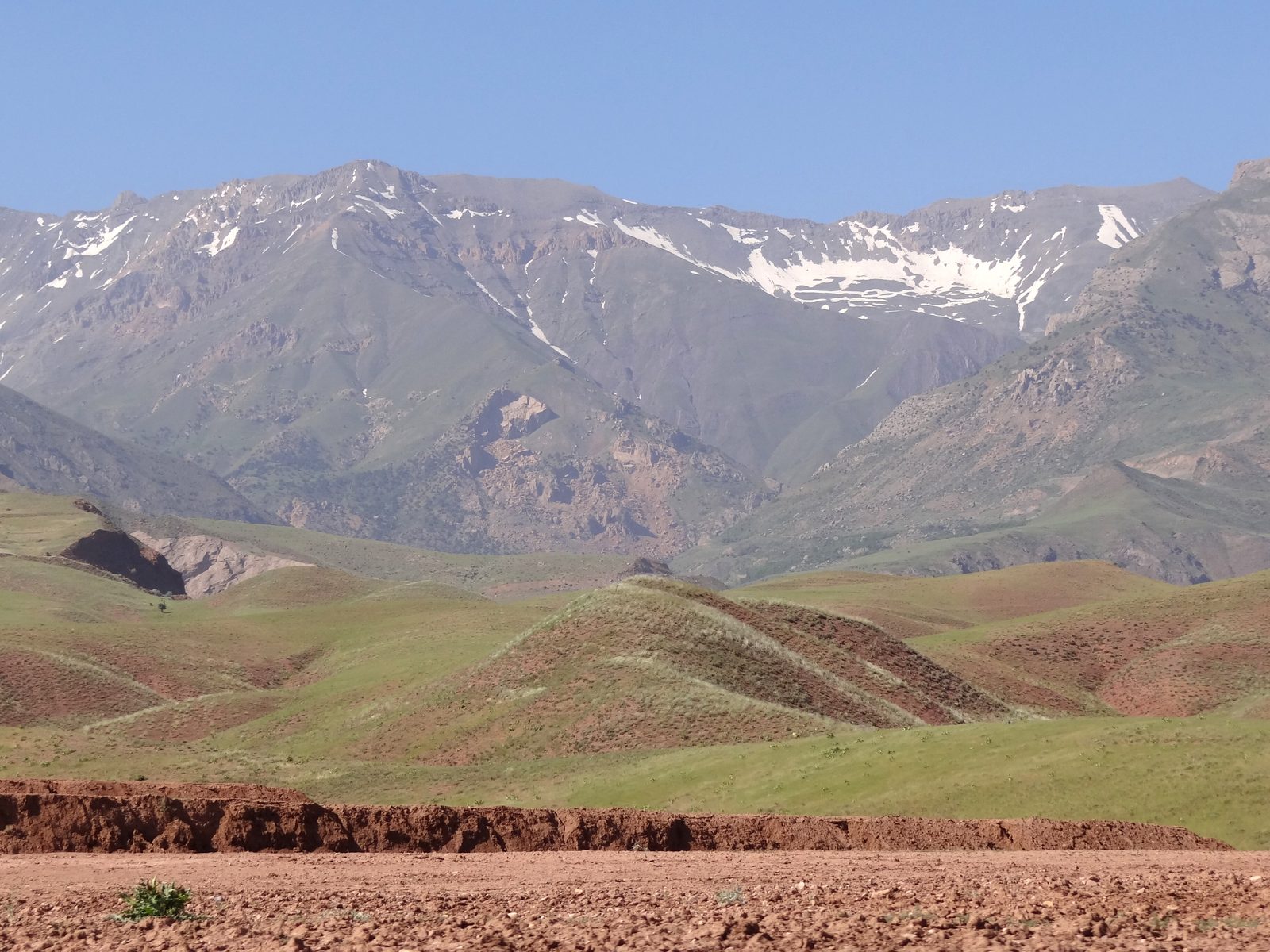
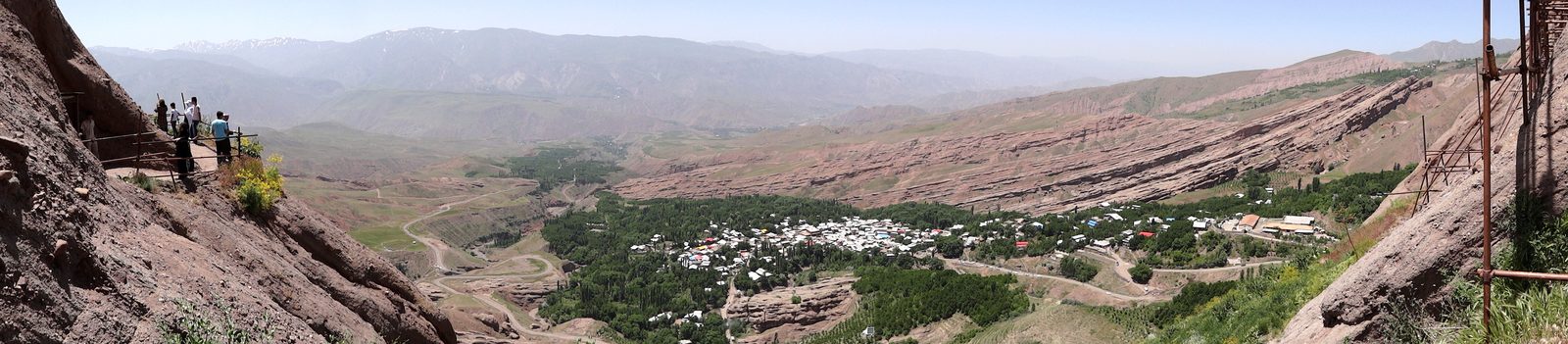
At the top, the castle covers roughly 20,000 square meters. Canvas shelters protect portions of the ruins from further weathering, and informational panels describe the history of the site. The views from the summit are the main reward: the Gazar Khan plain stretches below, the Alamut Valley winds into the distance, and the Andej River cuts through red rock canyons to the northeast. On a clear day, you can see snow-capped peaks of the central Alborz range. Most visitors spend one to two hours at the castle, though those with an interest in history and archaeology could easily spend longer.
Entry to the castle is free. There are no English-language signs, so hiring a guide or traveling with someone who knows the history will significantly enhance the experience. For more on planning your first trip to Iran, see our article on first trip to Iran.
Lambesar Castle
Lambesar Castle is the second major fortress in the valley, located near the village of Razamiyan. The approach from Qazvin follows a winding road through rice paddies and mountain villages, with views that grow more dramatic with every turn. From Razamiyan, it is a short taxi ride to the base of the castle, followed by a twenty minute walk uphill through the remaining walls and defensive structures.
Lambesar is less visited than Alamut Castle, which gives it a quieter, more atmospheric quality. The ruins sit on a steep hillside, and the views of the surrounding valleys are exceptional. Plan to spend at least an hour here. Bring sunscreen and a hat, as shade is scarce at these elevations.
Lake Ovan
Lake Ovan is a small alpine lake set among high mountains, reachable via an eight kilometer detour from Moalem Kalayeh. The lake is surrounded by villages and farmland, and the reflection of the peaks in its still water creates one of the most photogenic scenes in the valley. There are no formal facilities at the lake, but locals sometimes offer tea and simple meals. It is a good spot for a picnic or a quiet moment before heading back to the main road.
The mountain road from Qazvin
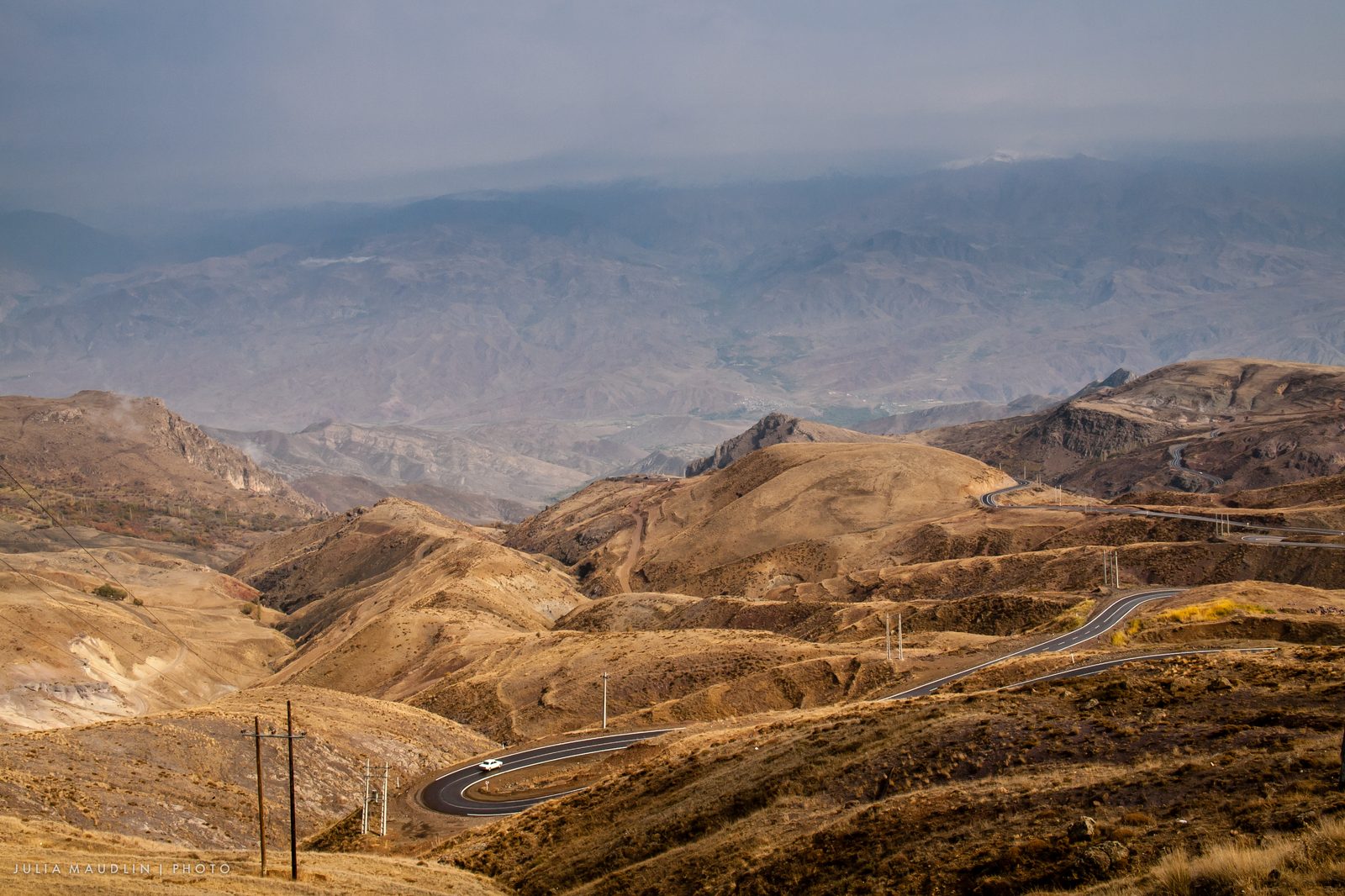
The road into Alamut Valley is an attraction in its own right. It climbs from the Qazvin plain through a series of gorges and passes, each one revealing a new layer of the Alborz range. In spring, wildflowers cover the slopes. In autumn, the deciduous trees turn gold and red against the grey limestone cliffs. The road passes through small villages where life moves at a pace that feels disconnected from the cities below. Stop at any of the roadside tea houses for a glass of tea and a view that no photograph can quite capture.
Andej and the southern valleys
The eight kilometer road from Moalem Kalayeh to Andej passes through three valleys of striking beauty. The red rock formations flanking the route have been compared to the Olgas in central Australia. Andej itself is a quiet village with a historic castle that predates the Ismaili period. It is a good base for longer hikes into the surrounding mountains and a reminder that the history of this valley extends far beyond the Assassins.
Where to stay
Accommodation in Alamut Valley is basic but functional. In Gazar Khan, the Koh-e Saran Hotel offers simple rooms with views of the surrounding mountains. The Samaei family guesthouse, located about 600 meters east of the village square, provides clean rooms with traditional floor mattresses and simple but delicious home-cooked meals. In the upper part of the village, the Golestan Guesthouse sits among green trees and offers suites with balconies overlooking the castle stairway. The Farhangian Hotel, a converted schoolhouse, has adapted its classrooms into guest rooms with shared kitchen and bathroom facilities.
None of these establishments accept international credit cards, and most do not have online booking. Use Mehyar to arrange your accommodation in advance, or be prepared to negotiate in person. For travelers combining Alamut with visits to other cities, our Qom guide and Tehran guide cover logistics for the broader route.
When to go
The best time to visit Alamut Valley is from late spring to early autumn, roughly May through October. Spring brings wildflowers and mild temperatures, though late snow is possible at higher elevations. Summer is warm during the day and cool at night, making it ideal for hiking and castle exploration. Autumn offers spectacular colors and fewer visitors. Winter is possible but challenging: the roads can be icy, temperatures drop well below freezing, and some guesthouses close for the season. If you visit in winter, bring appropriate gear and confirm that your accommodation is open.
What to bring
Alamut Valley is remote, and you should come prepared. Essential items include sunscreen and a hat (shade is scarce on the castle climbs), sturdy walking shoes with good grip, plenty of water for the ascent to Alamut Castle, and warm layers for the evening even in summer. If you plan to hike beyond the main castle sites, bring a map or GPS device, as trails are not always clearly marked. There are no ATMs in the valley, so bring enough cash for food, accommodation, and transport. The Mehyar wallet works at some guesthouses and restaurants, but cash is still the primary means of payment in rural areas.
Practical notes
Alamut Valley is safe for travelers, and the local population is accustomed to visitors. The valley is in Qazvin province, where people speak Persian with a Qazvini accent. As in the rest of Iran, women should wear a headscarf and modest clothing in public, and men should avoid shorts. Alcohol and pork are not available. The valley has limited mobile phone coverage in some areas, so download offline maps before heading in.
For those planning a longer trip through Iran, Alamut Valley pairs well with visits to Tehran, Qazvin, and the Caspian coast. Our 14-day grand tour of Iran includes routes through this region, and you can use Mehyar to book the transport that connects each stop. Start in Tehran, drive northwest through Qazvin into the valley, and continue north to the Caspian Sea or west to Zanjan and Tabriz.
Alamut Valley is not a place you visit quickly. The roads demand patience, the castles demand effort, and the landscape demands attention. But that is precisely what makes it rewarding. Open Mehyar, arrange your transport, and give yourself at least two days to explore properly. The fortresses of the Assassins have waited seven centuries for your visit. They can wait a few hours more while you find your footing on the mountain path.