
The call to Maghrib prayer echoes across Kerman's rooftops, and the city breaks its fast. Families gather around tables of dates, flatbread, and bowls of warm soup. But in the old neighbourhoods of Kerman, the evening meal is only the beginning of the night. Within the hour, groups of young men and women are already on their feet, stepping out into the narrow alleys with a purpose that has nothing to do with their own hunger. They are going door-to-door, and they are carrying a tradition that most Kermani families consider the soul of Ramadan in this city. They call it Allah Ramazoon, and it is unlike any other charity practice you will find in Iran.
This is not a formal fundraiser organized by a mosque committee or a government body. Allah Ramazoon is a neighbourhood-level movement, driven by youth, sustained by generosity, and rooted in a form of mystical poetry that belongs to Kerman alone. It has been passed down through generations, surviving wars, revolutions, and the modernization of Iranian cities. Every Ramadan, from the third night of the holy month until its final evening, the streets of Kerman fill with voices asking neighbours to give what they can to those who have nothing. This guide explains what Allah Ramazoon is, how it works, where it takes place, and what it means for the people who keep it alive.

What Is Allah Ramazoon?
Allah Ramazoon is a traditional charity practice specific to the city of Kerman and its surrounding towns in southeastern Iran. The name itself is a contraction, a fusion of reverence and familiarity: Allah for the divine, and Ramazoon as a local, affectionate form of Ramadan. In Kermani dialect, the name carries a warmth that standard Persian cannot quite capture, the sense of Ramadan as something close, something belonging to the people.
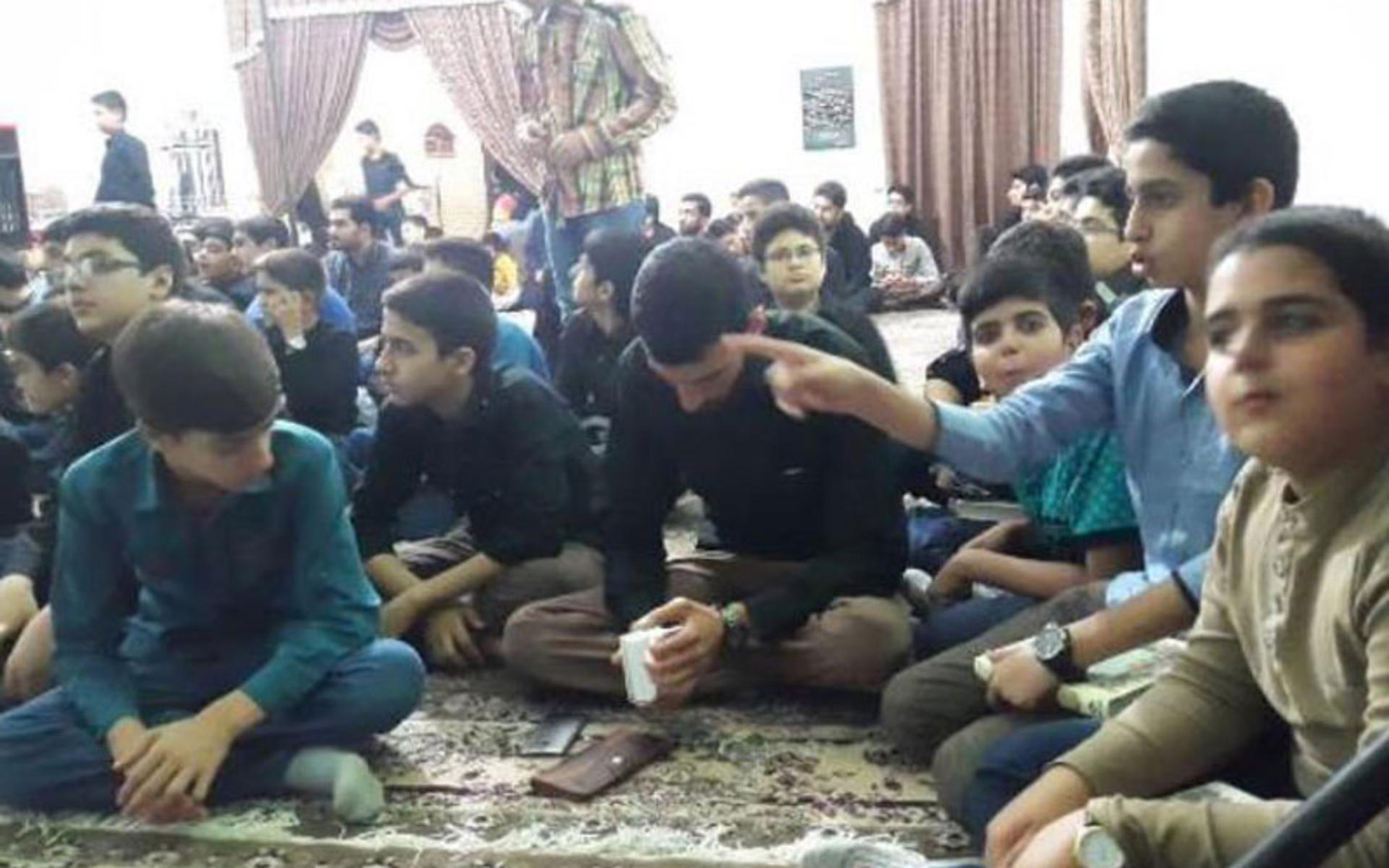
The practice operates on a simple principle. After the evening meal that breaks the daily fast, groups of five to ten young people gather in their neighbourhood. They walk from house to house, knocking on doors, singing traditional verses, and collecting donations of money, food, or goods. Everything collected is then distributed to the families of that same neighbourhood who are known to be in need. The charity does not leave the community. It stays local, personal, and direct.
What makes Allah Ramazoon distinctive is not the act of giving itself, because charity during Ramadan is widespread across the Muslim world. What makes it distinctive is the method. The collectors are not officials or mosque volunteers with clipboards. They are neighbourhood youth, organized into self-formed groups, each with its own internal structure. The tradition has rules, roles, and a repertoire of poems that the groups sing at each door. It is performance, worship, and mutual aid all at once.
How Allah Ramazoon Works: The Roles Within Each Group
Every Allah Ramazoon group has a clear hierarchy, though it is informal and earned rather than appointed. The group is led by a sarkar, or group leader, who is responsible for choosing the route through the neighbourhood and deciding which doors to knock on. The sarkar is typically an older young person who has participated in the tradition for several years and knows the families of the area well.
The second key role belongs to the singer, the person who recites the traditional Allah Ramazoon verses at each doorstep. These are not random poems. They are a specific body of mystical and devotional verses that have been associated with the tradition for generations. The singer must know them by heart and deliver them with the right cadence, because the quality of the performance is what opens doors and encourages generosity.
The third role is the treasurer, the person who carries the bag or box for collecting donations. The treasurer keeps careful account of what is given, and in many groups, this role rotates so that different members learn the responsibility of handling the community's trust. The treasurer does not open or count the donations in front of the donors. Everything is tallied later, in a private gathering of the group, before distribution begins.
The remaining members of the group walk alongside, providing presence and support. In some neighbourhoods, the group is accompanied by a small drum or a simple musical instrument, though this is less common today than it was in previous decades.
The Poetry of Allah Ramazoon
The verses sung at each door are the heart of the tradition, and they belong to a genre of Kermani folk poetry that exists nowhere else in Iran. The poems address God, the Prophet, and the Imams, but they also speak directly to the homeowner, asking for generosity in language that is part prayer and part gentle persuasion. The tone is never demanding. It is supplicating, almost musical, designed to make the listener feel that giving is a privilege rather than an obligation.
Traditional verses often follow a pattern in which the singer describes the spiritual rewards of charity, invokes the blessings of Ramadan, and then makes a direct, polite request. Some verses are humorous, playing on the relationship between the collector and the homeowner, teasing gently about the size of the donation. This humour is part of the tradition's genius: it removes the awkwardness of asking for money and replaces it with shared laughter.
The poetry of Allah Ramazoon has been studied by Iranian folklorists, who have noted that many of the verses contain vocabulary and grammatical forms specific to the Kermani dialect. The tradition is, in this sense, a living archive of a regional language that is under pressure from standardized Persian. Young people who join Allah Ramazoon groups learn poems that their grandparents recited, in words and rhythms that belong to Kerman alone.
When Does Allah Ramazoon Take Place?
The tradition begins on the third night of Ramadan and continues until the last night. The choice of the third night is deliberate. The first two nights are considered a period of settling into the rhythm of fasting, and the community's charitable energy has not yet reached its peak. By the third night, the fast has become real, the neighbourhood is in the full spiritual atmosphere of the holy month, and the youth are ready to begin.
Groups typically start moving through the streets about one to two hours after the iftar meal. The exact timing depends on the neighbourhood and the season, but the general pattern is consistent: families finish eating, the youth assemble at a gathering point, and the rounds begin. They continue until late in the evening, sometimes past midnight during the longer nights of winter Ramadan.
During the final ten nights of Ramadan, the intensity of the practice increases. These are the nights that hold special spiritual significance in Shia Islam, and the neighbourhoods of Kerman are already filled with worshippers heading to mosques for night prayers. The Allah Ramazoon groups move through the same streets, weaving between the streams of worshippers, their voices adding a layer of communal warmth to the sacred atmosphere.
Where to Witness Allah Ramazoon in Kerman
The tradition is strongest in the older residential neighbourhoods of Kerman, where families have lived for generations and the social fabric is tight enough to support door-to-door charity. The central and southern parts of the city, including areas around the Old Bazaar and the traditional quarters near the Jameh Mosque, are where the practice is most visible.
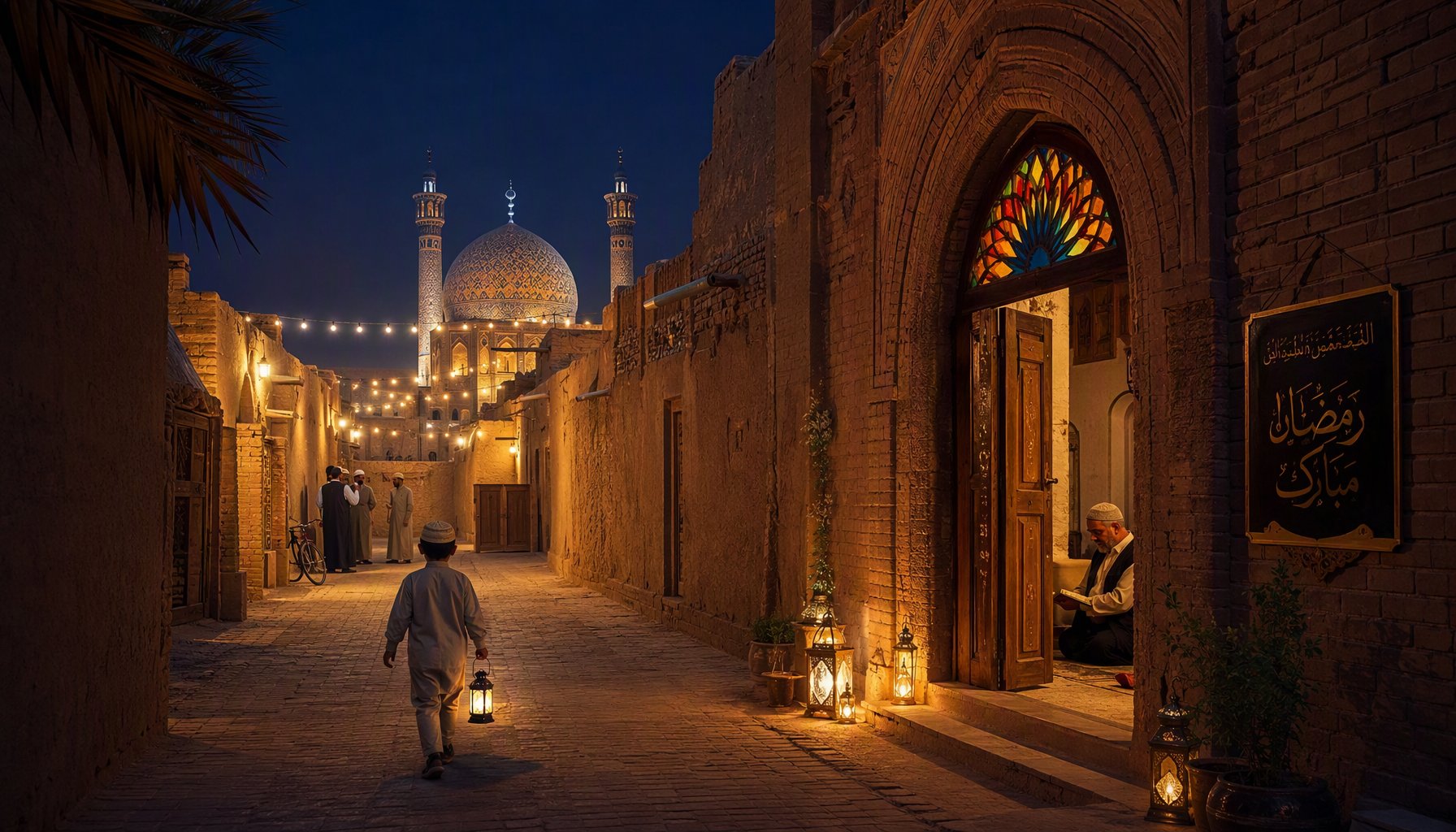
As a traveler, you can witness Allah Ramazoon simply by being present in these neighbourhoods after iftar during Ramadan. You will hear the groups before you see them, their voices carrying through the alleys. In most cases, they are welcoming to visitors who observe respectfully. The tradition is a source of deep local pride, and Kermanis are generally happy to see that outsiders take an interest.
If you are in Kerman during Ramadan and want to understand the tradition more fully, the best approach is to spend the evening in one of the older residential areas, walk the streets after iftar, and follow the sound of the poetry. There is no central office or organized tour for Allah Ramazoon. It is a living community practice, and the way to experience it is to be present in the community.

Getting to Kerman
Kerman is served by Karim Khan Zand International Airport, located to the east of the city centre. Domestic flights connect Kerman to Tehran, Mashhad, Isfahan, and Shiraz. The city is also on the national railway network, and the long-distance bus terminal handles routes from most major Iranian cities.
From Tehran, the flight to Kerman takes about an hour and a half. By road, the drive is roughly a thousand kilometres and takes ten to twelve hours. From Isfahan, the road distance is about 650 kilometres and seven to eight hours. From Shiraz, the drive is approximately 500 kilometres and six to seven hours.
Mehyar covers all major routes to Kerman. Mehyar Flights is the fastest option from Tehran and other provincial capitals. Mehyar Buses runs regular services on the road routes, and Mehyar Trains connects through the national rail network. Once in Kerman, Mehyar Taxi handles local transport, though the old neighbourhoods where Allah Ramazoon takes place are best explored on foot.
The Social Meaning of Allah Ramazoon
Beyond its religious dimension, Allah Ramazoon serves as a social mechanism that strengthens the bonds between neighbours. In a city where urbanization and apartment living have eroded some of the old communal habits, the tradition forces a form of interaction that would otherwise not happen. The youth of a neighbourhood, who might spend most of the year barely knowing each other, come together for a shared purpose. The homeowners, who might otherwise go months without speaking to their neighbours, open their doors and engage in a ritual of mutual recognition.
The distribution of collected goods also reinforces local solidarity. Because the donations stay within the neighbourhood, the givers and receivers are often people who see each other every day. There is no abstraction, no distant charity. The person who gave last night is the same person whose child received school supplies from the collection this morning. This directness is what gives the tradition its emotional weight.
Researchers who have studied the practice note that Allah Ramazoon also plays a role in youth socialization. Young people who participate learn organizational skills, public speaking through the poetry recitation, financial responsibility through the treasurer role, and a sense of civic duty that extends beyond the month of Ramadan. For many Kermanis, their first memory of the tradition is walking alongside an older sibling or parent, watching them sing at a door or carry the collection bag.
Practical Information for Visitors
If you plan to be in Kerman during Ramadan and want to experience Allah Ramazoon, there are a few things to keep in mind. The tradition takes place in residential areas, not tourist sites, so the experience is one of quiet observation rather than organized attendance. Respect the privacy of the neighbourhoods. Do not photograph people or their homes without permission. The groups are performing a devotional act, and the appropriate response from a visitor is respectful silence while the poetry is recited.
Ramadan in Kerman is a season of altered rhythms. Restaurants are closed during daylight hours, and the city is quieter than usual until iftar. After sunset, the streets come alive. Hotels continue to operate, though food service may be limited during the day. If you are not fasting, eat and drink discreetly in private.
The best time to walk the old neighbourhoods is between one and three hours after iftar. This is when the Allah Ramazoon groups are most active, and the atmosphere is at its most vibrant. The nights of Laylat al-Qadr, the odd-numbered nights in the last ten days of Ramadan, are especially atmospheric, though the groups may be harder to follow because so many people are heading to mosques for special prayers.
Combining Allah Ramazoon with a Visit to Kerman
Kerman has much to offer beyond its Ramadan traditions. The city is the gateway to the Lut Desert, a UNESCO World Heritage Site, and to the historic city of Bam with its reconstructed arg. Within Kerman itself, the Jameh Mosque, the Ganjali Khan Complex, and the Old Bazaar are all worth a visit.
If you are in Kerman during Ramadan, plan your days around the altered schedule. Sightseeing is best done in the morning, when the fast has not yet taken its toll. Afternoons are for rest. Evenings begin with iftar, and then the city transforms. Walking through Kerman's old quarters on a Ramadan night, listening to the voices of Allah Ramazoon drifting from alley to alley, is an experience that few travel guides will mention but that every visitor to Kerman should try to find.
Mehyar can help you plan the logistics of a Kerman visit at any time of year. Mehyar Hotels covers accommodation in the city, and Mehyar Trains, Mehyar Buses, and Mehyar Flights handle transport to and from the city. For local movement, Mehyar Taxi is available throughout Kerman and the surrounding province.

Why Allah Ramazoon Matters
In an age where charity is increasingly mediated through apps and online platforms, Allah Ramazoon persists as a face-to-face practice. It requires young people to knock on doors, to sing in the voices of their ancestors, to carry bags of collected goods through the streets, and to deliver those goods personally to neighbours in need. It is slow, personal, and deeply human.
The tradition also resists the homogenization of Iranian culture. In a country where Tehran's influence reaches into every corner, Kerman's Allah Ramazoon is a reminder that regional traditions have their own gravity and their own logic. The poetry, the dialect, the organizational structure, and the timing are all specific to Kerman. They cannot be replicated elsewhere, and they would lose their meaning if they were.
For travelers who visit Kerman during Ramadan, Allah Ramazoon offers something that no museum or monument can provide: a living encounter with a community at worship, not in a mosque but in its own streets, using its own words, for its own people. It is, in the truest sense, a tradition that belongs to Kerman and to no one else.