
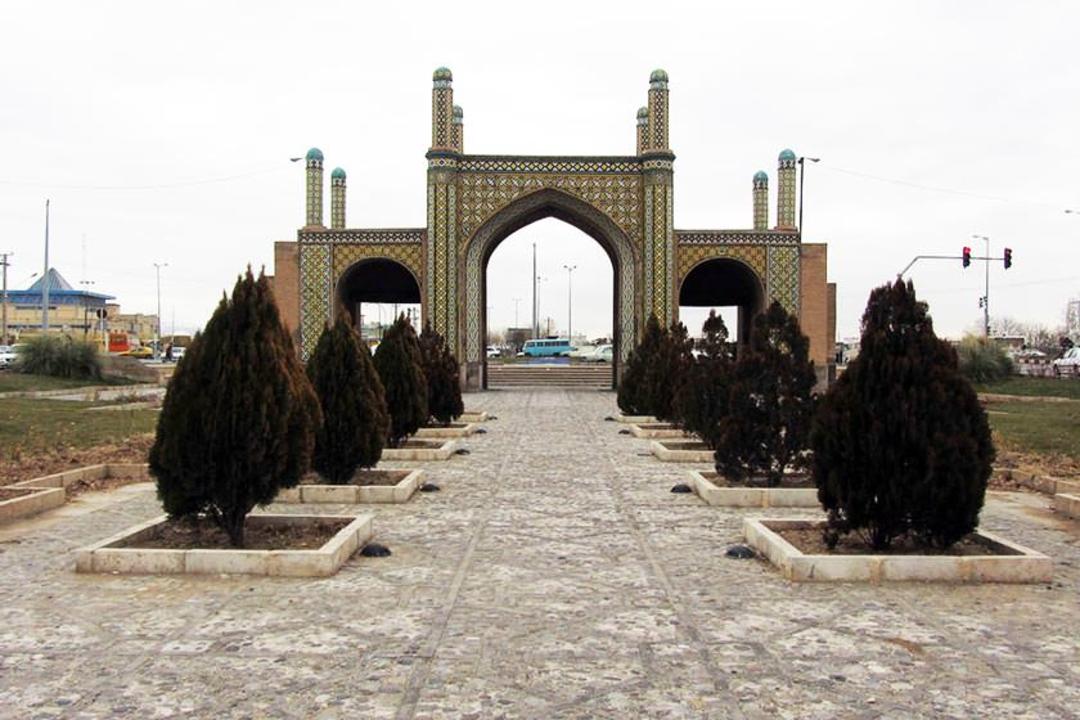
Standing at the southeastern edge of Qazvin's historic core, the Gate of Old Tehran is one of those structures that quietly commands attention. Its tilework glows in the afternoon sun, its arched passage invites you to imagine caravans and travelers passing through two centuries ago, and its presence anchors a square that still bears the name of the old road to the capital. Despite the name, this gate is not in Tehran. It is in Qazvin, and it was built to mark the point where the Tehran to Qazvin road entered the city, serving as both a checkpoint and a symbol of royal authority during the Qajar period.
For anyone exploring Qazvin's rich architectural heritage, the Gate of Old Tehran is an essential stop. The city itself was a critical waypoint between Tehran and the northwestern provinces, and this gate guarded the southeastern approach with both practical and ceremonial significance. Today, it sits in the heart of modern Qazvin, surrounded by the bustle of urban life, a contrast that makes its calm, monumental presence all the more striking.
Historical Background
The Gate of Old Tehran dates to the Qajar dynasty, specifically to the reign of Naser al-Din Shah, one of the longest-reigning monarchs in Iranian history. During this period, Qazvin served as a major commercial and military hub, and the city's gates were critical infrastructure for controlling movement, collecting tolls, and defending against raids from the surrounding plains.
The gate was originally constructed at the edge of the city, where the road from Tehran met Qazvin's outer walls. At the time, it stood well outside the developed area, marking the boundary between the safety of the urban core and the open road. Over the decades, as Qazvin expanded, the gate found itself surrounded by new neighborhoods. Today, it occupies Meydan-e Tehran Ghadim, or Old Tehran Square, at the beginning of Tehran Ghadim Street, a central location that belies its once-peripheral position.
In 1975, the gate was registered on Iran's National Heritage List under number 392, recognizing its architectural and historical significance. This designation helped ensure its preservation through subsequent decades of urban development, and the structure remains one of Qazvin's most recognizable landmarks.
Architecture and Tilework
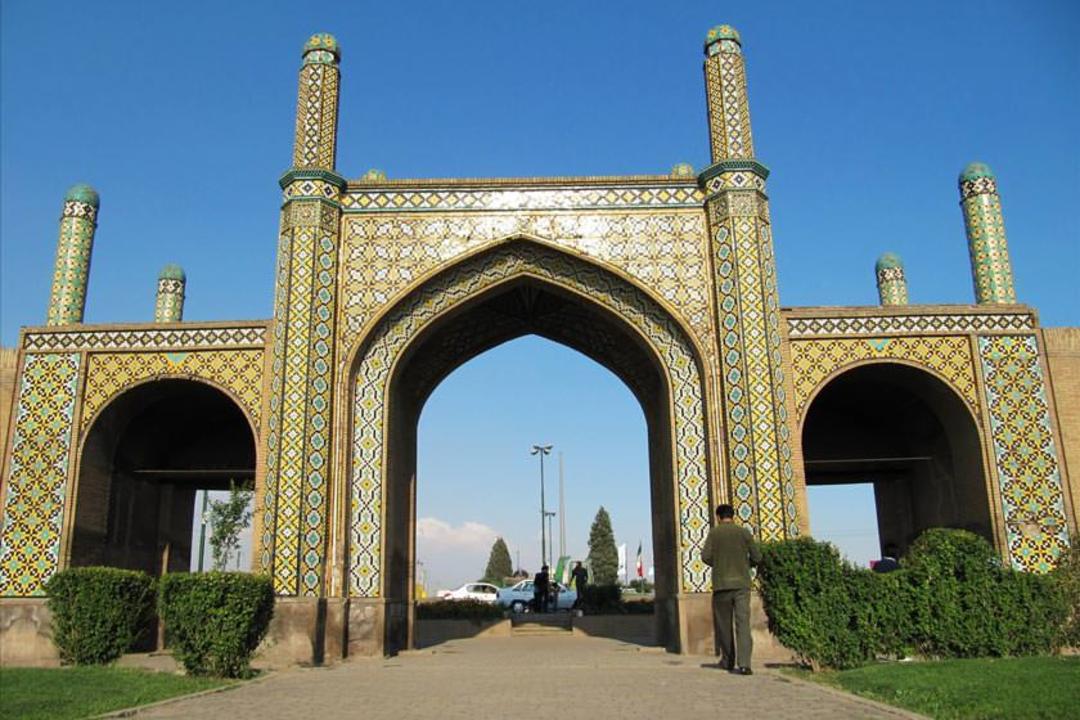
The gate features the ornate tilework characteristic of the Naser al-Din Shah period, with geometric and floral patterns in deep blues, turquoise, and white arranged around the central arch. The arch itself is a classic pointed form, flanked by rectangular panels that once served as frames for inscriptions and decorative motifs. The overall composition balances strength and elegance, reflecting the Qajar taste for imposing civic structures adorned with refined artistic detail.
The building materials include brick, plaster, and glazed tile, assembled in a style that draws on both Safavid traditions and the more ornate Qajar aesthetic. The upper portion of the gate includes a parapet with small arched openings, and the facade faces southeast toward the incoming road, ensuring that travelers approaching from the direction of Tehran would see the decorated face first.
Defensive Role and Urban Function
Beyond its visual appeal, the Gate of Old Tehran served a clear defensive and administrative purpose. In the Qajar era, city gates across Iran controlled access after dark, collected customs duties on goods entering the market, and provided a first line of defense against bandits and raiders. Qazvin's position on the main northwestern route made its gates particularly important, as the city handled significant trade traffic moving between the capital and the Azerbaijan provinces.
The gate protected Qazvin from attacks, theft, and looting, and its thick walls and solid construction could withstand small-scale assaults. Guards stationed at the gate monitored all comings and goings, and the structure doubled as a customs post where merchants paid fees before entering the city bazaar. This combination of military, fiscal, and symbolic functions was typical of Qajar city gates, though the Gate of Old Tehran is among the few that survive in anything close to their original form.
Exploring the Surroundings
A visit to the Gate of Old Tehran combines naturally with a walk through Qazvin's historic center. The square around the gate retains something of its traditional character, with old shops and tea houses nearby. From the gate, it is a short walk to the Qazvin bazaar, the Sepah Street, considered one of the first modern streets in Iran, and several historic mosques and caravanserais that date from the Safavid and Qajar periods.
The area is particularly atmospheric in the late afternoon, when the tilework catches the warm light and the square fills with locals going about their evening routines. Photographers will appreciate the contrast between the ancient gate and the modern traffic flowing around it, a visual reminder of how cities grow and change while their oldest structures hold firm.

How to Get There
Qazvin lies approximately 150 kilometers northwest of Tehran, connected by a modern freeway that takes about ninety minutes by car. The Gate of Old Tehran is located at Meydan-e Tehran Ghadim in the southeastern part of Qazvin's city center, at the beginning of Tehran Ghadim Street. From the Qazvin freeway, follow signs to the city center and then to Meydan-e Tehran Ghadim.
Mehyar Taxi operates in Qazvin and can arrange rides from anywhere in the city to the gate. For visitors coming from Tehran, intercity buses depart frequently from Tehran's Western Terminal (Terminal-e Gharb) and reach Qazvin in under two hours. Once in Qazvin, most taxis know the gate and can drop you at the square. Mehyar Hotels offers accommodation options in Qazvin for those planning a longer stay to explore the city's many historical sites.
Hours and Tickets
The Gate of Old Tehran is an outdoor structure visible at all times, with no entrance fee or restricted hours. You can view and photograph the gate from the square at any time of day. Allow less than one hour for a thorough visit, including time to walk around the structure and examine the tilework up close.
Tips and Nearby Sites
The best time to visit is spring or early autumn, when Qazvin's weather is mild and the light is ideal for photography. Summer visits are comfortable compared to southern Iran, but midday heat can make the square unpleasant. Winter mornings can be cold, given Qazvin's elevation and exposure to northwesterly winds.
Combine your visit with the Qazvin Bazaar, the Chehel Sotoun Pavilion, the Sepah Street, and the Ali Qapu Gate, all within walking distance of the Gate of Old Tehran. The neighborhood around the gate has several traditional cafes and restaurants where you can try local dishes such as qazvin pilaf and various herb-based stews. Bring comfortable walking shoes, as exploring Qazvin's historic center on foot is one of the most rewarding ways to experience the city.