
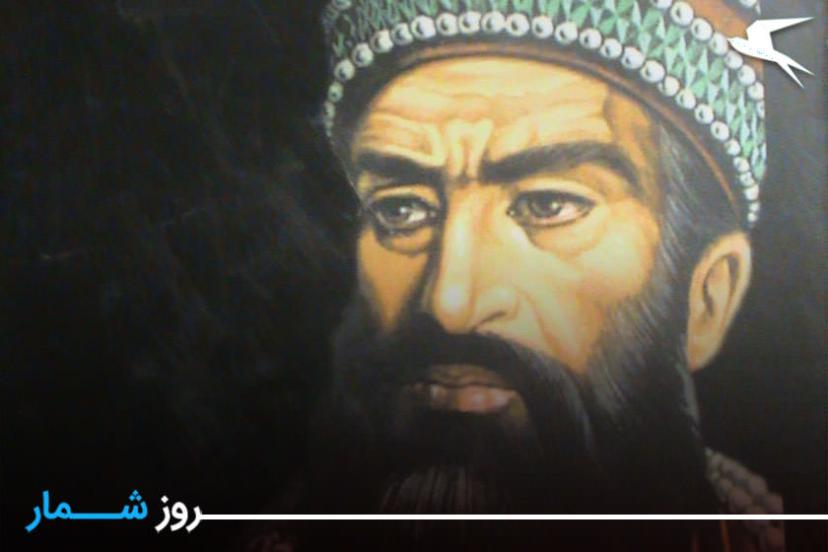
History has produced many conquerors, but few have risen as dramatically as Nader Qoli, the young warrior from the Afshar tribe of Khorasan who reinvented himself as Nader Shah and reshaped the map of Asia. His formal coronation on March 8, 1736, at the assembly of the Mughan Plain was not merely a transfer of power. It was the culmination of a decade of brilliant military campaigns that had rescued Iran from collapse, expelled occupying armies, and restored the country to a position of regional dominance. The ceremony that day, held in an enormous tented pavilion on the steppe, brought together tribal chieftains, military commanders, religious leaders, and court officials to witness the birth of a new dynasty.
The Rise of Nader Qoli
To understand the significance of the coronation, one must understand the chaos from which Nader emerged. In the early decades of the eighteenth century, Iran was in a state of existential crisis. The Safavid dynasty, which had ruled for over two centuries, was crumbling under internal corruption, religious strife, and external pressure. In 1722, Afghan rebels from the Hotaki tribe captured the capital Isfahan and effectively ended Safavid rule, plunging the country into a period of fragmentation and foreign occupation.
It was in this vacuum that Nader Qoli, born around 1688 into the Qirqlu branch of the Afshar Turkmen tribe in the northern reaches of Khorasan, began his ascent. A natural military genius, he gathered a loyal following and offered his services to Shah Tahmasp II, the surviving Safavid prince who was attempting to reassert authority. Nader's military prowess quickly became apparent. He drove the Afghans out of eastern Iran, repelled Ottoman forces from the western provinces, and pushed back Russian troops that had occupied territories along the Caspian Sea during the chaos of the Afghan invasion.
By the mid-1730s, Nader was the undisputed master of Iran's military and the de facto ruler of the country. Shah Tahmasp II had become a figurehead, and Nader's relationship with him grew increasingly strained. In 1732, Nader deposed Tahmasp and installed the shah's infant son Abbas III on the throne, with Nader himself serving as regent. The final step came four years later when Nader decided that the Safavid era was beyond salvage and that Iran needed a new ruling house.
The Coronation at Mughan
The assembly that crowned Nader Shah took place on the Mughan Plain, a vast grassland in what is now northwestern Iran near the border with the Republic of Azerbaijan. This location was not chosen at random. The Mughan Plain had historical resonance as a gathering place for Turkic tribal confederations, and its open expanse symbolised the broad-based support that Nader commanded from the tribal military establishment.
On March 8, 1736, corresponding to the nineteenth day of the month of Esfand in the Iranian calendar, an enormous assembly convened. Contemporary accounts describe a grand tented pavilion erected for the occasion, evoking the military camps that had been Nader's home for much of his life. Tribal khans, senior clerics, army commanders, and administrative officials from across the empire attended the ceremony. The assembly formally deposed the young Abbas III and offered the crown to Nader, who accepted and took the title Nader Shah Afshar.
The coronation was carefully staged to project both legitimacy and power. Nader emphasised his role as the restorer of Iran's territorial integrity and the champion of Shia Islam, even as he pursued a more conciliatory religious policy than the Safavids had maintained. The ceremony legitimised what was already a reality: Iran had a new shah, and the Afsharid dynasty had begun.

The Military Campaigns That Defined a Reign
The coronation was followed by perhaps the most spectacular phase of Nader Shah's career. His Indian campaign of 1738 to 1739 took him through modern-day Afghanistan and into the heart of the Mughal Empire. At the Battle of Karnal in February 1739, Nader's army of roughly 55,000 men crushed a Mughal force that outnumbered them by at least five to one. The victory opened the road to Delhi, and Nader entered the Mughal capital in triumph.
The spoils of the Indian campaign were legendary. Nader returned to Iran with an enormous treasure that included the Peacock Throne, the Koh-i-Noor diamond, the Darya-ye Noor diamond, and countless other jewels, artworks, and manuscripts. The wealth he brought back was enough to fund his ambitious building projects and military reforms for years. It was reportedly after seeing the Koh-i-Noor and other gems in the Mughal treasury that Nader exclaimed "Koh-i-noor!" (Mountain of Light), giving the famous diamond its name.
Nader also campaigned extensively in Central Asia, fighting against the Khanates of Bukhara and Khiva, and in the Caucasus, where he reasserted Iranian control over territories that are today part of Georgia, Armenia, and Azerbaijan. His military machine was one of the most effective of the eighteenth century, combining traditional Persian cavalry tactics with firearms and artillery acquired and refined through contact with Russian and Ottoman forces.
The Naderi Garden: Where His Legacy Lives On in Mashhad
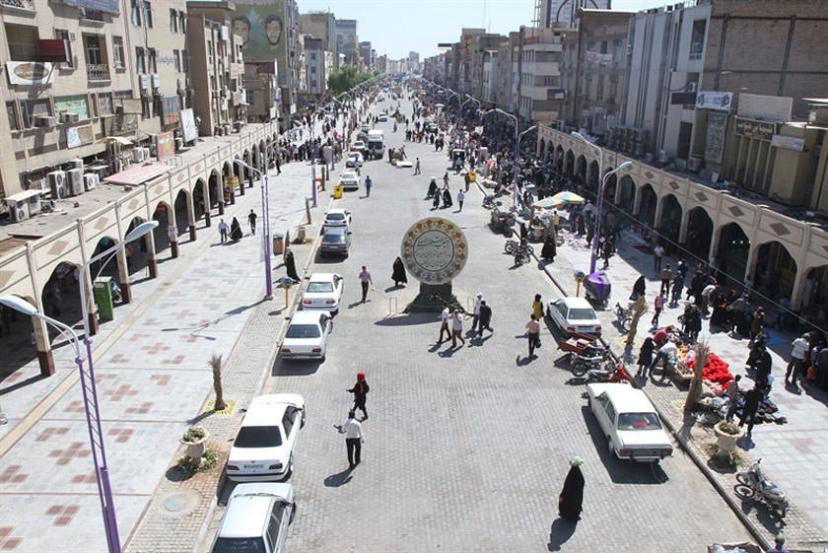
For visitors to Iran today, the most tangible connection to Nader Shah is the Naderi Garden Museum and Mausoleum in Mashhad, the capital of Razavi Khorasan Province. Mashhad held special significance for Nader. It was from this city that he launched many of his early campaigns, and he made it his capital during his reign. The mausoleum complex, situated in the northwest corner of Shohada Square, is one of the most significant historical sites in the city after the Imam Reza Shrine.
The current mausoleum was designed by the architect Hossein Seyhoun and features a distinctive tent-like structure that symbolises the tribal tent where Nader was born and the military campaigns that defined his life. The building sits on a twelve-step platform and is constructed primarily from hard granite. Inside, maroon marble stones create an atmosphere of solemnity and power. The famous statue of Nader Shah on horseback, sculpted by the renowned artist Abolhassan Sadighi, stands in the garden and captures the commanding presence of a ruler who reshaped the Middle East.
The museum complex occupies a garden of 14,400 square metres and houses several exhibition halls. The military museum displays weapons and armour from Nader's era and other periods of Iranian history, while other halls contain paintings, traditional garments, and historical documents related to the Afsharid period.
Practical Information for Visiting the Naderi Garden
The Naderi Garden Mausoleum is located on Shirazi Street, near Shohada Crossroads in central Mashhad. It is open daily from 8:00 AM to 5:00 PM, with slightly extended hours during the warmer months. Admission fees are modest, with separate rates for Iranian and international visitors. The complex is accessible by metro, with Shohada Station being the nearest stop, about a five-minute walk from the entrance. It is also approximately a fifteen-minute walk from the Imam Reza Shrine, making it a natural addition to any visit to Mashhad.
The best time to visit is during the spring months, particularly May, when the garden is at its greenest and the weather in Mashhad is most pleasant. Early morning or late afternoon visits are recommended during the summer, when temperatures in Khorasan can be high.
Why Nader Shah Still Matters
Nader Shah Afshar died in 1747, assassinated by his own officers at a camp near Quchan in Khorasan. His later years had been marked by increasing paranoia and cruelty, undermining the loyalty of the very men who had followed him to glory. Yet his achievement remains staggering. He took a country that was on the verge of disintegration and remade it as one of the most formidable military powers of the eighteenth century. His campaigns stretched from Delhi to the Caucasus, and his name was known in the courts of Europe, India, and Central Asia.
For travellers to Iran, the story of Nader Shah adds an essential dimension to understanding the country's historical identity. He represents a moment when Iran's military and political fortunes were at their most dramatic, and his legacy is preserved in the museums, monuments, and collective memory of Khorasan. Visiting the Naderi Garden in Mashhad is an encounter with a figure who tested the limits of what one person could achieve and whose coronation at Mughan changed the course of Iranian history.