
There are buildings that shelter history, and then there are buildings that made it. The Constitution House of Tabriz, known locally as Khaneh Mashrouteh, belongs firmly to the second category. Behind its unassuming brick facade on a quiet lane near the Jame Mosque of Tabriz, a group of merchants, clerics, and intellectuals gathered in the final years of the Qajar era to plan a movement that would reshape Iran forever. Their cause: a constitution, a parliament, and the rule of law over arbitrary royal power. Walking through the rooms where they debated, drafted, and dreamed, you can feel the weight of those decisions pressing against the plaster walls.

Where Is the Constitution House of Tabriz?
Khaneh Mashrouteh sits in the historic core of Tabriz, the capital of East Azerbaijan Province in northwestern Iran. The house is located on Rasteh Koocheh Street, just off Motahari Avenue, within walking distance of the famous Tabriz Bazaar, a UNESCO World Heritage Site. The neighbourhood is one of the oldest continuously inhabited areas of the city, and the call to prayer from the nearby Jame Mosque provides a constant backdrop to visits.
Tabriz itself has long been one of Iran's most important cities. It was the capital of the Qajar dynasty before Tehran rose to prominence, and it served as a crucial stop on the Silk Road for centuries. The city's position near the borders of the Ottoman Empire and the Caucasus made it a cosmopolitan centre where ideas from Europe, Russia, and the Middle East mingled freely. That intellectual ferment helped set the stage for the constitutionalist movement.
Reaching the house is straightforward. From the main square of Sahed (Meydan-e Sahed), walk north along Motahari Avenue and turn into Rasteh Koocheh Street. The house is clearly signposted and impossible to miss once you know where to look. Taxis and buses from anywhere in Tabriz can bring you to Motahari Avenue.
The History Behind Khaneh Mashrouteh
The house was built in 1868 during the reign of Naser al-Din Shah Qajar. It belonged to Haj Mehdi Koozekonani, a wealthy merchant and prominent figure in Tabriz's commercial community. The two-storey structure is a fine example of Qajar-era residential architecture, with decorative brickwork, arched doorways, and the classic central courtyard layout that characterises traditional Iranian houses from this period.
What makes this particular house extraordinary is what happened inside its walls. In the years leading up to the Iranian Constitutional Revolution of 1905 to 1911, Haj Mehdi Koozekonani opened his home to a circle of like-minded reformers. Among them were Sattar Khan, the legendary revolutionary commander; Sheikh Mohammad Khiabani, the fiery orator and parliamentarian; and Haj Mirza Aqa Farshi, a respected cleric who supported the constitutional cause. These men and their companions used the house as a secret meeting point to organise protests, draft pamphlets, and coordinate with constitutionalists in Tehran and other cities.
The Constitutional Revolution itself was a watershed moment in Iranian history. Sparked by widespread anger over economic concessions granted to foreign powers, arbitrary taxation, and the autocratic rule of Muzaffar al-Din Shah and his successor Mohammad Ali Shah, the revolution forced the monarchy to accept Iran's first constitution in 1906 and establish a national parliament, the Majlis. Tabriz played a central role in the revolution, and the city's constitutionalists were among its most dedicated fighters.
After the revolution was ultimately suppressed by Russian and British intervention, the house remained a symbol of the democratic ideals that the constitutionalists had championed. It was registered as a national heritage site by Iran's Cultural Heritage Organisation in 1975, ensuring its preservation for future generations.

What You Will See Inside
Today, Khaneh Mashrouteh operates as a museum dedicated to the Constitutional Revolution. The exhibition rooms are arranged around the central courtyard, and each one tells a different part of the story. The artefacts on display are intensely personal and deeply evocative. You will find original photographs of the revolutionary leaders, handwritten correspondence between constitutionalists in Tabriz and Tehran, and copies of the early newspapers and pamphlets that served as the movement's propaganda arm.
The museum's collection includes weapons used by the revolutionary fighters, including the famous firearms associated with Sattar Khan and his companions. There are period furniture pieces that give a sense of how the house looked when it was lived in, along with decorative objects from the Qajar era. One room is dedicated to the daily life of Tabriz during the constitutional period, with household items, clothing, and coins from the era.
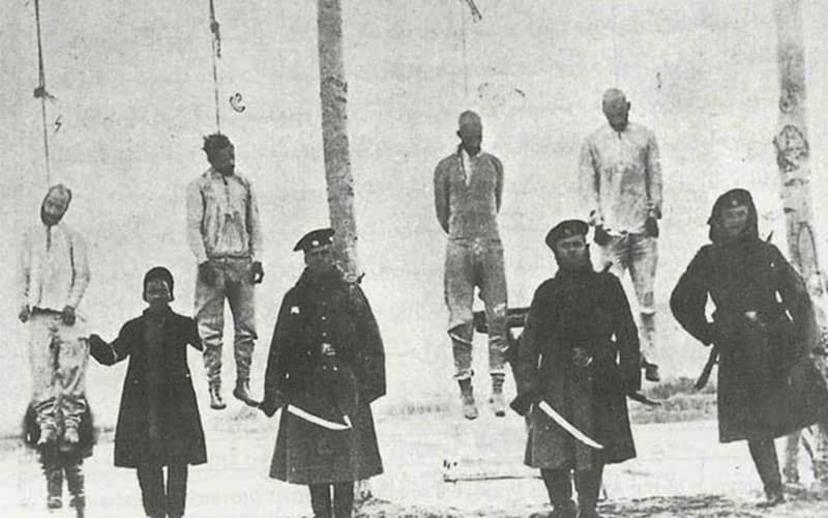
Perhaps the most moving exhibits are the documents and personal effects of the constitutionalists themselves. Letters written in haste before battles, death sentences issued by the royalist forces, and the simple possessions of men who risked everything for an idea. These objects transform the constitutional movement from an abstract chapter in a history textbook into something immediate and human.
The architecture of the house is itself a highlight. The brickwork, the symmetrical layout, the interplay of light and shadow in the arched corridors, and the view across the courtyard to the opposite wing all reward careful attention. The house has been restored sympathetically, and the restoration work allows visitors to appreciate both the beauty of Qajar design and the austere determination of the people who gathered here.
Opening Hours and Tickets
The Constitution House is open to visitors with seasonal hours:
- Spring and summer: 9:00 AM to 7:30 PM
- Autumn and winter: 9:00 AM to 5:30 PM
- Closed on Mondays
Admission is free or charged at a nominal fee, making it one of the most accessible cultural sites in Tabriz. The museum is small enough to explore comfortably in an hour, though history enthusiasts may spend longer reading the displays and studying the photographs.
Combining Your Visit With Other Tabriz Sights
The Constitution House's central location makes it an excellent addition to a walking tour of historic Tabriz. The Tabriz Bazaar, the largest covered bazaar in the world and a UNESCO World Heritage Site, is just a few minutes' walk away. The Jame Mosque of Tabriz, one of the city's most important religious buildings, is also nearby. Other attractions within easy reach include the Arg of Tabriz (Ark-e Alishah), a massive citadel dating to the Ilkhanid period, and the Mausoleum of two prominent Shia clerics known as the Two Kamals.
For a fuller experience of Tabriz, consider visiting the Azerbaijan Museum, which houses important archaeological finds from the region, or taking a short trip to the El Goli Park, a beautiful garden and pool complex on the southeastern edge of the city. Tabriz is also the gateway to the stunning village of Kandovan, where people still live in cone-shaped rock dwellings carved into volcanic formations.
Why the Constitution House Matters Today
More than a century after the Constitutional Revolution, Khaneh Mashrouteh remains a place of quiet inspiration. Iran's journey toward constitutional governance has been long and complicated, but the ideals that were debated within these walls, the ideals of representative government, freedom of the press, and the rule of law, continue to resonate. For visitors to Iran, the house offers a perspective on the country that goes beyond the usual tourist narrative. It reveals a Iran where ordinary citizens organised, resisted, and fought for a vision of their country that was more just and more free.
The house also serves as a reminder that Tabriz, often overlooked by international tourists who focus on Isfahan and Shiraz, has a rich and distinctive historical identity. It was here, in this northwestern metropolis, that some of the most pivotal chapters of modern Iranian history were written. A visit to the Constitution House is not just a visit to a museum. It is a encounter with the origins of Iranian democracy, preserved brick by brick in the heart of one of Iran's most historic cities.
Plan your visit to the Constitution House of Tabriz as part of a broader exploration of East Azerbaijan Province. Whether you are drawn by the architecture, the history, or the simple human drama of the constitutionalists' story, Khaneh Mashrouteh offers a deeply rewarding experience that stays with you long after you leave its quiet courtyard.