
Since ancient times, bridges have served as vital connections between cities and villages, enabling trade, travel, and cultural exchange across the Iranian plateau. In East Azerbaijan province, some of Iran's most impressive historical bridges span rivers and valleys, each one a testament to the skill and vision of the engineers and craftsmen who built them. These structures range from the Seljuk and Ilkhanid periods through the Safavid and Qajar eras, offering visitors a living timeline of Persian bridge-building tradition.
East Azerbaijan, with its rugged terrain, fast-flowing rivers, and strategic position on ancient trade routes, demanded durable and well-designed crossings. The result is a collection of stone and brick bridges that combine practical engineering with artistic beauty. Many of these bridges are registered as national heritage sites, and they remain among the most compelling reasons to explore this northwest Iranian province. Mehyar's travel platform can help you plan a route that connects several of these bridges in a single trip, making the most of your time in the region.
Qari Bridge: The Heart of Tabriz
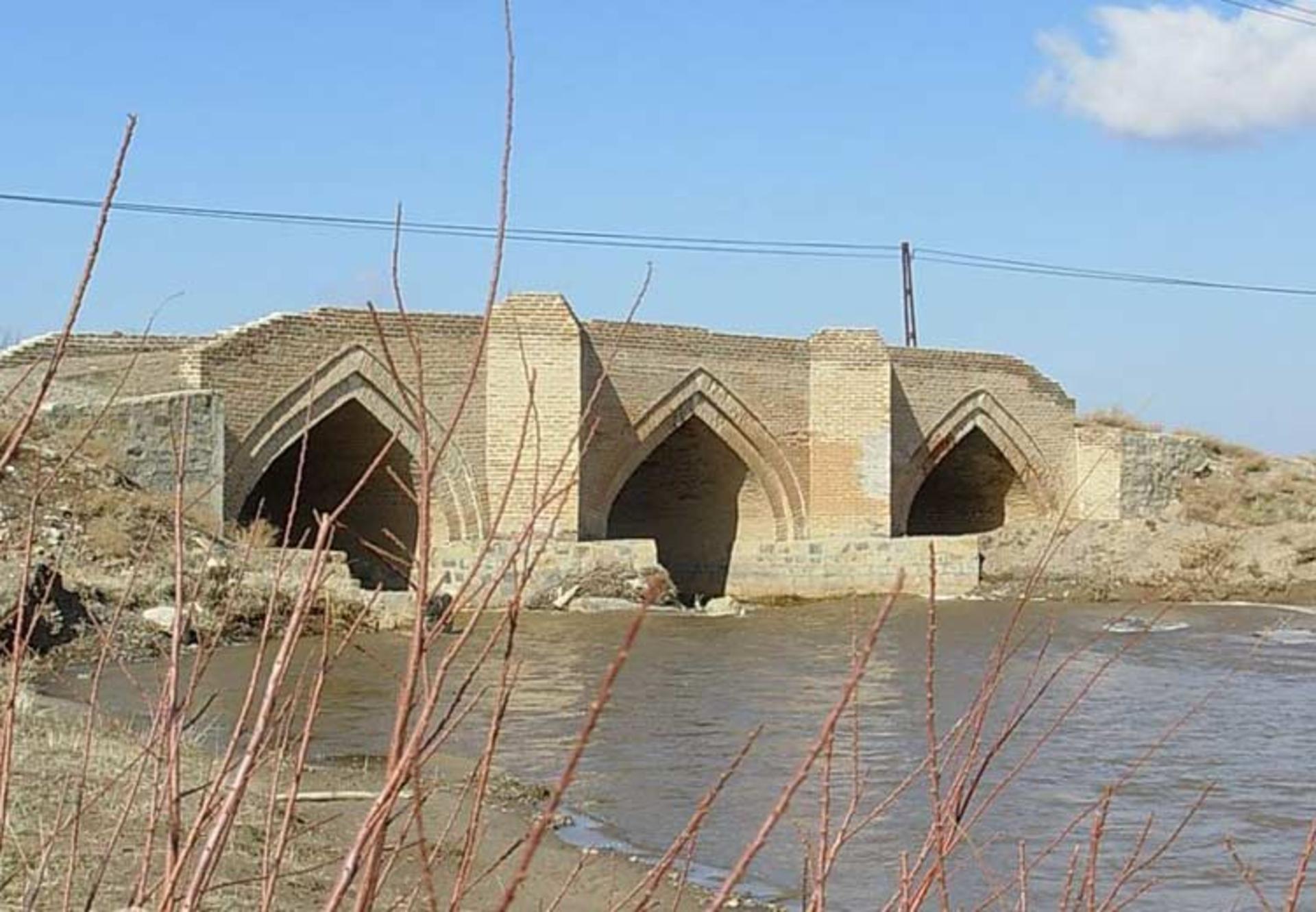
Qari Bridge, known in the Azerbaijani Turkish dialect as Qari Korpusu, stands as one of the most recognizable historical bridges in the city of Tabriz. Built over the Mehran Rud river (also called Quri Chay by locals), this bridge sits in the heart of the city on Thaqeh al-Eslam Street. Its name, meaning "old bridge" in the local Turkish dialect, reflects its great age and the deep respect the community has for this structure.
The bridge connects two historically important neighborhoods and has served as a vital crossing point for centuries. Its arches display the refined brickwork typical of the period, and the surrounding area retains much of its traditional character. Walking across Qari Bridge, you can feel the weight of history beneath your feet and see how the river continues to flow through the urban landscape just as it has for hundreds of years.
Stone Bridge of Tabriz
The Stone Bridge (Pol-e Sangi) of Tabriz is another notable crossing over the Mehran Rud, located on Chaykenar Street opposite the Stone Bridge Mosque. Dating to the Qajar period, this bridge earned its name from the distinctive stone blocks used in its construction. The Qajar era was one of significant infrastructure development in Tabriz, and this bridge reflects the period's attention to both durability and aesthetic appeal.
The bridge features multiple arches and solid piers designed to withstand seasonal flooding. Its placement across one of Tabriz's main waterways made it essential for daily commerce and movement between neighborhoods. Today, the Stone Bridge remains a functional part of the city's infrastructure while also serving as a registered national heritage site. Visitors can easily combine a visit to this bridge with explorations of the nearby mosques, bazaars, and historic streets of central Tabriz.
Zia-ol-Molk Bridge: A Safavid Masterpiece Near Jolfa
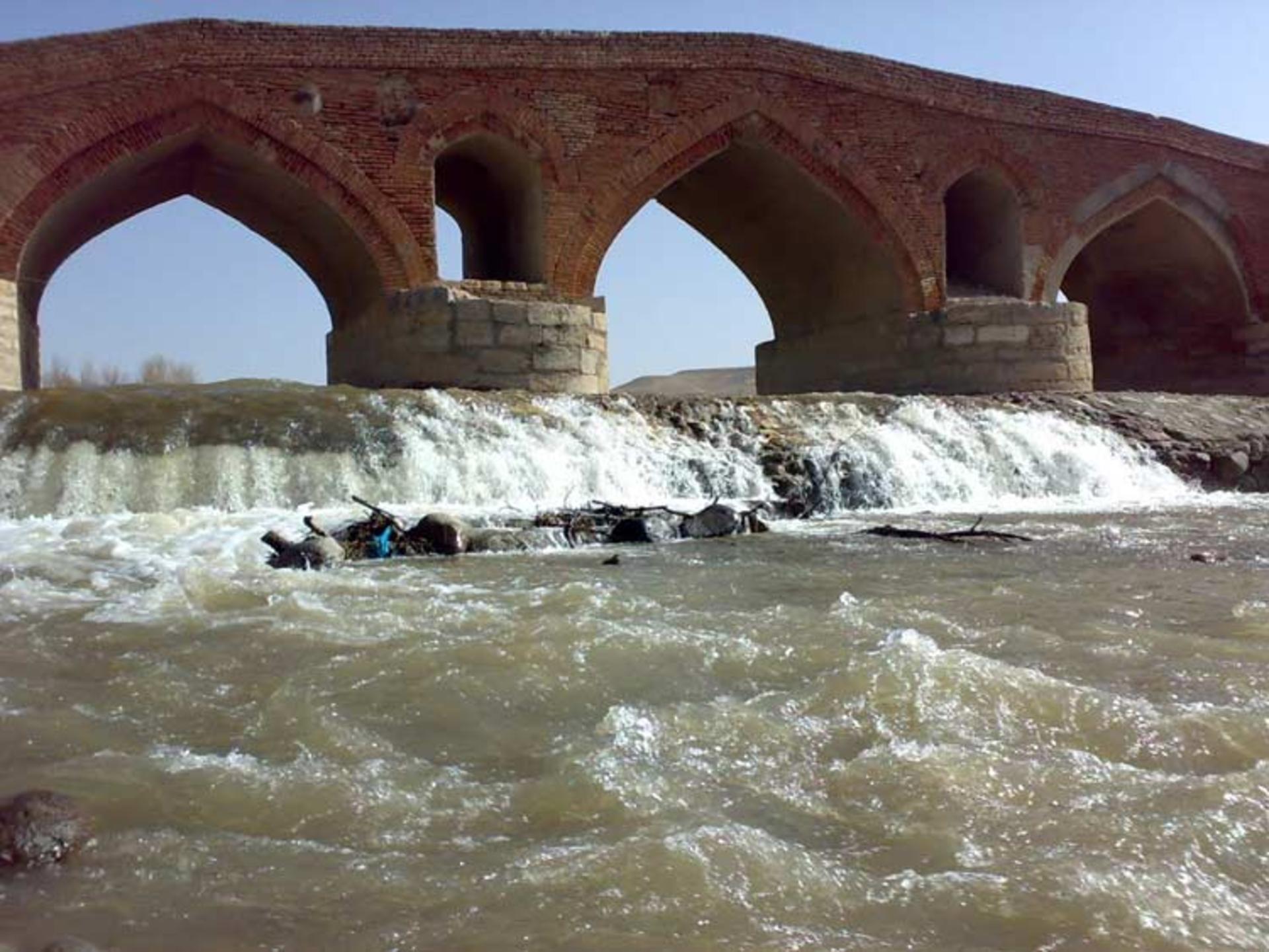
One of the most architecturally significant bridges in the province is the Zia-ol-Molk Bridge, located six kilometers west of Jolfa county near the Abbasi checkpoint, spanning the Aras River. This bridge dates to the reign of Shah Abbas Safavi, one of the most powerful and culturally influential rulers in Iranian history.
The bridge once connected Iranian territory with the Nakhchivan Autonomous Republic, and parts of it remain on both sides of the border. The southern foundations rise approximately ten meters above the river level, with a diameter of 6.5 meters, while the towers reached heights of twenty meters. Built from stone blocks with mortar and lime, the structure demonstrated advanced engineering for its time.
Inside the bridge, a caravanserais once provided shelter for travelers and their animals. Although much of the interior has collapsed, the remaining tall wall and column-like structure on the Iranian side still convey the bridge's original grandeur. Zia-ol-Molk Bridge was registered as national heritage number 6673 in January 2003, ensuring its protection for future generations.
Dokhtar Bridge: The Maiden's Crossing at Mianeh
Dokhtar Bridge, known as Giz Korpusu in Turkish, crosses the Qezel Uzun River in the Ghafankuh mountain range, approximately twenty kilometers from the city of Mianeh. This bridge served as the sole connection between eastern and western regions of the area in ancient times, making it strategically vital for trade and communication.
The bridge consists of three arches with brick foundations. On the central pier, an inscription once existed, though its text has been lost to time. On the left side, another inscription bears the date 933 AH, placing a significant phase of the bridge's history in the early sixteenth century. Over the centuries, Dokhtar Bridge underwent numerous repairs. The last major restoration occurred in 1946, when retreating forces demolished part of the bridge with explosives. Despite this damage, the bridge endures as a powerful symbol of resilience and engineering heritage.
Mardaq Bridge: Elegance Over the Mardaq River
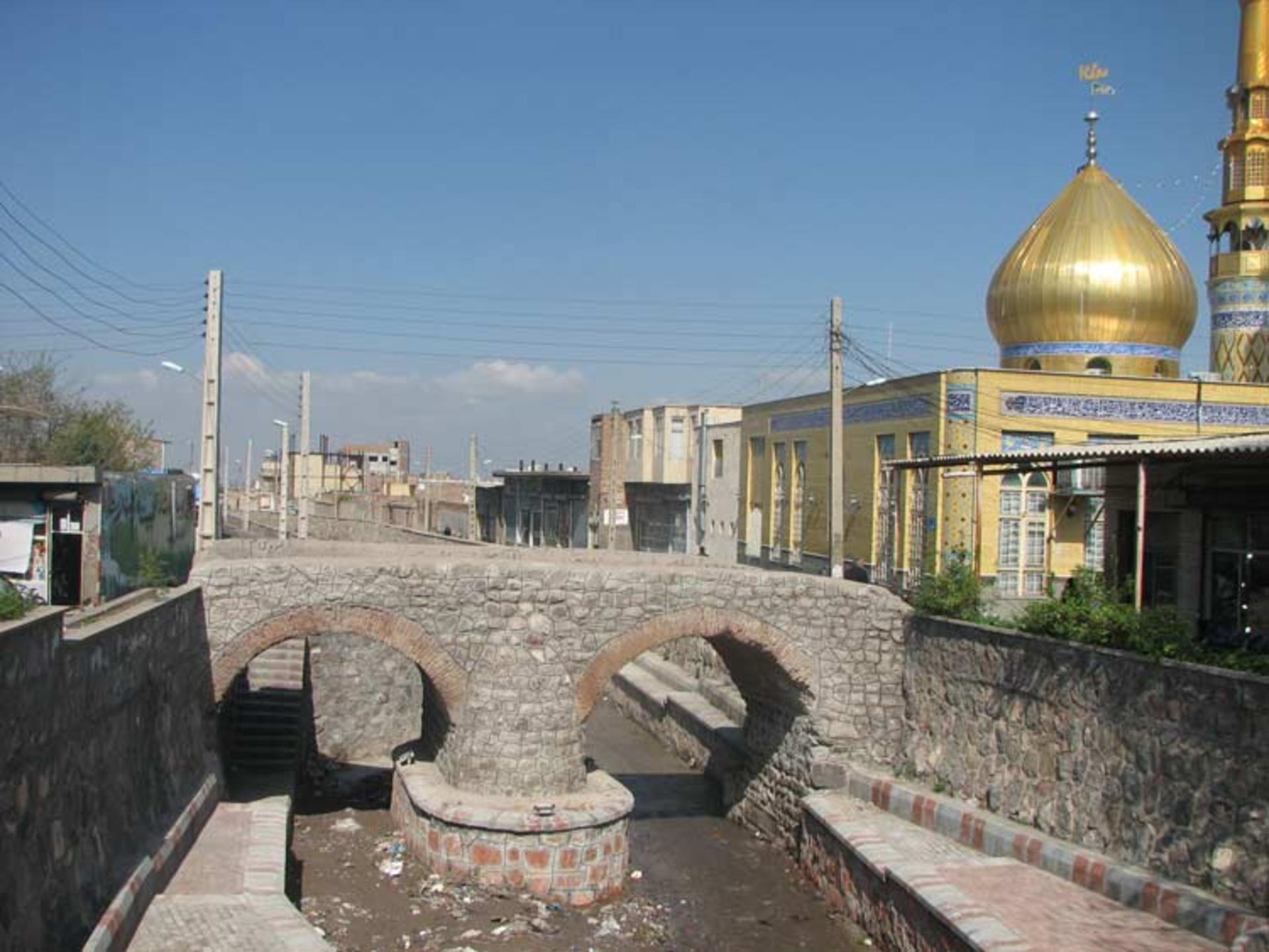
The Mardaq Bridge stands on the old road between Maragheh and the surrounding regions, crossing the Mardaq River. This river flows from the southern slopes of Mount Sahand, passes through Maragheh and Malekan, and eventually reaches Lake Urmia. The bridge's location on this important waterway made it essential for regional connectivity.
Mardaq Bridge features three arches, with the central arch larger than the two flanking ones. The pointed arches are constructed from local red bricks, while the body of the bridge uses native stone quarried from the Sanjan mine. This combination of materials reflects the practical approach of Iranian bridge builders, who selected locally available materials that could withstand the regional climate and river conditions. The bridge's elegant proportions and harmonious relationship with the surrounding landscape make it one of the most photogenic historical structures in East Azerbaijan.
Aji Chay Bridge: Tabriz's Ancient River Crossing
The Aji Chay Bridge, also known as the Bitter River Bridge, is one of the oldest bridges in Tabriz. Located on Khalaban Street and Shahid Babai Boulevard on the route toward Tabriz Airport, this bridge crosses the Aji Chay river. Historical accounts suggest the bridge dates to very early periods of Tabriz's history, possibly preceding many of the city's other surviving structures.
The river itself has played a crucial role in the development of Tabriz, and crossings like this bridge shaped the city's expansion patterns. The Aji Chay Bridge has witnessed centuries of daily life, from merchants transporting goods along the Silk Road to modern commuters heading to the airport. Its endurance through earthquakes, floods, and wars speaks to the quality of its original construction.
The Godafarin Bridges: Where Two Nations Meet
Among the most remarkable bridge structures in East Azerbaijan are the Godafarin Bridges, located in Khoda Afarin county on the Aras River. This site actually consists of two separate bridges, one of which is partially destroyed with only half remaining, while the other survives in more complete form. The two bridges sit approximately 800 meters apart, spanning the border region between Iranian Azerbaijan and the Karabakh area.
Despite their proximity, the two bridges differ significantly in engineering and architectural style. The more complete bridge features eleven arches constructed from white stone. Historical records are limited, but writings from a thirteenth-century author date the first bridge to the eighth century CE. Professor Andrew Robert Barn of Glasgow University has studied these bridges and contributed to our understanding of their historical context. The Godafarin Bridges represent one of the most dramatic and visually striking bridge sites in all of Iran.
Planning Your Bridge Tour with Mehyar
Visiting the historical bridges of East Azerbaijan offers a unique perspective on Iran's architectural heritage. These structures are not mere relics behind glass; they remain part of the living landscape, crossed by locals and admired by travelers who appreciate the intersection of beauty and engineering.
The best approach is to base yourself in Tabriz and make day trips to the various bridge sites. Many of the bridges near Tabriz, including Qari Bridge, Stone Bridge, and Aji Chay Bridge, can be visited within a single day using Mehyar taxi services to move between sites. For the more distant bridges at Jolfa, Mianeh, and Khoda Afarin, plan full-day excursions or overnight stays in the surrounding towns.
Spring and early autumn offer the most comfortable conditions for bridge exploration, with mild temperatures and the rivers flowing at moderate levels. The bridges look especially beautiful when surrounded by spring greenery or autumn colors. Book your accommodation and transport through Mehyar to ensure a smooth journey through this historically rich corner of Iran.
Practical Information
- Province: East Azerbaijan
- Main base city: Tabriz
- Key bridges: Qari, Stone, Zia-ol-Molk, Dokhtar, Mardaq, Aji Chay, Godafarin
- National heritage registrations: Multiple bridges registered
- Best season: April to June and September to October
- Estimated visit time: 1 to 2 hours per bridge site
- Transport: Private vehicle or Mehyar taxi recommended for reaching all sites