
You arrive in Qom for the shrine, as most visitors do. The golden dome of the Fatima Masumeh Shrine rises above the city like a compass needle, and every street in the old centre seems to tilt toward it. But once you have walked the marble corridors of the shrine and felt the cool stone under your feet, there is another Qom waiting just outside its gates. A bazaar that does not appear on most tourist maps, yet pulses with the daily life of a city that has been a centre of Shia scholarship and pilgrimage for over a thousand years. This is Bazarche Ferdowsi, the market quarter that clusters around Ferdowsi Street in the commercial heart of Qom, and it is one of the most authentic shopping experiences in central Iran.
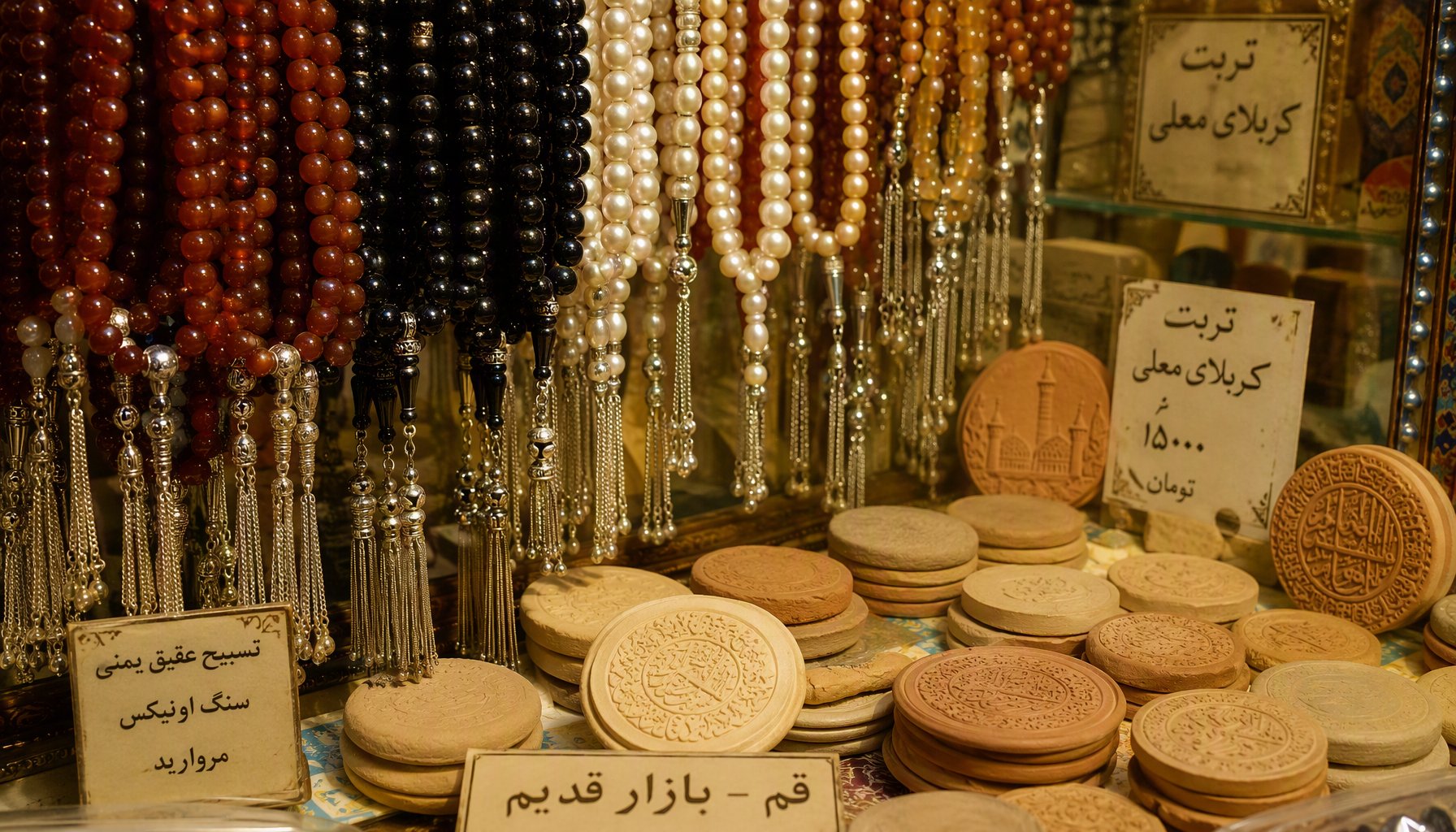
Bazarche Ferdowsi is not a single building with a single entrance. It is a quarter, a web of covered passages and open-air lanes that radiate from Ferdowsi Street and merge with the older corridors of the Qom Grand Bazaar to the north. Here, shopkeepers sell the objects that a religious city needs: turbahs, the small discs of blessed clay that Shia Muslims place their foreheads on during prayer, carved in Qom's own workshops from the soil of Karbala and Najaf. Prayer beads of carnelian, onyx, and pearl hang in clusters from wooden frames. Chadors in black, green, and patterned cotton are folded on shelves that reach the ceiling. And everywhere, the smell of rosewater and saffron drifts from shops selling attars and herbal remedies that have been mixed in the same neighbourhood for generations.

Where is Bazarche Ferdowsi?
The bazaar quarter lies in the centre of Qom, the city that serves as Iran's foremost centre of Shia theological learning. Ferdowsi Street runs roughly east to west through the commercial core, connecting the area around the shrine to the older bazaar streets that extend toward Azar Street and Arabestan neighbourhood to the north. The coordinates of the central point of Bazarche Ferdowsi are approximately 34.6401 degrees north and 50.8764 east, placing it well within walking distance of the Fatima Masumeh Shrine.
Qom itself sits about 150 kilometres south of Tehran, in the central desert plateau of Iran. The city is the capital of Qom Province and has a population of roughly 1.3 million. Its identity is inseparable from the shrine of Fatima Masumeh, the sister of Imam Reza, whose burial place has drawn pilgrims and scholars since the ninth century. The bazaar grew up to serve those pilgrims, and its character remains fundamentally shaped by the religious economy of the shrine city.
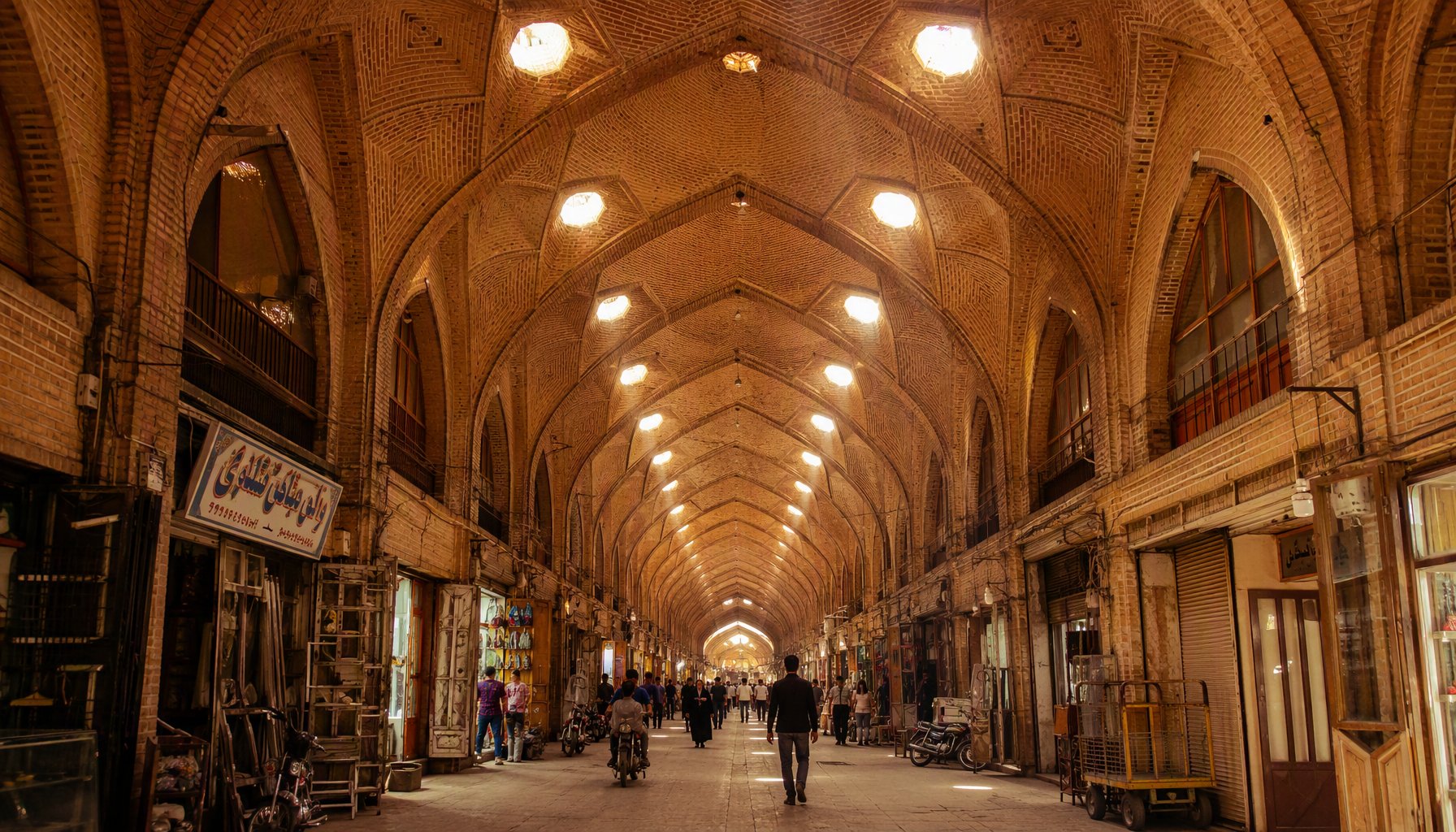
The Qom Grand Bazaar, of which Bazarche Ferdowsi forms a part, is one of the oldest and most important covered markets in Iran. Its origins trace back to the Safavid era, when Qom's status as a pilgrimage destination created demand for a proper commercial infrastructure. The bazaar was extended and renovated under Naser al-Din Shah Qajar in the nineteenth century. Today it comprises two main roofed corridors, stretching roughly one kilometre in length and covered by 78 domed vaults. These vaults, built of brick and plaster, create a rhythmic pattern of light and shadow along the length of the passages, and they remain one of the most distinctive features of the Qom bazaar experience.
What to Buy in Bazarche Ferdowsi
The shops of Bazarche Ferdowsi cater primarily to pilgrims and to the city's large population of seminary students, and the merchandise reflects this. The most characteristic product is the turbah, the small prayer stone. Qom is one of the main production centres for turbahs in Iran, and the bazaar offers them in a remarkable range: plain discs of red or grey clay, turbahs inscribed with Arabic calligraphy, turbahs made from the soil of Karbala (considered the most meritorious for prayer), and decorative versions set in metal or wooden cases for gifts. Prices start at just a few thousand tomans for a simple clay turbah and rise to several hundred thousand for finely crafted pieces.
Prayer beads, known as tasbih or subha, are another staple. You will find them in every material, from mass-produced plastic beads sold by the handful to exquisite strands of carved carnelian, black onyx, amber, and even meteorite. The finest beads are sold by specialty dealers who can tell you the origin of each stone and the number of beads (usually 33, 66, or 99, corresponding to the names of God in Islamic tradition). A good dealer will let you handle each strand and will explain the significance of the count.
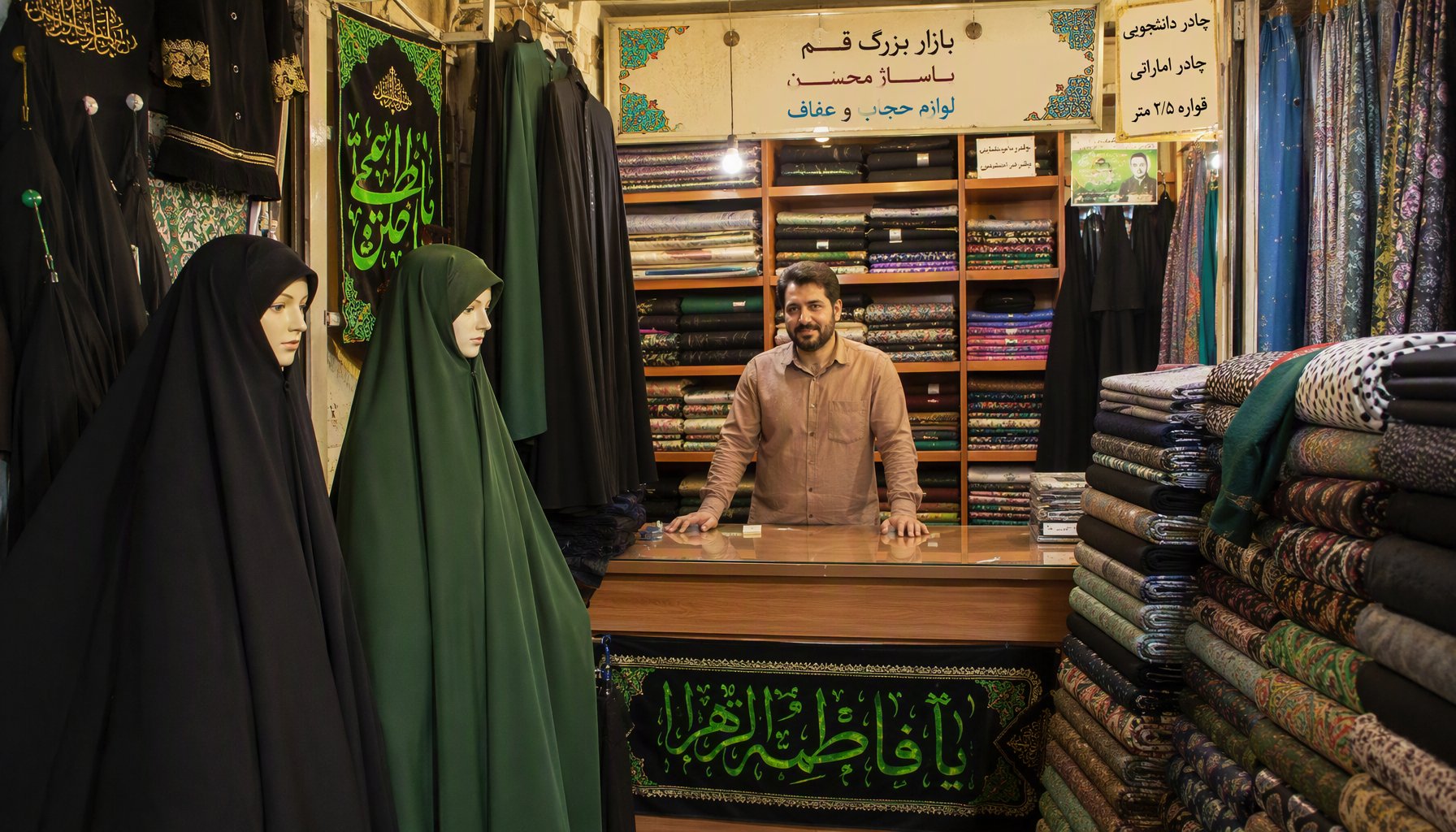
Chadors and abayas are sold in dedicated sections of the bazaar. The quality ranges from simple everyday black chadors to elaborately embroidered pieces with gold thread, intended for wedding ceremonies or major religious festivals. Fabric shops sell material by the metre, and tailors in the surrounding lanes offer custom stitching. Attar shops sell rosewater, distilled herbal extracts, and perfumes made without alcohol, as well as saffron, barberry, and other culinary products that make excellent gifts to take home.
The Architecture and Atmosphere
The physical fabric of Bazarche Ferdowsi is a mixture of periods. The oldest sections, with their brick domes and arched entrances, date from the Qajar era and earlier. The Qajar domes of the Grand Bazaar are a particular highlight: 78 vaults in a row, each one slightly different in its proportions and brickwork pattern, creating a visual rhythm that is both repetitive and varied. The ceilings are low in places, forcing you to duck slightly, and the passages narrow and widen as they follow the old property boundaries that have been in place for centuries.
Newer sections have been built with concrete and steel, and some passages have fluorescent lighting rather than the soft glow of filtered daylight through the dome oculi. The contrast is part of the charm: you move between the ancient and the modern in a few steps, passing a carpet seller whose family has occupied the same spot for four generations, then a shop selling mobile phone accessories, then a traditional tea house where old men sit on wooden benches and drink tea from glass estekans.
The soundscape is distinctive. The call to prayer from the shrine's minarets reaches the bazaar quarter every bit as clearly as it reaches the shrine courtyard, and when the midday adhan sounds, the pace of trade slows to a crawl as shopkeepers close their shutters and head to the nearest mosque. The sound of haggling, conducted in a mixture of Persian and Arabic (many traders in Qom come from the Arab-speaking communities of Khuzestan and southern Iraq), fills the covered passages. And the smell: a blend of spice, leather, rosewater, and the warm dusty scent of old brick.
How to Get to Qom and to the Bazaar
Qom is well connected to the rest of Iran. The city has its own airport, though most flights are domestic and limited in frequency. The main access is by road or rail. From Tehran, the drive south to Qom takes about 90 minutes on the freeway, a distance of roughly 150 kilometres. Intercity buses depart frequently from Tehran's southern terminals, and the journey takes two to two and a half hours. The train from Tehran to Qom runs several times daily and takes about two hours, arriving at Qom's railway station to the east of the city centre.
If you are planning your trip, open Mehyar and check Buses for departures from Tehran, Isfahan, or other cities on your route. For the last stretch from Qom's bus or train station to the bazaar, Mehyar Taxi can get you there quickly, though local taxis are also plentiful and inexpensive. The bazaar quarter is flat and compact, and once you are in it, you will be walking.
From the Fatima Masumeh Shrine, Bazarche Ferdowsi is a short walk. Exit the shrine precinct from the northern or western gates, and you will find yourself on streets that lead directly into the bazaar quarter. The transition is seamless: pilgrims leaving the shrine carry their purchases from the bazaar, and bazaar shopkeepers take their midday prayers at the shrine. The two institutions function as a single organism, and walking between them is part of the Qom experience.
The Bazaar and the Shrine: A Living Partnership
The relationship between the bazaar and the shrine in Qom is not incidental. It is structural. The bazaar exists because of the shrine, and the shrine's economy depends on the bazaar. Pilgrims need food, lodging, and religious objects. The seminary students, who number in the tens of thousands, need daily goods and services. The clerical establishment generates a constant demand for books, manuscripts, ritual objects, and fabrics. All of this commerce flows through the bazaar, and Bazarche Ferdowsi sits at the commercial core of this system.
Historically, the bazaar was also a centre of political life. In Qom, as in other Iranian cities, the bazaar merchants formed a powerful class with close ties to the clergy. Major political decisions were often debated in the caravanserais and tea houses of the bazaar, and the bazaar's economic weight gave it leverage in disputes with the state. The Constitutional Revolution of 1906, the nationalization of the oil industry in 1951, and the Islamic Revolution of 1979 all drew support from the alliance of bazaar and seminary that Qom epitomizes.
Today, the political role has faded, but the commercial and cultural partnership endures. Walking through Bazarche Ferdowsi, you are walking through a space that has shaped the religious and intellectual life of Iran for centuries. The shopkeepers may sell mobile phone cases alongside their turbahs now, but the essential character of the quarter remains unchanged.
Practical Information and Tips
Bazarche Ferdowsi and the wider Qom bazaar are open daily, though the rhythm of the day follows the prayer schedule. Most shops open around 9:00 in the morning and close around 20:00 or 21:00, but many shut their doors for an hour or more around the midday prayer. Friday is a working day, as it is throughout Iran, though the bazaar is quieter in the afternoon when many traders attend the Friday prayer sermon at the shrine or at one of the city's major mosques.
The best time to visit Qom, and its bazaar, is in the cooler months, from October through April. Summers in Qom are hot and dry, with temperatures regularly exceeding 40 degrees Celsius, and the bazaar passages, though shaded, can feel oppressively warm. Spring, particularly March and April, brings mild weather and the city is green at its edges. Winter is cold but dry, and the bazaar is a welcome shelter from the wind.
Photography is generally tolerated in the bazaar, but it is courteous to ask before photographing individual shopkeepers or customers. In a city as religiously observant as Qom, dress modestly. Women should wear a chador or at minimum a headscarf and loose coat. Men should avoid shorts and sleeveless shirts. The bazaar is a working commercial space, not a tourist attraction, and the people you encounter are going about their daily lives.
If you want to buy religious souvenirs, the bazaar offers better quality and lower prices than the shops immediately around the shrine. The shrine's immediate surroundings cater to hurried pilgrims, while the deeper bazaar streets, including those of Bazarche Ferdowsi, are where the specialist dealers operate. Take your time, compare prices, and do not hesitate to bargain. Haggling is expected and conducted with good humour on both sides.
Combining the Bazaar with the Rest of Qom
A visit to Bazarche Ferdowsi fits naturally into a day in Qom. Begin at the Fatima Masumeh Shrine, which is the spiritual centre of the city and one of the most important pilgrimage sites in Iran. The shrine complex includes courtyards, prayer halls, and the famous golden dome, and a visit can take anywhere from one to three hours depending on your interest. After the shrine, walk into the bazaar for lunch at one of the traditional restaurants that serve pilgrims and traders alike. Spend the afternoon browsing the shops of Bazarche Ferdowsi and the surrounding quarters.
If you have time, Qom offers several other sites worth visiting. The Jamkaran Mosque, on the southeastern edge of the city, is one of the most important Shia pilgrimage mosques and draws large crowds, particularly on Tuesday nights. The Salt Lake, or Howz-e Soltan, lies to the north of Qom and creates a striking white mirror in the desert landscape during the wet season. And the city's seminary schools, while not generally open to casual visitors, can be seen from the outside, and their presence gives Qom an atmosphere that is unlike any other city in Iran.
For travelers using Mehyar, the city of Qom is easily integrated into a broader itinerary. Mehyar Buses connects Qom to Isfahan (about three hours), Kashan (about two hours), and Tehran, making it a straightforward stop on any central Iran route. The bazaar quarter, the shrine, and the city's scholarly atmosphere combine to offer a distinctly different experience from the monumental tourism of Isfahan or Shiraz. It is quieter, more contemplative, and in its own way, just as rewarding.