
The Kolah Farangi building in Bandar Abbas is one of the most distinctive historical structures on the Persian Gulf coast. Built during the Safavid era, it served as a customs house and centre for foreign trade in one of Iran's most important port cities. Its unusual name, meaning "European Hat", comes from the octagonal wooden superstructure on its roof, which resembled the hats worn by European visitors in that period. Today, the building is a registered national monument and a compelling stop for anyone interested in the history of trade and architecture along the Persian Gulf.

A Safavid legacy on the Gulf
Bandar Abbas was founded in 1023 AH by order of Shah Abbas I, the most powerful ruler of the Safavid dynasty, who gave the port his name and invested heavily in its development. The city's position on the Persian Gulf, directly facing the Strait of Hormuz, made it one of the key gateways for international commerce entering and leaving Iran. The Kolah Farangi building was constructed in this context, as part of the infrastructure that supported the growing volume of trade passing through the port.
During the Safavid period, Bandar Abbas replaced the older port of Hormuz as the main commercial hub of the region. European merchants, particularly the Portuguese, English, and Dutch, maintained trading posts along the Gulf coast, and the customs houses and merchant residences that sprang up in Bandar Abbas reflected this international character. The Kolah Farangi building was at the centre of that world, handling the paperwork, storage, and administration of goods moving between Iran and overseas markets.
How the building got its name
The name Kolah Farangi, literally "European Hat", has a charming and specific origin. On top of the second floor of the building, the Safavid architects constructed an octagonal wooden structure crowned with a conical dome. The shape of this dome reminded locals of the hats worn by European travellers and merchants, known in Persian as "farangi". Over time, the nickname for the rooftop section spread to the entire building, and Kolah Farangi became the name by which everyone knew it.
This kind of informal naming was common in Iranian port cities, where the daily interaction between local residents and foreign visitors produced a rich vocabulary of borrowed words and colourful descriptions. The name Kolah Farangi captures a moment in the cultural history of the Persian Gulf, when the sight of a European hat on the skyline of Bandar Abbas was unusual enough to become a landmark.
Architecture and layout
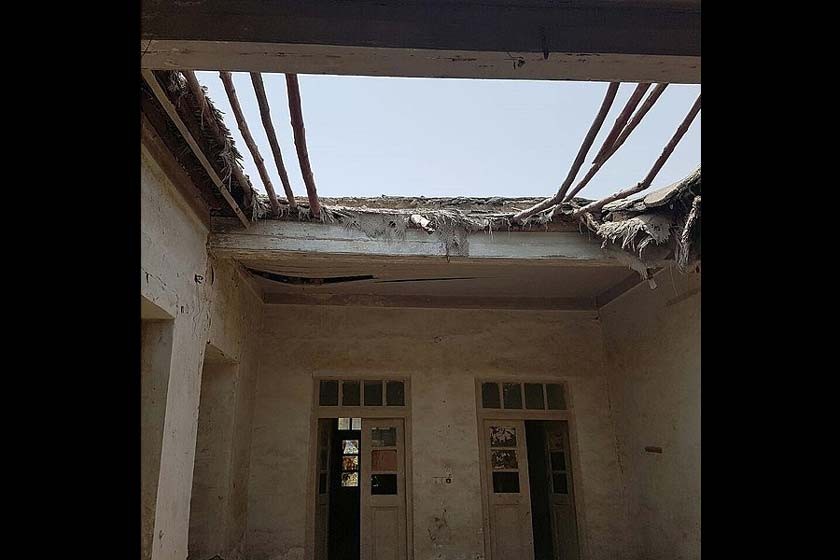
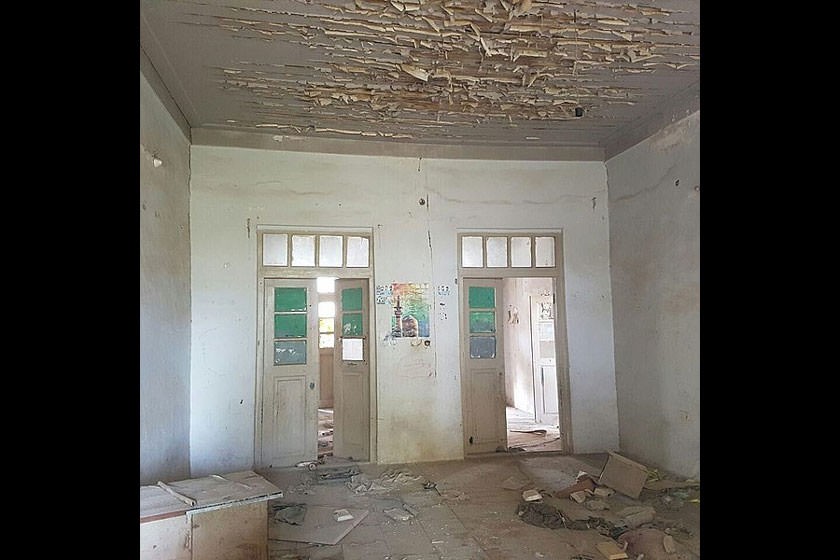
The Kolah Farangi building was designed to serve both practical and administrative functions. The ground floor was used for the storage of goods, with thick walls that helped keep the interior cool in the hot Gulf climate. The second floor housed offices and living quarters for the officials and merchants who managed the customs operations.
Two large courtyards occupy the northwestern side of the building, and beneath them run multiple water cisterns, an essential feature in a city where fresh water was always at a premium. The courtyards provided light and ventilation to the interior spaces, a standard approach in traditional Iranian architecture that is particularly effective in the intense heat of the Persian Gulf summer.
The exterior walls are built of rubble stone and mortar, with thick plaster finishes that have helped the structure survive for centuries. The octagonal wooden superstructure on the roof, with its conical dome, remains the most visually striking element of the building and the one that draws the most attention from visitors.

From customs house to national monument
For centuries, the Kolah Farangi building served its original purpose as a customs and trade centre, witnessing the comings and goings of merchants from India, Arabia, and Europe. As trade patterns shifted and modern port facilities were built elsewhere in Bandar Abbas, the building gradually lost its commercial function.
In 2005, the Kolah Farangi building was officially registered as a national monument of Iran, with the registration number 13835. This designation recognized its historical significance as one of the few surviving Safavid-era structures on the Persian Gulf coast and its value as a document of the international trade that shaped the region.
Today, the building is open to visitors free of charge. It stands near the old pier on Taleghani Boulevard in central Bandar Abbas, within walking distance of the traditional bazaar and the waterfront. For travellers arriving in the city by Mehyar Taxi or Mehyar Bus, the building is an easy first stop to get a sense of the deep history that underlies this modern port city.
Life inside the customs house
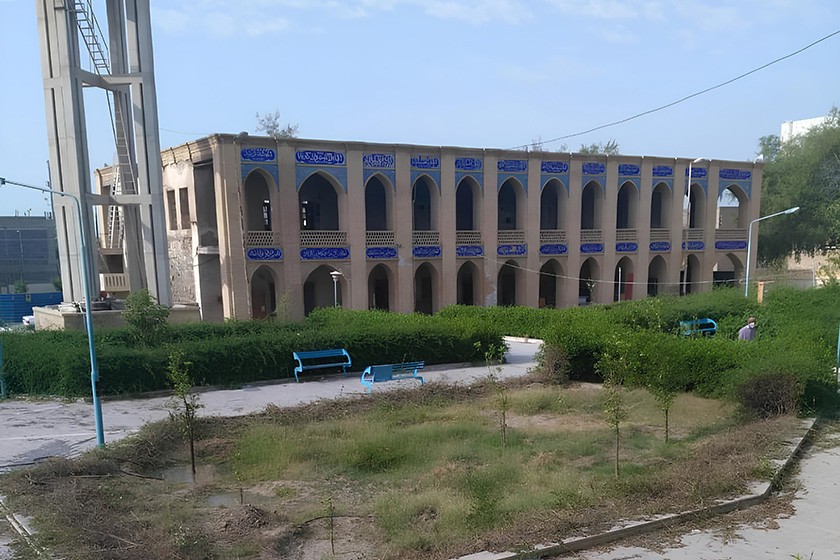
In its active years, the Kolah Farangi building was a place of constant activity. Merchants arriving by dhow from the Arabian Peninsula, India, and East Africa would bring their goods to the ground floor storage rooms, where the thick stone walls kept the temperature lower than the outside air. Customs officials worked from the second floor offices, assessing duties, recording cargoes, and managing the paperwork that kept the port running. The water cisterns beneath the courtyards collected rainwater and supplied the building with its daily needs, a system that was critical in a city with no natural freshwater sources.
The building also served as a meeting point for traders from different cultures. Persian merchants negotiated with their counterparts from the subcontinent and the Arab coast, and the multilingual conversations that filled the courtyards reflected the cosmopolitan nature of Gulf commerce. The residential quarters on the upper floor allowed senior officials and their families to live on site, and the building functioned as a small, self-contained community within the larger port.
The surrounding area
The neighbourhood around the Kolah Farangi building retains much of the character of old Bandar Abbas. Taleghani Boulevard, where the building stands, was historically the main commercial artery of the port, running from the waterfront inland through the commercial district. The old pier, now largely used by fishing boats rather than the large cargo vessels of earlier centuries, is just a short walk to the south. The traditional bazaar, with its stalls selling spices, textiles, and local handicrafts, lies within easy walking distance to the east, and the Hindu Temple is also nearby.
This concentration of historical sites means that a visit to the Kolah Farangi building can be part of a longer walk through the cultural heritage of central Bandar Abbas. The area is at its most pleasant in the cooler months, from November through March, when the Gulf air is warm but not oppressive and the light in the late afternoon casts long shadows across the courtyards and through the octagonal openings of the rooftop structure.
Visiting the Kolah Farangi building
The building is located on Taleghani Boulevard near the old pier in central Bandar Abbas. It is open to the public and entry is free. The best time to visit is during the cooler months, from late autumn through early spring, when the weather in Bandar Abbas is mild enough for walking between the city's historical sites. Mornings and late afternoons are the most comfortable, as midday heat can be intense even outside the peak summer months.
The Kolah Farangi building can be combined with a visit to the nearby traditional bazaar, the Hindu temple, and the waterfront promenade, all of which are within a short distance along Taleghani Boulevard. Mehyar Taxi can arrange transfers from the airport or from hotels to the historical district, making it straightforward to explore the cultural heritage of this important Persian Gulf port.