
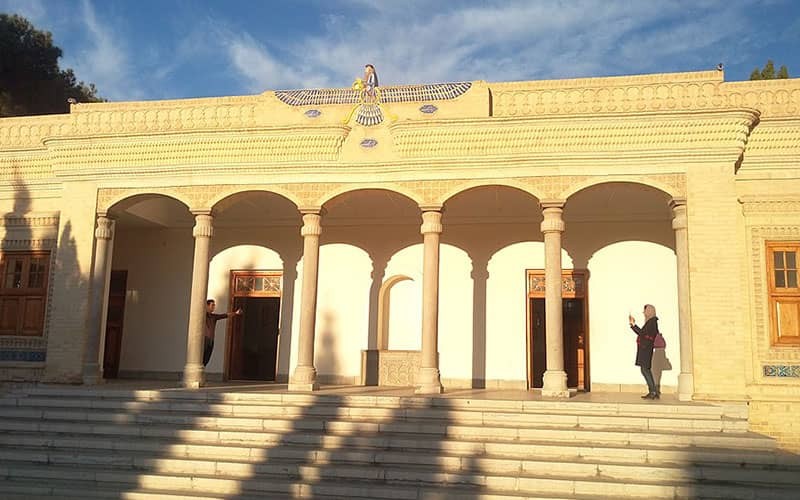
In the quiet streets of Yazd, behind a facade adorned with Faravahar symbols and carved stone columns, a fire has been burning continuously for more than fifteen centuries. Atashkadeh Bahram, the Bahram Fire Temple, is one of the most significant Zoroastrian places of worship in Iran and one of only a handful of sites where an ancient sacred flame remains alive. For Zoroastrians, fire represents the divine light of Ahura Mazda, and this temple stands as a living connection to one of the world's oldest monotheistic religions.
Where Is Atashkadeh Bahram?
The fire temple sits on Ayatollah Kashani Street, off Shahid Montazer Qaem Boulevard in central Yazd. The city of Yazd, located in the heart of Iran's central desert in Yazd Province, is one of the country's most important centers of Zoroastrian culture. Yazd's old town is a UNESCO World Heritage Site, and the fire temple is among its most visited landmarks.
The temple is easy to find from the city center. Public buses running along Ayatollah Kashani Street stop near the entrance. Open Mehyar and book a taxi from your Yazd hotel to reach the temple directly. Mehyar Buses connect Yazd to Tehran, Isfahan, Shiraz, and Kerman, making the city a convenient stop on any central Iran itinerary.
A Fire That Has Burned for 1,500 Years
The flame inside Atashkadeh Bahram is not a modern recreation. It is one of three great sacred fires of the Sassanian period that have survived to the present day. The fire originally belonged to the Adur Farnbag temple in Fars Province, one of the three most important Zoroastrian fire shrines of the Sassanian Empire, alongside Adur Gushnasp in Takab and Adur Burzen-Mihr in Razavi Khorasan.

The journey of this fire across the centuries is remarkable. After the fall of the Sassanian Empire, Zoroastrian communities faced periods of persecution and displacement. In the tenth century, to protect the flame from invaders, priests carried it from the original temple to a larger shrine in Yazd. When that shrine was also destroyed, the fire was moved to a cave on Mount Eshkaft, where it remained hidden for thirty years.
Over the next two centuries, the fire was transferred between several villages in the Yazd region, always under the careful guardianship of Zoroastrian priests. It stayed in the village of Turkabad near Ardakan for roughly three hundred years before moving to Sharifabad, and finally returned to Yazd in the eighteenth century. For many years, it was kept in a small house in the Dashturan quarter, hidden from public view.
The Construction of the Present Temple
The current building dates to 1934, during the reign of Reza Shah Pahlavi. A wealthy Zoroastrian philanthropist named Homabhai provided the funds, and the land was donated by the Amanat brothers in memory of their father, Ardeshir Mehraban Rustam Amanat. Jamshid Amanat, one of the brothers, oversaw the construction and traveled to India five times to secure financial support from the Parsee community there.
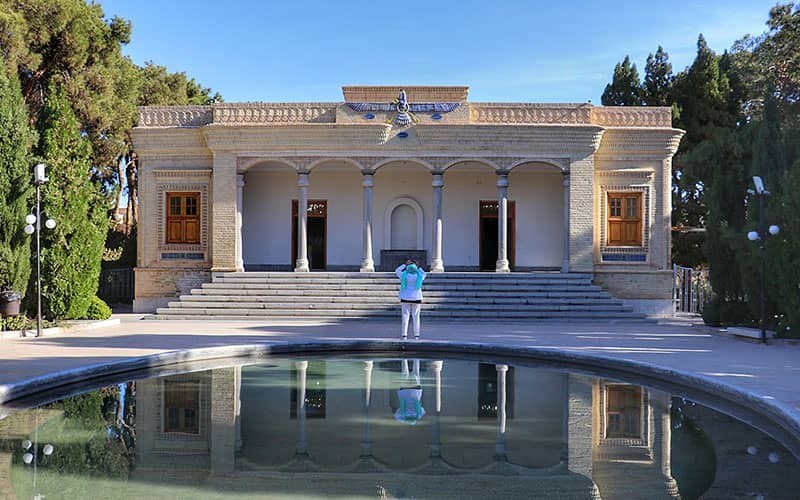
The architects were Iranian Parsees, and the design follows the spatial hierarchy of traditional Parsee fire temples while incorporating elements of Yazd's desert architecture. The building stands about twenty-one meters above ground level, and visitors ascend eight steps to enter. Evergreen trees surround the structure within a courtyard, creating a tranquil atmosphere. Stone columns carved in Isfahan and decorative tilework featuring the Faravahar motif, executed by artisans from Yazd and Isfahan, add dignity and beauty to the interior.
The walls inside are decorated with images of Zoroaster and verses from the Avesta, the sacred text of the Zoroastrian faith. The overall effect is one of restrained elegance, consistent with the Zoroastrian tradition that fire temples should be simple, pure, and free of ostentation.
The Sacred Fire Chamber
The fire itself burns in a large bronze vessel housed inside a glass enclosure, raised above floor level in a dedicated chamber at the center of the building. The chamber is designed to be shielded from direct sunlight, preserving the sanctity of the flame. A priest known as a Herbad tends the fire around the clock, adding pieces of dry, hard wood such as almond or apricot several times each day. The ashes, considered spiritually inert, are removed when necessary.
Visitors view the fire through the glass barrier. Zoroastrian tradition holds that human breath should not come into direct contact with the sacred flame, which is why the enclosure exists. Standing before the glass, watching a fire that has been tended without interruption for fifteen hundred years, is one of the most moving experiences available to visitors in Yazd.
The Verjavand Hall and the Water Reservoir
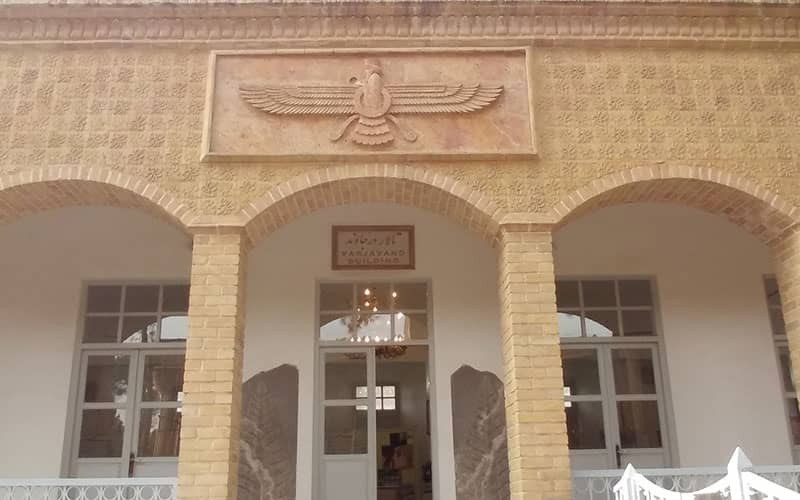
Adjacent to the main temple building is the Verjavand Hall, constructed in 1939 by Jamshid Amanat in memory of his wife. The original structure was rebuilt between 2002 and 2008 by engineer Parviz Verjavand in honor of his parents. Today the hall serves as an exhibition space where visitors can learn about Zoroastrian traditions, religious ceremonies, clothing, wedding customs, and the Nowruz table. Mannequins dressed in traditional garments illustrate the practices of the faith.
Beneath the hall lies the temple's water reservoir, or ab-anbar, which was also built by Jamshid Amanat. Visitors can descend into the cool underground chamber through a staircase. In the past, water from a qanat entered the reservoir through an overhead opening, and residents accessed it through a tap at the base. The reservoir is now dry and open for exploration, with foot holds visible in the walls that were once used for maintenance.
Etiquette for Visitors
Atashkadeh Bahram is a functioning place of worship, and visitors are expected to observe certain courtesies. Both men and women should be clean and modestly dressed. Zoroastrian men traditionally wear a white cap and women a white headscarf with light-colored clothing when entering the temple, and all visitors remove their shoes. No one may approach the sacred fire closely, as human breath is believed to contaminate its purity. Women during specific periods are traditionally not permitted to enter, similar to customs in other religious traditions.

Non-Zoroastrian visitors are welcome in the viewing areas. Photography may be restricted in some sections, so always ask permission. The atmosphere inside the temple is one of deep reverence, and maintaining a quiet, respectful demeanor is essential.
Practical Information
The temple is open daily except on certain religious holidays, typically from 8:00 to 12:00 and from 17:00 to 20:00. An entrance fee applies. Allow one to two hours for a full visit, including the main fire chamber, the Verjavand Hall, and the water reservoir.
Book your Yazd hotel through Mehyar Hotels for comfortable accommodation within walking distance of the temple and other Zoroastrian heritage sites. Mehyar Buses and Mehyar Taxis make it easy to reach Yazd from anywhere in Iran and to navigate between the city's scattered attractions.
Nearby Attractions
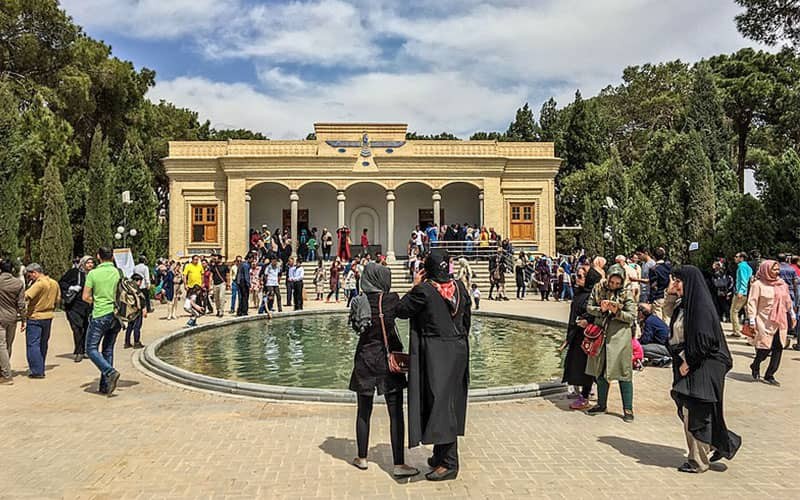
Yazd's old town is compact and rich with historical sites. The Amir Chakhmaq Complex, with its iconic row of alcoves, is a short distance away. The Jameh Mosque of Yazd, with its towering minarets, is one of the finest examples of Persian Islamic architecture. The Dowlat Abad Garden, home to the tallest badgir in Iran, is also nearby. For travelers interested in Zoroastrian heritage, the Towers of Silence on the outskirts of Yazd offer a sobering glimpse into ancient funerary practices.