
The Avesta is the foundational scripture of Zoroastrianism, one of the world's most ancient living religions, and it occupies a central place in the spiritual and cultural heritage of Iran. Composed in an old Iranian language closely related to Vedic Sanskrit, the Avesta preserves the teachings of the prophet Zarathustra and offers a worldview built around the eternal struggle between truth and falsehood. For travelers exploring the cities and monuments of Iran, understanding the Avesta opens a door to the deeper currents that have shaped Persian thought for thousands of years.

The Origins of the Avesta
The origins of the Avesta stretch back to the Old Iranian period, roughly between 1500 and 500 BCE, when its sacred verses were first composed and preserved through oral transmission by Zoroastrian priests. These verses, attributed to Zarathustra himself, represent the core theological teachings of the faith and emphasize the cosmic duality between truth, known as Asha, and the forces of deceit and disorder.
During the earliest centuries, the teachings existed only in the memories of the priestly class, passed from generation to generation through careful recitation. This oral preservation continued until the era of the Sassanian Empire (224 to 651 CE), when the need to compile and document the scattered teachings became urgent. The Sassanian rulers, recognizing the cultural and religious significance of the Avesta, initiated efforts to gather the remaining fragments of the texts and organize them into a unified body of work.
The process was not without losses. Alexander the Great's invasion of Persia led to widespread destruction of Zoroastrian manuscripts, and much ancient knowledge perished in the upheaval. Despite this devastating blow, what survived was painstakingly gathered under royal sponsorship, ensuring that the foundational spiritual teachings of the faith would endure. The Sassanian king Shapur II played a particularly important role in this codification, collecting remnants of the Avesta and organizing them into the cohesive structure that has survived to the present day.

Structure and Core Content
The Avesta is organized into five primary sections, each serving a distinct theological and liturgical purpose. The most important is the Yasna, which contains the Gathas, the hymns believed to have been composed by Zarathustra himself. These hymns are regarded as the most spiritually profound texts in the Zoroastrian tradition, focusing on themes of cosmic struggle, moral choice, and the human duty to uphold truth and righteousness. The language of the Gathas is dense with symbolism, and their interpretation often requires the guidance of a learned Mobed, or Zoroastrian priest.
The Visperad supplements the Yasna with additional prayers that honor spiritual leaders and divine entities. It expands the liturgical framework of Zoroastrian worship and underscores the interconnectedness between divine beings and human devotion. Through the Visperad, followers are reminded of the importance of community and collective effort in maintaining cosmic harmony.
The Vendidad is often described as the book of laws, containing extensive purity regulations, mythological narratives, and guidelines for maintaining cosmic order. It is a valuable source of Zoroastrian mythology, including the story of Yima, the first king, who is tasked with protecting all living beings from a catastrophic winter. This narrative highlights the ideals of stewardship and the responsibility that humanity bears toward the natural world.
The Yashts form a collection of hymns dedicated to various divine beings, celebrating early Iranian myths and demonstrating the rich spiritual imagination of the Zoroastrian tradition. Among them, the Mithra Yasht honors Mithra as the protector of truth and justice, while the Anahita Yasht venerates Anahita, the divinity of waters and fertility. These hymns reveal a worldview in which the sacred is woven into every aspect of the natural world, from rivers to mountains to the vast sky above.
The Khorda Avesta, sometimes called the Little Avesta, contains prayers and hymns intended for daily use by laypeople. It makes the teachings of the faith accessible beyond the priesthood, functioning as a practical guide for personal devotion. The Khorda Avesta includes prayers such as the Ashem Vohu and Yatha Ahu Vairyo, which encapsulate core Zoroastrian values of truth, righteousness, and the pursuit of a just life.
Language and Cultural Legacy
The Avesta is composed in Avestan, an ancient language closely related to Vedic Sanskrit. This linguistic connection offers crucial insights into the shared cultural and religious roots of early Indo-Iranian civilizations. Through vivid imagery and allegorical narratives, the Avesta explores universal themes of good versus evil and light versus darkness, portraying human choices as pivotal in maintaining cosmic equilibrium.
These themes have influenced broader ethical and philosophical traditions across the region, including those found in Judaism, Christianity, and Islam. The Avestan language, with its poetic and intricate structure, preserves an ancient worldview that emphasizes truth, righteousness, and harmony with nature. The cultural legacy of the Avesta extends to later Persian literature, where themes of moral struggle, duality, and reverence for nature persist as key motifs. Works such as the Shahnameh by Ferdowsi carry forward the ethical concerns and mythological richness that the Avesta first articulated.
Enduring Relevance in Modern Times
The Avesta holds profound cultural value not only for Zoroastrians but for all Iranians, serving as a symbol of pre-Islamic heritage and a testament to the enduring spiritual legacy of Mazdayasna, the worship of Ahura Mazda. The core principles of good thoughts, good words, and good deeds offer a universal moral framework that transcends religious boundaries and fosters peace, community solidarity, and environmental stewardship.
The Zoroastrian reverence for the natural world, as expressed throughout the Avesta, resonates strongly with contemporary efforts to address environmental degradation. The emphasis on purity and harmony with creation provides a spiritual foundation for ecological consciousness that feels remarkably modern. Scholars have noted that the Avesta's vision of human responsibility toward the earth anticipates many of the concerns that dominate current environmental discourse.
Exploring the Avesta's Legacy as a Traveler
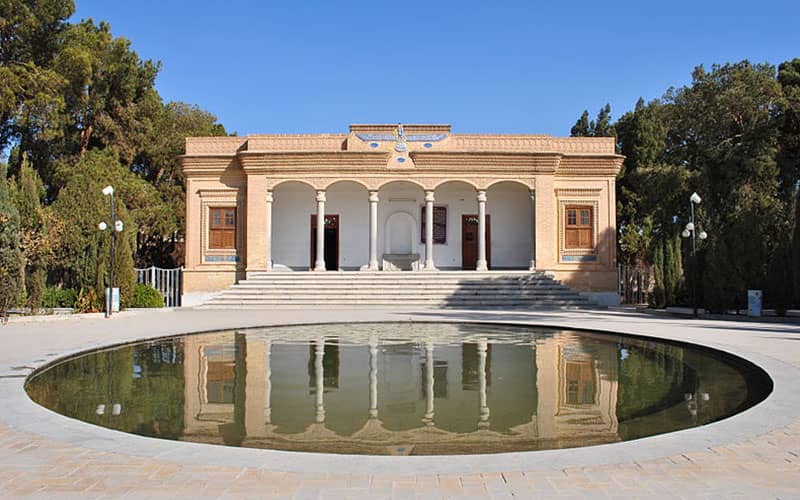
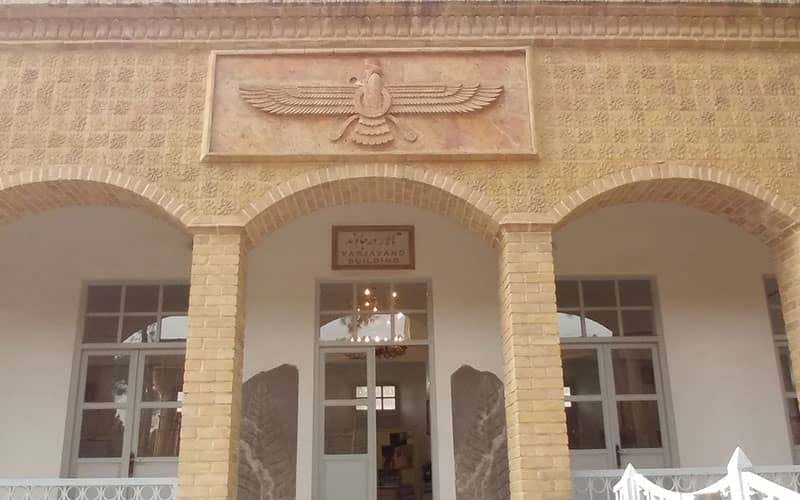
For travelers visiting Iran, the legacy of the Avesta is visible in the Zoroastrian sites scattered across the central plateau. In Yazd, the Zoroastrian Fire Temple houses an eternal flame said to have burned continuously since ancient times, and the Farvahar symbol that adorns its facade represents the moral philosophy at the heart of the Avesta. The towers of silence on the outskirts of Yazd preserve echoes of ancient funerary traditions described in Zoroastrian texts.
Near Kerman, the fire temple known as Atashkadeh Azarbagh offers a glimpse into the deep antiquity of Zoroastrian worship in the region, while the city of Yazd itself remains the center of Iran's living Zoroastrian community. Visitors can observe religious ceremonies, explore Zoroastrian neighborhoods, and learn how the teachings of the Avesta continue to guide daily life for the faithful.
Travelers planning a cultural journey through central Iran can use Mehyar to arrange transport between Yazd, Kerman, and other sites associated with the Zoroastrian heritage. Mehyar Buses connect the major cities of the plateau, making it straightforward to combine a visit to the Avesta's living legacy with the broader historical and architectural wonders of the region.
For those interested in the broader cultural landscape, the traditions rooted in the Avesta also connect to the celebration of Nowruz, the Persian New Year, and to the rich artistic heritage of [Persian gardens](/persian-gardens), both of which carry forward the Zoroastrian emphasis on renewal, light, and harmony with nature. Exploring these connections transforms a trip to central Iran into a journey through one of humanity's oldest and most enduring spiritual traditions.