
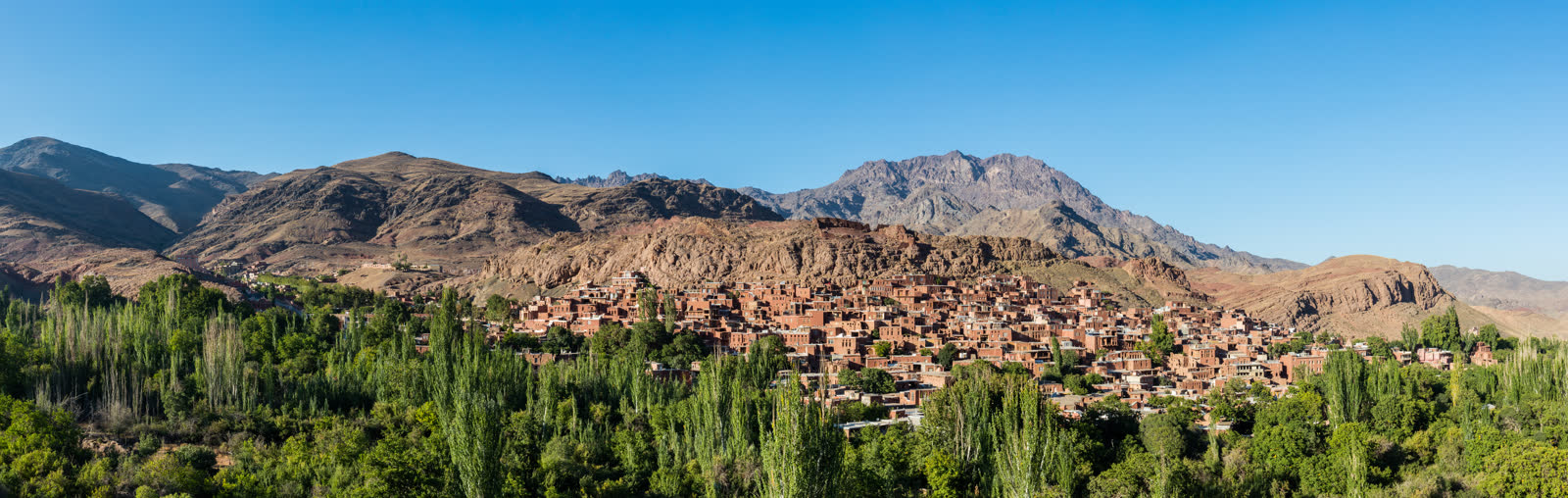
Thirty-seven kilometers east of Arak, the capital of Markazi province, Anjdan Village sits in a high valley of the central Iranian plateau. This is one of those rare settlements where history is not preserved in museums but lived in daily routines: in the walnut trees that have shaded these streets for generations, in the stone houses built with local materials, and in the quiet persistence of rural Iranian life. For travelers exploring the heartland of Iran beyond the usual tourist circuit, Anjdan offers a genuine encounter with a way of life that has endured in the Zagros highlands for centuries.
Anjdan has been registered as a national heritage site due to its architectural integrity and historical significance. The village represents a way of life that has existed in the central Zagros highlands for centuries, shaped by the harsh but beautiful mountain climate and the agricultural traditions of the region. Unlike many rural settlements that have been abandoned or modernized beyond recognition, Anjdan has retained much of its original character, making it a valuable destination for those interested in the living heritage of Iran's countryside.
Where Is Anjdan Village?
Anjdan is located approximately 37 kilometers east of the city of Arak in Markazi province, central Iran. The village sits at a high elevation in the mountainous terrain between Arak and the western slopes of the central plateau. The surrounding landscape is semi-arid, with the village benefiting from seasonal water sources and the fertile soil of its valley. Markazi province, whose name means "central province," occupies a key position in Iran's geography, and Anjdan sits within a network of historic villages that have preserved their traditional character despite the pressures of modernization.
The village's elevation gives it a distinctive climate compared to the lower-lying areas around Arak. Summers are warm but tempered by altitude, while winters can be cold with snowfall that blankets the stone roofs and walnut orchards. This seasonal rhythm has shaped the agricultural calendar and the daily life of the community for generations.
How to Get There
From Arak, the drive to Anjdan takes about 45 minutes on rural roads. The route passes through the rolling highland landscape characteristic of Markazi province, with scattered villages and agricultural fields along the way. The road climbs gradually as it moves east from Arak, offering views of the surrounding mountains and valleys that define this part of the central plateau.
Open Mehyar and choose Taxi from Arak for a comfortable ride to the village. Book via Mehyar Buses from Tehran or Isfahan to Arak, then arrange a local taxi for the final leg to Anjdan. The journey through the central highlands offers views of the vast Iranian plateau that are rarely experienced by travelers who stick to the main highways. If you are driving yourself, the route is straightforward and well-signed, though the final approach to the village is on narrower rural roads that wind through the agricultural landscape.
The Village Architecture
Anjdan's houses are built in the traditional style of the central Iranian highlands. Thick stone and mud-brick walls provide insulation against the cold winters and hot summers. Flat roofs, typical of arid-region architecture, are used for drying walnuts and herbs during the harvest season. The construction materials are all local: stone quarried from the surrounding hills, mud from the valley floor, and wood from the walnut trees that dominate the landscape.
The village layout follows the natural contours of the valley, with narrow lanes winding between houses and small courtyards. Water channels run through the village, a remnant of the ancient qanat system that once sustained agriculture across the plateau. These channels, though less extensive than in the past, still carry seasonal water through the village and demonstrate the sophisticated water management techniques that allowed settlement in this semi-arid environment.
The houses themselves are modest but well-adapted to the climate. Thick walls keep interiors cool in summer and warm in winter, while small windows reduce heat loss during the cold months. Many houses have enclosed courtyards that provide sheltered outdoor space protected from wind and dust. The architectural vocabulary of Anjdan speaks to centuries of adaptation to a demanding but rewarding landscape.

The Walnut Tradition
Anjdan is known in the region for its walnut orchards. The trees are old, some planted generations ago, and the annual harvest is a community event. Walnuts from Anjdan are prized for their quality and are sold in the markets of Arak and beyond. Visitors arriving in early autumn may witness the harvest and the traditional methods of hulling and drying the nuts.
The walnut harvest is more than an agricultural activity; it is a cultural event that brings families and neighbors together. The process of removing the green hulls, washing the nuts, and spreading them to dry on flat roofs and courtyards follows techniques that have been passed down through generations. The quality of Anjdan walnuts is recognized throughout Markazi province, and the village's reputation for excellent walnuts has been built over decades of careful cultivation.
Beyond walnuts, the village orchards also produce almonds, apricots, and other tree fruits suited to the highland climate. The combination of orchard agriculture and seasonal grain cultivation has sustained the village economy for centuries, creating a diversified subsistence strategy that reduced vulnerability to crop failure in any single season.
Life in the Village Today
The population of Anjdan, like many Iranian villages, has experienced changes in recent decades. Younger generations have moved to cities for education and employment, but a core community remains committed to maintaining the village and its traditions. Agriculture continues to be the main economic activity, supplemented by remittances from family members working in Arak and Tehran.
In recent years, there has been growing interest in rural tourism and heritage preservation, which has brought some new opportunities to the village. Visitors interested in traditional architecture, agricultural heritage, and authentic rural experiences are beginning to discover places like Anjdan, bringing modest economic benefits and renewed pride in local traditions. The registration of the village as a national heritage site has also helped to raise awareness of its significance and the need to protect its character.
Nearby Attractions
The region around Arak holds several historical villages and sites worth exploring. The city of Arak itself has traditional bazaars and old houses worth exploring, including the historic bazaar complex that serves as a commercial hub for the surrounding agricultural region. Further east, the road leads toward the desert margins of the central plateau, while to the west, the Zagros mountains rise with their oak forests and mountain trails.
Other historic villages in Markazi province share similar architectural traditions and agricultural heritage, each with its own distinctive character. The region offers a network of cultural destinations for travelers interested in exploring beyond the major cities and experiencing the diversity of Iranian rural life.
Best Time to Visit
Spring (April to May) is the most beautiful season, when the valley greens up and the fruit trees bloom. The contrast between the brown stone houses and the bright green of new leaves and blossoms is striking. Early autumn (September) coincides with the walnut harvest and is a culturally rich time to visit, when the village is busy with agricultural activity and visitors can observe traditional harvest practices firsthand. Summer is warm but bearable at this elevation, making it a reasonable time to visit though the landscape is drier. Winter is cold with occasional snowfall, and while the village has a quiet beauty under snow, access can be difficult and facilities limited.
Practical Details
- Address: Anjdan Village, 37 km east of Arak, Markazi province
- Hours: Open access at all times
- Tickets: Free
- Best season: April to May, September
- Phone: Markazi provincial tourism office