
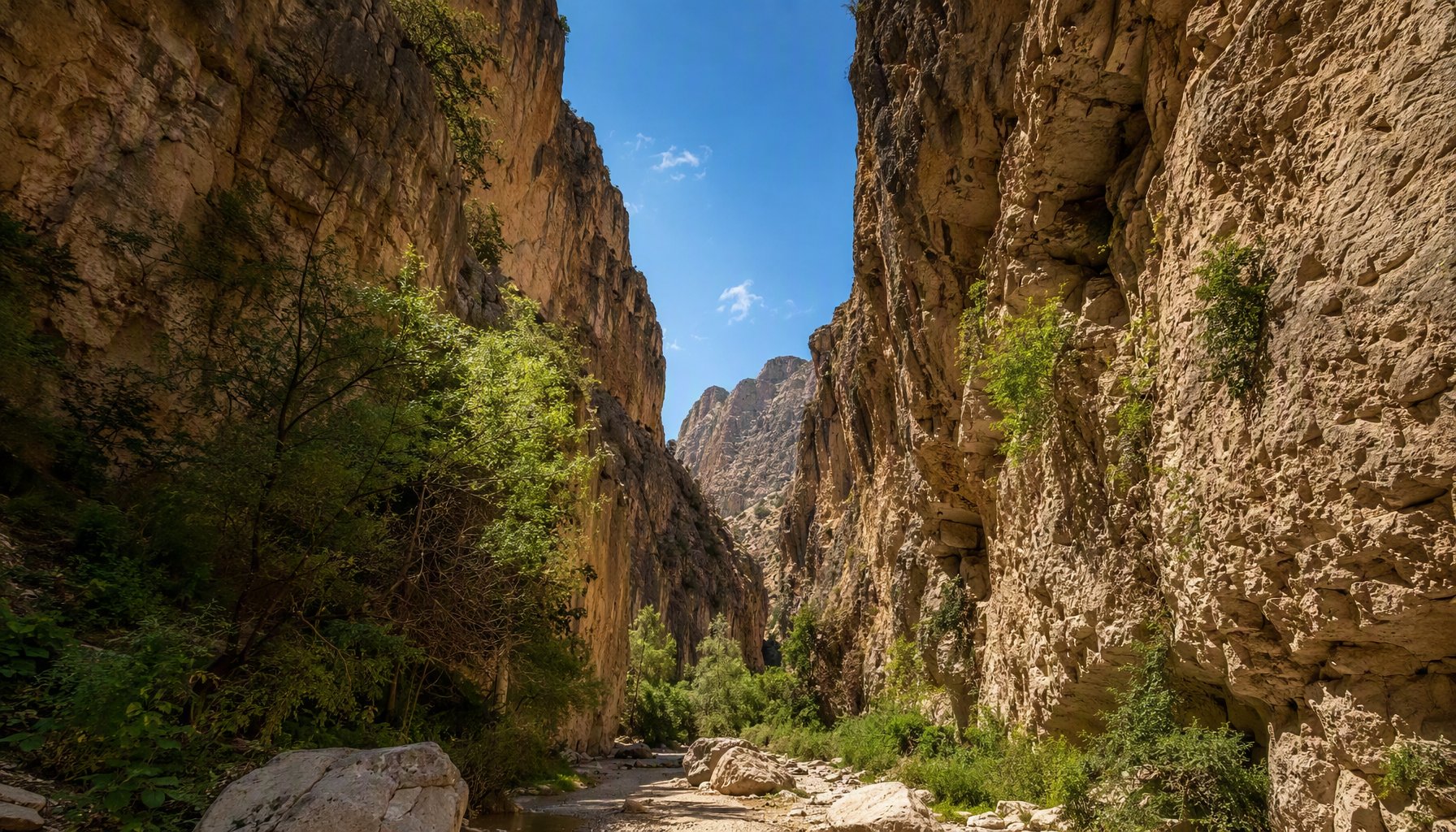
Deep in the Zagros mountains of western Iran, Almas Canyon cuts through limestone cliffs in a display of raw geological power. Known locally as Tangeh-ye Almas, this narrow gorge lies about 80 kilometers from the city of Ilam, the provincial capital. The canyon walls rise steeply on both sides, creating a natural corridor where sunlight filters down in shifting patterns and seasonal waterfalls cascade over the rock face.
Almas Canyon sits near the well-known Kafarin Canyon, and many visitors combine both sites into a single day trip. The area remains relatively untouched by mass tourism, offering a genuine wilderness experience in one of Iran's least-visited provinces. For travelers seeking authentic adventure far from crowded tourist trails, this canyon delivers an unforgettable encounter with the geological heart of the Zagros range.
Where Is Almas Canyon?
The canyon is located approximately 80 kilometers northwest of Ilam city, in Ilam province in western Iran along the Zagros range. The nearest major settlement is a small village a few kilometers from the canyon entrance. Ilam province borders Iraq to the west and is one of Iran's most mountainous and least densely populated regions.
The Zagros Mountains form one of the great mountain chains of the Middle East, stretching over 1,500 kilometers from northwestern Iran to the Strait of Hormuz. Almas Canyon sits in a section where millions of years of tectonic activity and water erosion have carved dramatic valleys and gorges into the limestone bedrock. The region's geological complexity makes it a fascinating destination for those interested in earth sciences and natural landscapes.
How to Get There
The drive from Ilam city to the canyon takes about 1.5 to 2 hours on rural roads. A private vehicle is strongly recommended, as public transport does not reach the canyon directly. You can arrange transportation through your accommodation in Ilam, or hire a local driver who knows the mountain roads well. Several tour operators in Ilam also offer guided trips to the canyon and surrounding attractions.
The road passes through rolling Zagros landscapes with oak forests and traditional Kurdish villages. As you leave Ilam behind, the terrain becomes increasingly rugged, with steep slopes covered in Mediterranean vegetation. The final approach requires a short hike from the parking point to the canyon entrance, following a marked trail that descends gradually into the gorge.
What to Expect Inside the Canyon
The canyon narrows significantly as you proceed deeper, with some sections barely wide enough for one person. The rock walls, shaped by millennia of water erosion, display layers of sedimentary stone in shades of beige, gray, and rust. These visible strata tell the story of millions of years of geological history, with each layer representing a different period of deposition and environmental change.
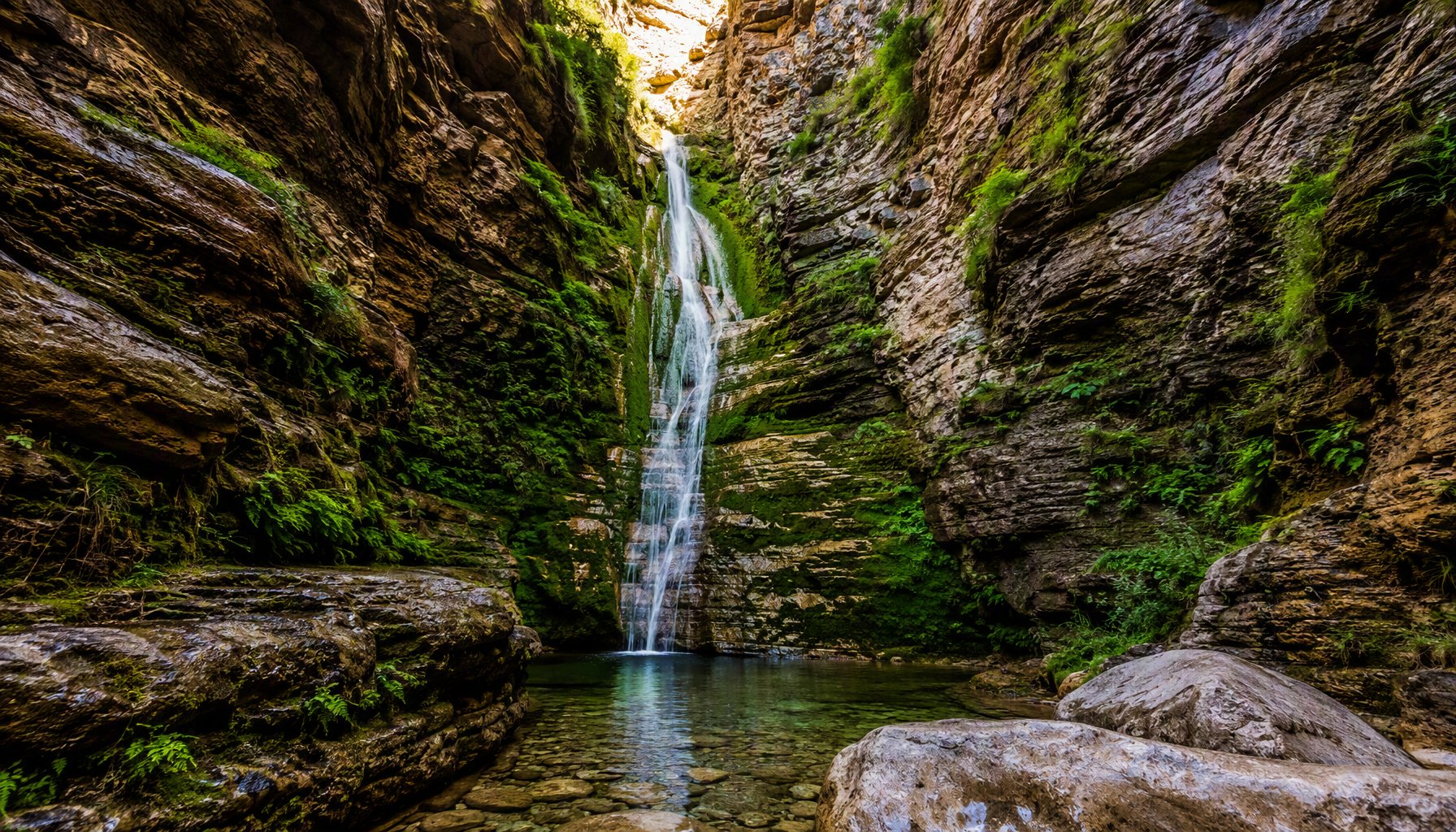
During spring and early summer, meltwater from the mountains feeds small waterfalls that drop from fissures in the cliff faces. The sound of rushing water echoes through the narrow space, creating an almost cathedral-like atmosphere. The moisture supports lush growth of mosses, ferns, and other moisture-loving plants that cling to the rock surfaces, adding splashes of green to the stone palette.
Wildlife is present but shy. You may spot Zagros ibex on the higher ledges, their curved horns silhouetted against the sky. Various bird species nest in the cliff crevices, including raptors that hunt in the updrafts along the canyon rim. The canyon floor is rocky and uneven, so sturdy footwear is essential. A walking stick can help with balance on the slippery stones near the waterfalls.
The Geological Story
Almas Canyon provides a visible cross-section of the Zagros geological formation. The limestone that forms the canyon walls dates back to the Mesozoic era, when this region was covered by shallow seas. Over millions of years, tectonic forces uplifted the seabed, creating the mountain range we see today. Water then became the sculptor, carving channels and caves through the soluble limestone.
The canyon's narrow profile results from the differential erosion rates of the rock layers. Harder limestone resists weathering and forms vertical cliffs, while softer layers erode more quickly, creating overhangs and recesses. This process continues today, with seasonal floods gradually deepening and widening the gorge. Geologists studying the area can read the landscape like a book, understanding the sequence of environmental changes that shaped this corner of Iran.
Nearby: Kafarin Canyon
About a short drive from Almas Canyon lies Kafarin Canyon, also called the Cave Canyon. Kafarin is famous for its numerous caves carved into the canyon walls, some of which show traces of ancient human habitation. Archaeologists have found evidence of prehistoric occupation in these caves, suggesting that early humans recognized the shelter and strategic advantages these natural formations provided.
The combination of both canyons makes for a full day of exploration and is the highlight of any visit to Ilam province. Kafarin offers a different experience from Almas, with its emphasis on cave exploration and archaeological interest. Together, they showcase the diverse natural and cultural heritage of the Zagros region.
Best Time to Visit
Spring (March to May) is the ideal season, when waterfalls are at their strongest and the surrounding Zagros oak forests are bright green. The weather is mild, making hiking comfortable, and wildflowers bloom across the mountain slopes. Early autumn (September to October) is also pleasant with mild temperatures and clear skies. Summer can be hot, particularly in the lower elevations, and the waterfalls may diminish to a trickle. Winter brings cold and potential snow blockage on the access roads, making the canyon difficult to reach.
What to Bring
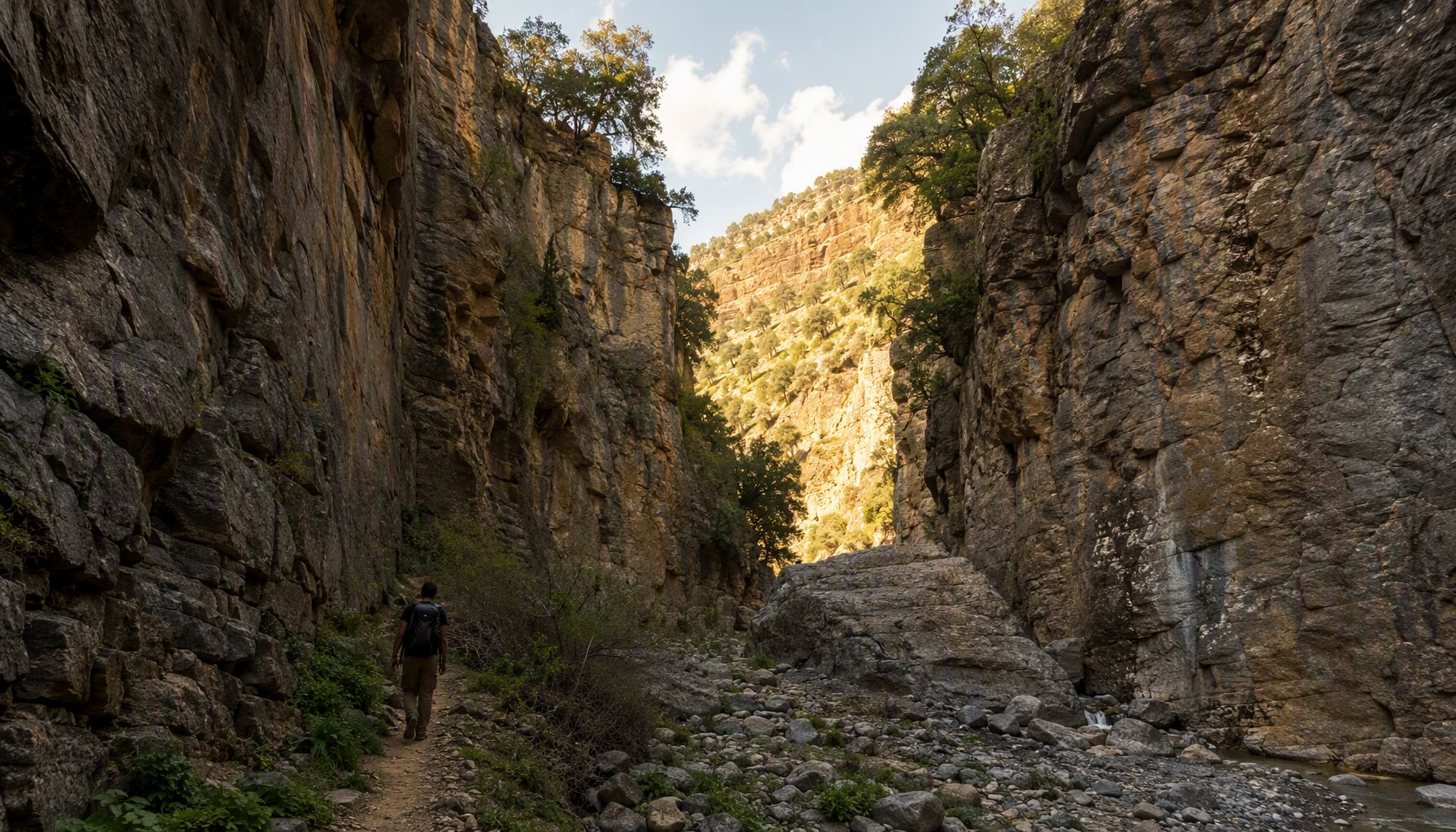
Visitors should come prepared for a moderate hiking adventure. Essential items include sturdy hiking boots with good grip, as the canyon floor can be slippery, especially near waterfalls. Bring plenty of water, as there are no facilities inside the canyon. A hat and sunscreen are advisable for the exposed sections, along with a light jacket for the cooler temperatures in the shaded gorge.
If you plan to explore Kafarin Canyon as well, a flashlight or headlamp will help you see inside the caves. A camera with a good lens will capture the dramatic lighting and geological details. Consider bringing a small backpack to carry your supplies, leaving your hands free for balance on the rocky terrain.
Practical Details
- Address: Approximately 80 km from Ilam city, Ilam province, western Iran
- Hours: Open access, daylight hours only
- Tickets: No entrance fee currently
- Best season: March to May
- Phone: Ilam provincial tourism office
- Difficulty: Moderate hiking, suitable for most fitness levels
- Duration: Allow 2 to 3 hours for the canyon walk itself, longer if combining with Kafarin Canyon
The canyon represents the kind of destination that rewards those willing to venture off the beaten path. Ilam province may not feature on most international tourists' itineraries, but visitors who make the journey discover a landscape of raw beauty and geological significance. Almas Canyon, with its towering walls, seasonal waterfalls, and connection to the ancient past, stands as one of the Zagros Mountains' most compelling natural attractions.