Seven kilometres south-west of Tehran's busiest streets, a different world opens up at the edge of the day. The farmlands of Ahmadabad Mostofi stretch flat and green (or gold, depending on the season) toward the Alborz mountains, and when the sun starts its final descent, the whole plain catches fire. This is not a curated viewpoint with ticket booths and souvenir stalls. It is working farmland that happens to produce some of the most rewarding sunsets in the Tehran region, and it costs nothing to stand in it and watch.
Where is Ahmadabad Mostofi?
Ahmadabad Mostofi is one of the older towns in Tehran province, sitting directly between Tehran and Eslamshahr. The distance from central Tehran is only about seven kilometres, which makes this one of the closest genuine countryside escapes available to anyone staying in the capital. You can literally finish a meeting in Tehran and be standing in a rapeseed field before rush hour peaks.
The town is reachable from Tehran via the Azadegan Highway and then the Ahmadabad road. The Eslamshahr railway station sits at the end of the Ahmadabad-Eslamshahr road, and the farmlands spread across the flat plain between these points. If you are coming from the city centre, the entire drive takes roughly twenty to thirty minutes in normal traffic.
The farmlands and their seasons
What makes Ahmadabad Mostofi unusual is that its fields are never truly empty. Cultivation runs year-round, so there is always something green, something golden, or something freshly harvested to look at. But the landscape does change dramatically with the seasons, and knowing what grows when helps you plan the right visit.
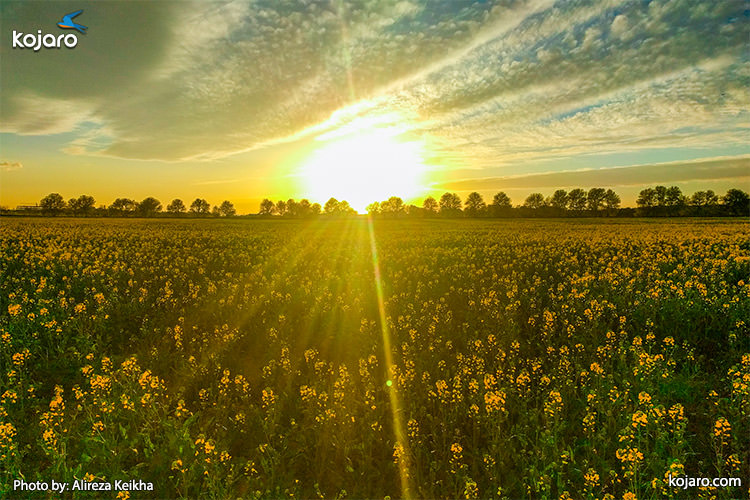
Spring (March to May) is rapeseed season. The canola fields burst into bright yellow across the plain, and this is when the area puts on its most vivid show. The rapeseed flowers attract ladybugs and other small insects, the air carries a faint sweet scent, and the contrast of yellow blossom against the dark soil and distant mountains makes every photograph look like a painting. Rapeseed is grown across Iran for cooking oil, and the fields around Ahmadabad are among the most accessible examples of this crop near a major city.
Late spring and early summer bring wheat. The yellow of the rapeseed gives way to the amber of ripening wheat, and the fields take on a warmer, more golden tone that pairs beautifully with the long summer evenings.
Autumn and winter see other crops and freshly ploughed earth, which create their own moody palette. The light is softer, the skies are often partly cloudy, and a partly overcast sunset here can produce dramatic streaks of colour that clear-sky evenings cannot match.
Why photographers come here
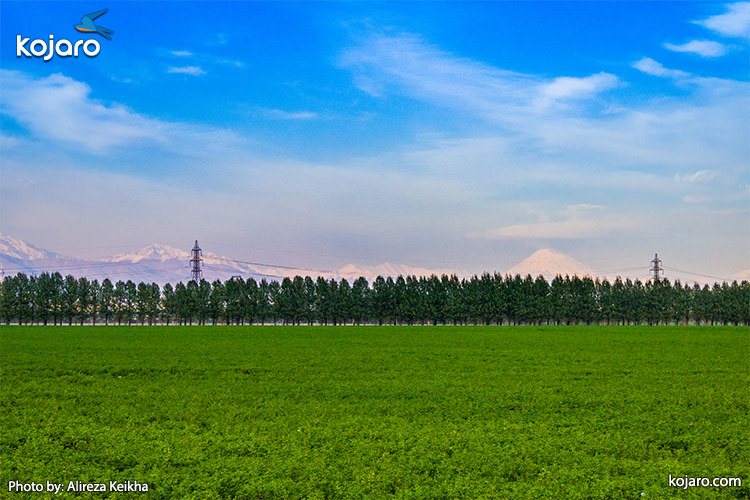
Sunset photography near a major city usually means fighting for a spot on a crowded rooftop. Ahmadabad Mostofi offers the opposite experience. The flat terrain means the horizon line stretches unbroken in every direction, and the Alborz mountain range frames the northern edge like a wall of pale blue and violet. On clear evenings, when Tehran's air pollution has not drifted south, the snow-capped cone of Mount Damavand rises above the fields in the distance. A foreground of rapeseed or wheat, a mid-ground of scattered trees and farm fences, and a background of Damavand and the Alborz range: this is the composition that keeps drawing photographers back.
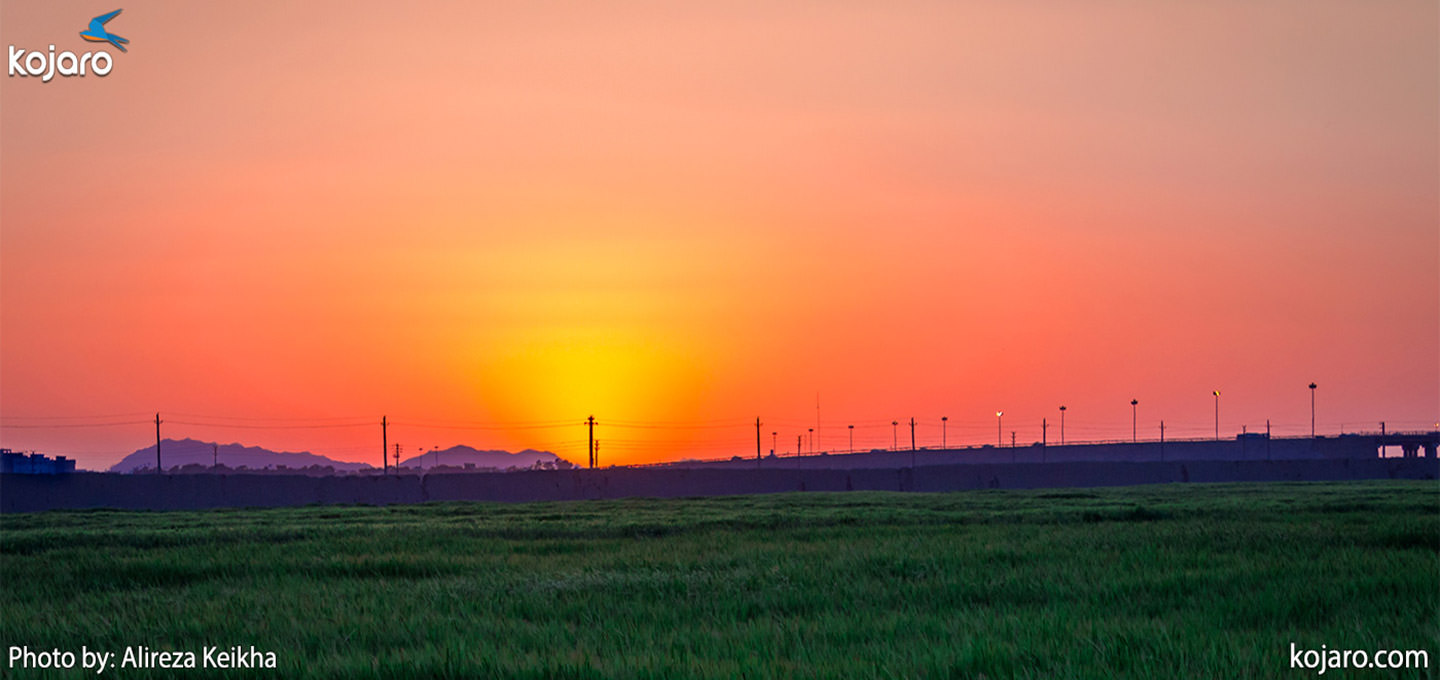
The last hour before sunset is the sweet spot. As the sun lowers, the light turns warm and directional, casting long shadows from the fence posts and irrigation channels. The sky itself cycles through a sequence of colours, from pale gold to deep orange to a final red stripe along the horizon. On partly cloudy days, the clouds catch the light from below and amplify the effect, turning the entire sky into a canvas.
The old water tank and the railway station
Two landmarks break the flatness of the plain and add visual interest to any visit.
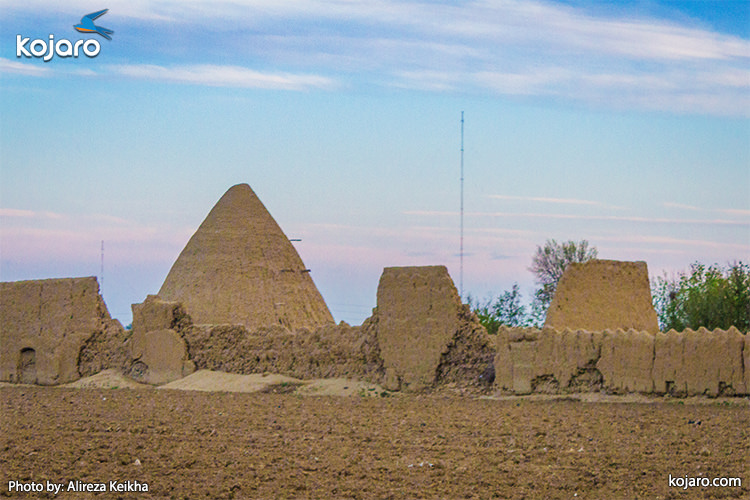
The old ab-anbar (traditional water reservoir) sits on the Ahmadabad-Eslamshahr road. These domed structures were once essential for storing water in Iran's hot, dry climate, and this one has become a quiet landmark for travellers heading south out of Tehran. Its mud-coloured dome against the open sky is a favourite foreground element for landscape photographs, especially in the warm light of late afternoon.
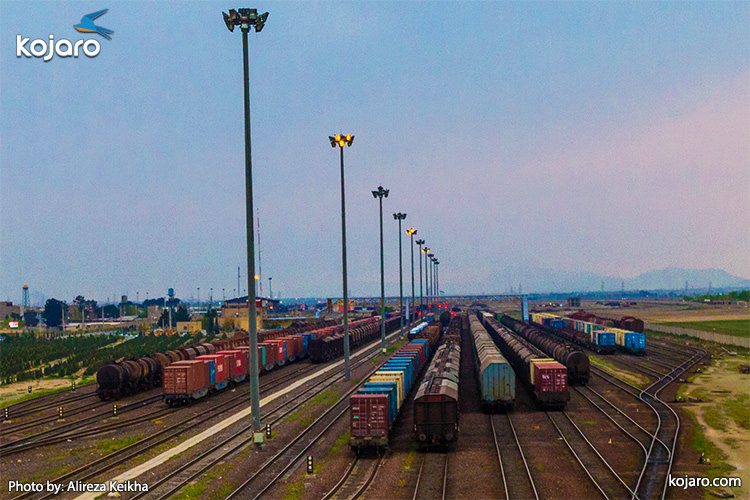
Further along the road, the Eslamshahr railway station adds an industrial counterpoint to the pastoral scenery. Colourful freight wagons line the tracks, and the contrast of painted metal against the earthy farmland creates an unexpected visual tension. The station is still active, so you may catch freight trains loading or departing while the sun sets behind them.
A favourite filming location
The visual appeal of these farmlands has not gone unnoticed by Iran's film and television industry. Directors have used the fields around Ahmadabad Mostofi as a location for numerous productions, from television commercials to major historical series. The most famous example is Mokhtarnameh, the epic television series about Mokhtar Thaqafi, which filmed several scenes against the backdrop of these very fields. The flat, open terrain and the quality of natural light make it a practical choice for productions that need a historical or rural setting within easy reach of Tehran's studios.
If you visit on a weekday morning, you might find a film crew at work, or at least the traces of one: tyre tracks in the dirt, a cleared patch where a camera dolly ran, or a farmer who can tell you which series shot here last.
How to get there from Tehran
Getting to Ahmadabad Mostofi is straightforward, and the short distance means you have several options.
By car. Take the Azadegan Highway south and follow the signs for Ahmadabad Mostofi and Eslamshahr. The drive from central Tehran covers roughly seven kilometres and takes twenty to thirty minutes in normal traffic. Once you reach the Ahmadabad road, the farmlands open up on both sides. There is no formal parking area, but wide dirt shoulders allow you to pull over safely. For a hassle-free drive with the flexibility to stop at any viewpoint that catches your eye, open Mehyar and book a Taxi. Your driver can wait while you photograph, and you avoid the stress of navigating back through Tehran traffic after dark.
By Mehyar Buses. Intercity buses from Tehran pass through the Eslamshahr corridor. Check the Mehyar app for available routes and schedules. From the main road, the farmlands are visible directly, and a short walk brings you to the best viewpoints.
By train. The Eslamshahr railway station is on the line from Tehran, and the colourful freight wagons at the station are worth a look in their own right. From the station, the farmlands stretch out to the east.
On a half-day tour. Several Tehran-based tour operators include Ahmadabad Mostofi as a sunset stop on longer day trips that may also cover nearby Eslamshahr or the southern Tehran province countryside. These tours typically handle transport and timing so you arrive at the right moment for golden hour.
What to bring
A few practical items will make the visit more comfortable and more productive.
- Camera with a wide-angle lens for the sweeping landscapes, and a telephoto or zoom for compressing Damavand behind the fields.
- A sturdy tripod if you plan to shoot the full sunset sequence, since exposures get long as the light fades.
- Comfortable shoes. The ground is dirt and gravel, not paved paths.
- Water and sun protection for late-afternoon visits in summer. The plain has almost no shade.
- A light jacket for autumn and winter evenings. The flat terrain means the wind comes in unobstructed, and temperatures drop quickly after the sun goes down.
- Insect repellent in spring, when the rapeseed fields attract large numbers of ladybugs and other insects.
Best time to visit
The single best window is mid-spring (April to early May), when the rapeseed is in full bloom and the days are long enough for a relaxed evening shoot. The yellow flowers against the warm sunset light produce the most iconic images from this location.
For a quieter experience with dramatic skies, autumn (October to November) offers partly cloudy conditions that amplify the sunset colours and cooler temperatures that make standing in the fields for an hour or two comfortable.
Summer evenings work if you arrive late enough to avoid the heat. The sun sets after 8 pm in June and July, and the wheat fields have their own golden appeal. Just bring plenty of water.
Winter is the quietest season. The fields are bare or freshly ploughed, the light is low and soft, and a snowy Alborz range behind dark earth creates a striking monochrome palette. Dress warmly and check road conditions if there has been rain, since the dirt shoulders can get muddy.
Practical tips
- Arrive at least forty minutes before sunset to scout your position and set up. The best spots are along the dirt roads that run between the fields, where you can frame the mountains and Damavand clearly.
- Stay on the paths and respect the crops. These are working farms, not public parks. Do not trample planted fields, and close any gate you open.
- Air quality matters. Check Tehran's pollution index before you go. On days when the smog stays over the city, Damavand disappears behind a grey veil. A fresh north wind or a recent rain usually clears the air.
- No entrance fee. The farmlands, the ab-anbar, and the railway station viewpoints are all open and free to access.
- Combine with Eslamshahr. The town of Eslamshahr is only a few kilometres further south and has its own parks and local restaurants if you want to extend the outing into a full evening.