
The city of Mashhad holds some of the finest examples of Islamic tilework anywhere in the Iranian plateau. Among its many architectural treasures, the question of the first lasting tile in Mashhad draws scholars, art historians, and curious travelers alike to examine the earliest surviving fragments of glazed ceramic decoration in the city's sacred buildings. The story of these tiles stretches back nearly a millennium, weaving through the Seljuk, Ilkhanid, Timurid, and Safavid periods to reveal how artisans in Khorasan transformed clay and mineral pigments into enduring works of beauty.

Where Is the First Lasting Tile Located?
The earliest surviving tilework in Mashhad is found within the sprawling complex of the Imam Reza Shrine, the holiest site in Iran and one of the largest religious complexes in the world. The shrine sits in the center of Mashhad, the capital of Khorasan Razavi Province, at coordinates approximately 36.28 degrees north and 59.61 degrees east. The complex encompasses courtyards, prayer halls, museums, libraries, and guest accommodations spread across more than 600,000 square meters.
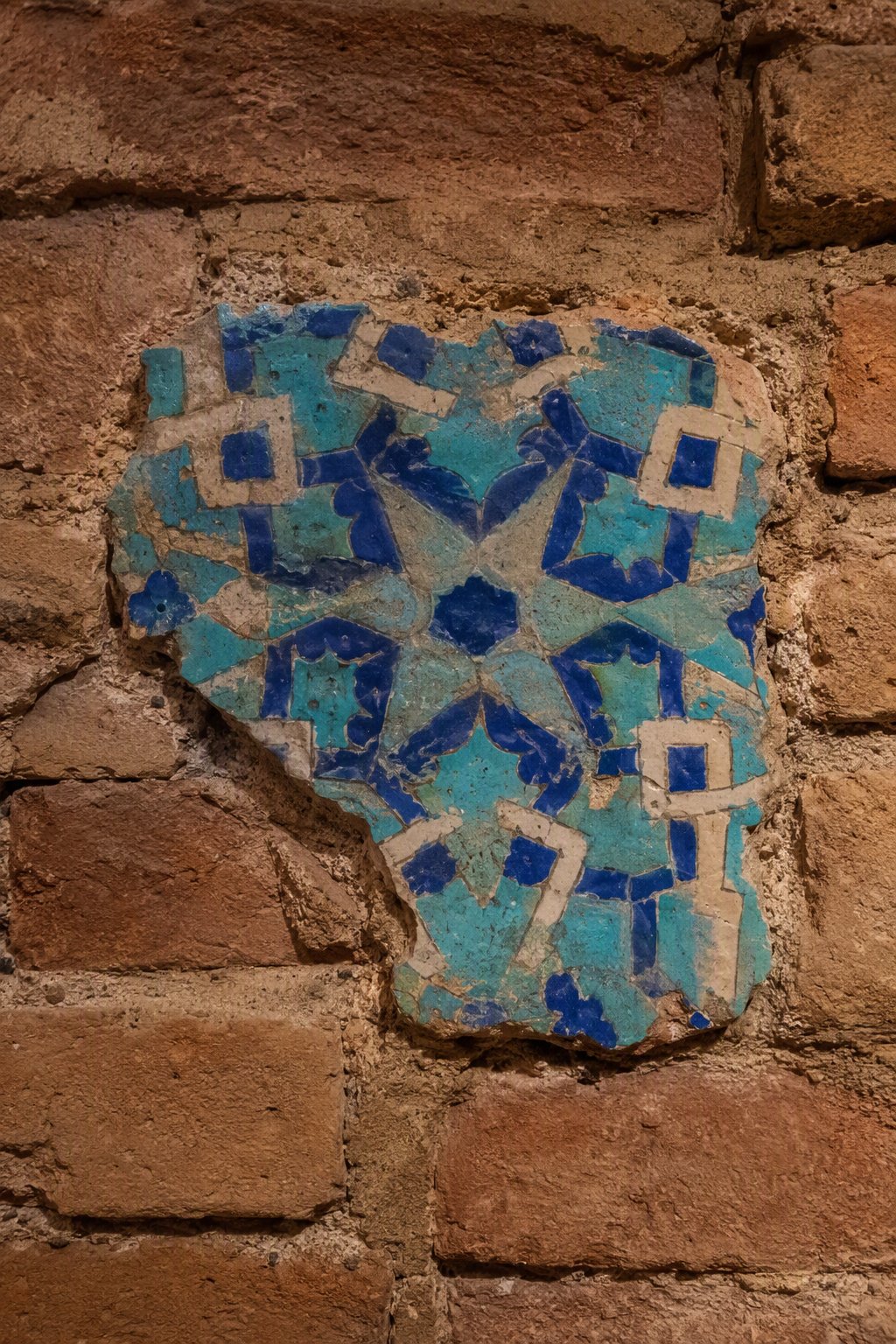
While the current structure of the shrine reflects centuries of continuous renovation and expansion, the earliest tile fragments date to the Seljuk period in the eleventh and twelfth centuries. These fragments were discovered during restoration work in various parts of the complex, particularly in the older courtyards adjacent to the original burial chamber. The tiles that survive from this early period are relatively small and show the distinctive characteristics of Seljuk ceramic art, including monochrome lustre techniques and simple geometric patterns.
How to Get to Mashhad
Mashhad is well connected to the rest of Iran by air, rail, and road. Mashhad International Airport serves domestic flights from Tehran, Isfahan, Shiraz, and other major cities, as well as international flights from several countries in the region. The flight from Tehran takes approximately ninety minutes.
For those traveling by train, Mashhad Railway Station connects to Tehran via a route that passes through Semnan and Sabzevar. The overnight train from Tehran is a popular choice, departing in the evening and arriving early the next morning. Buses also run frequently between Mashhad and most major Iranian cities.
Once in Mashhad, reaching the shrine is straightforward. The complex dominates the city center, and most visitors arrive by taxi or on foot. Mehyar Taxi provides reliable transport from the airport, railway station, or bus terminal directly to the shrine area. For public transit users, Mehyar Buses offers route information for Mashhad's bus network, which serves the shrine precinct with numerous lines. The city also has a growing metro system, with Line 1 passing near the shrine.
The Story of the First Lasting Tiles
The craft of tilemaking in the Mashhad region has roots that extend to pre-Islamic times, when Parthian and Sassanid artisans produced glazed ceramics for decorative and utilitarian purposes. However, the first truly lasting tiles applied to architectural surfaces in Mashhad emerged during the Seljuk era, when the city was already an important pilgrimage destination following the martyrdom of Imam Reza in 818 CE.
The Seljuk tiles found at the shrine complex are characterized by their distinctive turquoise and cobalt blue glazes, applied over a stone-paste body. These tiles were primarily used as decorative insets in brick walls, creating geometric patterns that combined the structural logic of brickwork with the chromatic brilliance of glazed ceramics. The technique, known as banna'i, alternates glazed tiles with plain bricks to form repeating star and cross patterns.
The transition from Seljuk to Ilkhanid tilework brought significant technical innovations. Mongol-era patrons, despite their initial destruction of the city, became enthusiastic supporters of the shrine's reconstruction. The fourteenth century saw the introduction of mosaic faience, a technique in which small, precisely cut tile pieces are assembled to form complex floral and calligraphic compositions. Fragments of this mosaic work survive in the older sections of the shrine.
What to See at the Shrine Complex
The Imam Reza Shrine complex contains tilework from virtually every period of Islamic art in Iran, making it a living museum of ceramic decoration. Visitors can trace the evolution of tilework styles by moving through the complex's different courtyards and galleries.
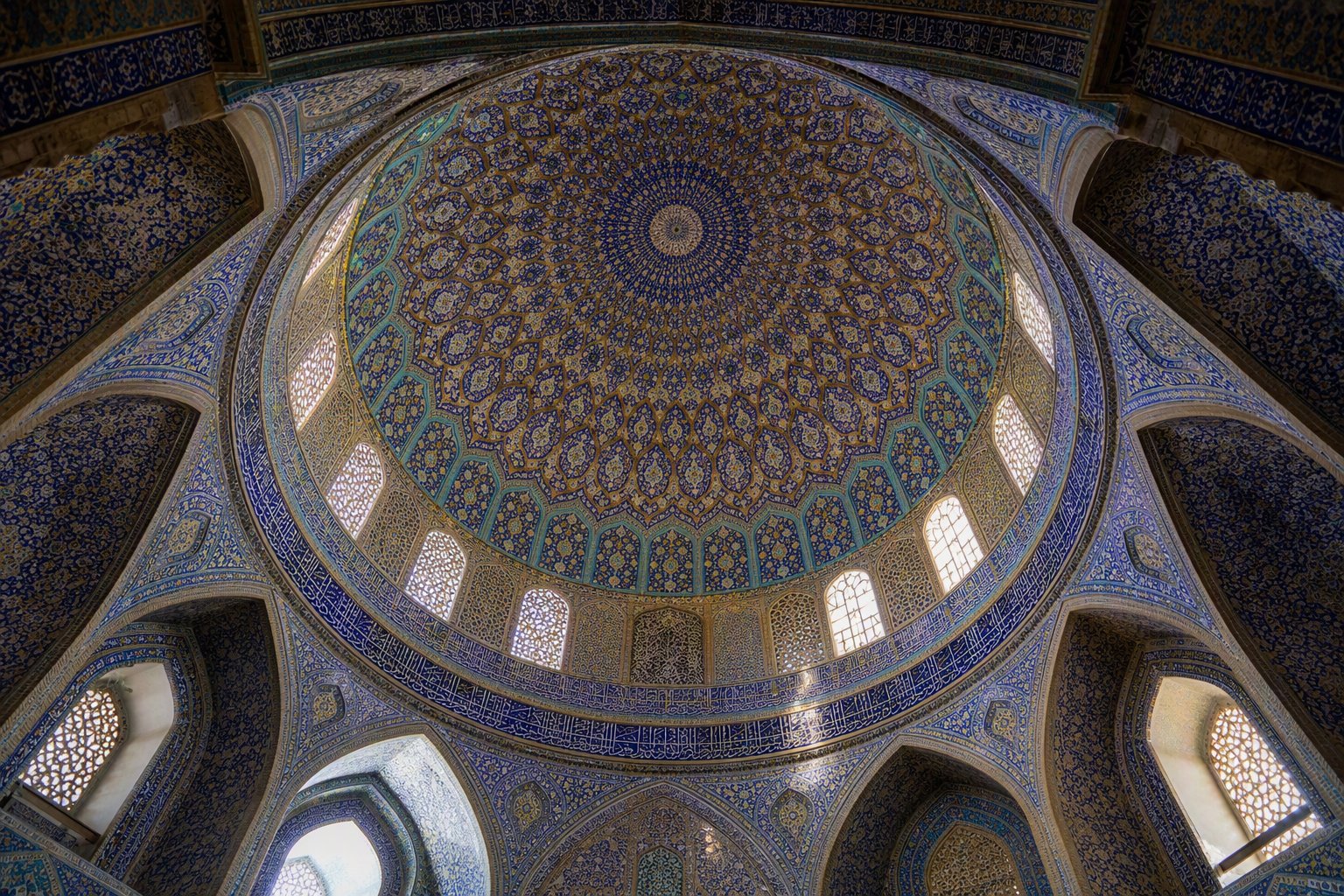
The Dar al-Huffaz Courtyard, on the northern side of the complex, features some of the finest Timurid-era tilework in existence. The iwans flanking this courtyard display magnificent examples of mosaic faience in deep cobalt blue, turquoise, and white, with calligraphic panels executed in elegant Thuluth script. The precision of the tile cutting and the richness of the glaze colors represent the zenith of the mosaic technique.
The Goharshad Mosque, built in 1418 by Queen Goharshad of the Timurid dynasty, stands adjacent to the shrine and contains some of the most celebrated tilework in all of Iran. The mosque's mihrab is adorned with a stunning array of mosaic faience tiles forming intricate arabesques and floral scrollwork. The dome above the mihrab features painted and glazed tile patterns that create a sense of infinite celestial space. Moving to the Safavid period, the Revolution Courtyard and its surrounding galleries showcase a shift toward larger-scale tile panels using the haft rang, or seven-color, technique. This method allowed for faster production and more pictorial compositions, including scenes of gardens, hunting parties, and calligraphic masterpieces.
The museum within the shrine complex, known as the Astan Quds Museum, houses a collection of tile fragments and complete tile panels that have been removed during restoration work and preserved for their historical significance. These pieces provide invaluable evidence for dating the various construction phases of the shrine and understanding the development of ceramic techniques in Khorasan.

Best Time to Visit
Mashhad experiences a continental climate with hot summers and cold winters. The best times to visit for comfortable outdoor exploration of the shrine complex are spring, from March through May, and autumn, from September through November. During these seasons, daytime temperatures range between fifteen and twenty-eight degrees Celsius.
Summer visits are possible but can be uncomfortable, with temperatures regularly exceeding thirty-five degrees Celsius. If visiting in summer, plan your exploration for early morning or evening hours. Winter brings cold weather and occasional snow, though the indoor prayer halls and museums remain accessible and offer warmth.
For those particularly interested in the tilework, visiting during clear, sunny days provides the best light for appreciating the glaze colors and intricate patterns. The morning light, hitting the iwans at an angle, reveals the subtle variations in glaze thickness and the fine detail of mosaic faience work.
Hours and Practical Tips
The Imam Reza Shrine complex is open around the clock for prayer, though museum hours are more limited. The museums typically operate from morning until early evening, with possible closures during Friday prayers. There is no entrance fee for the shrine itself, though the museum may charge a small fee.
Visitors should dress modestly and follow the dress code required at religious sites. Men should wear long trousers and avoid sleeveless shirts. Women must wear a headscarf and modest clothing covering arms and legs. Non-Muslim visitors are welcome in most areas of the complex, though access to certain prayer halls may be restricted during worship times.
Photography is generally allowed in the courtyards and exterior areas, but flash photography may be prohibited inside museums and prayer halls to protect the delicate tile surfaces. For those wishing to study the tilework in detail, binoculars or a zoom lens can help appreciate the upper registers of the iwans and dome interiors.
Nearby Attractions in Mashhad
Beyond the shrine complex, Mashhad offers several attractions that complement a visit focused on tilework and architectural heritage. The Nader Shah Mausoleum, located to the west of the shrine, houses the remains of the founder of the Afsharid dynasty and features a distinctive modern architectural design. The Tomb of Nader Shah includes a museum displaying weapons, manuscripts, and artifacts from the Afsharid period.
For a broader perspective on the region's history, the Khorasan Grand Museum offers exhibits spanning pre-Islamic archaeology, Islamic art, and ethnography. The museum's collection includes examples of tilework from other sites across the Khorasan region, providing context for the developments seen at the shrine.
Travelers with additional time can arrange day trips to the ancient city of Nishapur, approximately ninety kilometers to the southwest, where the Archaeological Site of Shadiyakh and the Mausoleum of Omar Khayyam offer further insights into the artistic traditions of greater Khorasan. Using Mehyar Buses, you can plan onward travel from Mashhad to Nishapur and other regional destinations with ease.