
Nestled within the ancient fabric of Kashan, El Yasin House stands as one of the finest surviving examples of Qajar-era residential architecture in central Iran. Built during the nineteenth century for a prosperous local merchant, this historical residence showcases the refined craftsmanship that made Kashan famous across the Persian plateau. Visitors who step through its wooden entrance door discover a world of intricately carved stucco walls, mesmerizing mirror work, vibrant stained-glass windows, and a serene central courtyard that offers a cool retreat from the surrounding desert climate. Whether you are an architecture enthusiast, a history lover, or simply a traveler seeking authentic Persian culture, El Yasin House delivers an experience that rivals the more famous houses of Kashan such as the Tabatabaei and Boroujerdi residences.
Where Is El Yasin House?
El Yasin House is located in the historic center of Kashan, a city in Isfahan Province in central Iran. Kashan sits approximately 250 kilometers south of Tehran and about 200 kilometers north of Isfahan, placing it squarely along the ancient trade route that connected the Iranian capital to the southern provinces. The house itself lies within the old urban texture of Kashan, close to other notable historical residences and within walking distance of the grand bazaar.
The city of Kashan occupies a strategic position on the edge of the Dasht-e Kavir desert. This desert setting shaped the architectural language of the city, encouraging builders to develop sophisticated solutions for temperature control, natural lighting, and water management. El Yasin House embodies all of these desert-adapted design principles, making it not just a beautiful building but also a lesson in sustainable architecture that has endured for well over a century.
Kashan's geographic coordinates place it at roughly 33.98 degrees north latitude and 51.43 degrees east longitude. The elevation sits around 930 meters above sea level, which contributes to the city's distinctive climate of hot, dry summers and cool winters.
How to Get to El Yasin House
Reaching Kashan is straightforward from most major Iranian cities, and several comfortable options exist for the final leg of the journey to El Yasin House itself.
By Mehyar Taxi. The most convenient way to explore Kashan's historical houses is through Mehyar Taxi. Open the app, set your destination to El Yasin House, and a private car will pick you up from your hotel or from any point in the city. Your driver can wait while you explore the house and then take you to your next stop, whether that is the Fin Garden, the Agha Bozorg Mosque, or one of Kashan's traditional restaurants.
By Mehyar Buses. Travelers arriving from Tehran, Isfahan, or other cities can use Mehyar Buses to book intercity coach tickets at competitive prices. The bus station in Kashan is located on the northern edge of the city, and from there a short taxi ride will bring you to the historic center where El Yasin House awaits.
By private car. If you are driving from Tehran, take Route 7 southeast toward Qom and then continue south on Route 65 toward Kashan. The journey takes approximately two and a half to three hours depending on traffic. Parking near the old city center can be limited, so consider parking at a designated lot and walking the final distance to the house.
What to See at El Yasin House
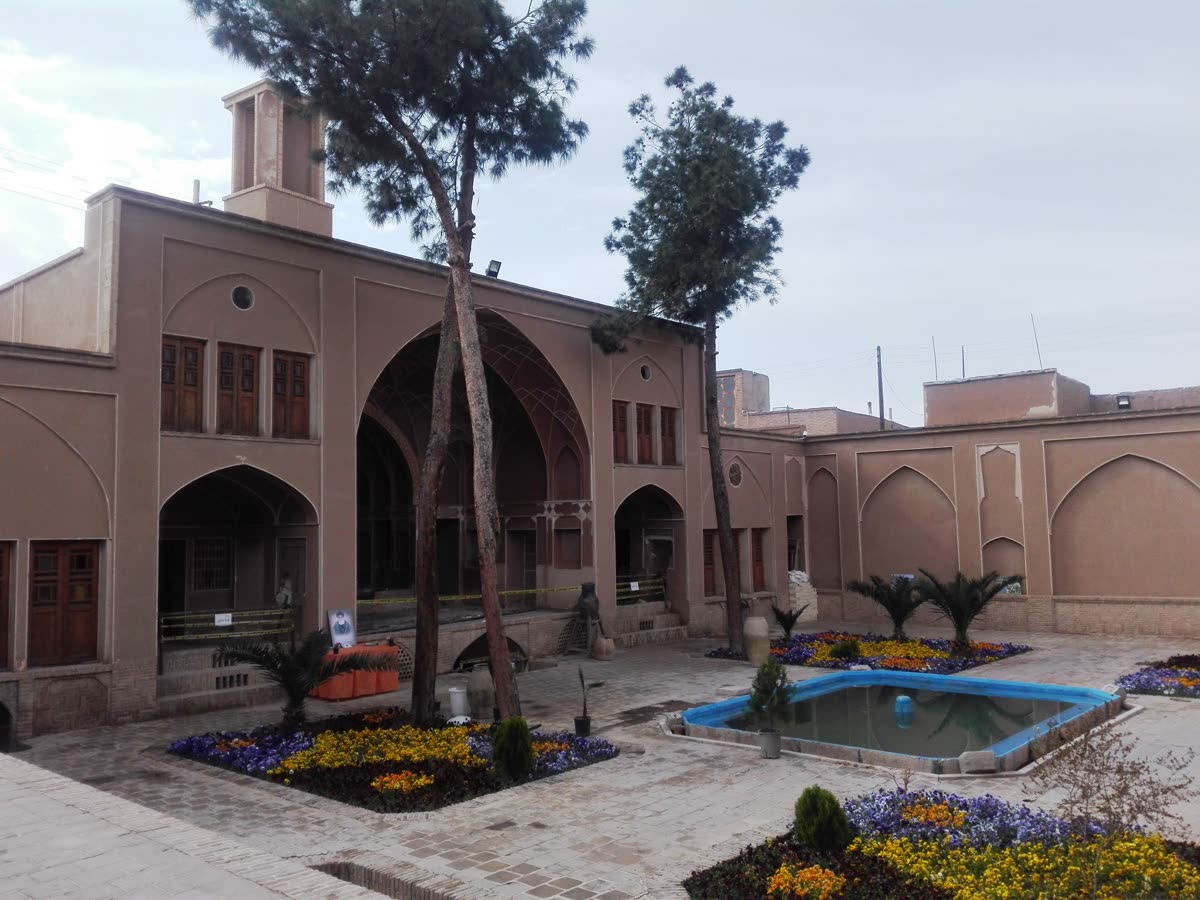
El Yasin House follows the classic plan of a wealthy Kashani merchant's residence from the Qajar period. The layout revolves around a central courtyard, a design that provides natural light and ventilation to every room while maintaining the privacy valued in traditional Persian domestic life.
The central courtyard. The heart of the house is its open courtyard, typically planted with a modest garden and featuring a small pool that once served both decorative and cooling purposes. The pool reflects the surrounding architecture and creates a calming atmosphere. Surrounding the courtyard are iwans, vaulted open-sided halls that function as semi-outdoor living spaces during mild weather.
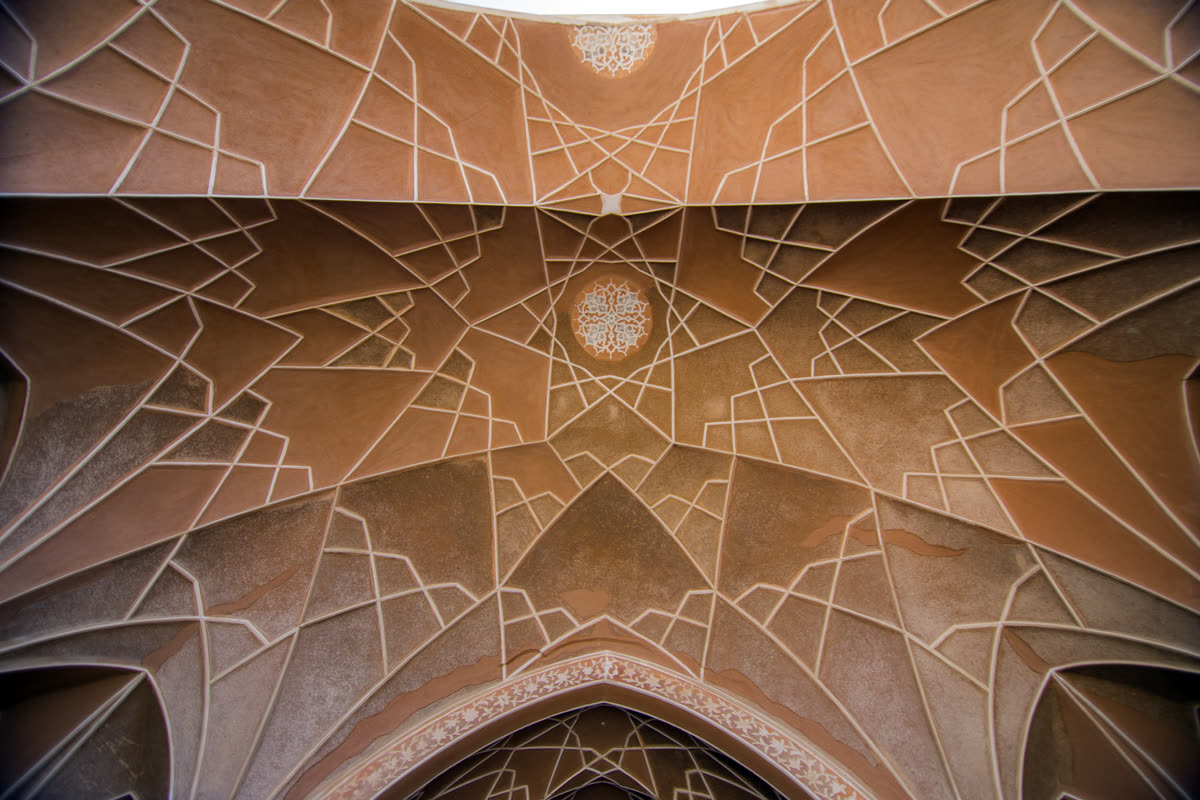
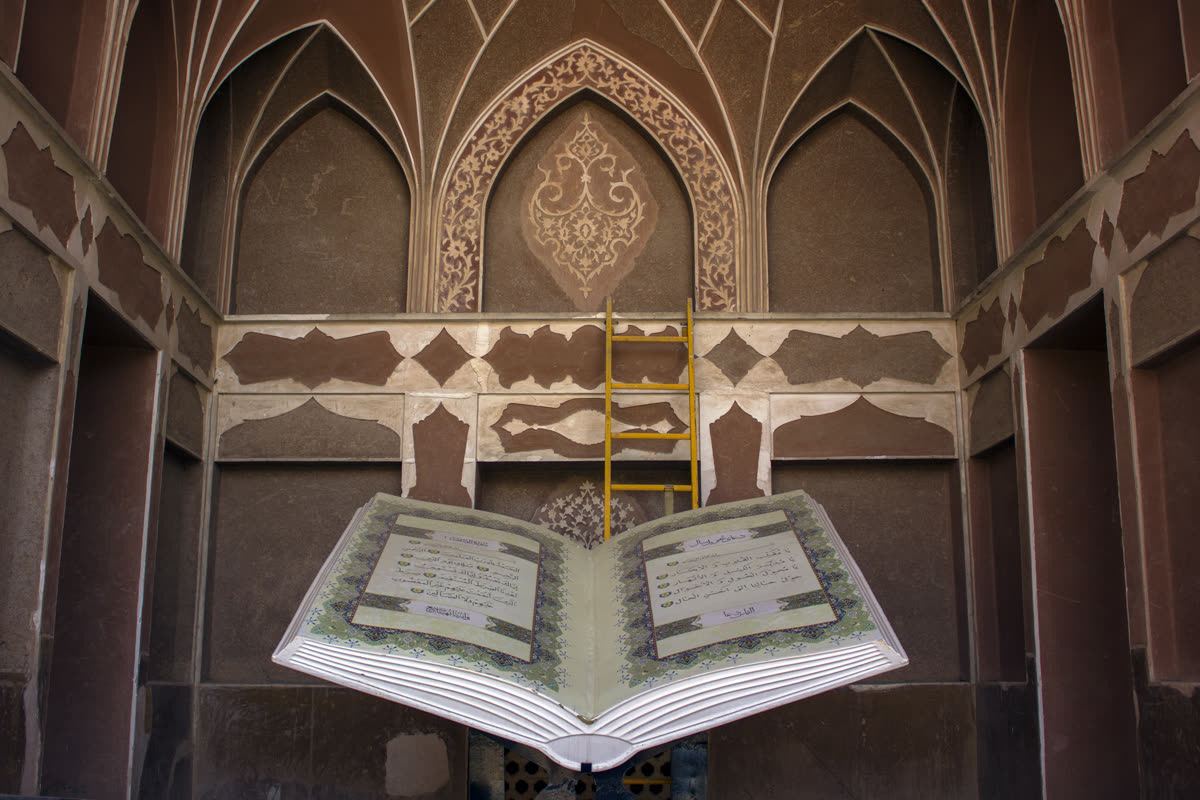
Stucco decoration. The walls throughout El Yasin House display some of the finest carved stucco work in Kashan. Artisans sculpted intricate floral patterns, geometric designs, and calligraphic panels directly into the plaster, creating surfaces that catch the light in constantly changing ways throughout the day. The stucco frames around windows and doorways are particularly elaborate, featuring layered compositions of vines, rosettes, and birds.
Mirror work and stained glass. Several rooms feature ayeneh-kari, the traditional Iranian art of embedding small mirror fragments into plaster to create dazzling reflective surfaces. Combined with the colored light that filters through the stained-glass windows above the iwans, these rooms produce an ethereal atmosphere that has attracted photographers and artists for generations.
Windcatchers. Like other traditional buildings in Kashan, El Yasin House employs badgirs, or windcatchers, to channel cool breezes into the interior spaces. These vertical shafts catch wind at roof level and direct it downward into the living quarters, providing a natural air-conditioning system that operates without any mechanical equipment. Understanding how these windcatchers work adds a fascinating engineering dimension to your visit.
The underground spaces. Many Kashani houses of this period include semi-subterranean rooms that stay cool even during the peak summer heat. These spaces, sometimes called shavestan, were used as summer retreats within the home and demonstrate the sophisticated climate-responsive design of traditional Iranian architecture.
Best Time to Visit El Yasin House
The optimal time to visit El Yasin House and the city of Kashan generally falls during two seasons. Spring, from late March through May, brings mild temperatures and the possibility of seeing the city's gardens in bloom. This season coincides with the annual Golab-giri, or rose-water distillation festival, which takes place in the villages around Kashan, particularly in the town of Qamsar and Niasar. Combining a visit to El Yasin House with a rose-water festival excursion makes for an unforgettable spring itinerary.
Autumn, from late September through November, offers similarly pleasant conditions. The summer heat has subsided, the skies are typically clear, and the light falling through the stained-glass windows of the house takes on a particularly warm golden quality. Winter visits are also possible, though temperatures can drop significantly at night. Summer, especially July and August, brings intense heat that can make walking between historical sites uncomfortable, though the cool interiors of El Yasin House provide welcome relief.
Hours and Tickets
El Yasin House is generally open to visitors during daylight hours, though exact opening times can vary by season and may be subject to change. As with many historical residences in Iran, there is typically a modest entrance fee that contributes to the ongoing maintenance and restoration of the building. Visitors should expect to pay a small charge in Iranian rials. It is advisable to carry cash, as card payment facilities may not always be available at smaller historical sites.
Photography is generally permitted inside El Yasin House, though tripods and professional equipment may require prior permission from the site management. Visitors are asked to respect the fabric of the building and avoid touching delicate stucco surfaces or mirror work.
Nearby Attractions
One of the great pleasures of visiting El Yasin House is its proximity to other significant sites in Kashan. Within a short walk or a brief taxi ride, you can visit the Tabatabaei Historical House, another masterpiece of Qajar residential architecture with similarly stunning stucco and stained glass. The Boroujerdi House is also nearby, famous for its tall windcatchers and grand painted interiors.
The Agha Bozorg Mosque and Theological School, with its magnificent central dome and symmetrical courtyard, lies just a few minutes away and represents the pinnacle of Kashan's religious architecture. The Fin Garden, a UNESCO World Heritage Site, sits a few kilometers outside the city center and offers a completely different but equally rewarding experience with its ancient cypress trees, flowing waterways, and Safavid-era pavilions.
For those interested in local crafts, the Kashan Bazaar is one of the oldest and most atmospheric covered markets in Iran. Here you can find the famous Kashani carpets, handwoven textiles, copper items, and rose-water products that the city has been known for centuries. Use Mehyar Taxi to easily navigate between these sites and make the most of your time in this remarkable desert city.
If you are planning a broader itinerary through central Iran, consider reading our guides to the best places to visit in Kashan and the Fin Garden of Kashan to build a complete picture of what this extraordinary city has to offer.