
The road from Rasht into the Alborz foothills of Gilan province climbs steadily through a landscape that becomes greener with every kilometre. The rice paddies of the Caspian plain give way to dense forest, the kind of broadleaf woodland that thrives on the moisture that pours off the Caspian Sea and settles against the northern slopes of the mountains. The air changes as you climb: cooler, damper, and heavy with the smell of vegetation. And then, in a clearing among the trees, you reach Divarsh, a village that has sat in this landscape for centuries, its houses built of wood and clay in a style that belongs to the Caspian slope and nowhere else.
Divarsh is one of many villages scattered across the Gilan highlands, but it has a character that sets it apart. The village sits at an elevation where the forest is thick and the views over the Caspian lowlands are wide. Its houses follow the local vernacular of Gilan: steeply pitched roofs to shed the heavy rain, wide eaves to protect the walls, and construction in timber and wattle-and-daub rather than the brick and mud-brick of the arid plateau to the south. The result is a village that looks, to a visitor from central Iran, almost northern European in its feel, though the details of the carpentry, the layout of the rooms, and the agricultural landscape around it are thoroughly Iranian and specific to the Caspian world.
This guide covers where Divarsh sits in Gilan, how to reach it from Rasht and the Caspian coast, what to see in the village and its surroundings, the best time to visit, and how to combine a trip to Divarsh with the wider landscape of Gilan province. It is written for travelers who want to understand the village as part of the Caspian environment, not merely to pass through it on the way to somewhere else.
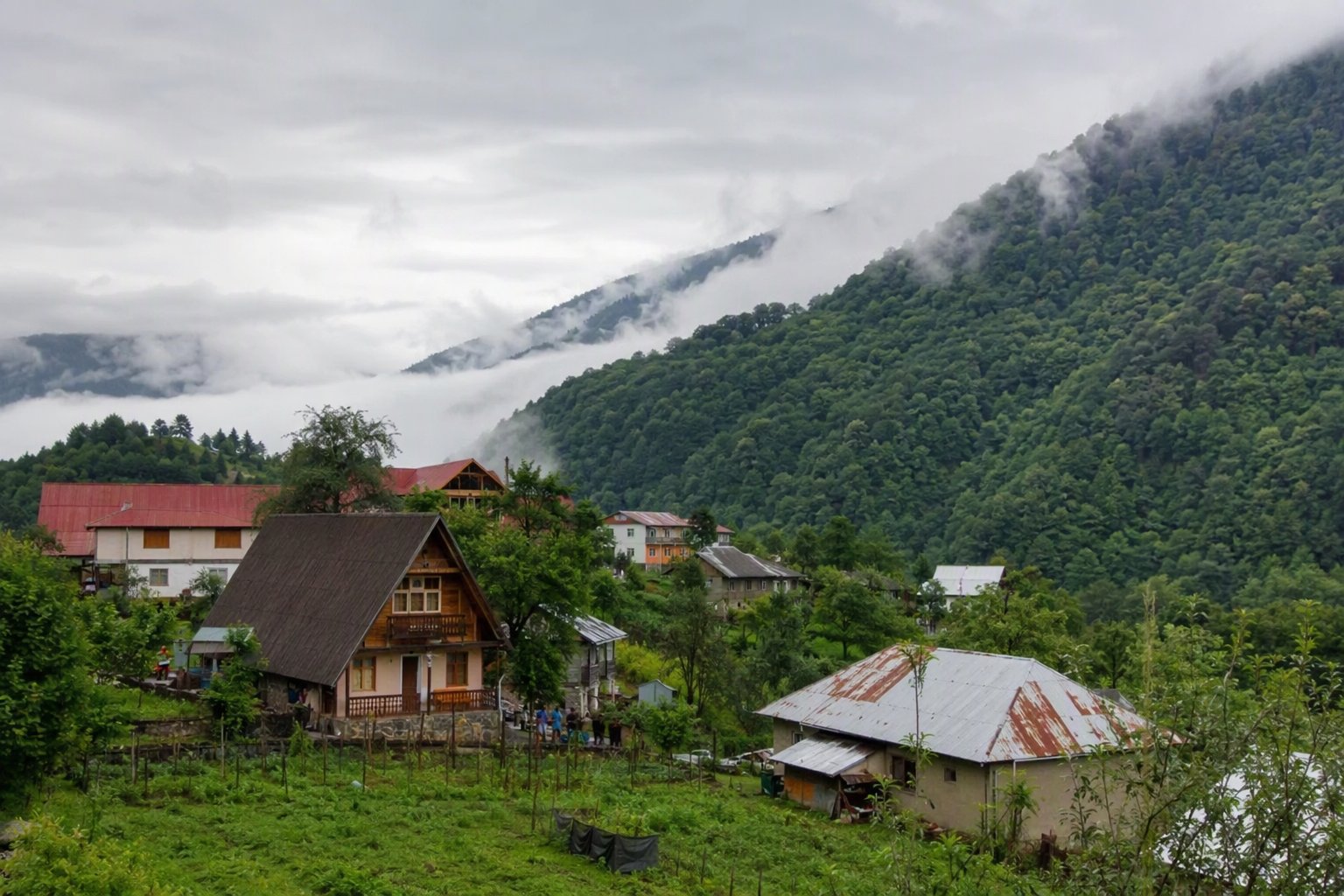
Where is Divarsh Village?
Divarsh is a village in Gilan Province, in the northern part of Iran, along the Caspian coast. Gilan is the province that stretches along the southern shore of the Caspian Sea, bounded by the Alborz mountain range to the south and the sea to the north. The province is one of the greenest and most agriculturally productive regions in Iran, thanks to the rainfall that the Caspian moisture brings to the coastal plain and the southern slopes of the Alborz.
The village is located in the highland zone of Gilan, above the coastal plain, in an area where the forest cover is dense and the terrain is hilly to mountainous. The nearest significant town is within the Gilan highlands, and the provincial capital, Rasht, is the main urban centre and transport hub for the region. Rasht sits on the coastal plain, roughly at sea level, and the drive from Rasht to Divarsh involves climbing from the flat, rice-growing lowlands into the forested hills above.
The setting is characteristic of the Caspian slope villages of Gilan. These villages are typically located on hillsides or in small clearings in the forest, positioned to take advantage of drainage, sunlight, and protection from the worst of the winter weather. The houses face south where possible, to catch the sun, and they are spaced far enough apart that each household has room for a garden and a small holding for livestock. The landscape around the village is a mosaic of forest, pasture, and cultivated plots, with rice terraces on the gentler slopes below and woodland above.
How to get to Divarsh
Reaching Divarsh requires first traveling to Gilan province, and then making the approach from Rasht or the Caspian coast into the highlands.
Getting to Rasht and Gilan
Rasht, the capital of Gilan, is the main gateway to the province. The city is served by Rasht Airport, also known as Sardar-e Jangal Airport, with domestic flights connecting to Tehran and a handful of other Iranian cities. The flight from Tehran takes roughly an hour. Rasht also has an intercity bus terminal with regular services to Tehran, Qazvin, Zanjan, and Tabriz, and a railway station on the line that connects the Caspian coast to the national network.
The road from Tehran to Rasht crosses the Alborz mountain range via the Qazvin to Rasht freeway, a route that passes through some of the most dramatic mountain scenery in northern Iran. The freeway climbs from the central plateau, crosses the mountains via tunnels and high passes, and descends to the Caspian plain on the northern side. The total journey from Tehran to Rasht takes roughly four to five hours by car, depending on conditions.
Open Mehyar and choose Buses for scheduled services from Tehran to Rasht. The bus is the most practical option for travelers without a private vehicle and runs daily on this busy route. For those who prefer speed, Mehyar Flights connects Tehran to Rasht in just over an hour. From the Rasht bus terminal or airport, Mehyar Taxi can arrange a private transfer to Divarsh, covering the climb from the coastal plain into the highland village.
From Rasht to the village
The drive from Rasht to Divarsh takes roughly an hour to an hour and a half, depending on road conditions. The route climbs from the coastal plain through the foothills of the Alborz, passing through smaller villages and forest clearings before reaching Divarsh. The road is paved for most of its length, though the final stretch may be narrower and less maintained than the main highway.
The journey itself is one of the attractions. The forest closes in around the road as you climb, and the views over the Caspian lowlands open up behind you. On a clear day, you can see the Caspian Sea from the high points on the road, a flat blue horizon to the north, with the green landscape of Gilan spread below.
What to see in and around the village
Divarsh is not a village with a single monument or a list of tourist sights. Its appeal lies in the whole: the architecture, the landscape, the pace of life, and the way the village sits within its environment.
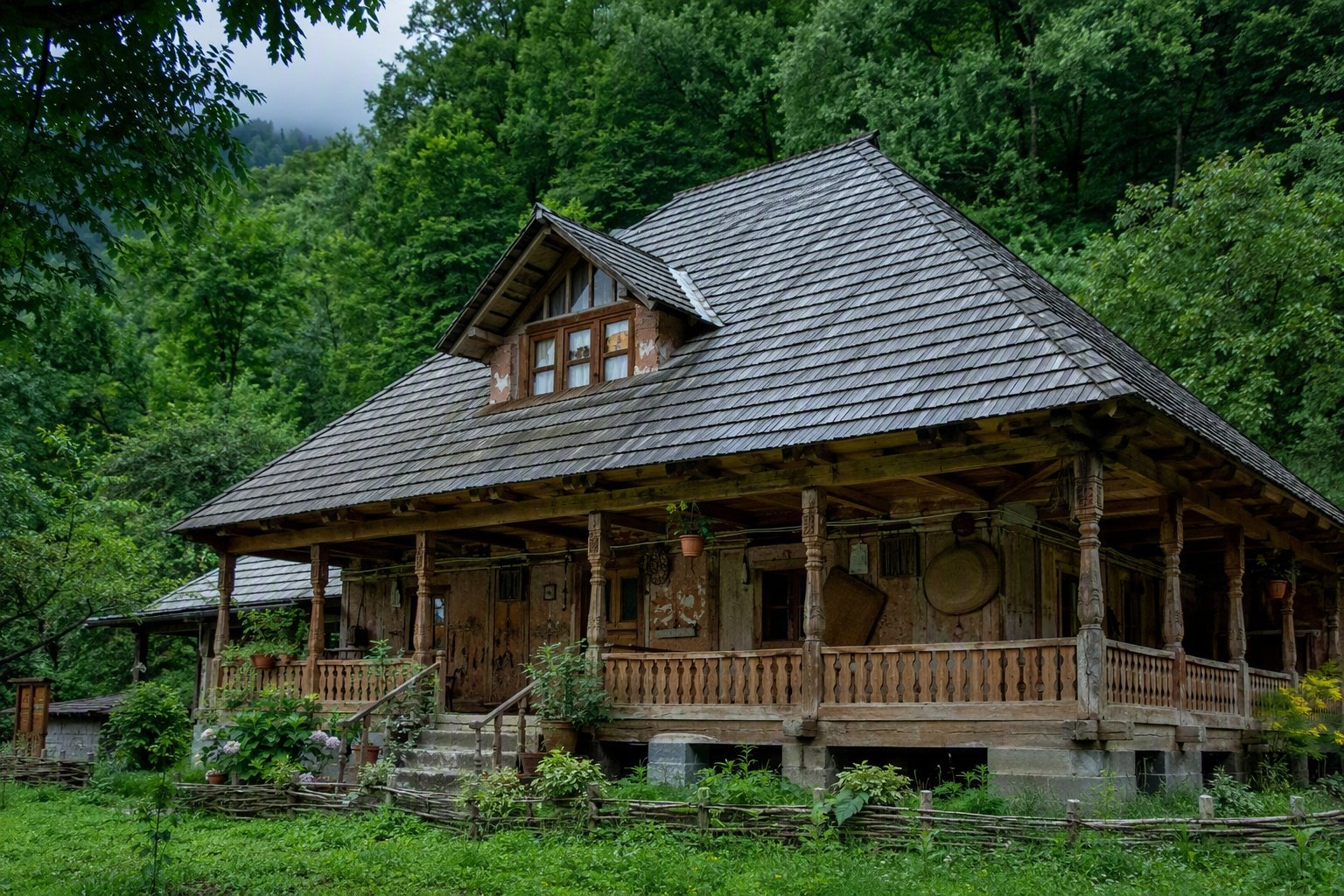
The traditional houses of Divarsh are the most visible expression of the local culture. Built of timber, with steep roofs and wide verandas, they reflect the need to cope with the heavy Caspian rainfall and the humidity that pervades the region for much of the year. The houses are typically one or two storeys high, with the ground floor used for storage or livestock and the living quarters above. The wood is local, harvested from the forests that surround the village, and the craftsmanship is evident in the joints, the roof framing, and the carved details that some households add to their eaves and balconies.
The agricultural landscape around the village is worth exploring. The Gilan highlands are a zone of mixed farming, with rice grown on the terraced slopes below the village, tea plantations on the mid-level slopes, and livestock grazing in the clearings and pastures above. In the spring and early summer, the rice terraces are flooded and green, creating a pattern of reflective surfaces that contrasts with the dark forest above. In the autumn, the tea bushes are picked, and the hillsides take on a different colour and texture.
The forests surrounding Divarsh are part of the Hyrcanian forest zone, a unique ecosystem that stretches along the southern Caspian coast from Azerbaijan to Turkmenistan. The Hyrcanian forests are among the oldest deciduous forests in the world, having survived the ice ages that stripped much of Europe and central Asia of their tree cover. Walking in the forest around the village, you pass through stands of oak, beech, hornbeam, and other broadleaf species, with an understory of ferns and shrubs that thrives in the humid conditions.
The views from the village and the surrounding hills are one of the rewards of the visit. On a clear day, the panorama extends from the Caspian Sea in the north to the high peaks of the Alborz in the south, with the green landscape of Gilan filling the space between. The light in the morning and late afternoon is particularly fine, with the low sun casting long shadows through the forest and picking out the details of the village below.
Best time to visit
Gilan has a subtropical, humid climate. Rainfall is heavy throughout the year, with the wettest months in autumn and winter. Summer is warm and humid, with temperatures on the coastal plain reaching the mid-thirties, though the highland villages are noticeably cooler.
The best time to visit Divarsh is from late spring through early autumn, roughly May through September. During this period, the weather is warm enough to enjoy the outdoor landscape, the roads are in good condition, and the rice terraces are at their most vivid. The early summer months of June and July are particularly attractive, when the forest is at its greenest and the days are long.
Autumn, from October to November, is also beautiful, with the forest canopy turning shades of yellow and red before the winter rains set in. The autumn colours in the Hyrcanian forest are among the finest in Iran, and the village, surrounded by the turning trees, is a striking sight.
Winter is cold and wet, with snow possible at the village elevation. The roads can be slippery, and the village, while inhabited year-round, is quieter in the winter months. A winter visit is possible for those prepared for the conditions, but the spring and summer months offer a more comfortable and visually rewarding experience.
Hours and practical details
Divarsh is a living village, not a formal tourist site, and there are no opening hours or tickets. The village is accessible at all times, and visitors are welcome to walk through it, photograph the architecture, and enjoy the landscape. As with any rural community in Iran, visitors should be respectful of the residents and their privacy, and should ask permission before photographing people or entering private property.
There are no hotels in Divarsh itself, though homestays may be available through local arrangement. The nearest hotels and guesthouses are in Rasht and the larger towns of the Gilan highlands. Food in the village is home-cooked and traditional, and visitors who wish to eat in the village should arrange this in advance through a local contact or guide.
Facilities in the village are basic. There are small shops for essentials, but travelers should bring any specific needs from Rasht. The mobile phone coverage in the village is generally adequate, though it may be patchy in the surrounding forest.
Nearby attractions in Gilan
A visit to Divarsh can be combined with the wider attractions of Gilan province, one of Iran's most diverse and visually striking regions.
Rasht, the provincial capital, has one of the most atmospheric bazaars in Iran, with a covered market selling the fish, vegetables, herbs, and handicrafts of the Caspian region. The city's food culture is distinctive, and the restaurants of Rasht serve the best of Gilaki cuisine, known throughout Iran for its richness and variety.
The Caspian coast itself is within easy reach of the highland villages, and the beaches of the Caspian Sea offer a different kind of landscape from the forested hills. The drive from the highlands to the coast passes through rice paddies and tea plantations, and the contrast between the two landscapes is dramatic.
The town of Masuleh, one of the most famous villages in Gilan, is within driving distance and is known for its stepped architecture, where the roof of each house serves as the courtyard of the one above. Masuleh is more developed for tourism than Divarsh, and a visit to both villages offers a comparison between the tourist-facing and the everyday face of Caspian village life.
For travelers interested in the natural landscape of the region, the Gilan highlands offer extensive opportunities for hiking and nature walking. The Hyrcanian forest trails around Divarsh and the neighbouring villages are among the most rewarding in northern Iran, and the combination of forest, mountain, and sea views is hard to match elsewhere in the country.
Mehyar Taxi can arrange private transfers from Rasht to Divarsh and onward to other Gilan destinations, and Mehyar Buses connects Rasht to the major cities of northern and central Iran. A journey through the villages of Gilan reveals a side of Iran that is green, humid, and culturally distinct from the arid plateau to the south, and Divarsh is a quiet, authentic place to experience it.
