
Tucked into a broad plain at the foot of the Zagros mountains in Lorestan Province, Borujerd has been called the Little Paris of Iran for its blend of natural beauty, refined architecture, and cultured atmosphere. The second-largest city in Lorestan, sitting at an elevation of 1,600 meters, Borujerd carries a history that stretches back to the Sassanid era and beyond. Its streets and neighborhoods hold a concentration of historical monuments that few Iranian cities can match, from the foundations of ancient fire temples beneath its grand mosque to the delicate mirror work of Qajar-era shrines.
For visitors interested in Iranian architecture and history, Borujerd offers a compact and walkable collection of sites that span more than a thousand years of continuous civilization. The city's location at the crossroads of western Iran made it a natural stopping point for rulers, scholars, and traders, each of whom left their mark on the urban landscape. With Mehyar Taxi, you can move between monuments at a comfortable pace, stopping to photograph details and linger in the atmospheric old quarters.

Where Is Borujerd?
Borujerd lies in northern Lorestan Province, 401 kilometers southwest of Tehran, at the edge of the vast Silakhour plain and the western flanks of the Zagros range. The city sits at 1,600 meters elevation, giving it a cold mountain climate with temperatures ranging from minus 18 degrees in winter to plus 38 in summer. The Zagros peaks provide a dramatic backdrop and supply the rivers and springs that have sustained settlement here for millennia.
Borujerd has no airport of its own. The nearest air access is Khorramabad airport, about 90 minutes by road, or you can fly into Tehran and drive the four hours and forty minutes south. For rail travelers, the Tehran-Dorud train stops at Dorud station, from which it is another hour by road to Borujerd. Mehyar Buses connects the city to major centers across Iran, making it accessible for budget travelers.
The Jameh Mosque: A Thousand Years of Faith
The Friday Mosque of Borujerd stands at the spiritual and geographic center of the old city, and its history encapsulates the layered nature of Iranian civilization. The mosque was originally built in the third century AH (ninth century CE) atop the ruins of a Sassanid fire temple, a common pattern across Iran where early Muslim communities adapted existing sacred sites for their own worship.
The mosque's dome rises 20 meters above the prayer hall, and its interior features a distinctive nine-step minbar (pulpit), a rare architectural element that reflects the craftsmanship of the early Islamic period. Over the centuries, the mosque has undergone numerous renovations and expansions, but its fundamental plan retains echoes of the original structure. The transition from fire temple to mosque is not merely symbolic; archaeological evidence beneath the current building confirms the continuity of sacred use at this location across at least two major religious traditions.
For visitors, the Jameh Mosque offers a chance to see how Islamic architecture in western Iran absorbed and transformed pre-Islamic forms. The thick brick walls, the proportion of the dome to the courtyard, and the orientation of the prayer niche all speak to a building tradition that has evolved over a thousand years in this specific place.
Imamzadeh Jafar: A Seljuk Masterpiece
Perhaps the single most architecturally significant monument in Borujerd is the Imamzadeh Jafar shrine, the resting place of a descendant of Imam Zain al-Abedin, the fourth Shia Imam. The shrine's lineage is traced through five generations connecting back to the Imam, giving it deep religious significance for the local community and for Shia pilgrims from across Iran.
The dome of Imamzadeh Jafar is a masterpiece of Seljuk-era architecture, composed of 18 tiers reaching a height of 25 meters. The Seljuk period, spanning the eleventh to thirteenth centuries, was one of the great eras of Iranian dome construction, and this example ranks among the finest in western Iran. The proportions, the brickwork patterns, and the way light enters through carefully placed openings all demonstrate the sophisticated understanding of geometry and structural engineering that Seljuk builders possessed. The shrine has been registered as a national monument, ensuring its preservation for future generations.
The Imam (Soltani) Mosque: Qajar Grandeur
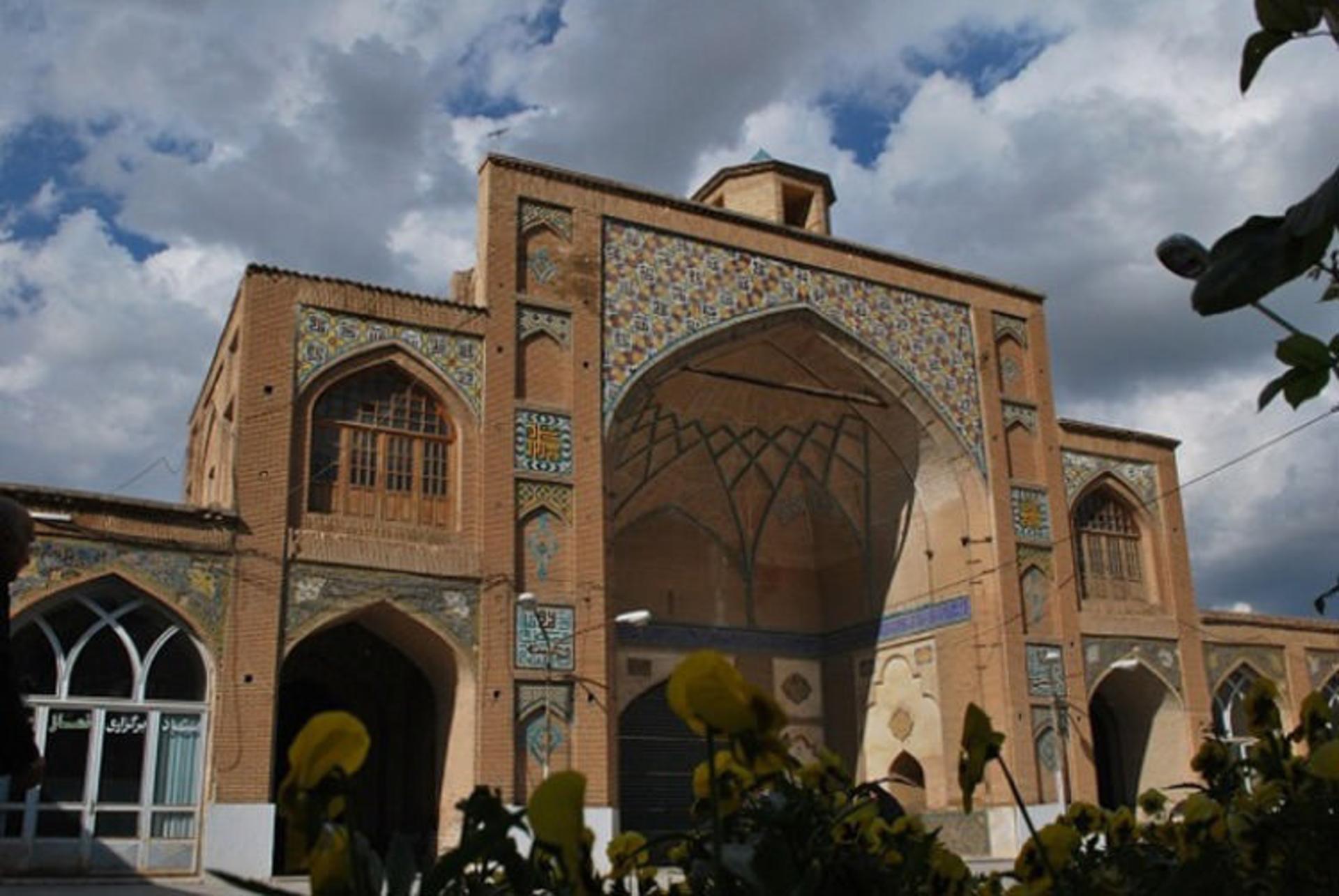
The Imam Mosque, also known as the Soltani Mosque, is Borujerd's grandest congregational mosque and a prime example of Qajar-era religious architecture. Built during the nineteenth century and modeled after the Shah Mosque (now Imam Mosque) in Isfahan, the Borujerd version adapts the Isfahan prototype to local materials and climate conditions.
The mosque's courtyard measures 61 by 47 meters, giving it a spacious and contemplative atmosphere. Four iwans open onto the courtyard, each decorated with tile work in the blue and turquoise palette characteristic of the period. The prayer hall beneath the southern iwan features a domed ceiling with painted decoration, and the minarets flanking the entrance portal rise above the surrounding neighborhood, serving as visual landmarks visible from across the old city.
The decision to model this mosque after Isfahan's greatest mosque reflects Borujerd's self-image as a city of culture and refinement. Local patrons and rulers wanted their city to echo the architectural splendors of the great capitals, and the Soltani Mosque succeeds in creating a sense of grandeur that belies the city's modest size.
The Tabatabaei Historical Complex
In the Sufi quarter of Borujerd, the Tabatabaei Historical Complex preserves the memory of one of the city's most influential families. The complex includes several interconnected buildings that served different functions over the centuries, from residential quarters to spaces for spiritual gatherings and community meetings.
The Kamal-oddin Tabatabaei House, part of the complex, has been converted into a museum displaying local artifacts, historical photographs, and objects that illustrate daily life in Borujerd across the Qajar and early modern periods. Walking through the rooms, visitors encounter traditional furniture, clothing, tools, and documents that paint a vivid picture of how an prominent family lived in this corner of the Zagros.
The Egyptian House, another component of the wider Tabatabaei legacy, is noted for its distinctive Qajar-era brickwork. The facade displays geometric patterns in brick that create a play of light and shadow throughout the day, a hallmark of the decorative vocabulary used by Borujerd's builders during the nineteenth century.
Borujerd Arg: Sassanid Water Engineering
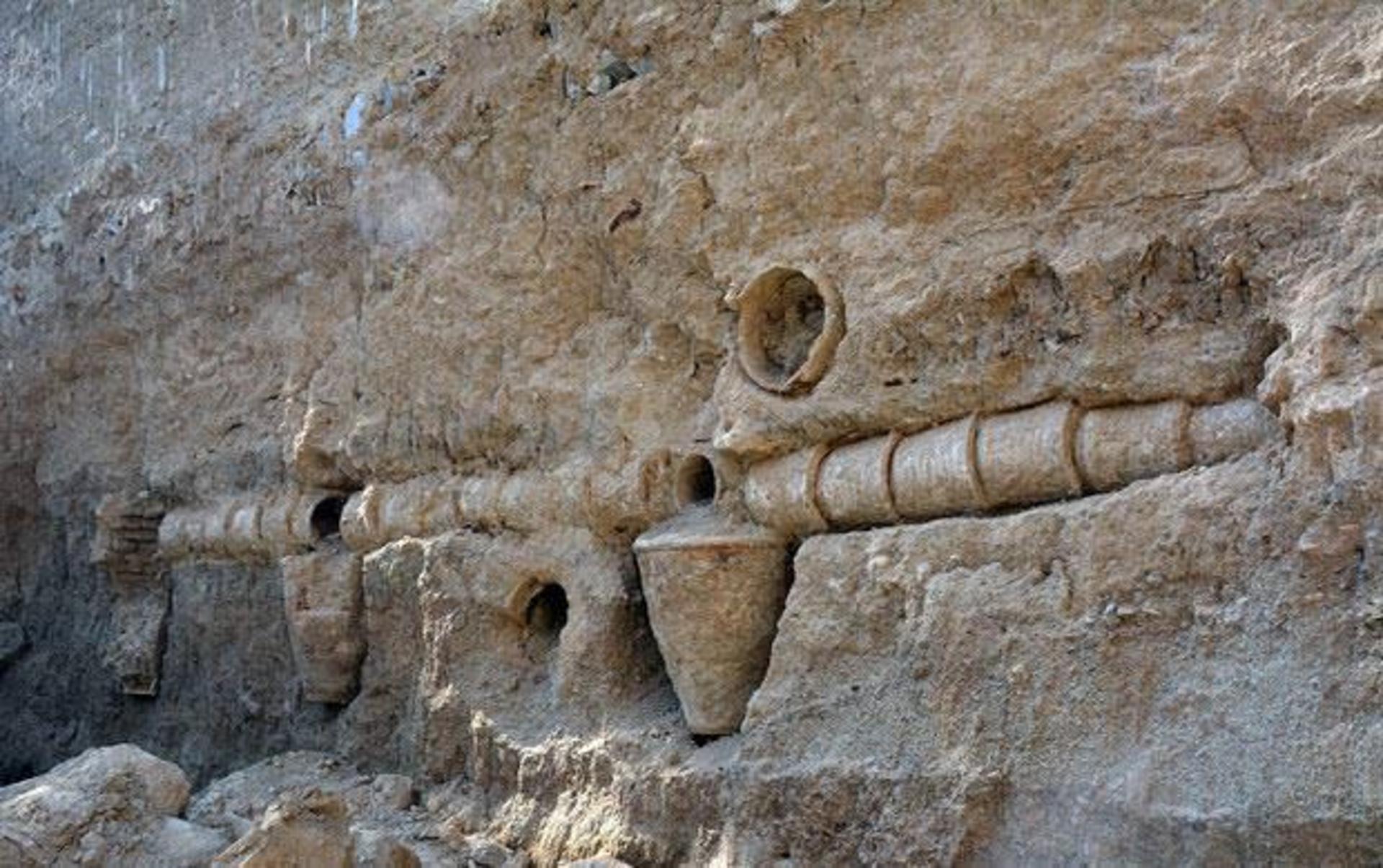
The Borujerd Arg, or citadel, represents one of the oldest surviving structures in the city, with foundations that may date to the Sassanid period. Beyond its defensive function, the Arg is remarkable for its integrated water management system, which reflects the advanced hydraulic engineering of pre-Islamic Iran.
The water system channels underground flows through a network of qanats (underground canals) and storage cisterns, providing the city with a reliable water supply even during dry periods. This engineering achievement sustained Borujerd through centuries of growth and remains a testament to the practical genius of ancient Iranian builders. While much of the visible structure dates to later periods, the underlying water system reveals the Sassanid origins of the site.
Chogha Hill: The Volcanic Viewpoint
Rising above the eastern edge of Borujerd, Chogha Hill is a volcanic formation that has become one of the city's most popular recreational spots. Locals call it Bam-e Borujerd, meaning the Roof of Borujerd, because of the panoramic views it offers over the city, the Silakhour plain, and the surrounding Zagros peaks.
The hill's volcanic origin gives it a distinctive geological character, with dark basaltic rocks contrasting against the green of the plain below. A road leads to the summit, where benches and small pavilions provide places to rest and enjoy the view. At sunset, the light plays across the Zagros range in shades of gold and purple, making Chogha Hill one of the best viewpoints in western Iran. The site is freely accessible and popular with locals for evening outings and weekend picnics.
Natural Attractions Near Borujerd
Vaneh Waterfall
Twenty-one kilometers northwest of Borujerd, Vaneh Waterfall cascades down a rocky mountainside in a setting of remarkable natural beauty. The waterfall is fed by mountain springs and snowmelt, flowing strongest in spring and early summer. The surrounding valley offers shaded walking paths, and the cool mountain air provides relief from the summer heat of the city below. Reaching the waterfall requires a moderate hike, but the effort is rewarded by the sight and sound of water plunging through a green corridor of vegetation.
Bisheh Dalan Wetland
Fifteen kilometers southeast of Borujerd, the Bisheh Dalan wetland supports a rich ecosystem of aquatic plants, birds, and other wildlife. The wetland is particularly important as a resting point for migratory birds traveling between breeding grounds in the north and wintering areas further south. Birdwatchers will find herons, egrets, and various duck species here, especially during spring and autumn migration periods.
The Silakhour Plain
Stretching some 70 kilometers south of Borujerd, the Silakhour plain is one of the longest continuous agricultural plains in western Iran. In spring, the plain transforms into a vast carpet of green wheat and wildflowers, with the Zagros mountains forming a dramatic backdrop. The drive along the edge of the plain offers some of the finest landscape views in Lorestan, and several villages along the way provide opportunities to stop and experience rural Iranian life.

Versho: The German Silver Craft of Borujerd
Borujerd is the center of Iran's Versho crafting tradition. Versho, also known as German silver or nickel silver, is an alloy that resembles silver but contains no actual silver. Local artisans have been working with Versho for generations, creating decorative objects, jewelry, tableware, and ornamental pieces that are sold across Iran.
The workshops of Borujerd's bazaar are the best places to watch Versho craftsmen at work and to purchase authentic pieces. The craft requires patience and precision, and the resulting objects display a distinctive bright finish that sets them apart from other metalwork traditions in Iran. Buying Versho directly from Borujerd supports the continuation of this unique craft and ensures you receive genuine, locally made pieces.
Where to Stay
Borujerd offers several accommodation options. The four-star Zagros Hotel provides the most comprehensive services in the city. The Hollis Hotel and AmirKabir three-star hotel offer comfortable mid-range options. For a more authentic experience, the Golchahran eco-lodge provides traditional accommodation with local meals. Book your stay through Mehyar Hotels to compare options and find the best fit for your trip.
Practical Details
- Address: Borujerd City, Lorestan Province, western Iran
- Hours: Monuments accessible during daylight; museums typically 9:00 to 17:00
- Best season: Late spring (May to June) and early autumn (September) for mild temperatures
- Visit duration: Two to three days for the city monuments, more if including natural sites
- Nearest airport: Khorramabad (90 minutes by road)
- Train: Dorud station, then one hour by road to Borujerd
- Transport: Mehyar taxi for city monuments; private vehicle recommended for natural sites