
Iran's bazaars are far more than markets. They are the beating commercial heart of every historic city, places where centuries of trade, craftsmanship, and social life converge under vaulted brick ceilings. To walk through a Persian bazaar is to step inside a living institution, one that has shaped the economy, architecture, and culture of the Iranian plateau for well over a thousand years. This guide takes you through the four greatest bazaars in the country, each with its own character, history, and treasures.
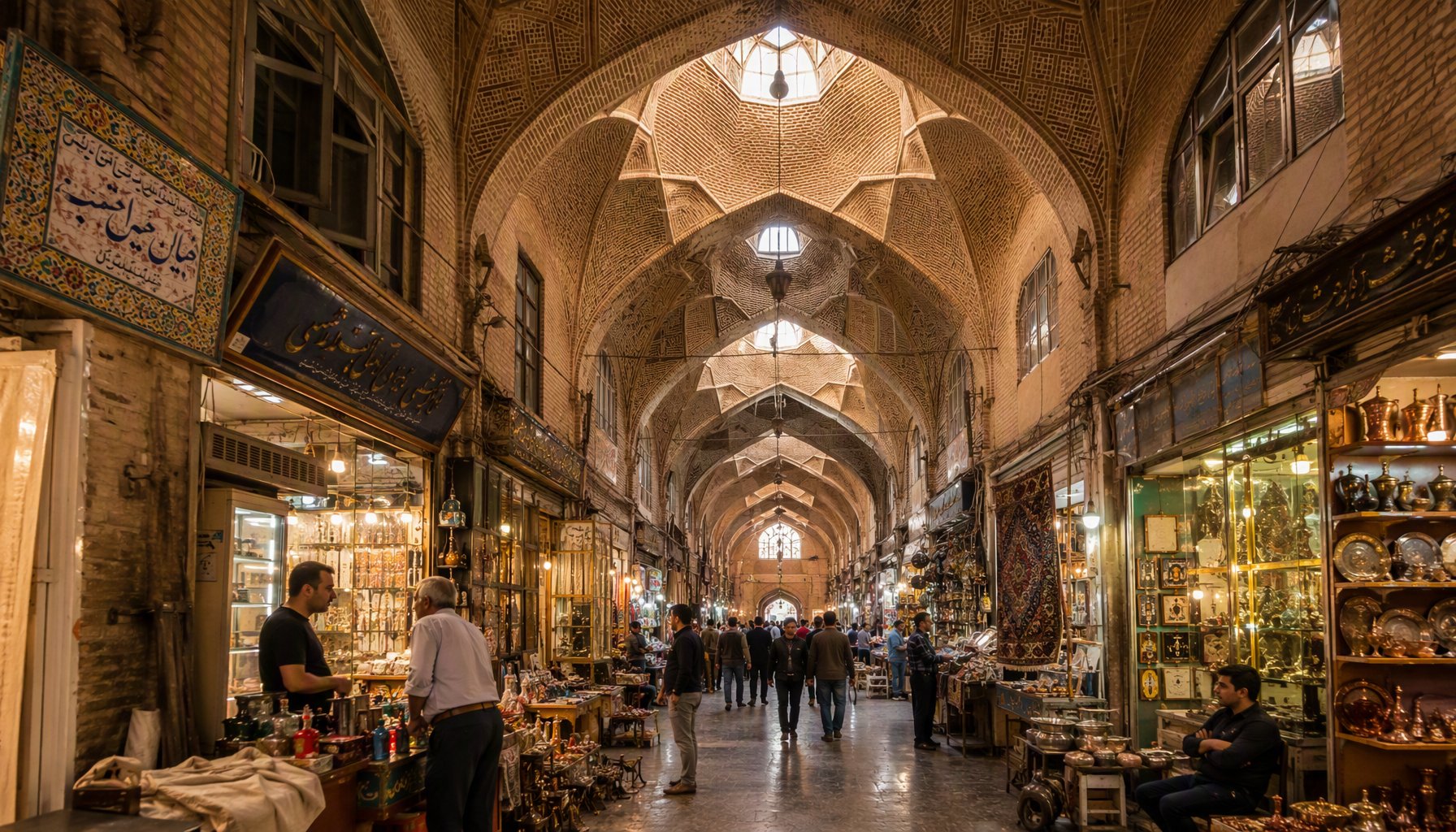
Tehran Grand Bazaar: The Commercial Heartbeat of the Capital
The Grand Bazaar of Tehran is the largest and busiest bazaar in Iran, and one of the largest covered markets in the Middle East. Stretching over ten kilometres of corridors, alleys, and sarais (courtyard caravanserais), it occupies a vast area south of Imam Khomeini Square in the historic centre of the capital. The bazaar dates back centuries, though much of its current structure was rebuilt during the Qajar era in the nineteenth century after fires and earthquakes destroyed earlier sections.
Walking into the Tehran Grand Bazaar is an exercise in sensory immersion. The air carries the scent of saffron, rosewater, tanned leather, and freshly baked barbari bread. Overhead, vaulted ceilings with small skylights cast geometric patterns of light onto the stone floors. Around you, shopkeepers call out prices, porters weave through the crowd with carts loaded high, and the constant hum of negotiation fills every corridor.
The bazaar is organized by trade. The shoe sellers occupy one section, the carpet merchants another. Gold and jewellery shops cluster in the Saraye Zahir al-Dowleh, an ornate courtyard building that is worth visiting for its architecture alone. The spice sellers and dried fruit vendors line corridors fragrant with cumin, barberries, pistachios, and saffron threads. Textile merchants display bolts of silk, termeh cloth, and handwoven fabrics in colours that range from deep indigo to vibrant crimson.
What to buy in Tehran's Grand Bazaar depends on your interests and your budget. Persian carpets and rugs are the most iconic purchase, though quality varies enormously and prices range from modest machine-woven pieces to extraordinary hand-knotted silk rugs worth thousands of dollars. Saffron, pistachios, and dried barberries make excellent gifts and are significantly cheaper here than in airport shops. Copper and enamel work, known as minakari, is a speciality of Tehran artisans, and you can find beautiful handcrafted pieces in the metalwork section.
The bazaar opens early, around 9 in the morning, and closes by late afternoon, typically around 5 or 6. It is closed on Fridays, the Islamic day of rest. Arrive in the morning to see the bazaar at its most authentic, when shopkeepers are setting up, tea is being brewed, and the first deals of the day are being struck. Use Mehyar Taxi to reach the bazaar from any point in Tehran, as parking in the area is notoriously difficult.
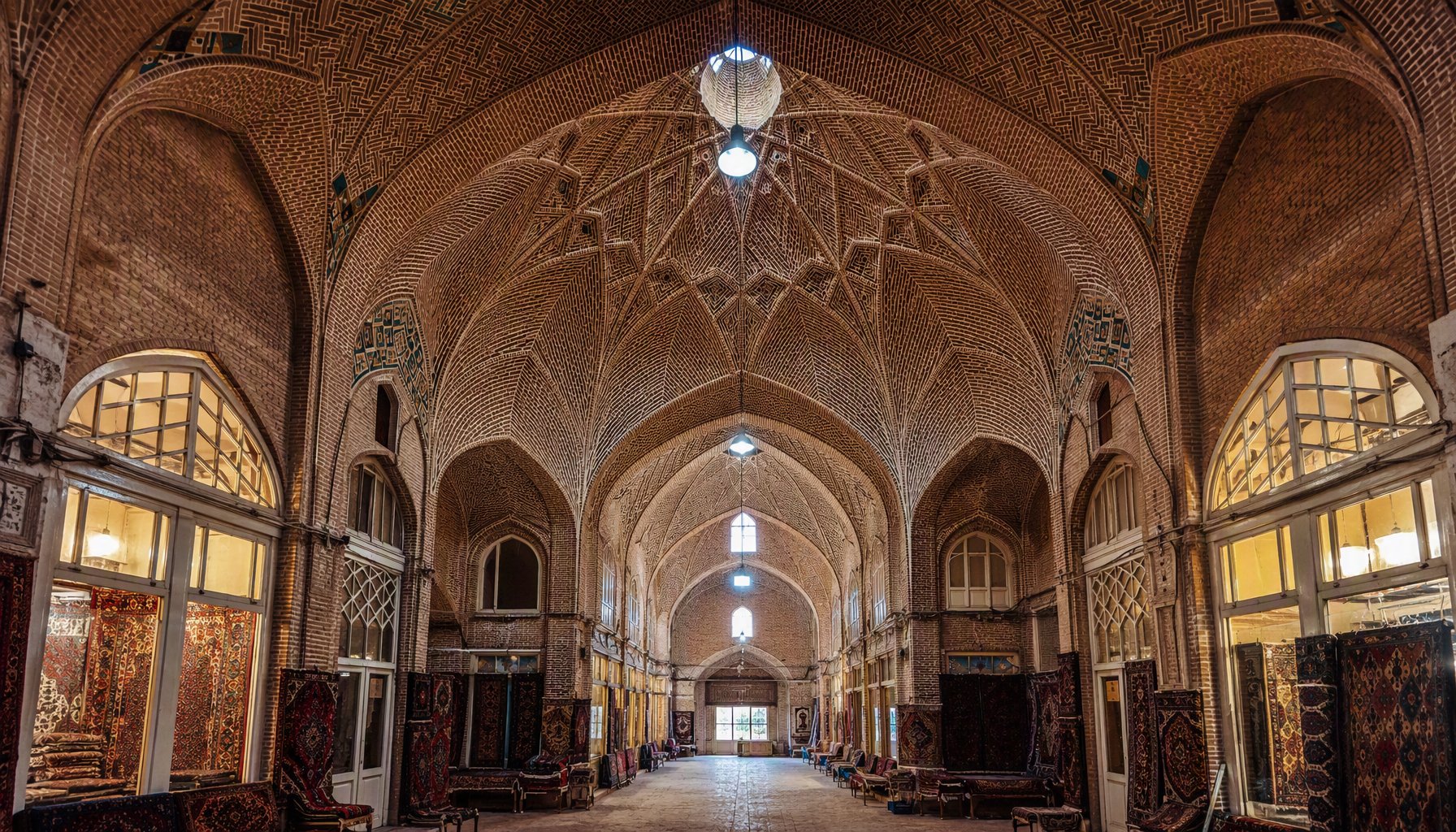
Tabriz Historic Bazaar Complex: A UNESCO World Heritage Masterpiece
The Bazaar of Tabriz is the oldest and most historically significant bazaar in Iran, and one of the oldest covered markets in the world. In 2010, it was inscribed on the UNESCO World Heritage List, recognized as an outstanding example of a traditional commercial complex that has functioned continuously for centuries. The bazaar was a critical node on the ancient Silk Road, connecting Europe and East Asia through the Iranian plateau, and its importance to the history of trade cannot be overstated.
Tabriz's bazaar complex covers an area of roughly seven kilometres of covered streets, making it the longest covered bazaar in the world. The architecture is extraordinary. Soaring brick vaults, some dating to the Safavid and even earlier periods, create cathedrals of commerce. The light that filters through small openings in the domed ceilings creates an atmosphere of mystery and grandeur. Interconnected caravanserais, or sarais, branch off the main corridors, each one historically serving merchants from a particular region or dealing in specific goods.
The bazaar is organized into specialized sections called rastehs. The Mozaffarieh, or Timcheh-ye Mozaffari, is the carpet section, and it is one of the most visually stunning parts of the entire complex. The domed ceiling above the carpet dealers is a masterpiece of Persian brickwork, with intricate geometric patterns that draw the eye upward. Here, merchants display Tabriz rugs, known worldwide for their fine weave, intricate floral patterns, and exceptional quality.
Tabriz is also famous for its confectionery, and the bazaar's sweet shops are legendary. Nougat, baklava, and a local speciality called ris (a type of toasted rice sweet) are sold in shops that have been making them for generations. The Amir Bazaar section handles gold and jewellery, while the Kafashan (shoemakers' quarter) and other specialized sections reflect the diversity of Tabriz's commercial heritage.
The bazaar is open daily except Fridays, generally from early morning until late afternoon. Tabriz is reachable from Tehran by a one-hour flight or an overnight train. Within the city, Mehyar Taxi can take you directly to the bazaar entrance. Wear comfortable shoes, as the sheer scale of the complex means you will walk considerably more than you expect.
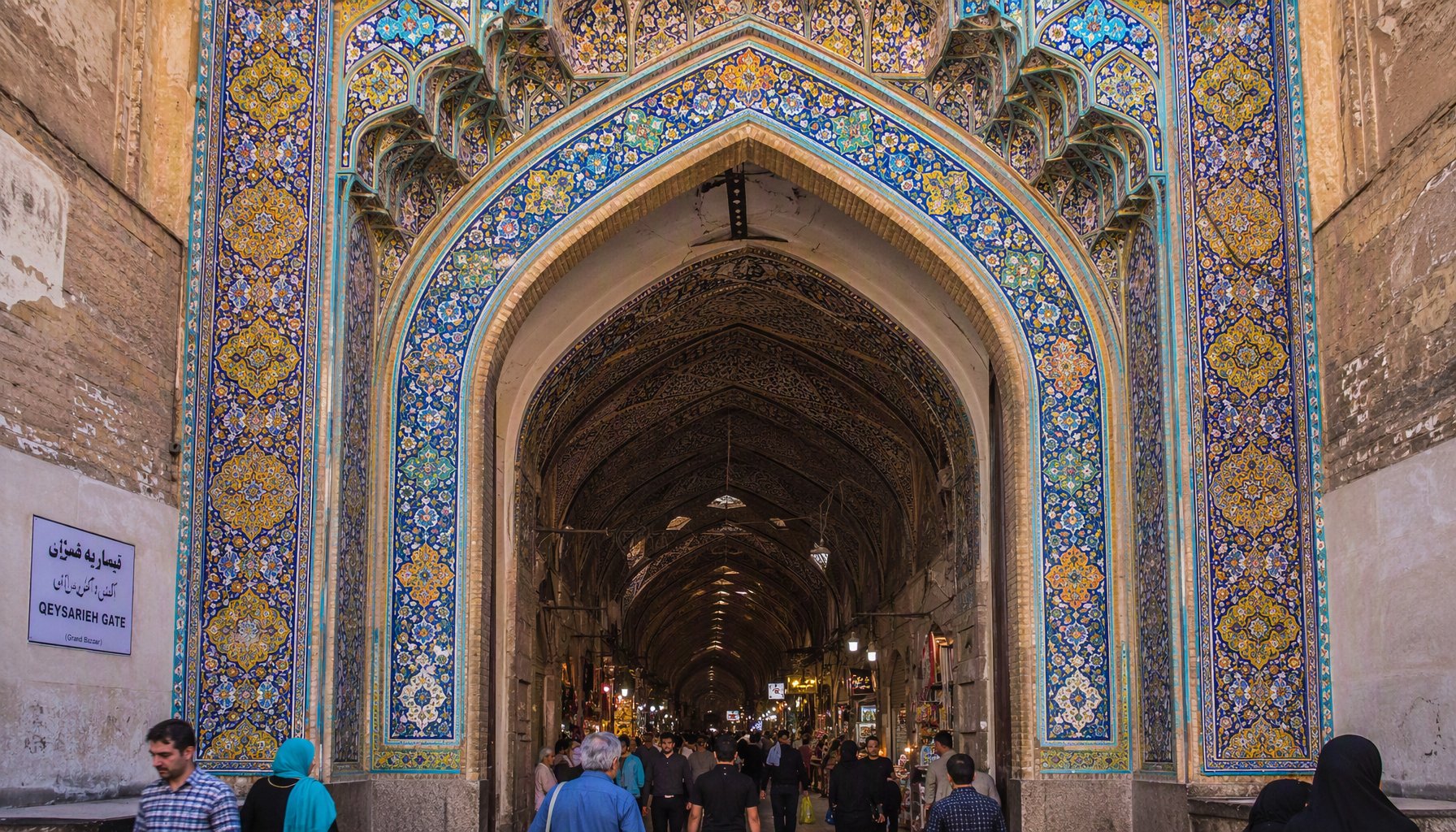
Isfahan Grand Bazaar: Elegance Beside the Square
The Grand Bazaar of Isfahan is one of the finest examples of Persian commercial architecture, and its location is unmatched. The bazaar begins at the southern edge of Naqsh-e Jahan Square, the magnificent Safavid-era plaza that is itself a UNESCO World Heritage Site, and extends southward for nearly two kilometres through a network of covered corridors, sarais, and mosques.
Construction of the bazaar began in the early seventeenth century under Shah Abbas I, the greatest of the Safavid rulers, who transformed Isfahan into one of the most beautiful cities in the world. The bazaar was designed to connect the royal square to the old city and to serve as the commercial engine of the Safavid capital. The entrance from the square, known as the Qeysarieh Gate, is adorned with some of the finest tilework in Iran, featuring colourful mosaic tiles in patterns of arabesques and hunting scenes.
Inside, the bazaar unfolds in a series of vaulted corridors, each one lined with shops and punctuated by beautiful courtyards. The Timcheh-ye Mozaffari, the carpet caravanserai, is the architectural highlight. This domed chamber, decorated with painted tiles and muqarnas (stalactite vaulting), is one of the most beautiful interiors in all of Isfahan. Carpet merchants display their finest pieces here, and the acoustics of the dome make even ordinary conversation sound musical.
Isfahan's bazaar is particularly renowned for its handicrafts. Khatam-kari (intricate inlay work using wood, bone, and metal), minakari (enamel on copper), and calligraphy are specialities of Isfahan's artisans, and you can find master craftsmen plying their trades in workshops tucked into the bazaar's side corridors. The bazaar also offers excellent Persian textiles, including termeh and brocade, as well as spices, sweets, and antiques.
The bazaar is connected to two of Isfahan's most important mosques. The Shah Mosque (now Imam Mosque) sits at the western edge of the bazaar, and the Sheikh Lotfollah Mosque faces the square to the east. Many visitors combine a tour of the square and its mosques with a few hours in the bazaar, which is a natural and rewarding combination.
The bazaar is open daily except Fridays, from around 9 in the morning until late afternoon. Isfahan is well connected to Tehran by air (one hour) and by bus (approximately five to six hours). Use Mehyar to book flights or arrange your transport within the city.

Vakil Bazaar, Shiraz: Beauty and Nostalgia in the City of Poetry
Vakil Bazaar in Shiraz is one of the most aesthetically pleasing bazaars in Iran, and its setting within the Zand-era complex of Shiraz gives it a coherence and charm that few markets can match. The bazaar was built in the late eighteenth century by Karim Khan Zand, the ruler of the Zand dynasty who made Shiraz his capital and transformed it with a series of magnificent buildings, including the Arg-e Karim Khan citadel, the Vakil Mosque, and the Vakil Bath House.
The bazaar stretches for several hundred metres, its brick-vaulted corridors adorned with tall arches, carved stone columns, and decorative tilework. The ceiling features a series of domed sections, each one punctured with small openings that allow shafts of natural light to illuminate the shops below. The effect is one of warmth and intimacy, a world away from the overwhelming scale of the Tehran or Tabriz bazaars.
Vakil Bazaar is particularly famous for its spice shops and the vibrant colours of its merchandise. Sacks of turmeric, cumin, coriander, and dried rose petals line the entrances, creating a rainbow of earthy tones and intoxicating fragrances. The bazaar is also a good place to buy Shiraz's speciality products, including giveh (traditional handmade shoes), gabbeh (coarse handwoven rugs with abstract geometric patterns), and local sweets such as ranginak (date and walnut confection) and masghati (a saffron-infused gelatin sweet unique to Shiraz).
The carpet section of Vakil Bazaar is worth special attention. Shiraz has long been a centre of carpet trade, and the rugs brought here from Qashqai nomad weavers in the surrounding mountains are among the most sought-after in Iran. These tribal rugs, with their bold geometric patterns and rich colours, are distinct from the finer floral designs of Tabriz or Isfahan, and they carry the spirit of nomadic life in every knot.
Vakil Bazaar is open daily except Fridays. It is located in the centre of Shiraz, within walking distance of the Vakil Mosque, the Vakil Bath House, and the Arg-e Karim Khan. The easiest way to reach it is by Mehyar Taxi from any hotel in the city. Shiraz is accessible from Tehran by a one-hour flight or by overnight train and bus.

What Unites These Bazaars
Despite their differences, Iran's great bazaars share common features that make them instantly recognizable as part of a single tradition. All are covered structures, designed to protect merchants and shoppers from the intense sun and seasonal rains. All are organized by trade, with each craft or commodity having its own designated section. All feature caravanserais, or sarais, where travelling merchants once stored their goods and rested after long journeys along the Silk Road and other trade routes.
The architecture follows a consistent vocabulary of brick vaulting, domed ceilings, arched entrances, and courtyards. Yet each bazaar has developed its own personality over the centuries, shaped by the local climate, the regional economy, and the aesthetic traditions of the city. Tehran's bazaar is a sprawling, chaotic, energetic labyrinth. Tabriz is monumental and historic, with an almost ecclesiastical grandeur. Isfahan is elegant and refined, befitting its Safavid heritage. Shiraz's Vakil is intimate and artistic, reflecting the poetic sensibility of the city.
Practical Tips for Visiting Iranian Bazaars
Bargaining is expected in all of these bazaars. The first price offered is never the final price, and a friendly negotiation is part of the experience. Approach it with good humour and patience. Paying in cash is the norm, though some larger shops in Tehran and Isfahan may accept card payments. Load your Mehyar wallet before visiting to ensure you can make purchases easily.
Photography is generally welcome, but always ask permission before photographing shopkeepers and their wares. Many merchants are happy to pose, especially if you show genuine interest in their craft. The best time to visit is in the morning, when the light is most beautiful and the atmosphere most authentic. Friday is the universal closing day.
These bazaars are not merely shopping destinations. They are living museums of Iranian commercial culture, places where the rhythms of buying and selling have remained essentially unchanged for centuries. Whether you are hunting for a masterpiece carpet, a bag of the finest saffron, or simply the pleasure of wandering through one of the great architectural achievements of the Islamic world, Iran's bazaars will reward you generously.