
Iran has a reputation in some Western capitals that does not match the reality on the ground. The country is, by most measures, one of the safest in the Middle East for travellers. Violent crime against tourists is extremely rare. Pickpocketing exists but is no more common than in any major European city. What you will encounter instead, in almost every town and village, is a level of hospitality that many solo travellers describe as the most generous they have experienced anywhere in the world. Strangers invite you for tea. Restaurant owners refuse to let you pay. Families insist you join their picnic. This is not an act. It is a cultural norm, and it makes Iran a uniquely rewarding destination for those travelling alone.
This guide covers the best places for solo travel in Iran, organized around the cities that offer the best combination of safety, things to see, ease of transport, and social warmth. It also includes practical advice on visas, dress codes, money, getting around, and the specific considerations that solo travellers, particularly women, should keep in mind.
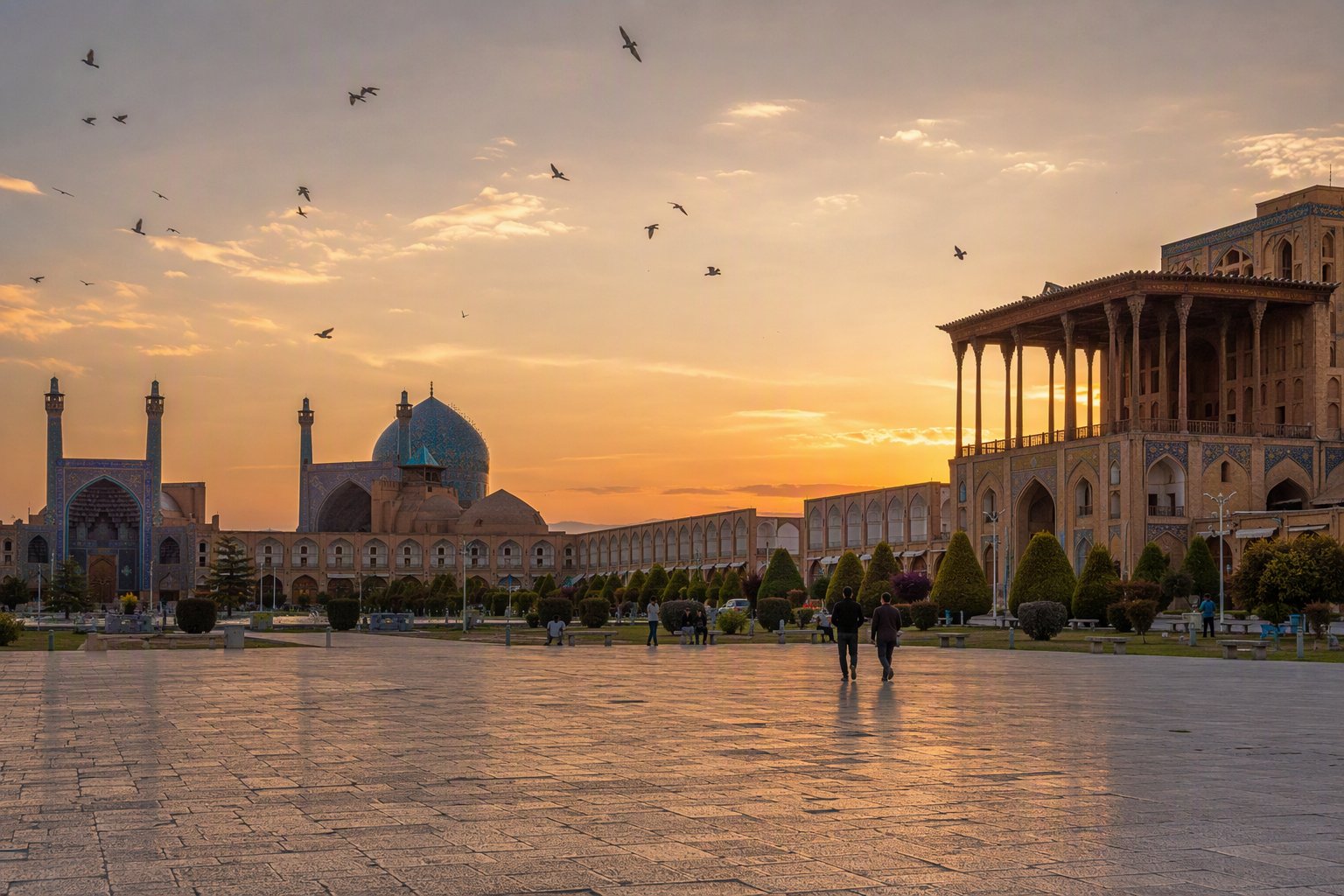
Isfahan: The Best City for First-Time Solo Travellers
Isfahan, the former capital of the Safavid Empire, is the city most frequently recommended for solo travellers visiting Iran for the first time. The reasons are straightforward. The city centre is compact and walkable, with most of the major attractions clustered around Naqsh-e Jahan Square, one of the largest public squares in the world and a UNESCO World Heritage Site. The square itself is surrounded by the Imam Mosque, the Sheikh Lotfollah Mosque, the Ali Qapu Palace, and the Grand Bazaar, all within a few minutes' walk of each other. You can spend two or three days in Isfahan and see everything that matters without ever needing a taxi.
Beyond the square, Isfahan has the historic Armenian quarter of New Julfa, with its sixteen churches and the stunning Vank Cathedral. The Si-o-se-pol bridge and the Khaju Bridge, both spanning the Zayandeh Rud river, are among the most beautiful structures in Iran and perfect spots for an evening stroll. The city's cafes and teahouses are full of young Iranians who are curious and friendly, making it easy to strike up conversations and make local connections.
From a practical standpoint, Isfahan has excellent bus and taxi connections to Tehran, Shiraz, and Yazd. The city has a good range of accommodation, from budget hostels to boutique hotels. Mehyar Hotels lists guesthouses and hotels across Isfahan, with reviews from other travellers to help you choose. The metro system, while limited to a single line, connects the main tourist areas to the bus terminal and the outskirts.
Isfahan is safe at all hours. The city centre is well-lit and busy into the evening, and solo travellers, including women travelling alone, report feeling completely comfortable walking at night. The main precaution is the same as anywhere: be aware of your surroundings and keep your valuables secure.
Shiraz: Poetry, Gardens, and Ancient Ruins
Shiraz, the city of poets, is another excellent destination for solo travellers. The birthplace of Hafez and Saadi, two of the greatest poets in the Persian language, Shiraz has a literary and cultural atmosphere that makes it a favourite among travellers who enjoy depth alongside sightseeing. The Tomb of Hafez, a beautifully designed pavilion set in a garden, is one of the most atmospheric spots in Iran. Locals gather there in the evenings to recite poetry and drink tea, and solo travellers are welcomed into the circle.
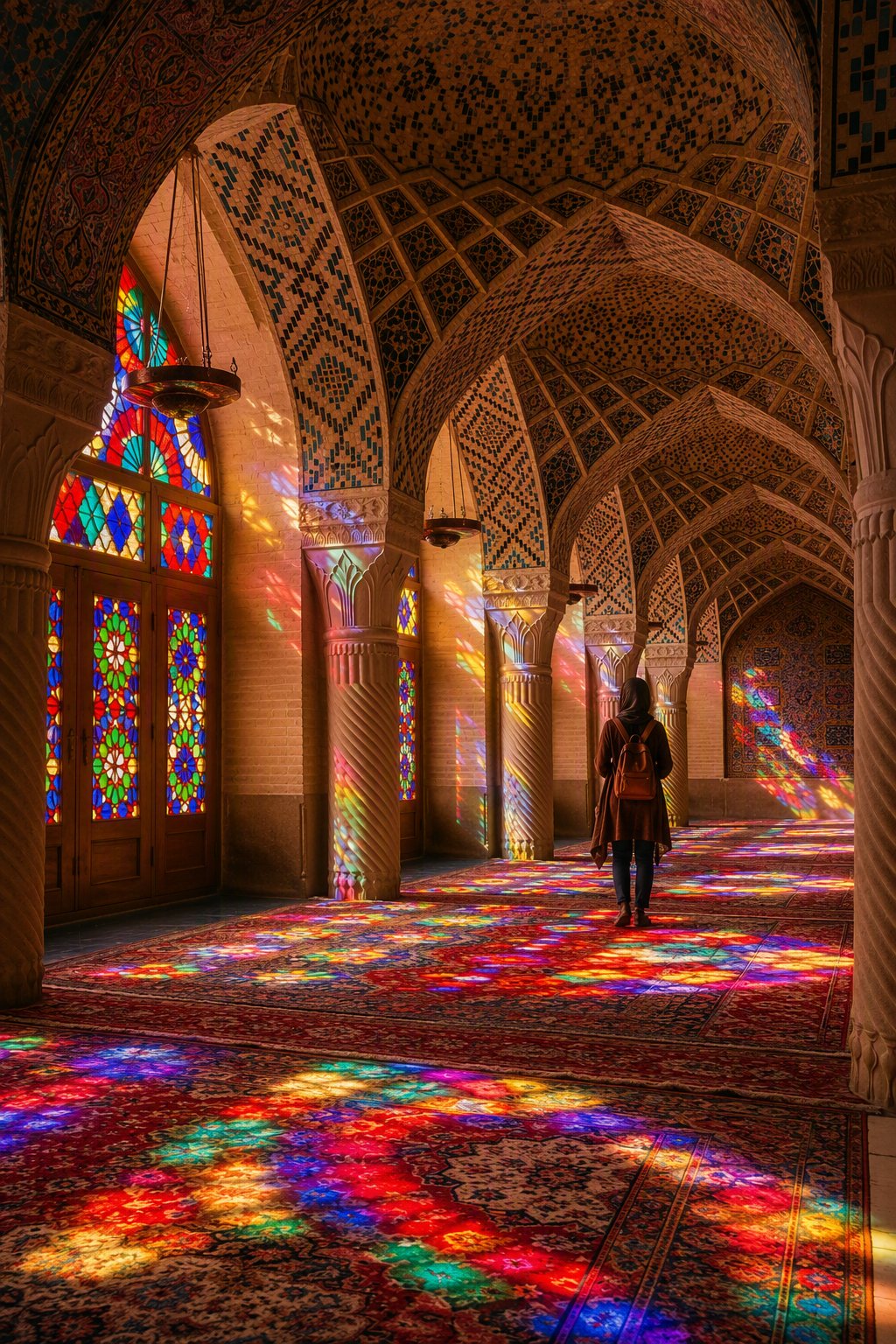
The city is also the gateway to Persepolis, the ceremonial capital of the Achaemenid Empire, located about an hour's drive northeast. Persepolis is one of the most important archaeological sites in the world and a UNESCO World Heritage Site. You can reach it by shared taxi from Shiraz, which is an affordable and social way to travel. Back in the city, the Eram Garden, a UNESCO-listed Persian garden, and the Nasir al-Mulk Mosque, famous for its stained glass windows that create rainbow patterns on the floor in the morning light, are highlights that reward unhurried exploration.
Shiraz is a mid-sized city with a relaxed pace. The people are known throughout Iran for their warmth and hospitality, and solo travellers consistently report some of their most positive interactions here. The city has good transport links, with daily flights to Tehran and regular buses to Isfahan, Yazd, and the southern coast.
Yazd: A Desert City of Windcatchers and Mud-Brick Alleys
Yazd is one of the oldest continuously inhabited cities in the world, and its historic centre is a UNESCO World Heritage Site. The city's architecture, built to survive in the harsh desert climate, is unlike anything else in Iran: narrow winding alleys, towering windcatchers that funnel cool air into buildings, underground water channels called qanats, and mud-brick houses with heavy wooden doors. Walking through the old quarter of Yazd feels like stepping back centuries.
For solo travellers, Yazd offers something that the bigger cities sometimes lack: a sense of quiet. The city is small enough to explore on foot, and its compact historic centre can be covered in a day or two. Highlights include the Jameh Mosque of Yazd, with its towering minarets and intricate tilework; the Amir Chakhmaq Complex, a stunning symmetrical structure that dominates the main square; and the Zoroastrian Towers of Silence, where ancient funerary rites were practiced on hilltops outside the city.
The desert location makes Yazd very hot in summer, so the best times for a solo visit are spring (March to May) and autumn (September to November). In winter, the city is cool and pleasant, with clear skies and few tourists. Accommodation in Yazd includes several traditional guesthouses in restored courtyard homes, which offer a unique and atmospheric stay. Mehyar Hotels lists options across Yazd, including heritage properties in the old city.
Tehran: The Capital with Endless Layers
Tehran is not typically the first stop for solo travellers seeking peace and quiet, but it is a city of extraordinary richness for those who know where to look. The National Museum of Iran, the Golestan Palace (a UNESCO World Heritage Site), the Grand Bazaar, and the Treasury of the National Jewels are all worth dedicated visits. The city's museums, galleries, and cultural centres provide depth that smaller cities cannot match.
For solo travellers, Tehran's size is both an advantage and a challenge. The metro system, with five lines, makes it easy to cover long distances quickly and cheaply. The city has the widest range of accommodation, from budget hostels in the central districts to high-end hotels in the north. The food scene is diverse, with restaurants serving every regional cuisine in Iran plus international options.
The northern districts, particularly around Tajrish and Darband, are green, pleasant, and good for evening walks. Darband, a mountain trail with restaurants and cafes built into the hillside, is a popular spot for solo travellers to enjoy a meal with a view over the city. Mehyar Taxi operates throughout Tehran and is a convenient way to get between attractions, particularly in the evening when public transport becomes less frequent.

Kashan: A Hidden Gem for Solo Exploration
Kashan, located between Tehran and Isfahan, is one of Iran's best-kept secrets for solo travellers. The city's historic houses, built by wealthy merchants in the nineteenth century, are masterpieces of Persian domestic architecture: painted ceilings, stained glass windows, mirror-work halls, and landscaped courtyards with central pools. The Tabatabaei House, the Borujerdi House, and the Abbasian House are all open to visitors and can be explored in a single day.
Kashan is also the gateway to the ancient site of Sialk, one of the oldest settlements in the Iranian plateau, dating back to the fifth millennium BC. The nearby town of Nushabad has an underground city, called Ouyi, that was carved from rock over a thousand years ago and is one of the most unusual attractions in the country.
The city is small, safe, and easy to navigate. Solo travellers appreciate its manageable scale after the intensity of Tehran. Kashan is on the main rail line between Tehran and Isfahan, making it an easy stop on a solo itinerary.
Tabriz: The Gateway to Azerbaijan and the Caucasus
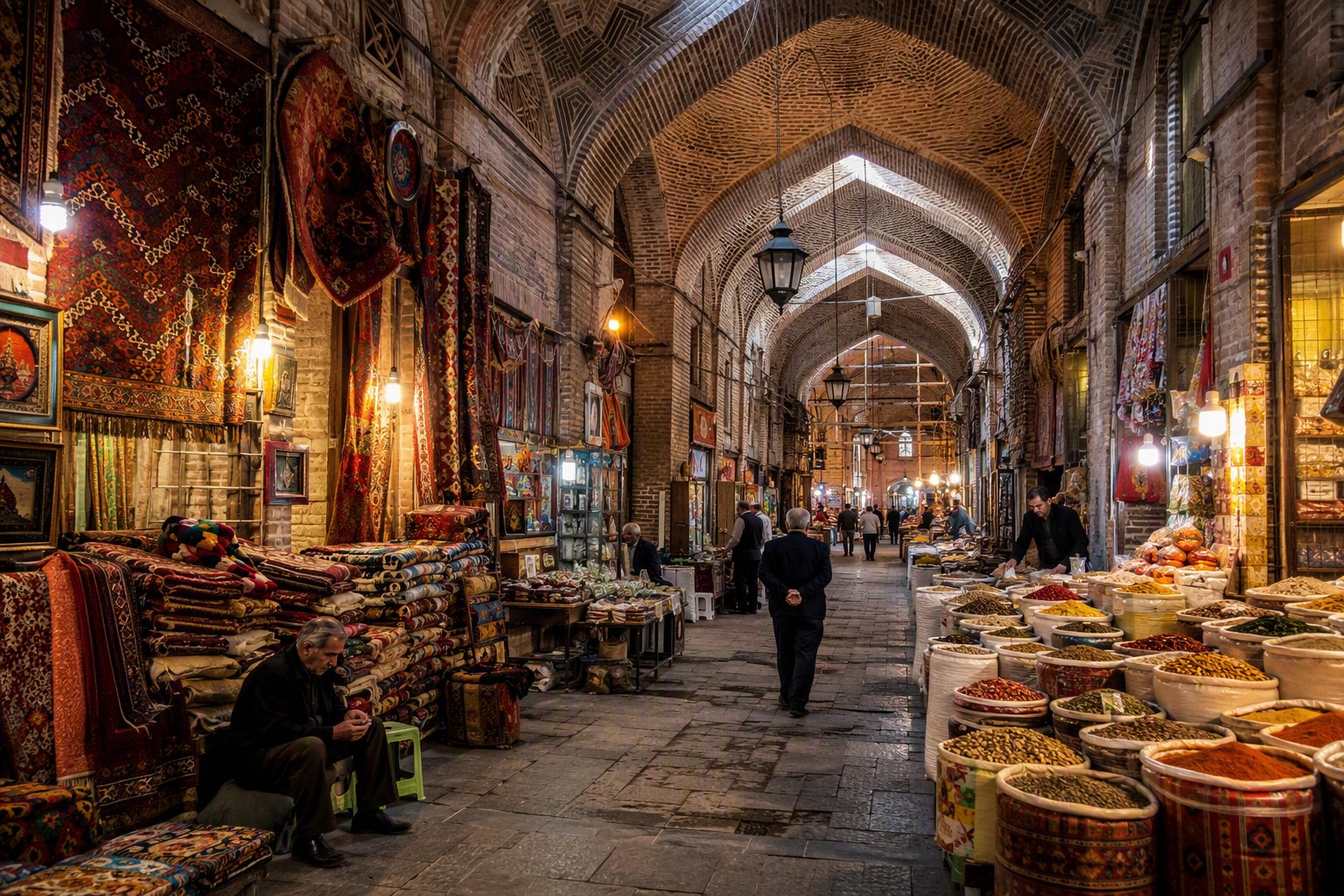
Tabriz, the capital of East Azerbaijan Province, is Iran's largest city in the northwest and one of the most historically significant. The Grand Bazaar of Tabriz, a UNESCO World Heritage Site, is the largest covered bazaar in the Middle East and was a key stop on the ancient Silk Road. Walking through its labyrinthine corridors, past shops selling spices, carpets, jewellery, and textiles, is one of the great market experiences in the world.
For solo travellers, Tabriz offers a different cultural flavour from the cities of central Iran. The Azerbaijani influence is strong, in the language, the food, and the architecture. The city is also the starting point for visits to the Kandovan rock village, where people still live in cone-shaped dwellings carved from volcanic rock, and the stunning Blue Mosque, one of the few surviving examples of Ilkhanid architecture.
Tabriz has good transport connections, with daily flights and buses to Tehran and regular services to the Turkish border. The city is safe and welcoming, though solo travellers should note that winters are very cold, with temperatures regularly dropping below freezing.
Kerman and the Desert Routes
Kerman, in southeastern Iran, is a city that rewards the solo traveller willing to go further off the beaten path. The city itself has the Ganjali Khan Complex, a beautifully preserved Safavid-era square with a mosque, bathhouse, caravanserai, and bazaar. But the real draw of the Kerman region is the desert landscape beyond the city.
The Lut Desert, or Dasht-e Lut, is a UNESCO World Heritage Site and one of the hottest places on Earth. Organized tours from Kerman take visitors into the desert to see the yardang formations, the kaluts, and the vast empty expanses that make the Lut unique. The desert town of Mahan, near Kerman, has the Shazdeh Garden, a stunning Persian garden that appears miraculously green in the middle of the arid landscape, and the tomb of the Sufi saint Shah Nematollah Vali.
Kerman is less visited by international tourists than Isfahan or Shiraz, which means that solo travellers receive more attention and hospitality from locals. English is less widely spoken, but the warmth of the welcome more than compensates.
Practical Tips for Solo Travellers in Iran
Safety
Iran is one of the safest countries in the Middle East for tourists. Violent crime against foreigners is extremely rare. The most common issue is petty theft in crowded bazaars and on public transport, which can be avoided with basic vigilance. The Iranian police are generally helpful to tourists, and tourist police offices exist in major cities. Solo travellers should avoid remote border areas, particularly in the southeast near Pakistan and Afghanistan, where government travel advisories may apply.
Dress Code
Iran has a mandatory dress code. Women must cover their hair with a headscarf and wear loose-fitting clothing that covers the arms and legs. Men should avoid shorts in public. The dress code is enforced less strictly than it once was, particularly in Tehran, where many women push the boundaries of the rules. As a solo traveller, it is worth respecting local norms while understanding that the reality is often less rigid than the law suggests.
Money and Banking
International credit cards do not work in Iran due to sanctions. Solo travellers must bring enough cash (US dollars or euros) to cover their entire trip and exchange it at official exchange offices or banks. Iranian rials are the local currency. ATMs work with Iranian bank cards only. Budget carefully, as inflation can affect prices.
Getting Around
Iran has an excellent intercity bus network that connects all major cities and many smaller towns. The buses are comfortable, affordable, and run on schedule. VIP buses, with wider seats and more legroom, are available on major routes. Domestic flights connect the larger cities and save time on long distances. The train network covers the main north-south and east-west corridors. Within cities, taxis and ride-hailing apps like Snapp (Iran's equivalent of Uber) are widely available. Mehyar Taxi provides an additional option for airport transfers and city rides in major destinations.
Accommodation
Solo travellers in Iran can choose from hotels, guesthouses, eco-lodges, and traditional courtyard houses converted to accommodation. Mehyar Hotels lists properties across Iran's major destinations, with transparent pricing and verified reviews. In smaller cities like Yazd and Kashan, the traditional guesthouses offer a far more atmospheric experience than generic hotels.

For Women Travelling Solo
Iran is generally safe for women travelling alone, though it requires more cultural navigation than for men. Many women have shared positive experiences of solo travel in Iran, noting the hospitality and curiosity they encountered. The dress code must be observed, and some conservative areas may be more restrictive than others. It is worth researching specific destinations and connecting with other women who have travelled to Iran for first-hand advice.
A Note on Visas
Most nationalities need a visa to visit Iran. The process varies by country, but many travellers can obtain a visa on arrival at major international airports, including Tehran Imam Khomeini International Airport, Shiraz, and Isfahan. The visa typically grants a stay of up to thirty days. Some nationalities, including British, American, and Canadian passport holders, must travel with a guided tour and cannot travel independently. Check the latest requirements before planning your trip.
Final Thoughts
Solo travel in Iran is an experience that challenges assumptions and expands understanding. The cities are beautiful, the history is profound, and the people are among the most hospitable you will find anywhere. Whether you are walking across Naqsh-e Jahan Square at dusk, reciting poetry at the Tomb of Hafez, or exploring the desert kaluts near Kerman, you will find that Iran rewards the solo traveller with moments of genuine connection and discovery that are hard to replicate elsewhere. Plan your itinerary with Mehyar, book your accommodation in advance, and go with an open mind. The country will surprise you.