
The Hindu Temple of Bandar Abbas is one of the most unusual historical buildings in southern Iran. Standing on Imam Khomeini Boulevard in the heart of the city, its white conical exterior and distinctive grooved surface look like nothing else in the surrounding streetscape. Built in the late 19th century by Indian merchants who lived and traded in this Persian Gulf port, the temple is a rare physical reminder of the commercial connections that once linked the coast of Iran to the western shores of the Indian subcontinent. It is registered as a national monument and remains one of the most photographed landmarks in Bandar Abbas.
A temple born of trade
The story of the Hindu Temple begins with the history of trade between Iran and India. Bandar Abbas has been a major port on the Persian Gulf since the Safavid period, and its location near the Strait of Hormuz made it a natural meeting point for merchants from across the Indian Ocean. By the 19th century, a small community of Hindu traders, mostly from the city of Shikarpur in western India, had established itself in Bandar Abbas. At its peak, about 100 Hindu families lived in the city, most of them engaged in commerce.
The temple was built in 1310 AH, corresponding to approximately 1870 CE, during the governorship of Mohammad Hasan Khan Sa'd al-Molk. It was designed to serve the religious needs of this community and was known locally as the "Botguran" worship place, a name derived from the local term for Hindus. The local population of Bandar Abbas historically referred to Hindu residents as "gabr" or "gur", and the temple became known as the "Peresteshgah-e Botguran", or "the place of worship of the Botguran".
Architecture that bridges two worlds
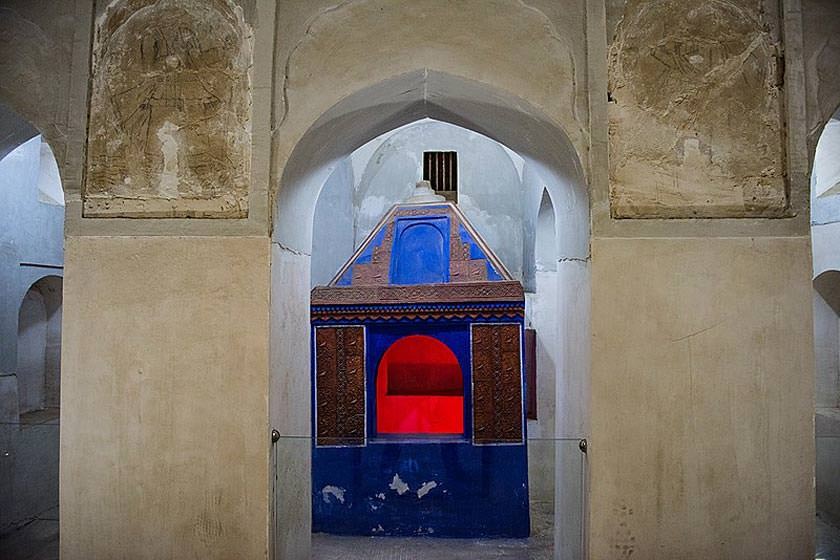
The architecture of the Hindu Temple of Bandar Abbas is a fascinating blend of Indian religious design and local building techniques. The materials used include rubble stone, mud mortar, saruj (a traditional waterproof cement), coral stone, and thick layers of plaster. The exterior is cone-shaped, painted white, and marked by longitudinal grooves that give it a fluted appearance reminiscent of Hindu temple shikharas found across northern India.
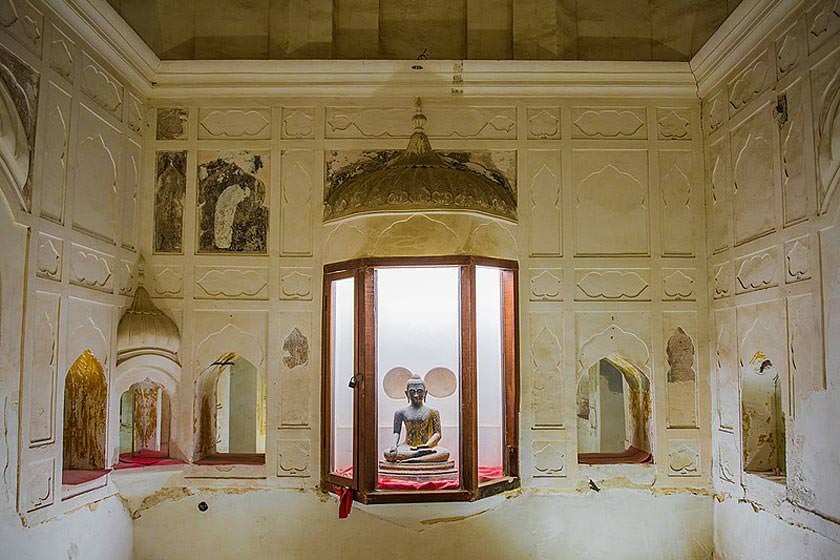
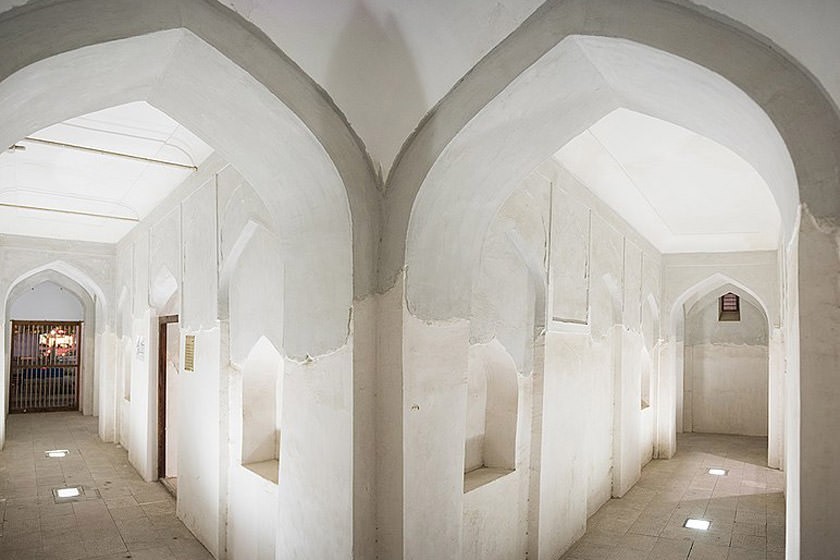
The core of the building is a square central chamber covered by a dome. Inside this chamber, niches and blind frames decorate the walls. Surrounding the central room on all four sides are covered corridors, along which worshippers once performed circumambulation, a key ritual in Hindu devotional practice. Small cells opening off the corridors were used by Brahmin students studying at the temple.

Among the most striking features inside the temple are the religious paintings that survive on the walls. One of the most important depicts Krishna playing the flute, a classic image from Hindu iconography. These paintings, though weathered by time and climate, offer a vivid connection to the devotional life of the community that built the temple.
From the western corridor, a spiral staircase leads to the roof, where the full scale of the dome and its layered trapezoidal decorations can be appreciated. The dome is crowned with Hindu ritual motifs and offers a view across the city and, on clear days, toward the waters of the Persian Gulf in the distance.
A gathering hall and spiritual school
On the eastern side of the dome is a large hall that served as the temple's assembly room. The walls of this hall are decorated with paintings that illustrate different philosophical themes from Hindu belief, each one expressing a particular aspect of the community's spiritual worldview. The hall was used for communal gatherings, festivals, and religious teaching.
In its original form, the temple was set within a spacious courtyard that included native trees and planted greenery, providing a tranquil setting within the busy port city. Over time, as the street was widened, part of this courtyard was lost, but the building itself has been preserved and restored.
The departure of the community and after
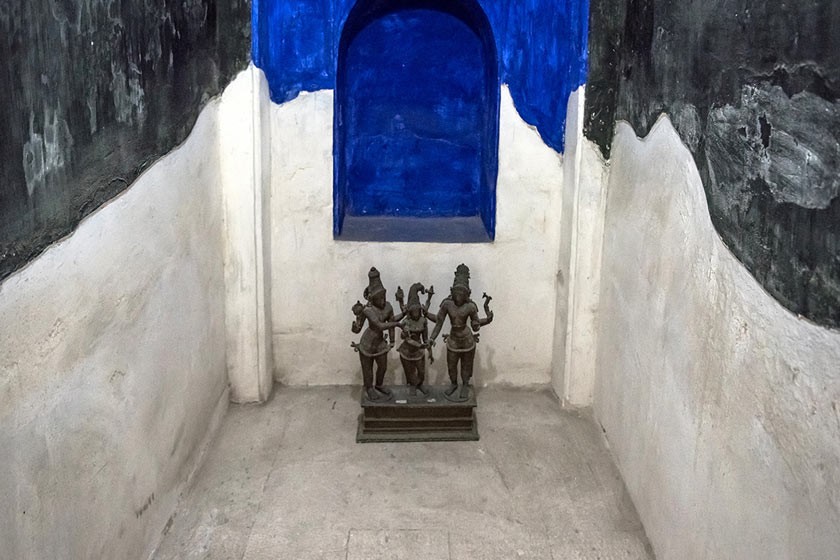
The Hindu community of Bandar Abbas lived in the city from approximately 1300 to 1344 in the Iranian solar calendar, corresponding to the early to mid-20th century. When the community eventually left Bandar Abbas, they took with them the temple's idols and the furnishings of the prayer niches. After their departure, the building gradually fell into disrepair.
The Iranian Cultural Heritage Organisation has since carried out several rounds of restoration to stabilise the structure, repair the dome, and preserve the remaining paintings. These efforts have ensured that the temple survives as a tangible link to the multicultural history of trade on the Persian Gulf.

The temple as a national monument
In 1999, the Hindu Temple of Bandar Abbas was officially added to the list of national monuments of Iran, with registration number 1999, dated 1 Ordibehesht 1377 in the Iranian calendar. This recognition highlighted its significance not only as a unique piece of architecture but also as evidence of the long-standing commercial and cultural ties between the Persian Gulf coast of Iran and the Indian subcontinent.
The temple is located on Imam Khomeini Boulevard at the Chaharrah-e Bargh (Electricity Junction), directly opposite the daily market of Bandar Abbas. Visiting typically takes one to two hours. The temple is open daily except on official holidays, from 8 in the morning until 6 in the evening, and a small admission fee applies.
Visiting the temple
The best time to visit Bandar Abbas, and the Hindu Temple in particular, is during the cooler months from November through March. Summer temperatures in the city regularly exceed 40 degrees Celsius with high humidity, making outdoor exploration uncomfortable. Early morning and late afternoon are the most pleasant times of day for visiting the temple, and the building takes on a striking appearance in the evening when it is illuminated by floodlighting.
Mehyar Taxi can arrange transfers from anywhere in Bandar Abbas to the temple, and the location on the main boulevard makes it accessible by public transport as well. Visitors can combine the temple with a walk through the nearby bazaar and a visit to the Kolah Farangi building, both of which are within easy walking distance along the main street.