
Shiraz is the city of poetry and gardens, a place where the scent of orange blossoms drifts through every street in spring and the tombs of Iran's greatest poets draw pilgrims and literature lovers from across the world. The capital of Fars Province sits within a short drive of Persepolis, the ceremonial capital of the Achaemenid Empire, and within walking distance of Qajar mosques, Safavid shrines and living bazaars. This guide covers the key sights, the best time to visit, and how to reach Shiraz with Mehyar services at every step.
Where is Shiraz?
Shiraz is the capital of Fars Province in southern Iran, set in a fertile plain at the foothills of the Zagros Mountains. The city lies about 930 kilometres south of Tehran by road, or a one-hour flight on Mehyar Flights. Shiraz has been a centre of Persian culture for more than a thousand years, and its name is inseparable from the poets Hafez and Saadi, the gardens of Eram and Afifabad, and the ancient ruins of Persepolis that lie within easy reach. The orange-blossom season in April turns every boulevard into a perfumed corridor.
How to get to Shiraz and getting around
Mehyar Flights connects Tehran to Shiraz Airport on a frequent schedule, with a flight time of roughly one hour. Mehyar Buses runs scheduled coaches from Tehran, Isfahan and other major cities to the Shiraz bus terminal. The road from Isfahan is well-paved and passes through attractive mountain scenery on the final stretch into Fars.

Once in the city, Mehyar Taxi is the easiest way to reach your hotel and move between the central sights, the tombs of Hafez and Saadi and the gardens of Eram and Afifabad. The bazaar, the Arg and the Pink Mosque are close enough to combine on a single walking route, but Persepolis sits well outside walking distance, so a private car or taxi is essential for the full itinerary.
Persepolis and the ancient capitals
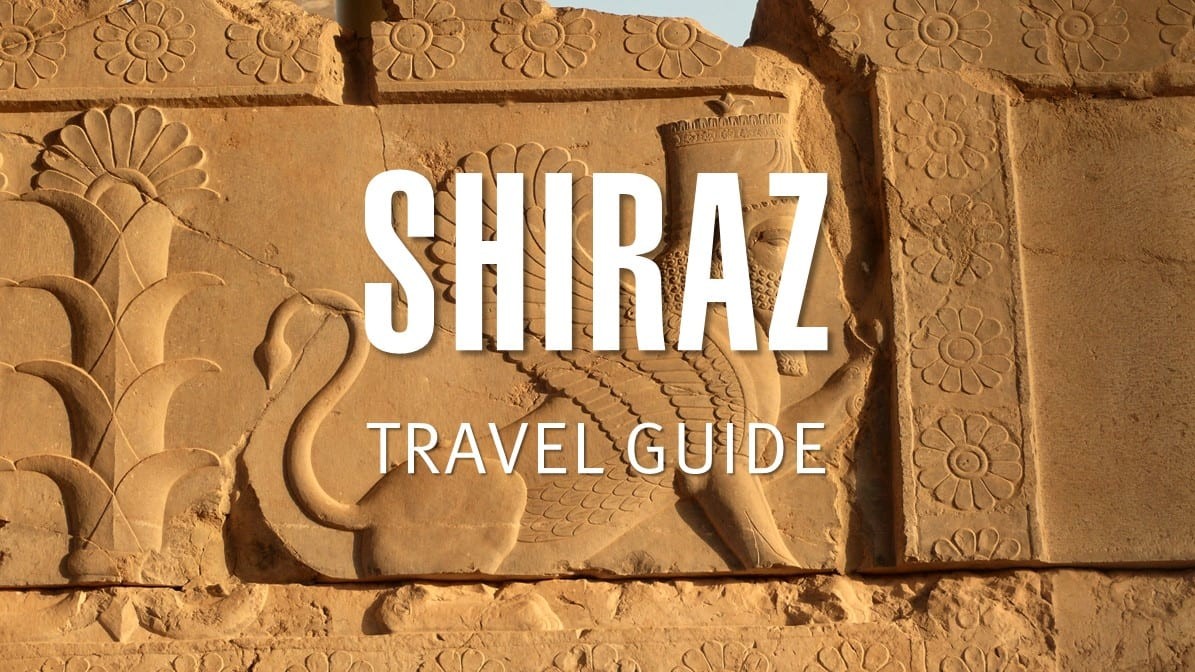
Persepolis, known in Persian as Takht-e Jamshid, is one of the most important archaeological sites in the world and the symbol of ancient Iranian grandeur. Built on the orders of Darius I in the sixth century BC as the ceremonial capital of the Achaemenid Empire, the site covers a vast stone terrace with staircases, audience halls and columns that still rise to their full height. The Apadana Palace, the Gate of All Nations and the Treasury each tell a chapter of the imperial story through carved reliefs that show delegations from across the known world bringing tribute. Persepolis lies about 70 kilometres northeast of Shiraz, and the drive takes roughly an hour.
Cyrus the Great's Tomb at Pasargadae, about 130 kilometres to the north, is the resting place of the founder of the Achaemenid Empire. The structure is a simple stepped plinth topped by a gabled chamber, and the restraint of the design matches the reputation of the king who ruled on justice and tolerance.
Hafezieh and Saadiyeh

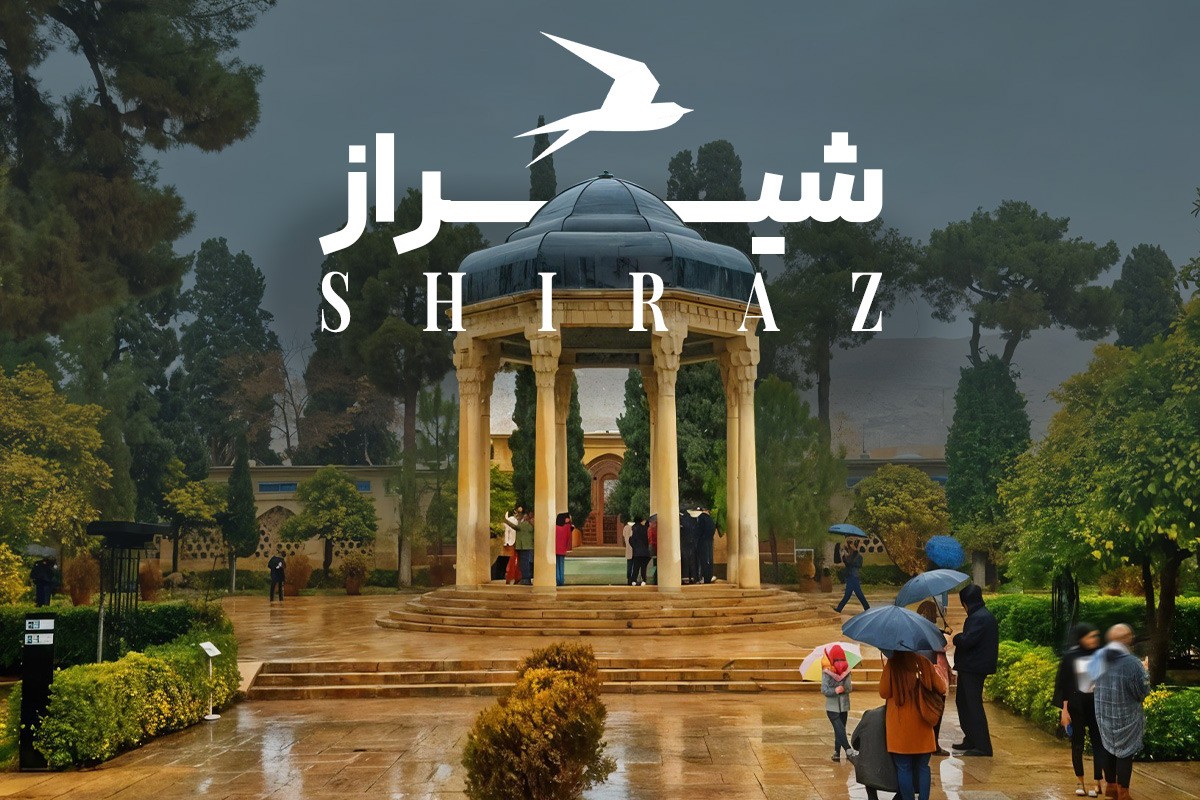
Hafezieh, the tomb of Hafez, is the most visited cultural site in Shiraz. The current structure was built during the Pahlavi era and registered as a national heritage site in 1975. The open pavilion, with its slender columns and bronze roof shaped like a Sufi's hat, sits in a garden of orange trees and cypress, and visitors gather at the cenotaph to place a hand on the stone and read a couplet by Hafez for guidance. The site is especially atmospheric in the evening, when the garden is lit softly and the sound of recitation drifts through the air. Opening hours run from 8:30 to 21:30 in spring and from 7:30 to 17:30 in winter.
Saadiyeh, the tomb of Saadi, stands at the foot of Mount Pahandeh on the northeastern edge of Shiraz beside the Delgosha Garden. The current mausoleum was built in the mid-twentieth century and registered as national heritage in 1974. The blue-tiled dome rises above a garden of cypress and orange trees, and the interior carries verses from the Gulistan and the Buston inscribed on the walls. Saadi is known as the Master of Speech among Iranians, and his tomb draws visitors from every corner of the country.
The Pink Mosque and Shah Cheragh
Nasir ol-Molk Mosque, known as the Pink Mosque for the rose-coloured tiles that cover its facade, is one of the most photographed buildings in Iran. Built during the Qajar period by one of the great lords of the era, the mosque is famous for the way morning light passes through its stained-glass windows and paints the prayer hall in patterns of colour. The best time to visit is in the early morning, when the sun enters from the east and the carpets on the floor turn into a kaleidoscope of red, blue and gold.
Shah Cheragh is the shrine of a brother of Imam Reza, and one of the most important pilgrimage sites in Iran. The interior is covered in mirror work that turns every surface into a field of reflected light, and the tiled facade carries some of the finest calligraphy in the city. The shrine was registered as national heritage in 1942 and draws visitors throughout the day and into the night.
The Arg, the bazaar and the Quran Gate
The Arg of Karim Khan, built in 1180 AH by the founder of the Zand dynasty, served as the residence and headquarters of Karim Khan Zand. Its massive brick walls and corner towers are among the best-preserved examples of Zand military architecture, and the citadel was registered as national heritage in 1972.
The Vakil Bazaar, built on the orders of Karim Khan Zand, is one of the most famous traditional markets in Iran, lined with shops selling carpets, spices, copperwork and sweets. The bazaar sits next to the Vakil Mosque and the Vakil Bath, forming a historical cluster in the heart of the city. The Quran Gate marks the northern entrance to the city and was once topped by a Quran that travellers passed beneath for blessing. The current structure carries the calligraphic bands and tilework that mark it as a symbol of Shiraz.
Best time to visit Shiraz
Shiraz has a mild climate compared to other southern Iranian cities, with warm summers and cool winters. The most magical window is April, when the orange blossoms are at their peak and the scent fills every street. May and early June are also pleasant. Autumn, from September through November, brings comfortable temperatures and fewer crowds. Summer can be hot, with daytime temperatures often above 35 degrees, but the evenings cool and the poet shrines are atmospheric at night. Winter is mild by Iranian standards, though some days can be chilly.
Where to stay in Shiraz
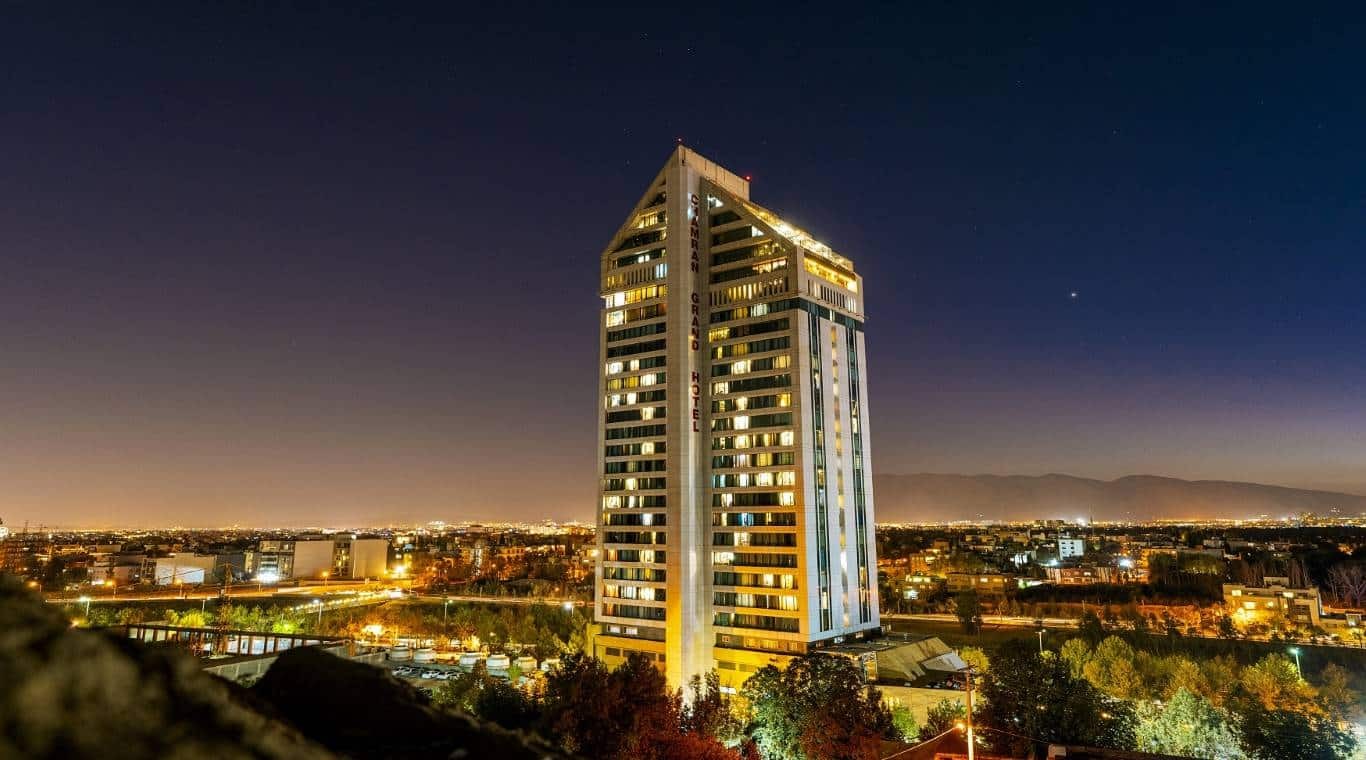
Shiraz has a wide range of hotels near the central bazaar, the Zandiyeh Complex and along Zand Boulevard, with options from budget guesthouses to five-star properties. Most first-time visitors choose a central location so the Arg, the Vakil Bazaar and the Pink Mosque are within walking distance, and Mehyar Hotels lists vetted choices for every budget. If you plan to spend time at Hafezieh or Persepolis, a property with parking and easy access to the northern route will save you time.
Mehyar services in Shiraz
Mehyar covers every stage of a Shiraz visit. Mehyar Flights connects Tehran to Shiraz in about an hour, Mehyar Buses runs scheduled coaches from the capital and the major southern cities, Mehyar Taxi handles airport transfers and trips between the city sights and Persepolis, and Mehyar Hotels keeps a current list of properties in the centre and along Zand Boulevard. For onward travel to Isfahan, Yazd or the Persian Gulf coast, Mehyar Buses and Mehyar Taxi both offer connections that keep your itinerary moving.